 Popular
Photo: Wikipedia
Quality of Life in Chesapeake, VA
A high quality of life with strong walkability, manageable living costs, healthy neighborhood signals, and solid amenity access.
What does Quality of Life tell us?
Quality of Life blends cost of living, nearby amenities, socioeconomic signals, and neighborhood character. City-level scores represent the whole municipality; individual neighborhoods can differ.
What does this tell us?
Quality of Life blends cost of living, nearby amenities, socioeconomic signals, and neighborhood character. City-level scores represent the whole municipality; individual neighborhoods can differ.
Cost of Living
30% above national average
The Real Cost of Living in Chesapeake, VA for 2026
| Tier | Individual | Family (4) |
|---|---|---|
| Survival | $24k | $46k |
| Comfortable | $70k | $103k |
| Luxury | $146k+ | $226k+ |
| Elite (Top 5%) | $171k+ | $266k+ |
92%
The Area Signal
A metric tracking the socioeconomic signals of the area.
Hobbies
Explore the areaGroceries
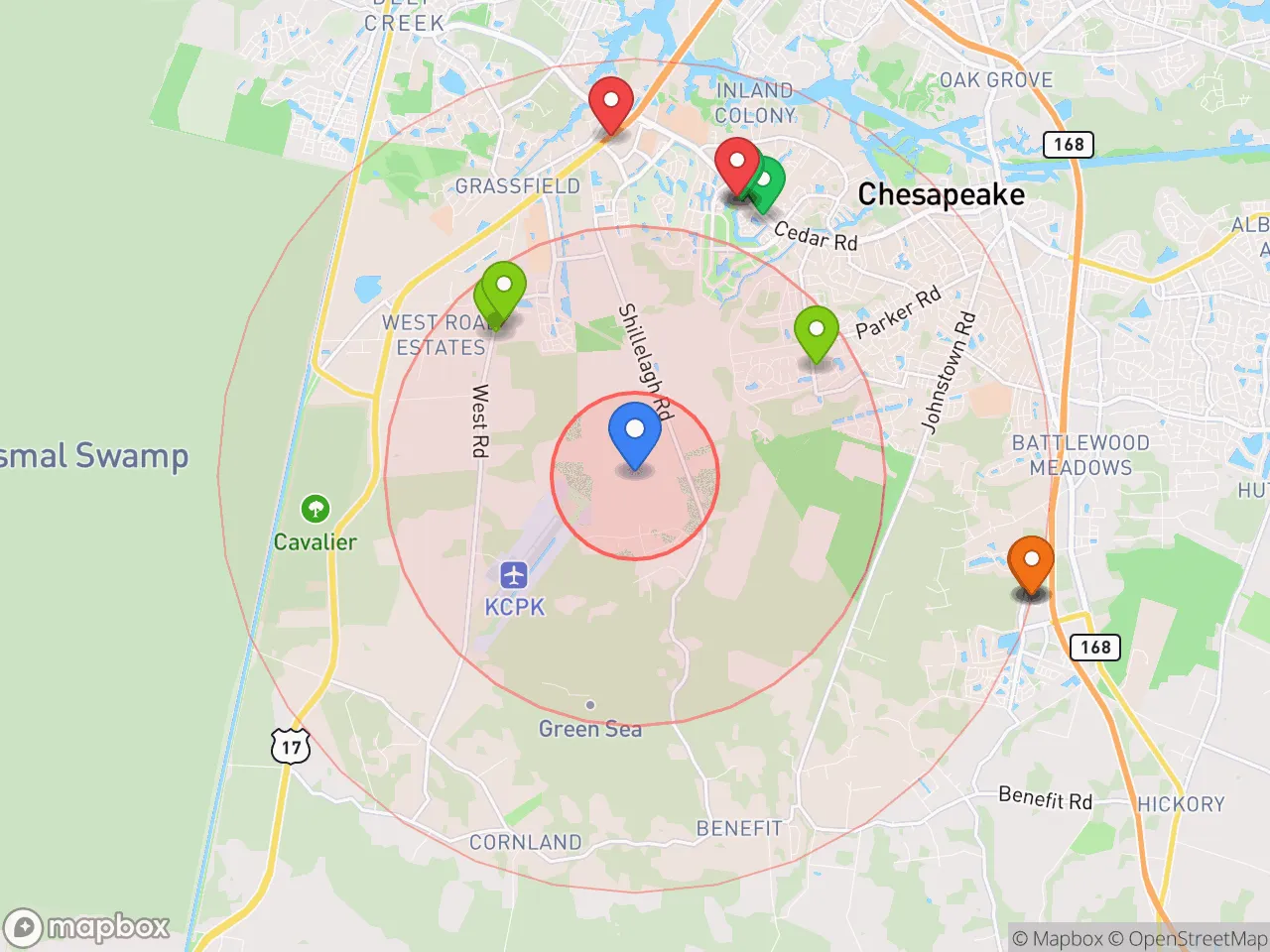
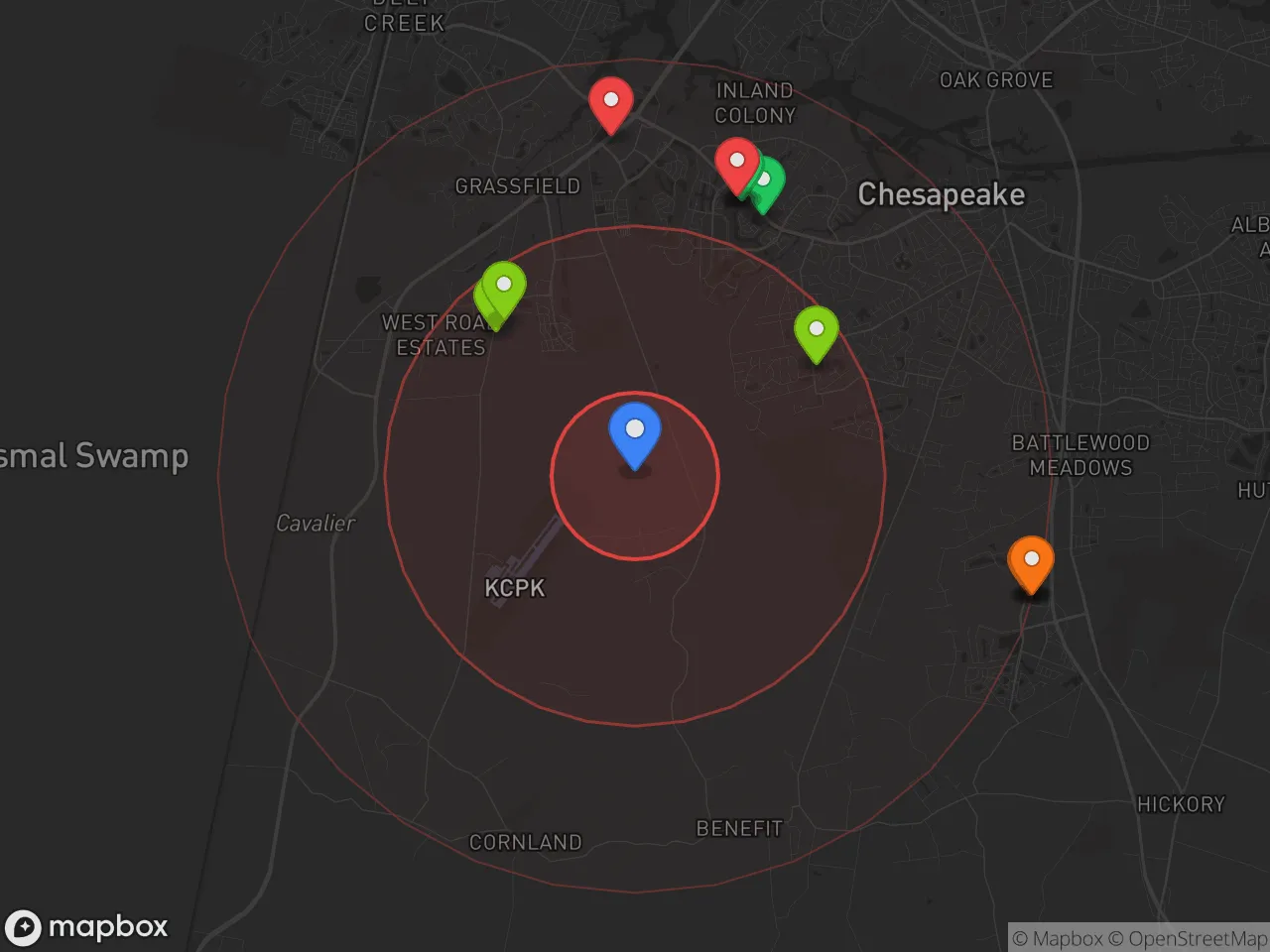
6 within 10 miles
Gas
20 within 10 miles
Hospital
14 within 20 miles
Airport
RDU — Raleigh–Durham International
Post Office
USPS — Chesapeake, VA
Critical Amenities
Quality-of-Life Analysis
Chesapeake, Virginia, presents a quality of life defined by suburban affluence, strong family orientation, and a notably high cost of living that reflects its desirability. With a cost of living index of 130 (30% above the national average), the city attracts established professionals, military families connected to nearby Naval Air Station Oceana and Joint Expeditionary Base Little Creek, and executives commuting to Norfolk and Virginia Beach. The population skews toward homeowners and dual-income households who prioritize space, safety, and access to top-rated public schools over urban convenience.
Cost of living, housing affordability, and how it compares to nearby cities
Chesapeake’s housing market is the primary driver of its elevated cost of living. The median home value sits at $359,100, significantly higher than the national median of roughly $340,000 and notably above neighboring Suffolk (around $310,000) but still below Virginia Beach’s median of approximately $390,000. Rents are also elevated, with a median of $1,523 per month, which is about $150 higher than the national average. For context, a household earning the regional median income of roughly $85,000 would spend about 27% of gross income on a mortgage at current rates—manageable but tight for first-time buyers. Compared to Norfolk, where the cost of living index is around 110, Chesapeake commands a premium for its lower crime rates and larger lot sizes. The average commute of 25.5 minutes is slightly longer than the national average of 26 minutes, reflecting the city’s spread-out layout and reliance on Interstate 64 and U.S. Route 17 for access to employment hubs in Norfolk and Virginia Beach.
Schools, amenities, and what daily life is like for families
Daily life in Chesapeake revolves around its highly regarded public school system, Chesapeake Public Schools, which consistently ranks among the top in Virginia for academic performance and extracurricular offerings. The city is home to over 200 parks, including the 763-acre Northwest River Park and the popular Chesapeake City Park, which hosts seasonal festivals and farmers markets. Retail and dining are concentrated along the Battlefield Boulevard and Greenbrier corridors, anchored by the Greenbrier Mall and a dense cluster of chain restaurants and local eateries. The city lacks a true urban core—downtown Chesapeake is more administrative than commercial—so most errands and social outings require driving. For outdoor recreation, residents have easy access to the Intracoastal Waterway, the Great Dismal Swamp National Wildlife Refuge, and the Chesapeake Bay beaches within a 30-minute drive. The area’s military presence shapes the rhythm of life, with many families adhering to early schedules and school-year calendars aligned with deployment cycles.
Chesapeake is best suited for families and professionals who value low crime, strong schools, and suburban space over walkability or nightlife. Empty nesters and retirees also find the city appealing for its quiet neighborhoods and proximity to medical facilities like Chesapeake Regional Medical Center. Singles and young renters may find the cost prohibitive and the social scene limited compared to Norfolk’s Ghent district or Virginia Beach’s oceanfront. For those who can afford the premium, Chesapeake offers a stable, well-maintained environment with a clear emphasis on family life and outdoor access—a trade-off that consistently ranks it among the most livable mid-sized cities in the Mid-Atlantic.

Crime in Chesapeake, VA
Crime rates similar to the national median for U.S. locations.
Violent CrimeViolent Crime Analysis
Property CrimeProperty Crime Analysis
Crime Analysis
Chesapeake, Virginia, reports a violent crime rate of 315.5 incidents per 100,000 residents and a property crime rate of 1,457.1 per 100,000, placing it in a middle tier for safety among large metro-area cities. While these figures are lower than those of neighboring Norfolk and Portsmouth, they remain above the national averages for both categories, reflecting the challenges of a growing city within the Hampton Roads region. The overall safety picture is mixed: many residential areas are quiet and family-oriented, but crime trends are influenced by the broader metropolitan dynamics and the local justice system’s approach to prosecution and sentencing.
Crime in context
Chesapeake’s violent crime rate of 315.5 per 100,000 is roughly 10% below the national average of 380 per 100,000, but it is significantly higher than the Virginia state average of approximately 240 per 100,000. Property crime in Chesapeake, at 1,457.1 per 100,000, exceeds both the national average (around 1,950) and the state average (roughly 1,300). Compared to other large metro-area cities in Virginia, Chesapeake fares better than Norfolk (violent crime near 600 per 100,000) but worse than Virginia Beach (violent crime near 200 per 100,000). The city’s proximity to high-crime urban centers means that regional crime patterns—including gang activity and drug trafficking—spill over into Chesapeake’s borders. Progressive prosecutorial policies in the Hampton Roads region, including those in Norfolk and Portsmouth, have been linked to reduced incarceration rates and shorter sentences for repeat offenders, a trend that critics argue undermines public safety by allowing more criminals to remain on the streets and reoffend.
What residents experience
Residents report that property crime—particularly vehicle break-ins, package theft, and burglary—is the most common safety concern in Chesapeake. The city’s sprawling suburban layout, with many cul-de-sacs and wooded lots, can create a false sense of security; non-violent property crimes occur frequently in areas near major highways like I-64 and I-464. Violent crime, while less common, is concentrated in specific corridors, including parts of the Deep Creek and South Norfolk districts. The local Chesapeake Police Department maintains a visible presence in commercial zones and newer subdivisions, but response times in outlying rural areas can be slower. Residents often cite the lack of a strong, deterrent-focused justice system as a source of frustration, with some noting that repeat property offenders cycle through the courts quickly due to progressive diversion programs and lenient sentencing guidelines favored by regional district attorneys.
Neighborhood-level variation is significant. Areas like Great Bridge and Hickory consistently report violent crime rates below 200 per 100,000, making them among the safest in the city. In contrast, the South Norfolk and Portlock neighborhoods experience violent crime rates approaching 500 per 100,000, driven by poverty, gang presence, and proximity to Norfolk’s higher-crime zones. Prospective residents should research specific census tracts and consult local crime maps, as block-by-block differences can be stark. The city’s overall safety profile is acceptable for a large metro suburb, but the influence of progressive criminal justice policies in the region remains a valid concern for those prioritizing security and victim advocacy.
* Values derived from national, state, county, city and local statistics and may differ in a specific area. Last updated: 2026-05-01T18:30:05.000Z
Narrative content on this page is AI-generated and may contain mistakes. Verify any details that matter before acting on them.
ReloMaps may earn a commission from affiliate links at no extra cost to you.

