 Popular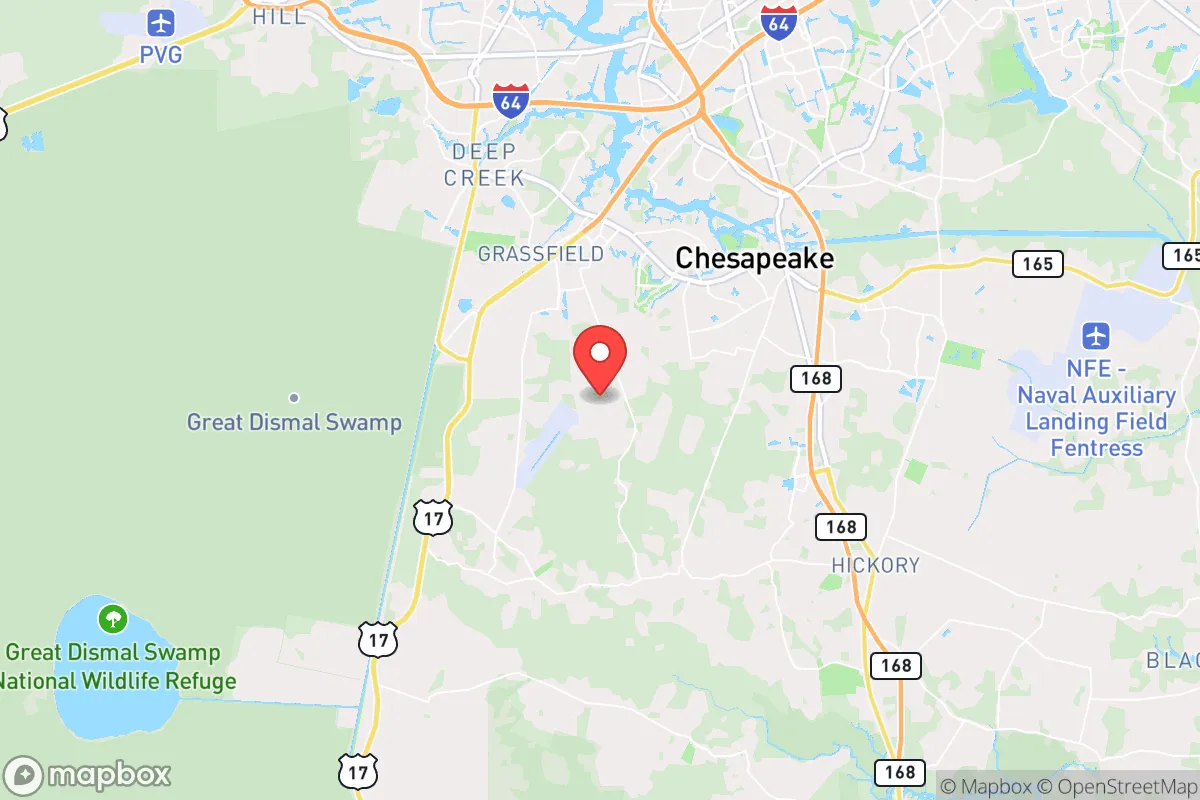
Photo: Wikipedia
Political ClimatePolitical Climate in Chesapeake, VA
District shown is the primary district for this city’s centroid. Cities may span multiple districts.
Local Political AnalysisPolitical Analysis of Chesapeake, VA
Chesapeake, Virginia, has long been a quiet stronghold of conservative values in the otherwise shifting Hampton Roads region, and its Cook Partisan Voting Index of EVEN reflects a community that is genuinely up for grabs—but still leans right in practice. For years, the city was reliably red, with local elections and federal races consistently favoring candidates who prioritize limited government, lower taxes, and Second Amendment rights. However, recent trends show a slow but steady creep of progressive influence, driven largely by an influx of residents from more liberal areas like Norfolk and Virginia Beach, as well as younger families moving into new developments near the Greenbrier area. While Chesapeake hasn't flipped blue yet, the margin of victory for conservative candidates has narrowed in the last two cycles, and that's something folks who value personal freedom should keep a close eye on.
How it compares
Compared to its neighbors, Chesapeake is the last bastion of common-sense governance in a region that's increasingly leaning left. Norfolk, just to the north, is a deep-blue city dominated by government workers and a young, transient population that votes overwhelmingly for progressive policies. Virginia Beach, while historically more conservative, has seen its own shift toward the center, especially in its tourist-heavy oceanfront districts. Suffolk, to the west, is more rural and still reliably red, but it lacks Chesapeake's population density and economic influence. The real contrast is with Portsmouth and Hampton, both of which have become poster children for high taxes, overregulation, and soft-on-crime policies that have driven businesses and families out. Chesapeake remains the place where a person can still buy a home on an acre of land, keep a firearm without a dozen permits, and not have the city council dictate how to run their own household—but that stability is under pressure as progressive activists push for zoning changes, higher density housing, and more government oversight in local schools.
What this means for residents
For the average Chesapeake resident, the political climate directly affects daily life in ways that are easy to take for granted—until they start to slip. Property taxes here are still reasonable compared to Norfolk or Virginia Beach, but there's been a steady push from the city council to raise them to fund "equity initiatives" and expanded public transit, which many locals see as a foot in the door for bigger government. The school board, once a model of parental control and local decision-making, has faced increasing pressure from state-level mandates and activist groups pushing critical race theory and gender ideology into classrooms. If you value the freedom to raise your kids without government interference, or the right to run a small business without endless red tape, Chesapeake is still a good bet—but it's no longer a sure thing. The next few election cycles will be critical, and if the progressive wave that's washed over Norfolk and Richmond reaches Chesapeake's city hall, you can expect higher taxes, more regulations on property use, and a general erosion of the personal liberties that made this area a great place to live.
One cultural distinction that sets Chesapeake apart is its strong sense of local identity and resistance to being lumped in with the rest of Hampton Roads. There's a palpable pride among long-time residents in the city's rural roots—many still own horses, hunt on private land, or keep vegetable gardens—and this translates into a political culture that values self-reliance over government programs. You won't find the same enthusiasm for bike lanes, light rail, or "affordable housing" mandates here that you see in Norfolk or Richmond. Instead, the local conversation tends to focus on keeping taxes low, protecting property rights, and ensuring that the police have the resources they need to keep crime in check. That said, the city's rapid growth—new subdivisions and shopping centers are popping up everywhere—is bringing in people who don't share those values, and the political balance is shifting. If you're considering a move to Chesapeake, know that you're buying into a community that's fighting to hold the line against progressive overreach, but that fight is getting harder every year.

State Political ClimatePolitical Climate in Virginia
State Political AnalysisPolitical Environment in the State
Virginia has shifted from a reliably purple swing state to a solidly blue one over the past 15 years, driven largely by explosive growth in the Washington D.C. suburbs. The state’s political center of gravity has moved decisively north and east, with the rural south and west becoming increasingly isolated in their conservative lean. For a conservative considering relocation, the key takeaway is that Virginia is no longer the competitive, common-sense state it was a decade ago—it’s now a one-party-dominated commonwealth where your vote in most races is effectively predetermined by where you live.
Urban vs. rural divide
The political map of Virginia is a tale of two commonwealths. The urban crescent—Northern Virginia (Fairfax, Loudoun, Prince William counties), Richmond, and Hampton Roads (Virginia Beach, Norfolk)—drives Democratic majorities. Fairfax County alone, with over 1.1 million residents, delivers more Democratic votes than the entire southwestern corner of the state combined. Loudoun County, once a conservative stronghold, flipped blue in the 2010s and now votes Democratic by double digits. Meanwhile, rural and exurban areas like Roanoke, Lynchburg, Fredericksburg (though its suburbs are trending left), and the Shenandoah Valley remain reliably Republican. The Richmond suburbs like Chesterfield and Hanover are still red-leaning but are slowly shifting as more D.C. transplants move south. The divide is stark: drive 30 minutes west of any major city, and you’ll find Trump flags and “Don’t Tread on Me” plates; drive 30 minutes east, and you’ll see Harris-Walz yard signs and electric vehicle charging stations.
Policy environment
Virginia’s policy environment has become increasingly progressive since Democrats took full control of the governorship and legislature in 2019. The state’s income tax is a flat 5.75%, which is moderate, but property taxes vary wildly—Loudoun County has some of the highest in the state, while Pittsylvania County in the south is much lower. The regulatory posture is business-friendly on paper, but the Virginia Clean Economy Act (2020) mandates a 100% carbon-free grid by 2050, which has driven up electricity costs and pushed out traditional energy jobs. Education policy is a flashpoint: the state eliminated public charter school caps in 2021, but actual charter growth has been slow due to local resistance. The 2020 “Virginia Values Act” expanded non-discrimination protections to include sexual orientation and gender identity, which conservatives argue has led to conflicts over parental rights and bathroom policies in schools. Election laws have tightened in some ways—voter ID is still required—but the state expanded no-excuse absentee voting and same-day registration, which critics say weakens ballot integrity. Healthcare is dominated by Medicaid expansion (2019), which added 400,000 enrollees but also increased state spending. For a conservative, the policy environment feels like a slow but steady drift toward California-style governance, especially in the northern suburbs.
Trajectory & freedom
Virginia’s trajectory on personal freedom is concerning for conservatives. The 2020 gun control package—passed after the 2019 Democratic sweep—included universal background checks, a “red flag” law, a one-handgun-per-month limit, and a ban on assault weapons (later struck down by a court but still symbolic). The 2021 repeal of the “right-to-work” law for public employees was a major blow to labor freedom, though private-sector right-to-work remains. On medical freedom, the state mandated COVID-19 vaccines for state employees in 2021, and while that mandate has since been rescinded, the precedent remains. Parental rights took a hit with the 2020 “LGBTQ-inclusive” curriculum mandates in public schools, which require teaching about sexual orientation and gender identity from kindergarten—a policy that sparked massive backlash in places like Loudoun County, where parents protested school board meetings for months. Property rights are under pressure from the Virginia Housing Commission’s push for “missing middle” zoning reforms, which would override local single-family zoning in favor of duplexes and townhouses. The state’s tax burden is moderate but rising: the gas tax was increased in 2020, and there’s talk of a mileage-based user fee. On the positive side, Virginia still has no state-level rent control, and the 2022 “Second Amendment Sanctuary” movement saw over 100 counties pass resolutions vowing not to enforce new gun laws—though these are symbolic and unenforceable. Overall, the trend is toward more government control, not less.
Civil unrest & political movements
Virginia has been a national flashpoint for political violence and activism. The 2017 “Unite the Right” rally in Charlottesville—which left one counter-protester dead—still casts a long shadow over the state’s reputation. More recently, the 2020-2021 school board wars in Loudoun County saw parents arrested, protests outside school buildings, and a national spotlight on critical race theory and transgender policies. The 2021 gubernatorial race between Glenn Youngkin and Terry McAuliffe was essentially a referendum on parental rights, with Youngkin winning by tapping into suburban anger over school closures and curriculum. Immigration politics are less visible than in border states, but Fairfax County is a self-declared “sanctuary” jurisdiction, and the state has a “driver’s license for all” law (2020) that allows undocumented immigrants to obtain licenses. Election integrity remains a hot topic: the 2020 election saw record mail-in voting, and while no widespread fraud was proven, the 2021 audit of the 2020 election found minor discrepancies that fueled ongoing distrust. The “Virginia Freedom Caucus” in the state legislature has been a vocal minority, pushing for election audits and parental rights bills, but they’ve been largely powerless since Democrats control both chambers. For a new resident, the most visible sign of political tension is the sheer number of political signs and flags—especially in exurban areas like Spotsylvania County, where “Fight for Freedom” rallies are common.
Projection
Over the next 5-10 years, Virginia will likely become more Democratic, not less. The Northern Virginia growth corridor is adding 50,000+ new residents annually, most of whom are young professionals and government contractors who lean left. The Richmond suburbs are slowly turning blue as D.C. transplants move south. Rural areas will continue to shrink and age, losing political clout. The 2024 election saw Virginia vote for Kamala Harris by about 5 points, and that margin is expected to grow. The 2025 gubernatorial race will be a test: if a Republican can’t win in a non-presidential year, the state is effectively lost for the GOP. On policy, expect more gun control, more zoning overrides, and more progressive education mandates. The “right-to-work” repeal for private-sector workers is a real possibility if Democrats ever get a supermajority. The carbon-free grid mandate will continue to raise energy costs. For a conservative moving in now, the realistic expectation is that you’ll be living in a state where your vote in statewide races won’t matter, but local elections—especially in exurban counties like Hanover or Augusta—will still be competitive. The best bet for a conservative is to buy in a red-leaning exurb or rural county, where you can at least control your local school board and zoning.
For a conservative considering relocation, Virginia offers a mixed bag: low taxes compared to the Northeast, beautiful geography, and strong job markets in defense and tech—but at the cost of living in a state that is increasingly hostile to traditional values and personal freedoms. If you’re moving here, pick your county carefully. The difference between living in Loudoun County and Bedford County is the difference between living in a progressive suburb and a redoubt of rural liberty. The state as a whole is trending blue, but the red pockets are still worth fighting for—if you’re willing to drive a little farther to the grocery store.
* Values derived from national, state, county, city and local statistics and may differ in a specific area. Last updated: 2026-05-01T18:30:05.000Z
Narrative content on this page is AI-generated and may contain mistakes. Verify any details that matter before acting on them.
ReloMaps may earn a commission from affiliate links at no extra cost to you.

