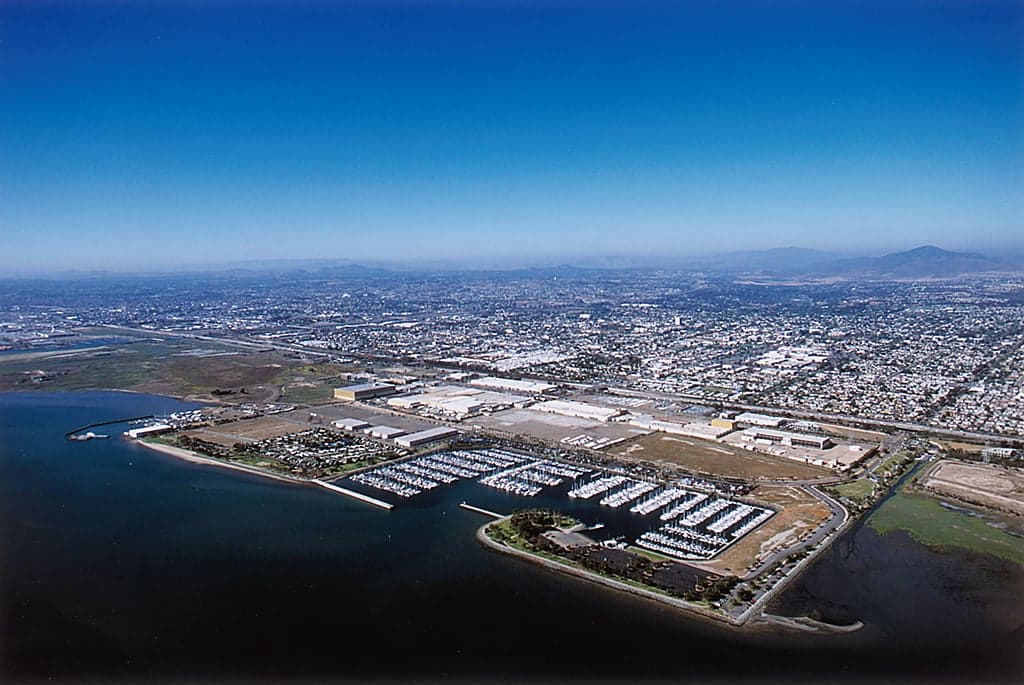
Photo: Wikipedia
Political ClimatePolitical Climate in Chula Vista, CA
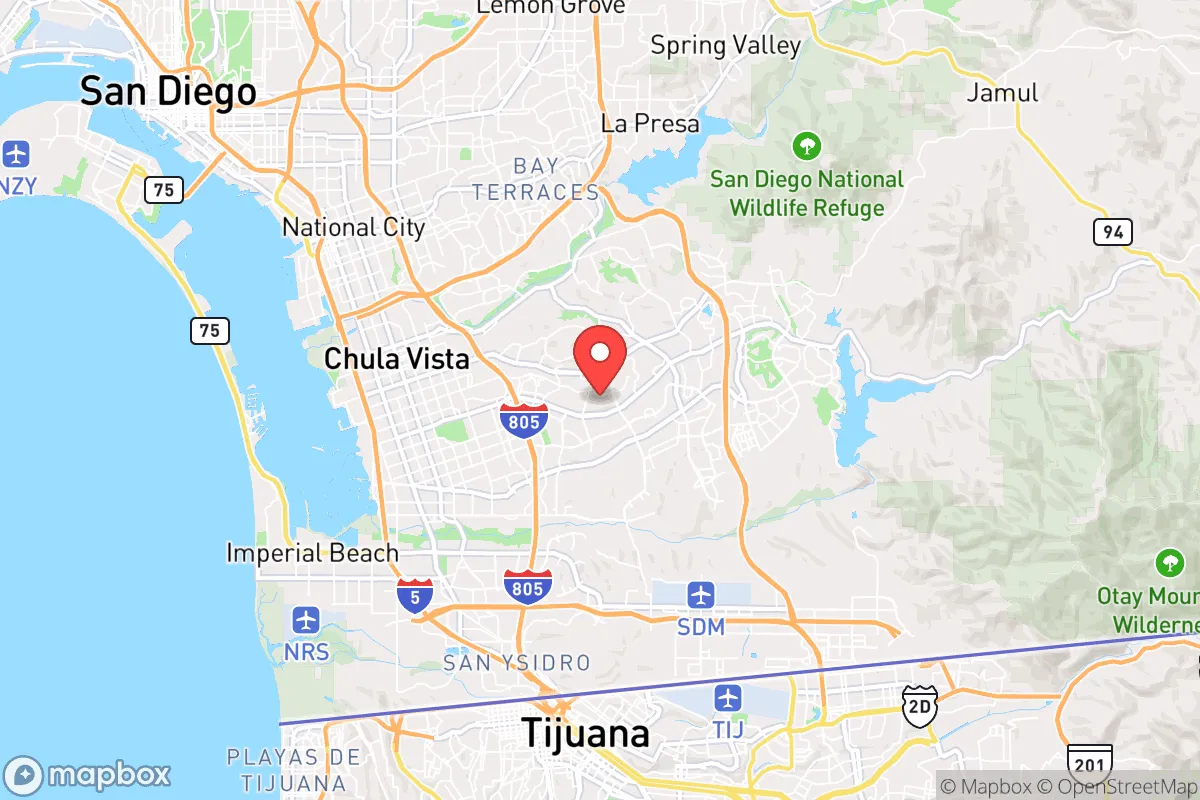
District shown is the primary district for this city’s centroid. Cities may span multiple districts.
Local Political AnalysisPolitical Analysis of Chula Vista, CA
Look, I’ve lived in Chula Vista my whole life, and I’ve watched this city shift from a solidly moderate, family-first community into a place that’s now firmly in the progressive column. The Cook PVI of D+13 tells you everything you need to know: Chula Vista leans heavily Democratic, and that lean has gotten sharper over the last decade. It wasn’t always this way—back in the 90s and early 2000s, you’d see a real mix of conservative and moderate voices on the city council. Now? The local government is almost uniformly progressive, and the policy agenda reflects it.
How it compares
If you drive just 15 minutes east to Eastlake or Otay Ranch, you’ll still find some conservative-leaning pockets—especially among the older homeowners and small business owners who remember when property taxes were lower and regulations were lighter. But compare Chula Vista to its neighbors: San Diego to the north is even more liberal (D+20+), while National City to the west is also deep blue. The real contrast is with places like Santee or Escondido, which are more purple-to-red. Chula Vista used to be the moderate middle ground between San Diego’s urban liberalism and the inland conservative towns. That’s gone. Now, the city council and school board are dominated by progressive voices who push policies like sanctuary city protections, higher minimum wages, and aggressive climate mandates—things that sound good on paper but often mean more bureaucracy and less personal freedom for residents.
What this means for residents
For a conservative or even a moderate, living here means you’re constantly dealing with government overreach into your daily life. Want to start a small business? You’ll face layers of permitting, fees, and labor regulations that make it harder to compete. Want to send your kid to a school that focuses on basics instead of social activism? Good luck—the school board has leaned hard into equity initiatives and critical theory, often at the expense of reading and math scores. Property taxes are high, and the city keeps finding new ways to tax you—like the recent push for a sales tax increase to fund “climate action” programs. And don’t get me started on the housing crisis: the city’s response has been to fast-track high-density developments that change the character of neighborhoods, while ignoring the concerns of existing homeowners about traffic, parking, and crime.
On the cultural side, Chula Vista still has a strong sense of community—especially among the long-time Mexican-American families who’ve been here for generations. But the new wave of activism is pushing a more divisive, identity-focused politics that I think is eroding that unity. You see it in the local elections: candidates who talk about “equity” and “inclusion” but rarely mention fiscal responsibility or public safety. The police department has been defunded in spirit if not in name, and property crime has ticked up as a result. If you value personal responsibility, limited government, and the freedom to live your life without a city council member telling you how to heat your home or what kind of car to drive, Chula Vista is becoming a harder place to call home. I still love the weather and the proximity to the bay, but I’m watching the direction we’re heading, and it’s not one I’m comfortable with.

State Political ClimatePolitical Climate in California
State Political AnalysisPolitical Environment in the State
California is a one-party Democratic state where Republicans haven’t won a statewide election since 2006, and the legislature’s supermajority has been in place since 2017. The dominant coalition is a mix of coastal progressives, Silicon Valley tech donors, and union-heavy public sector workers, with a growing Latino electorate that leans left but is less uniformly progressive than the party’s activist base. Over the last 20 years, the state has shifted from a competitive purple state—where Arnold Schwarzenegger governed as a moderate Republican—to a deep blue stronghold, driven by massive in-migration from abroad and out-migration of conservative-leaning residents to Texas, Idaho, and Arizona.
Urban vs. rural divide
The political map is a stark coastal-versus-interior split. The Bay Area—San Francisco, Oakland, San Jose—and Los Angeles County are the Democratic engine rooms, delivering 60-70% margins that swamp the rest of the state. San Diego and Sacramento are reliably blue but less extreme. The Central Valley, anchored by Bakersfield and Fresno, is a Republican stronghold where agriculture and oil interests dominate, but its population is too small to offset the coast. The Inland Empire—Riverside and San Bernardino—is a battleground that has shifted left in recent cycles as suburban moderates and younger voters move in. Rural counties like Shasta (Redding) and Modoc vote 70%+ Republican, but they’re losing population and political clout. The only notable flip in 2024 was Orange County, once a GOP bastion, which is now solidly blue after decades of demographic change and suburban flight from the Democratic coastal cities.
Policy environment
California’s policy environment is the most progressive in the nation, and it’s a heavy burden for anyone who values personal freedom. The state income tax tops out at 13.3%, the highest in the country, and the sales tax can exceed 10% in cities like Los Angeles. Property taxes are capped by Prop 13, but recent ballot measures have chipped away at it, and reassessments on commercial property are on the table. The regulatory posture is hostile to small business: the California Environmental Quality Act (CEQA) is weaponized to block housing and infrastructure, and the state’s energy policies have driven electricity costs to double the national average. Education policy is dominated by the California Teachers Association, with school choice virtually nonexistent—no vouchers, weak charter laws, and a curriculum that emphasizes critical race theory and gender identity. Healthcare is heavily regulated, with a state-run exchange (Covered California) and a push toward single-payer that keeps private insurance costs high. Election laws are the most permissive in the country: universal mail-in voting, same-day registration, and no voter ID requirement, which has led to persistent concerns about ballot harvesting and list maintenance.
Trajectory & freedom
California is becoming less free by almost any measure, and the trend is accelerating. On gun rights, the state has the nation’s strictest laws—an assault weapons ban, a 10-day waiting period, and a “may issue” concealed carry regime that was tightened further by SB 2 in 2023, which effectively bans carry in most public places. Parental rights have been eroded by AB 1955 (2024), which prohibits schools from notifying parents if a child changes their gender identity or pronouns. Medical autonomy took a hit with the state’s COVID-19 mandates, which were among the longest-lasting in the country, and the ongoing push to mandate vaccines for schoolchildren. Property rights are constrained by rent control (AB 1482) and a growing movement to repeal Prop 13’s protections for commercial properties. On speech, the state has criminalized “hate speech” in certain contexts and allows public universities to punish faculty for controversial views. The only area where freedom has expanded is marijuana legalization, but even that is heavily taxed and regulated. The bottom line: if you value the Second Amendment, educational choice, or keeping more of your paycheck, California is moving in the wrong direction.
Civil unrest & political movements
California has a long history of protest and activism, but the last decade has seen an escalation. The 2020 George Floyd protests in Los Angeles and Oakland turned into widespread looting and property destruction, with little accountability. The state’s sanctuary laws (SB 54) limit cooperation with federal immigration enforcement, and cities like San Francisco have seen open-air drug markets and homeless encampments that the state has been unable to address. The secession movement—CalExit—has fizzled, but there is a growing “State of Jefferson” movement in the rural north, where counties like Modoc and Shasta have voted to explore secession from California. Election integrity is a flashpoint: the state’s universal mail-in system, combined with a lack of voter ID, has led to lawsuits over ballot harvesting and non-citizen voting, though the state’s Democratic leadership dismisses these concerns. A new resident will notice the visible homelessness crisis, the constant protests in major cities, and the tension between coastal progressives and interior conservatives that plays out in every election cycle.
Projection
Over the next 5-10 years, California will likely become even more Democratic and more progressive. Demographic trends favor the left: the state’s white population is shrinking, while Latino and Asian populations—which lean Democratic—are growing. In-migration from abroad continues to fuel the coastal cities, while out-migration of conservatives to Texas and Idaho accelerates. The legislature will likely pass a single-payer healthcare bill, further restrict charter schools, and raise taxes on the wealthy. The housing crisis will worsen, driving more middle-class families out. The only wild card is a potential economic downturn that could expose the state’s fiscal fragility—California has a $73 billion budget deficit as of 2025—but even that is unlikely to shift the political trajectory. Someone moving in now should expect to find a state that is less affordable, less free, and more ideologically uniform than it is today.
For a conservative-leaning individual or parent, California is a tough sell. The tax burden is crushing, the schools are ideologically driven, and the regulatory environment stifles opportunity. If you’re set on moving here, target the few remaining red enclaves—Bakersfield, Redding, or parts of San Diego County’s inland suburbs—where you can find like-minded neighbors and lower costs. But be prepared for a state government that is actively hostile to your values, and plan for the possibility that you’ll eventually join the millions who have left for freer states.
* Values derived from national, state, county, city and local statistics and may differ in a specific area. Last updated: 2026-04-24T09:52:18.000Z
Narrative content on this page is AI-generated and may contain mistakes. Verify any details that matter before acting on them.
ReloMaps may earn a commission from affiliate links at no extra cost to you.

