
Photo: Wikipedia
Quality of Life in Cincinnati, OH
Above-average quality of iife. The area offers a reasonable cost of living, decent mobility, and a mix of neighborhood amenities.
What does Quality of Life tell us?
Quality of Life blends cost of living, nearby amenities, socioeconomic signals, and neighborhood character. City-level scores represent the whole municipality; individual neighborhoods can differ.
What does this tell us?
Quality of Life blends cost of living, nearby amenities, socioeconomic signals, and neighborhood character. City-level scores represent the whole municipality; individual neighborhoods can differ.
Cost of Living
20% below national average
The Real Cost of Living in Cincinnati, OH for 2026
| Tier | Individual | Family (4) |
|---|---|---|
| Survival | $15k | $29k |
| Comfortable | $42k | $61k |
| Luxury | $93k+ | $145k+ |
| Elite (Top 5%) | $152k+ | $236k+ |
84%
The Area Signal
A metric tracking the socioeconomic signals of the area.
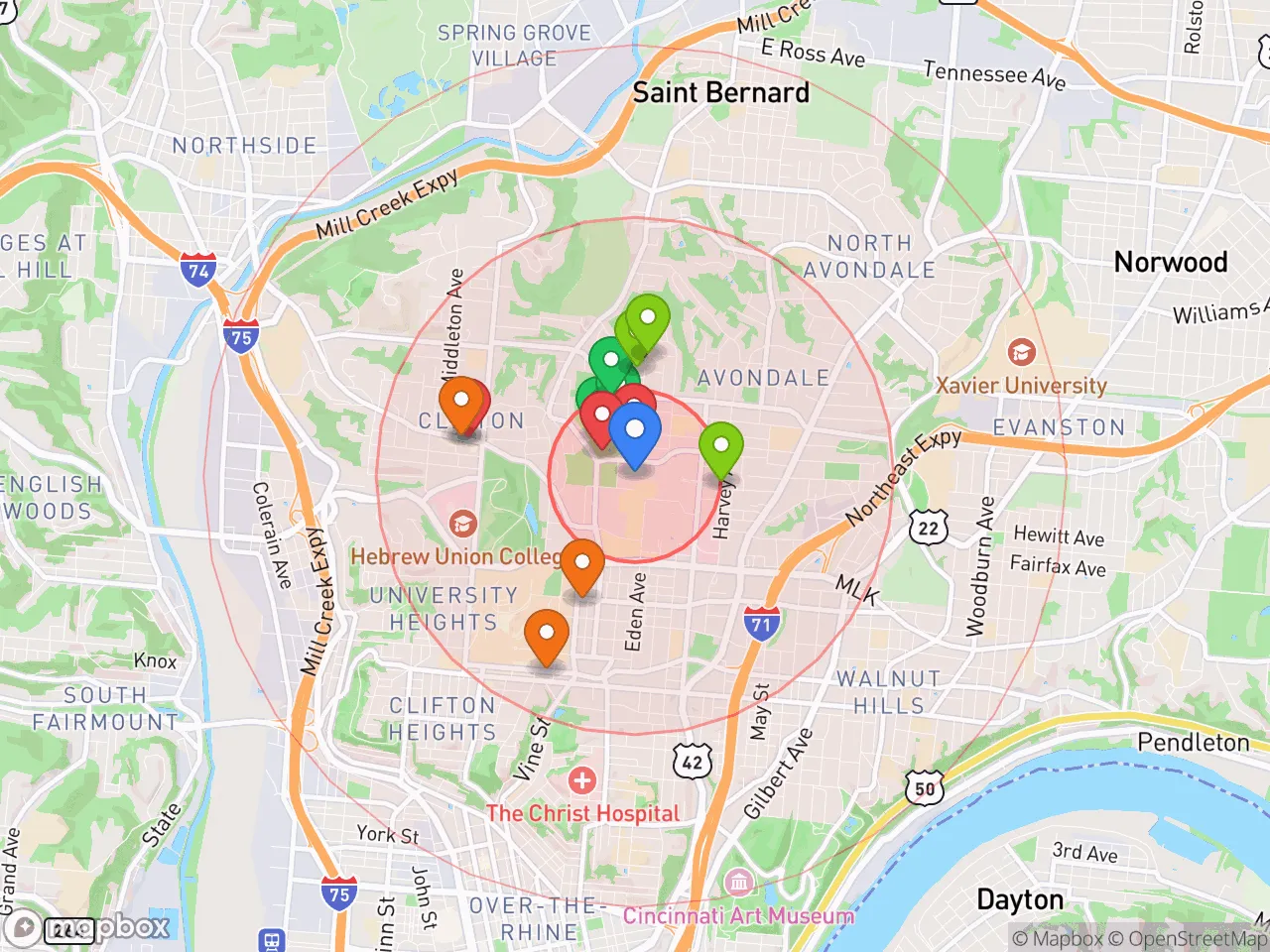
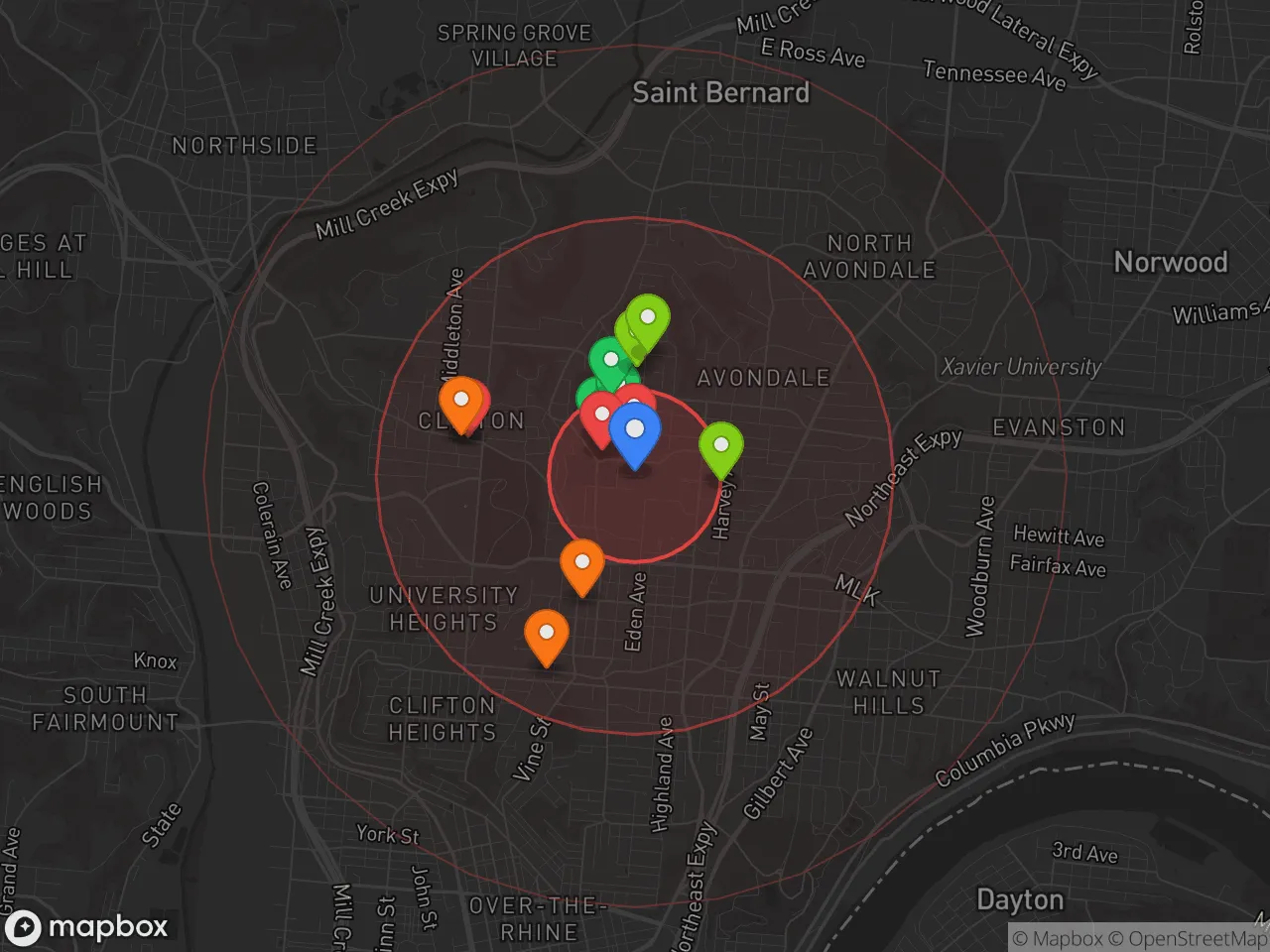
Hobbies
Explore the areaGroceries
6 within 10 miles
Gas
20 within 10 miles
Hospital
20 within 20 miles
Airport
Indianapolis International Airport
Post Office
USPS — Cincinnati, OH
Critical Amenities
Quality-of-Life Analysis
Cincinnati, Ohio, offers a quality of life that blends Midwestern affordability with big-city amenities, attracting a diverse mix of young professionals, families, and empty-nesters. The metro area’s cost of living is significantly below the national average, making it a practical choice for those seeking urban energy without the financial strain of coastal hubs. With a cost-of-living index of 80 (where 100 equals the U.S. average), residents enjoy a notably lower expense burden than in peer cities like Columbus (index 90) or Indianapolis (index 85). The population skews toward a pragmatic, community-oriented demographic, with a strong presence of healthcare and education workers anchored by major employers like Cincinnati Children’s Hospital and the University of Cincinnati.
Cost of living, housing affordability, and how Cincinnati compares to nearby areas
Cincinnati’s housing market is a standout advantage for newcomers. The median home value sits at $215,300, roughly 60% of the national median, while the median rent is $953 per month—well below the U.S. average of $1,400. This affordability is most pronounced when compared to nearby metros: Columbus homes average $280,000, and Lexington, Kentucky, sits at $250,000. The average commute of 23 minutes is shorter than the national average of 26 minutes, meaning residents can live close to job centers in downtown, Over-the-Rhine, or the suburbs without sacrificing time. Property taxes in Hamilton County average 1.8% of home value, slightly above Ohio’s 1.5% average, but still lower than in neighboring Kentucky’s Boone County (2.1%). For renters, the $953 median is a bargain compared to the $1,200 median in Columbus or $1,100 in Louisville, making Cincinnati one of the most affordable major metros in the Midwest for both buyers and renters.
What daily life is like for families, including schools and neighborhood amenities
Daily life in Cincinnati revolves around walkable neighborhoods, a robust park system, and a surprisingly vibrant cultural scene for a city its size. The Cincinnati Public Schools district serves about 36,000 students, with standout magnet programs like Walnut Hills High School (ranked among Ohio’s top 10) and the School for Creative and Performing Arts. For families, the Cincinnati Zoo & Botanical Garden (one of the oldest in the U.S.) and the Cincinnati Museum Center at Union Terminal provide year-round activities. The city’s 5,000-acre park system includes Eden Park, which offers free access to the Cincinnati Art Museum, and Smale Riverfront Park along the Ohio River. Groceries cost about 5% below the national average, and a monthly transit pass on the Metro bus system runs $85. The food scene is anchored by iconic chili parlors like Skyline Chili and a growing craft brewery corridor in Over-the-Rhine, with over 50 breweries in the metro. Commuters benefit from a relatively low traffic congestion index of 1.2 (where 1.0 is free-flowing), making errands and school drop-offs less stressful than in larger cities.
This combination of low costs, short commutes, and rich amenities makes Cincinnati an ideal fit for professionals in healthcare, education, and manufacturing who want a balanced urban lifestyle. Families will appreciate the affordable housing and strong school options, while young renters can access walkable neighborhoods like Northside or Oakley without paying premium rents. Retirees on fixed incomes also thrive here, given the low cost of living and access to world-class medical care at the University of Cincinnati Medical Center. Anyone seeking a city with genuine character, manageable scale, and a lower financial barrier to entry will find Cincinnati a compelling choice.

Crime in Cincinnati, OH
Significantly higher crime rates than 87% of comparable U.S. locations.
Violent CrimeViolent Crime Analysis
Property CrimeProperty Crime Analysis
Crime Analysis
Cincinnati's overall safety picture is defined by crime rates that significantly exceed both Ohio and national averages, a pattern closely tied to the region's large urban dynamics and the progressive prosecutorial policies that have taken hold in Hamilton County. With a violent crime rate of 774.7 per 100,000 residents and a property crime rate of 3,588.8 per 100,000, the city presents a risk profile that demands careful consideration from potential residents. These figures place Cincinnati among the more dangerous large metro areas in the Midwest, a reality shaped by systemic factors including the local justice system's approach to offender rehabilitation over public safety.
Crime in context
Cincinnati's violent crime rate is nearly double the national average of roughly 380 per 100,000 and substantially higher than Ohio's statewide rate of approximately 300 per 100,000. Property crime in the city also runs well above both benchmarks, with the national average hovering around 1,950 per 100,000 and Ohio's average near 1,800 per 100,000. These disparities are not accidental. Hamilton County has seen a sustained shift toward progressive prosecution, with elected officials and judges who prioritize diversion programs and reduced sentencing. While intended to address mass incarceration, this ideological approach has a direct, measurable consequence: more offenders cycling back onto Cincinnati streets, driving up both violent and property crime rates. For readers evaluating relocation, this policy environment is a critical negative factor, as it weakens deterrence and undermines justice for victims.
What residents experience
For those living in Cincinnati, the high crime rates translate into tangible daily concerns. Property crime—including theft, burglary, and motor vehicle theft—is the most common threat, affecting neighborhoods across the city. Violent incidents, while less frequent, are concentrated in specific areas and often involve firearms. Residents report heightened vigilance, with many avoiding certain blocks after dark and investing heavily in home security systems. The progressive justice system's emphasis on offender leniency means that even when arrests are made, repeat offenders frequently return to the same neighborhoods, eroding community trust in public safety institutions. This cycle is particularly frustrating for law-abiding residents who see the same individuals committing crimes with minimal consequences.
Neighborhood-level variation is stark. Areas like Hyde Park, Mount Lookout, and parts of Oakley experience property crime rates closer to the national average, while neighborhoods such as Over-the-Rhine, Avondale, and the West End see violent crime rates that can exceed 1,500 per 100,000. The safest pockets are often in the city's eastern and northern fringes, where single-family homes and stronger community policing offer some buffer. However, no neighborhood is immune to the spillover effects of a justice system that prioritizes offender outcomes over public safety. For anyone considering a move to Cincinnati, a thorough block-by-block analysis and a clear-eyed assessment of the local political climate are essential.
* Values derived from national, state, county, city and local statistics and may differ in a specific area. Last updated: 2026-04-21T22:54:56.000Z
Narrative content on this page is AI-generated and may contain mistakes. Verify any details that matter before acting on them.
ReloMaps may earn a commission from affiliate links at no extra cost to you.

