 Popular
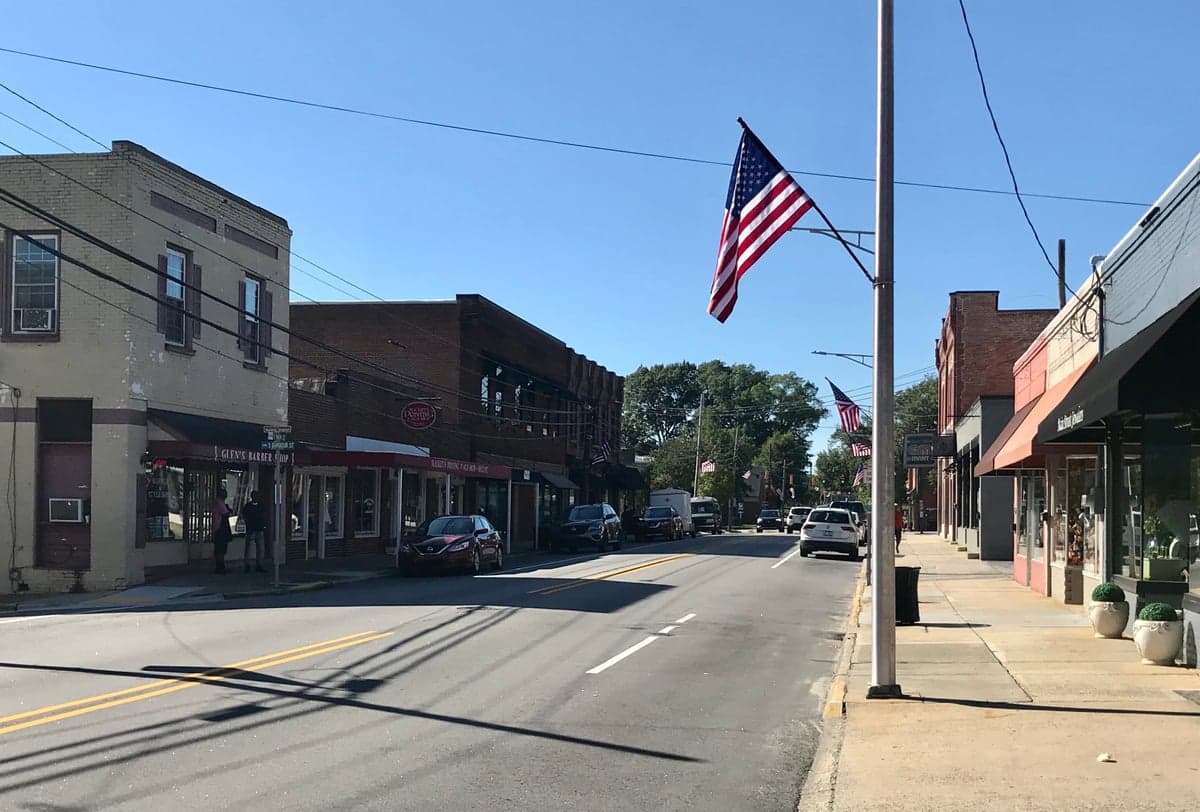
Photo: Wikipedia
Personal Sovereignty in Clayton, NC
Viable for self-reliance. Generally workable, though some barriers may limit total independence.
What does Personal Sovereignty tell us?
Personal Sovereignty measures your capacity for self-reliance and independence with minimal government friction. Higher scores mean fewer barriers between you and the way you want to live... but it assumes you have the space you need and good neighbors.
What does this tell us?
Personal Sovereignty measures your capacity for self-reliance and independence with minimal government friction. Higher scores mean fewer barriers between you and the way you want to live... but it assumes you have the space you need and good neighbors.
State Policy
Energy independence: Importer (15% of energy produced in-state)
Personal Liberty
Homesteading

Personal Liberty Analysis
Clayton, North Carolina, offers a notably high degree of personal sovereignty relative to many parts of the country, particularly for those who prioritize minimal government interference in daily life. Located in Johnston County, a historically conservative stronghold, the town benefits from a state-level legal framework that strongly favors individual rights, including the Second Amendment, parental authority, and property freedom. For a survivalist or prepper mindset, Clayton represents a strategic balance: it is close enough to the Raleigh-Durham metroplex for economic opportunity, yet far enough to avoid the heavy regulatory and cultural overreach common in urban centers. The local culture and governance lean toward self-reliance, making it a viable base for those who view government expansion as a threat to personal autonomy.
Tax burden and regulatory posture: How Clayton compares to surrounding areas
North Carolina’s tax structure is among the most favorable in the Southeast for individuals seeking to retain more of their earnings. The state has a flat income tax rate of 4.75% as of 2026, with ongoing legislative efforts to reduce it further. Johnston County adds a property tax rate of approximately $0.75 per $100 of assessed value, which is lower than Wake County’s rate just to the north. This means Clayton residents pay significantly less in property taxes than those in Raleigh or Cary, while still accessing county services. Sales tax in Johnston County is 7%, slightly above the state minimum, but the absence of municipal income taxes or onerous business license fees keeps the overall burden manageable. Regulatory posture is equally restrained: Johnston County has resisted adopting many of the zoning and environmental mandates seen in more progressive counties. There are no county-wide plastic bag bans, no strict energy codes for existing homes, and building permit processes are streamlined. For a prepper, this means fewer bureaucratic hurdles when constructing a workshop, installing a backup generator, or adding a rainwater catchment system. The state’s right-to-work laws and lack of prevailing wage requirements for private construction further reduce government-imposed costs on self-reliant projects.
Self-defense and gun law specifics: What the Second Amendment looks like in Clayton
North Carolina is a shall-issue state for concealed carry permits, meaning that if you meet basic criteria—no felony record, no involuntary commitment, completion of a safety course—the sheriff must issue the permit. Johnston County’s sheriff’s office is known for efficient processing, typically turning around permits within the statutory 45-day window. Open carry of handguns is legal without a permit for anyone who can legally possess a firearm, though local practice favors concealed carry for discretion. Stand-your-ground laws are fully in effect: there is no duty to retreat in any place where you have a lawful right to be, including your vehicle. Castle doctrine protections extend to your home, workplace, and occupied vehicle. Importantly, North Carolina preempts local firearm ordinances, so Clayton cannot enact its own bans on magazine capacity, specific weapon types, or carry in parks—a critical safeguard against the patchwork of restrictions seen in states like California or New York. For preppers, this means you can stockpile ammunition, own AR-15s, and keep a firearm in your vehicle without fear of local overreach. The state also has a robust firearm industry, with multiple gun shows within an hour’s drive and a strong network of private sellers. One caveat: North Carolina does require a pistol purchase permit from the sheriff for handgun transfers from private parties, though this is a relatively minor hurdle compared to universal background check systems elsewhere.
Self-reliance and homesteading viability: Lot sizes, zoning, and off-grid feasibility
Clayton’s zoning code is a mixed bag but generally favorable for those seeking a self-sufficient lifestyle. Within the town limits, standard residential lots are typically one-third to one-half acre, which allows for substantial vegetable gardens, small chicken coops, and even a goat or two with a permit. However, the real opportunity lies in the unincorporated areas of Johnston County surrounding Clayton, where minimum lot sizes are often one to three acres. Here, you can keep livestock, install solar panels, drill a well, and set up a septic system without the restrictive covenants found in suburban subdivisions. The county’s zoning ordinance explicitly permits “agricultural uses” on parcels of two acres or more, including beekeeping, orchards, and small-scale animal husbandry. Off-grid feasibility is moderate: North Carolina law does not require grid connection for new homes, but you must meet state building codes for structural safety and septic systems. Rainwater collection is legal for outdoor use, and many rural properties already have wells. Solar panel installation is straightforward, with no county-level permitting hurdles beyond standard electrical inspections. The main limitation is that Johnston County does not have a formal “homestead exemption” for property taxes beyond the standard $25,000 deduction, so your tax bill will reflect improvements like a solar array or workshop. Still, compared to states that ban rainwater harvesting or require grid-tied solar, Clayton offers a permissive environment for building a resilient homestead.
Personal liberties: Parental rights, medical autonomy, speech, and property
North Carolina has been a battleground for parental rights, and the current legal landscape is strongly protective. The state’s Parents’ Bill of Rights, enacted in 2023, guarantees that parents have the primary authority over their children’s education, healthcare, and moral upbringing. This means no school can hide a child’s medical records or gender-related decisions from parents, and parents can opt their children out of any curriculum they find objectionable. Johnston County Schools have been proactive in implementing these protections, with transparent policies on library materials and sex education. Medical autonomy is more nuanced: North Carolina has not expanded Medicaid under the ACA, which limits options for low-income individuals, but for those with private insurance or cash-pay arrangements, there are few restrictions on alternative treatments. The state does not have a vaccine mandate for adults, and COVID-era mandates have been repealed. Freedom of speech is robust, with no hate speech laws that could be weaponized against political dissent. Property rights are protected by North Carolina’s “private property rights” statutes, which require governments to prove a compelling public interest before taking land via eminent domain. Johnston County has not abused this power, and most development is market-driven rather than government-planned. For those concerned about government overreach, the combination of strong parental rights, limited medical mandates, and firm property protections makes Clayton a sanctuary of personal liberty compared to states like Oregon or New York.
In the broader context of American personal sovereignty, Clayton, NC, ranks well above average. It offers the legal framework of a red state—gun rights, tax restraint, parental control—without the extreme isolation of rural Montana or the high cost of Texas suburbs. The town’s proximity to Raleigh provides economic resilience and access to medical infrastructure, while Johnston County’s rural character preserves the ability to live off-grid or semi-self-sufficiently. For a survivalist or prepper evaluating relocation, Clayton represents a pragmatic middle ground: enough freedom to build a resilient life, enough community to avoid total isolation, and a government that largely stays out of your way. It is not a libertarian utopia—there are still building codes, property taxes, and a pistol purchase permit requirement—but it is a place where an individual can exercise genuine autonomy without constant friction from the state.

* Values derived from national, state, county, city and local statistics and may differ in a specific area. Last updated: 2026-05-03T20:26:20.000Z
Narrative content on this page is AI-generated and may contain mistakes. Verify any details that matter before acting on them.
ReloMaps may earn a commission from affiliate links at no extra cost to you.

