 Popular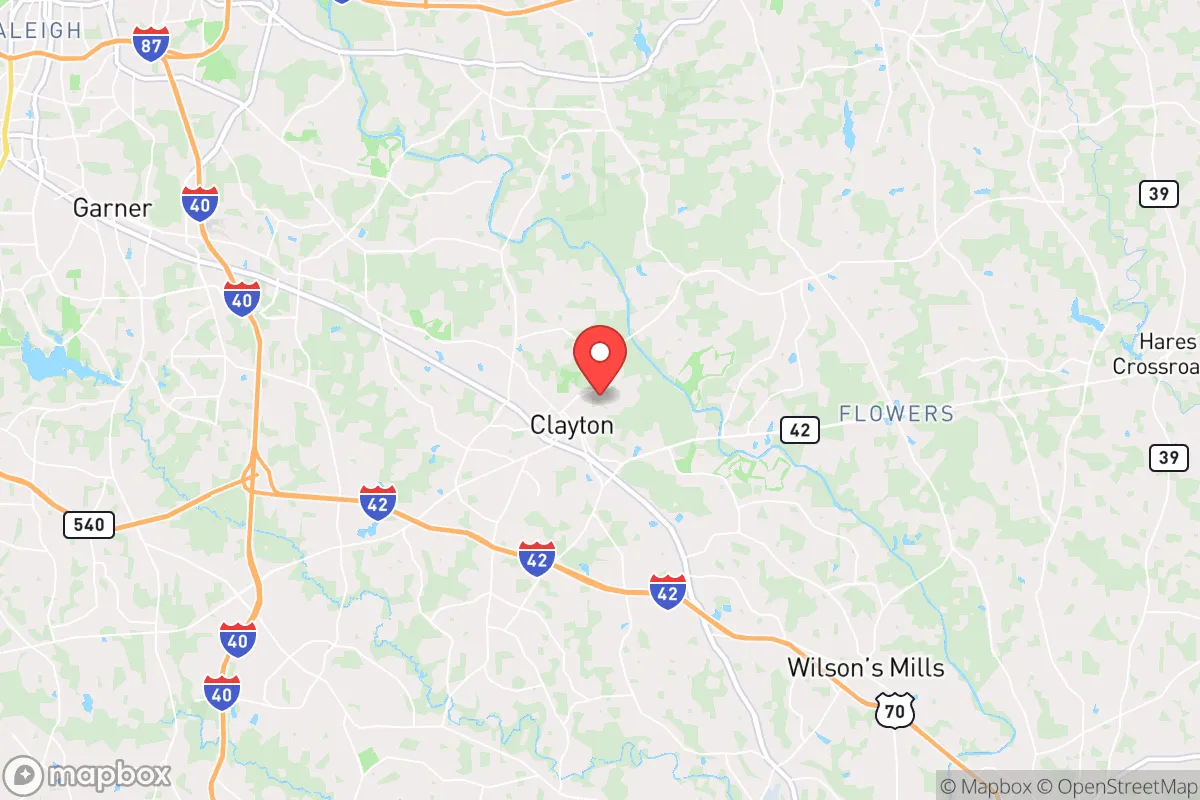
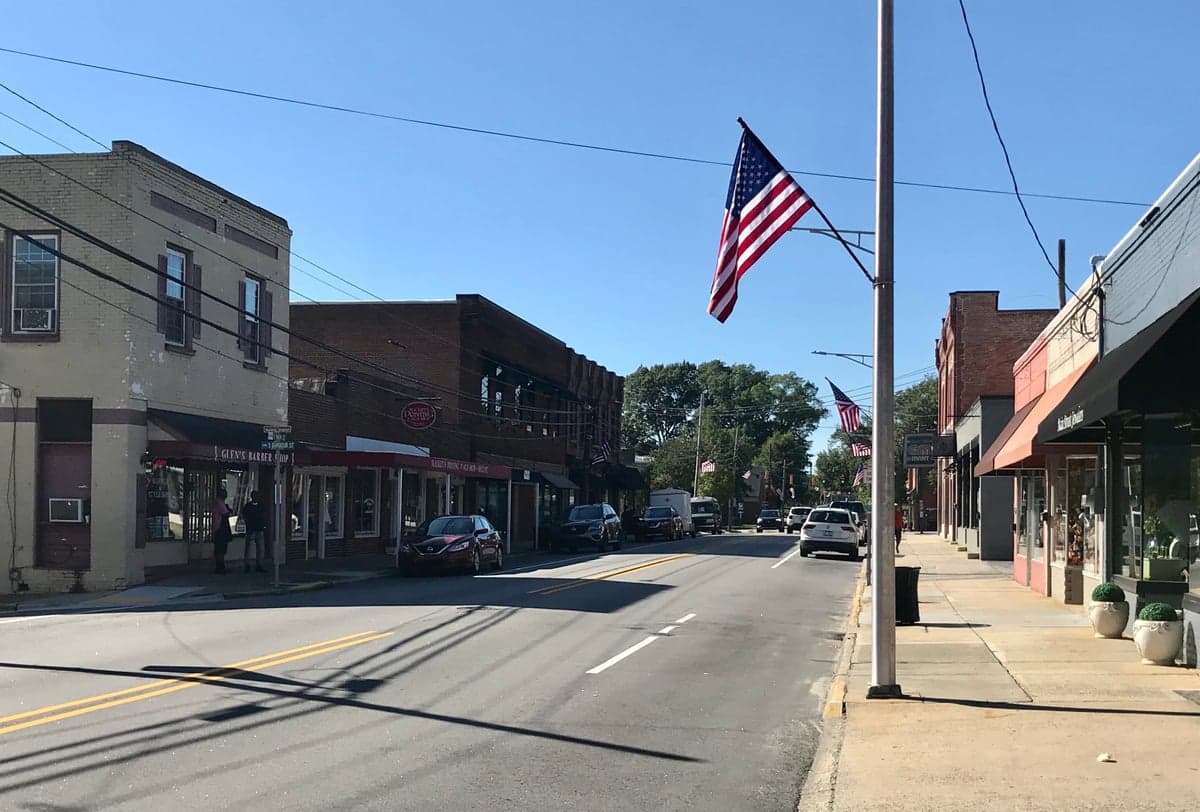
Photo: Wikipedia
Political ClimatePolitical Climate in Clayton, NC
District shown is the primary district for this city’s centroid. Cities may span multiple districts.
Local Political AnalysisPolitical Analysis of Clayton, NC
Clayton, North Carolina, has long been a reliably conservative community, and that hasn't changed much at its core, even as the area grows. The Cook Partisan Voting Index (PVI) of R+8 tells you the real story: this is a solidly Republican town, where folks tend to vote for lower taxes, fewer regulations, and a government that stays out of your personal business. You can feel it in the local elections and the general vibe—people here value their Second Amendment rights and don't take kindly to being told how to live their lives. That said, the rapid growth from the Raleigh-Durham metro area is bringing in new folks, and you can see the political winds starting to shift, though it's still a long way from turning blue.
How it compares
If you drive 15 minutes west to Garner, you'll find a similar conservative streak, but it's a bit more moderate, with a growing number of transplants who lean left. Head north to Raleigh, and you're in a completely different world—a deep blue city where progressive policies on everything from zoning to policing are the norm. The contrast is stark. In Clayton, you still see "Don't Tread on Me" flags and local candidates running on platforms of fiscal responsibility and personal liberty. The surrounding Johnston County is even more conservative than Clayton itself, with a PVI that's even redder, so the rural areas act as a buffer against the progressive tide coming out of Wake County. It's a real reminder that where you live in this region determines a lot about how much government you have to deal with.
What this means for residents
For those of us who've been here a while, the political climate means a lighter touch from local government. Property taxes are lower than in Raleigh, and you don't see the same kind of overreach on things like business regulations or land use. The town council has historically been conservative, keeping new development in check and resisting pressure to adopt the kind of progressive social policies that are popping up in bigger cities. That's a big deal if you're worried about government overreach into your family's life—things like school curriculum battles or mask mandates. The local schools, while growing, still reflect the community's values, and there's a strong sense that parents, not bureaucrats, should have the final say. The concern now is that as more people move in from blue areas, they bring their voting habits with them, and we could see a slow erosion of those freedoms.
One thing that sets Clayton apart culturally is its strong sense of local identity and a resistance to being swallowed up by the Raleigh sprawl. You won't find the same kind of "progressive" cultural events or activist groups that dominate in the city. Instead, you get a community that still rallies around the high school football team, the local VFW, and the annual Clayton Harvest Festival. There's a real wariness of any policy that feels like it's coming from the outside—whether that's state-level gun control or federal environmental mandates. The long-term trajectory is uncertain, but for now, Clayton remains a place where you can live your life without a lot of interference, and that's exactly how most folks here want it to stay. If you're looking for a place that still values individual rights over collective agendas, this is still one of the better bets in the Triangle area.

State Political ClimatePolitical Climate in North Carolina
State Political AnalysisPolitical Environment in the State
North Carolina is a classic purple state that has been trending rightward in key metrics, but it remains a fierce battleground where the outcome of any statewide election is usually within a point or two. Over the last 10-20 years, the state has shifted from a reliably conservative stronghold (voting for Bush in 2004, Romney in 2012) to a state that Trump won by just 1.3 points in 2020 and 3.2 points in 2024. The dominant coalition is a mix of rural and small-town conservatives in the Piedmont and Coastal Plain, plus a growing suburban conservative base in exurbs like Union County and Johnston County, offset by explosive growth in the liberal-leaning Research Triangle (Raleigh-Durham-Chapel Hill) and the increasingly blue Mecklenburg County (Charlotte). The state legislature, however, remains firmly under Republican supermajority control, which has been the primary driver of policy for the last decade.
Urban vs. rural divide
The political map of North Carolina is a textbook case of the urban-rural split. The three major metros—Charlotte, the Raleigh-Durham-Chapel Hill triangle, and Greensboro-Winston-Salem—are all Democratic-leaning, with the Triangle being the most liberal. Wake County (Raleigh) voted for Biden by 30 points in 2020, and Mecklenburg County (Charlotte) by 38 points. These metros are growing fast, driven by tech, finance, and university jobs, and they are pulling the state leftward. In contrast, the rural east—places like Robeson County, Duplin County, and the northeastern coastal counties—vote heavily Republican, as do the rural western mountains. The real story is the exurban counties that have flipped from blue to red: Union County (southeast of Charlotte) went from 55% Bush in 2004 to 68% Trump in 2020. Johnston County (southeast of Raleigh) went from 62% Bush to 72% Trump. These are the fast-growing, family-oriented suburbs where conservative values are thriving, and they are the reason the state hasn't flipped fully blue despite massive urban growth.
Policy environment
North Carolina’s policy environment is a mixed bag, but the state legislature has been a bulwark against the worst progressive overreach. The state has a flat income tax rate of 4.5% (down from 7% in 2013), and the legislature is working toward eliminating it entirely. Corporate income tax is 2.5%, one of the lowest in the South. There is no state property tax—that’s handled at the county level, which keeps local control strong. On education, the state has a robust school choice program: the Opportunity Scholarship Program provides vouchers for low- and middle-income families to attend private schools, and the program was expanded in 2023 to be nearly universal. This is a huge win for parental rights. On healthcare, the state finally expanded Medicaid in 2023 under a Republican-backed compromise, which was controversial among conservatives but was paired with certificate-of-need reform and other market-based measures. Election laws have been tightened: voter ID is now required (passed in 2018, implemented in 2023), and the state has moved to a nine-day early voting window with same-day registration. The legislature also passed a 12-week abortion ban in 2023, overriding the governor’s veto, which was a major victory for pro-life advocates.
Trajectory & freedom
On the freedom front, North Carolina has been a net positive over the last five years, but there are warning signs. The biggest win for personal liberty was the 2023 expansion of gun rights: the legislature passed a law eliminating the requirement for a permit to purchase a handgun (permitless carry), and also removed the requirement for a concealed carry permit for most adults. This was a direct response to federal overreach and a clear statement that the state respects the Second Amendment. On parental rights, the 2023 "Parents' Bill of Rights" (HB 755) requires schools to notify parents of any changes in a child’s health or well-being, and prohibits instruction on gender identity and sexuality in K-4 classrooms. This is a strong step against the woke indoctrination that has infected other states. However, there are concerning trends: the state’s medical autonomy was dealt a blow when the legislature, under pressure from the governor, allowed the expansion of Medicaid, which many conservatives see as a step toward government-run healthcare. Property rights have been under threat from the state’s aggressive use of eminent domain for highway projects and the Mountain Valley Pipeline, though the latter was a federal project. The biggest freedom concern is the state’s slow but steady urbanization: as the Triangle and Charlotte grow, they bring with them the progressive politics of their transplants, which could erode the state’s conservative character over time.
Civil unrest & political movements
North Carolina has seen its share of political flashpoints, but nothing on the scale of Portland or Seattle. The 2020 Black Lives Matter protests in Raleigh and Charlotte were large but mostly peaceful, with some property damage and curfews. The state has a strong, organized conservative movement: the John Locke Foundation and the Civitas Institute are influential think tanks that shape policy, and grassroots groups like the North Carolina Republican Party and the NC Values Coalition are active on social issues. Immigration politics are relatively quiet compared to border states, but there is tension: Charlotte and Durham have declared themselves "sanctuary cities" (though state law prohibits them from fully refusing cooperation with ICE), and the legislature has passed laws requiring sheriffs to honor ICE detainers. Election integrity has been a major issue since 2020: the state’s 2020 election was heavily scrutinized, and while no widespread fraud was found, the legislature passed the voter ID law and tightened absentee ballot rules. There was a notable controversy in the 9th Congressional District in 2018 (ballot fraud in Bladen County), which led to a new election and a Republican win. A new resident would notice that political signs are everywhere, especially in rural areas, and that people are not shy about discussing politics—it’s a state where the culture war is very much alive.
Projection
Over the next 5-10 years, North Carolina is likely to remain a purple state, but the trend lines are concerning for conservatives. The in-migration from blue states (New York, New Jersey, California) is accelerating, and these newcomers tend to vote Democratic. The Research Triangle is growing at a breakneck pace, and Wake County alone is adding 50-60 people per day. If the state continues to attract tech workers and remote workers from the Northeast, the urban-rural divide will become even more pronounced, and the state could flip to blue in presidential elections by 2032. However, the state legislature is gerrymandered in favor of Republicans, and the courts have upheld the maps, so the legislature will likely remain red for the foreseeable future. The wild card is the exurban growth: if places like Union County, Johnston County, and Cabarrus County continue to attract conservative families fleeing the high taxes and crime of blue states, they could offset the urban growth. The most likely scenario is that North Carolina becomes a "lean Republican" state for the next decade, with the legislature staying conservative and the governor’s mansion flipping between parties. The state will continue to be a laboratory for conservative policy on school choice, tax cuts, and gun rights, but the cultural battle will intensify as the urban centers grow.
For a conservative moving to North Carolina, the bottom line is this: you are coming to a state that still respects your rights, but you need to pick your county carefully. If you move to Raleigh or Charlotte, you will be living in a blue bubble with high taxes and progressive politics. If you choose the exurbs—Waxhaw, Clayton, Holly Springs—or the rural areas, you will find a community that shares your values, with low taxes, good schools, and a government that leaves you alone. The state is a battleground, but for now, the conservatives are holding the line. Just don’t expect it to stay that way forever if the transplants keep coming.
* Values derived from national, state, county, city and local statistics and may differ in a specific area. Last updated: 2026-05-03T20:26:20.000Z
Narrative content on this page is AI-generated and may contain mistakes. Verify any details that matter before acting on them.
ReloMaps may earn a commission from affiliate links at no extra cost to you.

