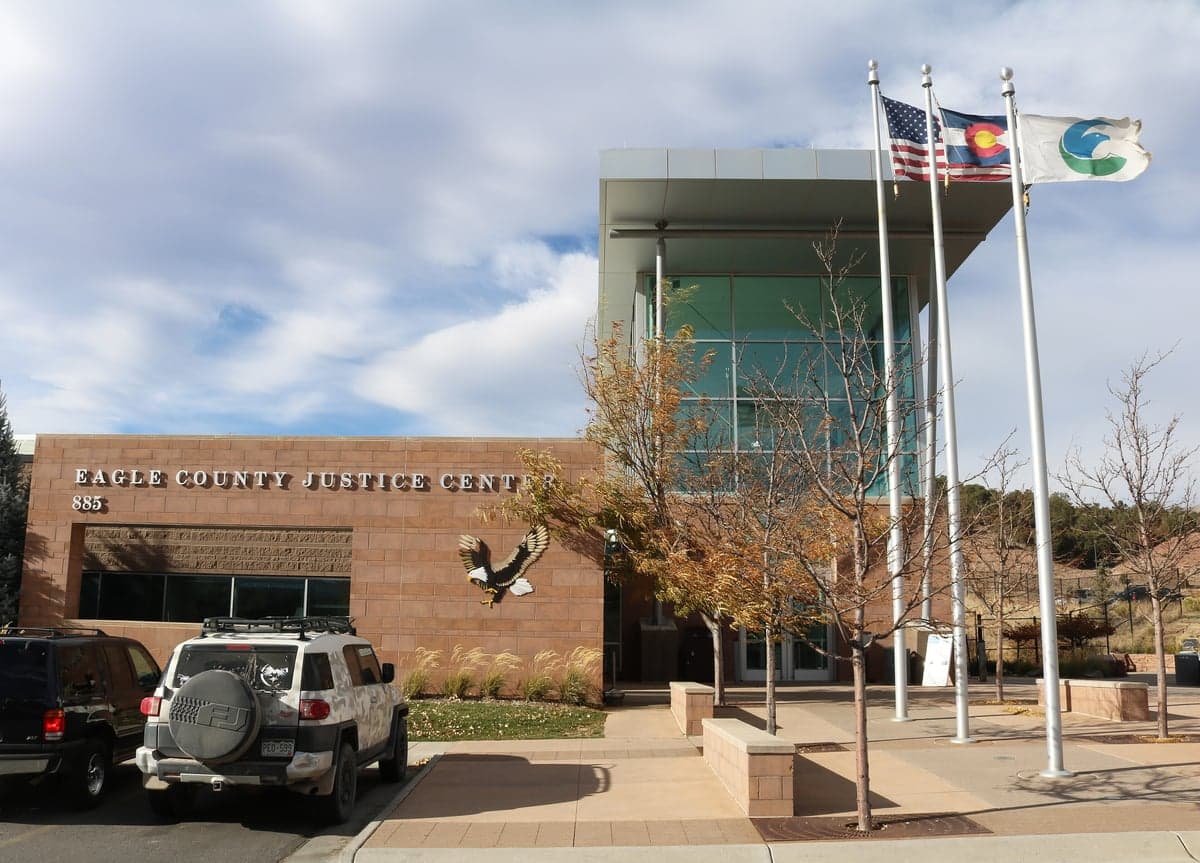
Photo: Wikipedia
Demographics of Eagle County
Affluence Level in Eagle County
An upper-middle-class area. Household wealth, education levels, and homeownership run ahead of national benchmarks.
People of Eagle County
Eagle County, Colorado, is home to 55,374 residents who form a distinctive mountain community defined by its resort economy, outdoor recreation culture, and a demographic profile that blends a white-majority population with a substantial Hispanic minority. The county’s character is split between affluent, amenity-driven enclaves like Vail and Beaver Creek and more working-class, service-oriented towns such as Eagle and Gypsum, creating a social landscape where ski-industry wealth and Latino labor coexist. With 50.3% of adults holding a college degree, the population is highly educated, yet the 30.2% Hispanic share—largely Mexican-American families rooted in construction, hospitality, and agriculture—gives the county a bicultural texture uncommon in rural Colorado. This is a place where the people are defined less by a single heritage than by the tension between seasonal transience and multi-generational settlement.
Settlement & growth (pre-1960)
Long before European arrival, the Ute people—specifically the Ute bands of the Tabeguache and Yampa—occupied the Eagle River Valley seasonally, hunting elk and deer and traveling through what is now Vail Pass and the Gore Range. The Ute Trail, a major footpath across the Continental Divide, passed directly through modern-day Eagle County. Spanish explorers and trappers entered the region in the late 1700s, but no permanent Spanish settlements took root; the area remained Ute territory until the 1870s, when the U.S. government forcibly removed the Utes to reservations in Utah following the Meeker Massacre of 1879.
American settlement began in earnest with the Colorado Silver Boom of the 1880s. Prospectors and miners—predominantly Anglo-Americans from the Midwest and Northeast, along with smaller numbers of Cornish, Irish, and German immigrants—flooded into the Eagle River Valley. The town of Red Cliff was founded in 1879 as a mining supply hub, and Minturn grew as a railroad town for the Denver & Rio Grande Western Railway, which pushed through the county in 1887 to serve the mines. Eagle, originally named "Eagle River" and later "Castle," was established in 1887 as the county seat, drawing homesteaders and ranchers who raised cattle and hay on the valley floor. By 1900, the county’s population hovered around 3,000, overwhelmingly native-born white, with a small Mexican-origin population working on railroads and in sheepherding.
The collapse of silver in 1893 and the decline of hard-rock mining after World War I caused a population slump. Ranching and agriculture sustained the valley through the 1920s and 1930s, but the county remained sparsely populated—fewer than 4,000 residents as late as 1950. The decisive turning point came in 1962, when Vail Mountain opened as a ski resort, transforming the county’s economy and demographics. The resort was conceived by a group of World War II veterans, including Pete Seibert, who saw the mountain’s potential during a 1957 ski trip. Vail was incorporated as a town in 1966, and Beaver Creek followed in 1980. These resort towns attracted a wave of young, white, college-educated migrants from the East Coast, California, and the Midwest—ski bums, entrepreneurs, and second-home buyers—who reshaped the county from a ranching backwater into an international luxury destination.
Modern era (post-1965)
The 1965 Hart-Cellar Act had a delayed but significant impact on Eagle County. While the county did not see the large-scale Asian or Indian immigration typical of coastal cities, the law’s elimination of national-origin quotas opened the door for a steady flow of Mexican immigrants who arrived to fill the labor demands of the booming resort economy. From the 1970s onward, Mexican and Mexican-American workers—many from the states of Jalisco, Michoacán, and Zacatecas—settled in Eagle, Gypsum, and El Jebel, forming tight-knit barrios that provided construction labor for Vail’s hotels and condominiums, housekeeping for its lodges, and kitchen work for its restaurants. By 2000, the Hispanic share of the county’s population had risen to 18%, and by 2020 it reached 30.2%.
Domestic migration also reshaped the county after 1965. The rise of Vail as a year-round resort—skiing in winter, golf and hiking in summer—drew affluent professionals from Denver, Chicago, New York, and Los Angeles. Many purchased second homes in Vail Village, Lionshead, and Beaver Creek, driving up real estate prices and creating a bifurcated housing market. The county’s white population, while still the majority at 63.1%, became increasingly concentrated in the resort towns and in newer subdivisions like Edwards and Avon, where gated communities and luxury condominiums cater to the wealthy. Meanwhile, the Hispanic population grew in the more affordable, service-oriented towns of Eagle and Gypsum, where mobile home parks and apartment complexes house the workforce that keeps the resort economy running.
Immigration from East and Southeast Asia remains minimal—just 0.5% of the population—and is largely limited to a small number of professionals working in hospitality management or as seasonal workers. The Indian-subcontinent population is similarly small at 0.7%, concentrated in medical and tech roles in the Vail Valley. The Black population, at 0.9%, is negligible and scattered. The foreign-born share of 8.4% is overwhelmingly Hispanic, with Mexican nationals making up the vast majority. The county’s racial and ethnic landscape is thus a binary one: a white, college-educated, property-owning class and a Hispanic, less-educated, service-sector workforce, with little middle ground.
The future
Eagle County’s population is projected to grow slowly, reaching roughly 60,000 by 2035, driven by continued in-migration of affluent retirees and remote workers seeking mountain lifestyles. The Hispanic population is likely to plateau or grow modestly, as immigration enforcement and housing costs push some families to more affordable areas in the Front Range or out of state. The county is not tribalizing into distinct ethnic enclaves in the way that larger urban areas are; instead, it is homogenizing along class lines, with the wealthy white population consolidating in Vail, Beaver Creek, and Edwards, and the Hispanic population remaining in Eagle and Gypsum. The cultural identity of the county is being absorbed into a resort-service economy, where the white majority’s lifestyle of recreation and consumption depends on the labor of a Hispanic minority that is increasingly integrated into local schools and civic life but remains economically separate.
For someone moving in now, Eagle County offers a stable, safe, and beautiful environment with excellent schools and low crime, but it is a place where social mobility is limited by housing costs and where the demographic divide between the resort elite and the service workforce is visible daily. The county is becoming a more permanent, less transient community as second-home owners age into full-time residents, but the fundamental economic structure—a luxury resort economy built on a Latino labor base—is unlikely to change. New arrivals should expect a politically conservative but socially tolerant atmosphere, where the main fault line is not race but class, and where the defining question is whether you can afford to live near the slopes or must commute from the valley floor.

* Values derived from national, state, county, city and local statistics and may differ in a specific area. Last updated: 2026-05-12T17:39:32.000Z
Narrative content on this page is AI-generated and may contain mistakes. Verify any details that matter before acting on them.
ReloMaps may earn a commission from affiliate links at no extra cost to you.

