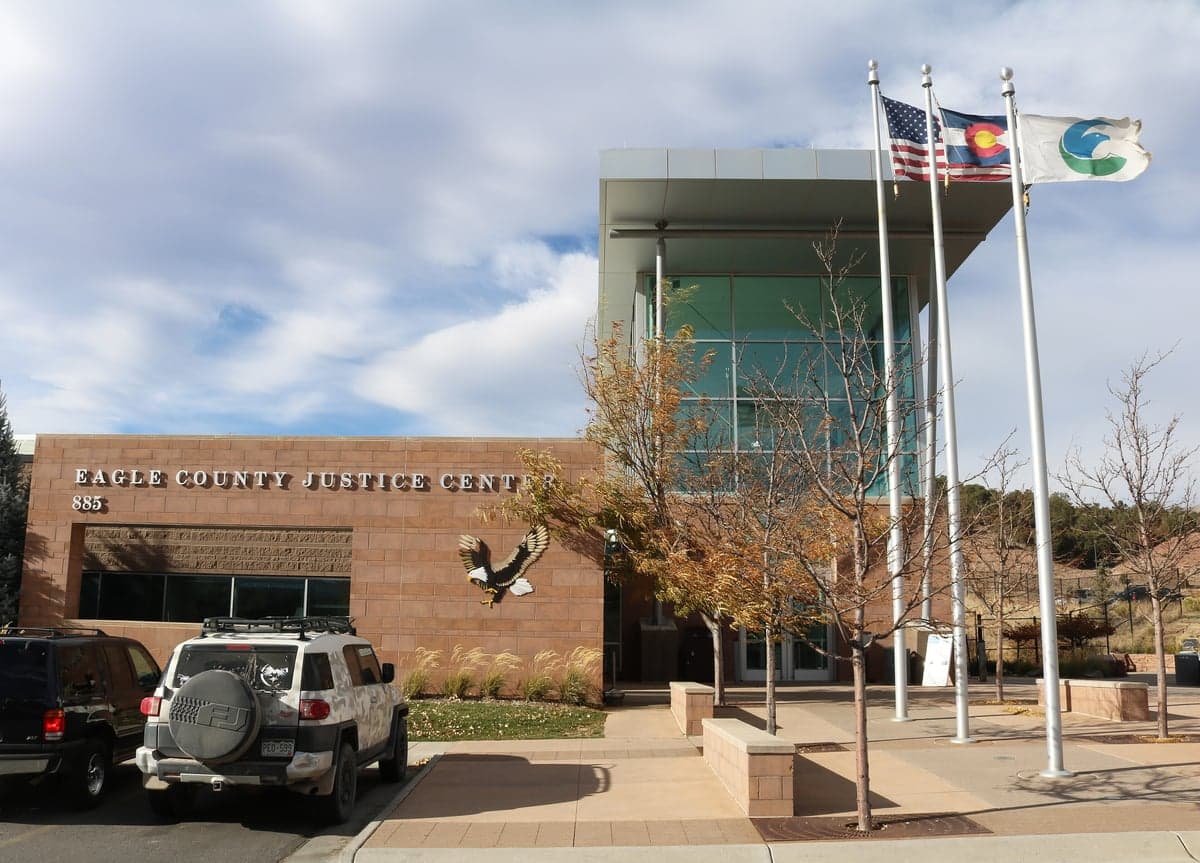
Photo: Wikipedia
Personal Sovereignty in Eagle County
Viable for self-reliance. Generally workable, though some barriers may limit total independence.
What does Personal Sovereignty tell us?
Personal Sovereignty measures your capacity for self-reliance and independence with minimal government friction. Higher scores mean fewer barriers between you and the way you want to live... but it assumes you have the space you need and good neighbors.
What does this tell us?
Personal Sovereignty measures your capacity for self-reliance and independence with minimal government friction. Higher scores mean fewer barriers between you and the way you want to live... but it assumes you have the space you need and good neighbors.
State Policy
Energy independence: Net exporter (110% of energy produced in-state)
Personal Liberty
Homesteading

Personal Liberty Analysis
Eagle County, Colorado, presents a deeply mixed picture for those prioritizing personal sovereignty, where the stunning natural environment and rugged Western ethos coexist with some of the most assertive state-level governance in the nation. For the conservative-leaning individual or parent evaluating this area for relocation, the core tension is between the county’s local culture of self-reliance and the increasingly heavy hand of the state government in Denver. While the unincorporated areas around Gypsum, Dotsero, and the rural stretches of the Eagle River Valley offer a tangible sense of autonomy, the county’s regulatory framework, particularly around land use and taxation, demands careful scrutiny. This analysis examines the specific levers of personal freedom—tax burden, self-defense rights, homesteading viability, and parental control—to determine whether Eagle County can truly serve as a redoubt for those seeking to minimize government overreach.
Tax burden and regulatory posture: How state and local policies affect your wallet and freedom
Colorado’s state-level tax structure is relatively moderate, with a flat income tax rate of 4.4% and a state sales tax of 2.9%, but Eagle County adds its own layers that significantly impact the cost of living and personal financial sovereignty. The county’s total sales tax rate, when combined with municipal levies, can reach 8.4% in places like Vail and Avon, a substantial bite on every purchase. Property taxes are a more nuanced story: Colorado’s assessment rate for residential property is low (6.7% in 2025), but Eagle County’s sky-high property values mean the actual tax bill can be crushing, especially in the core resort towns. A $1.5 million home in Edwards or Eagle-Vail will carry an annual property tax of roughly $6,000–$8,000, a figure that feels punitive for those accustomed to lower-cost states. The regulatory posture is where the real friction emerges for sovereignty-minded individuals. Eagle County enforces strict building codes, wildfire mitigation ordinances, and short-term rental restrictions that limit how you can use your own land. The county’s 1041 regulations give it broad power over developments of state interest, effectively allowing local government to veto or heavily condition any significant land use change. For the prepper or homesteader, this means you cannot simply buy a parcel near Wolcott or Bond and build a self-sufficient compound without navigating a thicket of permits, environmental reviews, and neighbor notifications. The state’s energy code, which Eagle County enforces aggressively, mandates high-efficiency construction standards that drive up building costs by 15–25%, a de facto barrier to affordable, off-grid construction.
Self-defense and gun law specifics: What Eagle County gun owners need to know
Colorado’s gun laws have shifted dramatically leftward in recent years, and Eagle County residents must operate within a state framework that increasingly restricts the right to keep and bear arms. The state now mandates universal background checks for all firearm transfers, including private sales, and has enacted a red flag law (Extreme Risk Protection Order) that allows courts to temporarily seize firearms from individuals deemed a threat, without a criminal conviction or a hearing for the gun owner. Magazine capacity is capped at 15 rounds for handguns and 10 for long guns, a direct limitation on defensive capability. Eagle County itself is a mixed environment: the sheriff’s office in the county seat of Eagle has historically taken a more moderate stance on Second Amendment issues than the Denver metro area, but the local political climate in Vail and Avon is heavily influenced by a transient, left-leaning population. Concealed carry permits are issued by the county sheriff, and Eagle County is shall-issue, meaning the sheriff must issue a permit if you meet the statutory requirements (age 21, no disqualifying criminal history, proof of training). However, the state’s preemption law prevents local governments from enacting their own gun bans, so you won’t face a Vail-specific assault weapons ban—yet. For the survivalist, the practical reality is that Eagle County is not a gun-friendly haven like rural Wyoming or Montana. You can own firearms, but the legal climate is adversarial, and any future state-level magazine bans or registration schemes will apply here. The best bet for a more permissive environment is to live in the unincorporated county, away from the resort towns, where local law enforcement is less likely to aggressively enforce the red flag law against a responsible gun owner.
Self-reliance and homesteading viability: Lot sizes, zoning, and off-grid feasibility across the county
Eagle County’s geography and zoning create a stark divide between the resort corridor and the rural hinterlands, making homesteading viability highly location-dependent. In the unincorporated areas around Gypsum, Dotsero, and the Colorado River valley, you can find parcels of 5 to 35 acres zoned for agricultural use, where the county allows limited livestock, gardening, and accessory dwelling units. However, the county’s land use code imposes strict setbacks, water rights requirements, and a 35-foot height limit on structures, which constrains the kind of self-sufficient compound a prepper might envision. Off-grid living is technically possible but practically difficult: Eagle County requires a septic system permit, a well permit (subject to Colorado’s prior appropriation water law), and compliance with the state’s building code even for a tiny home or yurt. Solar panels are allowed, but net metering rules from the local utility, Holy Cross Energy, limit how much you can generate and sell back. The county’s wildfire mitigation regulations are particularly onerous in the wildland-urban interface, requiring defensible space, fire-resistant roofing, and sometimes mandatory sprinkler systems. For those seeking true off-grid independence, the areas near Bond and the Flat Tops Wilderness offer the most promise, with larger parcels (40+ acres) and less enforcement pressure, but access can be seasonal and services are minimal. The town of Eagle itself has a more permissive zoning code for urban homesteading than Vail or Avon, allowing backyard chickens and small-scale agriculture on lots as small as a quarter-acre. But the county’s overall posture is one of managed growth, not frontier freedom—you can homestead, but you will do so under the watchful eye of the planning department.
Personal liberties: Parental rights, medical autonomy, speech, and property in Eagle County
Parental rights in Eagle County are shaped by Colorado’s progressive state laws, which have eroded traditional parental authority in several key areas. The state’s comprehensive sex education mandate, which requires schools to teach LGBTQ-inclusive content from kindergarten, applies to Eagle County schools, and parents cannot opt their children out of specific lessons—only the entire sex ed unit. The state’s vaccine mandate for school attendance, which includes the HPV vaccine for middle schoolers, leaves no philosophical exemption, only medical and religious (and the religious exemption is narrowly defined). Medical autonomy is similarly constrained: Colorado has legalized assisted suicide (Medical Aid in Dying) and has a robust telehealth system for abortion access, but the state’s public health orders during the pandemic showed a willingness to override individual medical choice, including vaccine mandates for healthcare workers and school staff. Free speech is protected under the First Amendment, but Eagle County’s social climate in the resort towns can be hostile to conservative viewpoints, with local ordinances in Vail and Avon prohibiting “harassing” speech that could be interpreted broadly. Property rights are the most concerning area: Colorado’s conservation easement program, heavily promoted in Eagle County, can permanently restrict land use in exchange for tax credits, and the county’s open space tax (a 1.5% sales tax dedicated to land preservation) funds the acquisition of development rights, effectively removing land from private control. The county’s short-term rental regulations, which cap the number of licenses in certain zones, represent a direct limit on how you can use your own property for income. For the parent or individual who values medical freedom, educational choice, and unfettered property rights, Eagle County’s local culture of tolerance does not extend to those who reject the prevailing progressive orthodoxy.
Overall, Eagle County offers a lower degree of personal sovereignty than many rural Western counties, constrained by Colorado’s aggressive state-level agenda and the county’s own regulatory appetite. Compared to a place like Moffat County or Rio Blanco County to the north and west, where local sheriffs refuse to enforce red flag laws and zoning is minimal, Eagle County feels like a managed resort community rather than a frontier refuge. For the survivalist or prepper, the calculus is clear: the county’s natural resources—water, timber, isolation—are exceptional, but the legal and regulatory overhead is high. If you are willing to navigate the permitting maze and live in the unincorporated areas like Gypsum or Dotsero, you can carve out a degree of self-reliance. But if your goal is maximum autonomy with minimal government interference, you will find more fertile ground in the less-regulated counties of the Western Slope or the Great Plains. Eagle County is a beautiful place to live, but it is not a place where the state steps aside and lets you govern your own life.

* Values derived from national, state, county, city and local statistics and may differ in a specific area. Last updated: 2026-05-12T17:39:32.000Z
Narrative content on this page is AI-generated and may contain mistakes. Verify any details that matter before acting on them.
ReloMaps may earn a commission from affiliate links at no extra cost to you.

