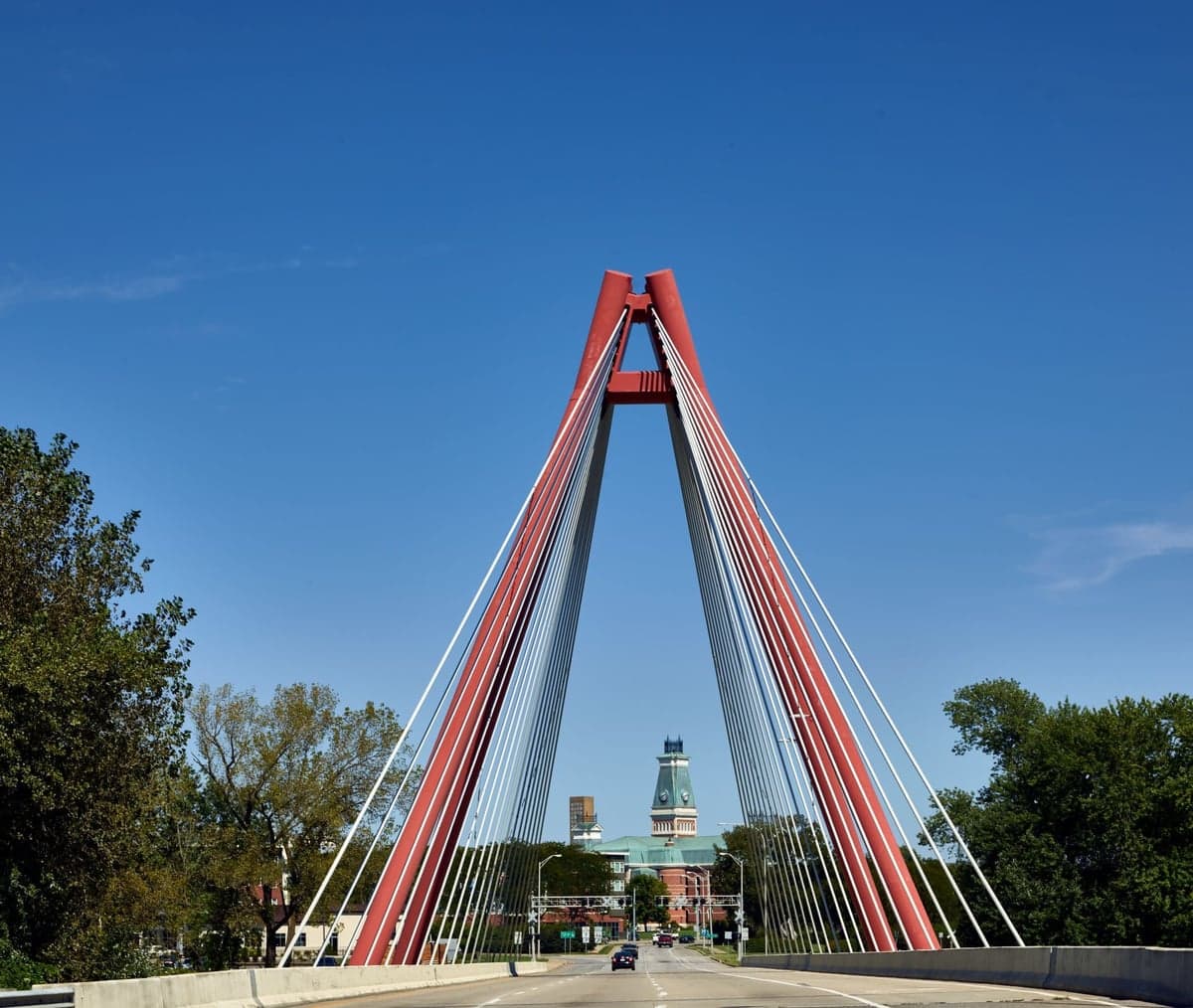
Photo: Wikipedia
Demographics of Columbus, IN
Affluence Level in Columbus, IN
A middle-class area roughly in line with national averages across income, home values, education, and employment.
People of Columbus, IN
The people of Columbus, Indiana, today form a notably well-educated and increasingly diverse community of 51,104 residents, distinguished by a professional-class character rooted in the city’s unique architecture and manufacturing base. With 41.3% holding a bachelor’s degree or higher—well above the national average—and a foreign-born population of 11.4%, Columbus is both a Midwestern manufacturing town and a small city with a global footprint. Its population is 71.6% white, 10.0% Hispanic, 8.7% Indian (subcontinent), 3.1% East/Southeast Asian, and 2.4% Black, a mix that reflects distinct waves of immigration and domestic migration over the past two centuries.
How the city was settled and grew
Columbus was founded in 1821 as the Bartholomew County seat, drawing its earliest settlers from Kentucky, Tennessee, and the Ohio River valley via land grants and the promise of fertile farmland. These Anglo-American pioneers built the original core around the courthouse square, an area now known as Downtown Columbus, where many of the city’s historic homes and early commercial buildings still stand. The city’s first major growth spurt came with the arrival of the railroad in the 1840s, which turned Columbus into a regional shipping hub and attracted German and Irish immigrants who settled in the West Side neighborhoods near the rail yards. By the early 20th century, the founding of Cummins Engine Company in 1919—still the city’s dominant employer—triggered a second wave of domestic in-migration from rural Indiana and Appalachia, with workers filling bungalows and cottages in Lincoln Village and Eastbrook. These neighborhoods remain predominantly white and working-class today, reflecting their original settlement patterns.
Modern era (post-1965)
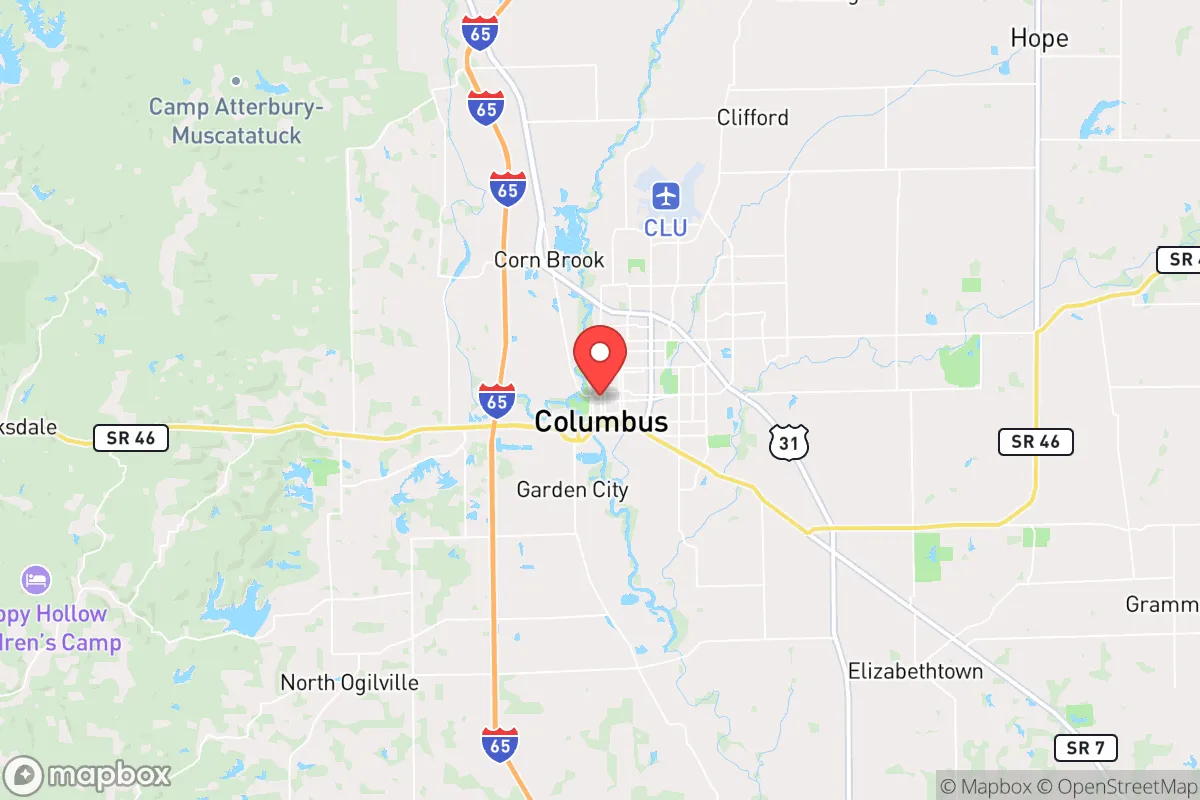
The 1965 Hart-Cellar Act reshaped Columbus’s population more dramatically than most Midwestern cities its size. Cummins’ global expansion and the company’s aggressive recruitment of engineers and managers from India created the city’s most distinctive demographic feature: an Indian (subcontinent) population of 8.7%, one of the highest shares for any U.S. city under 100,000. These families concentrated in newer subdivisions on the Far North Side, particularly around the Parkside and Tipton Lakes neighborhoods, where larger homes and top-rated schools (including Columbus East High School) attracted professionals. Simultaneously, a smaller but steady inflow of East/Southeast Asian immigrants—primarily Vietnamese and Filipino—settled in the South Side near the I-65 corridor, often working in manufacturing and healthcare. The Hispanic population, now 10.0%, grew more gradually, driven by agricultural and construction labor, and is most concentrated in the West Side around the 25th Street corridor, where Spanish-language churches and markets have taken root. The Black population, at 2.4%, remains small and largely native-born, with historic roots in the Downtown area near the old railroad district.
The future
Columbus’s population is trending toward greater diversity, but in a pattern of distinct enclaves rather than wholesale integration. The Indian-subcontinent community is projected to grow further as Cummins continues to recruit globally and as second-generation families remain in the area; the Far North Side subdivisions are likely to become even more heavily Indian, with new construction catering to this demographic. The Hispanic population is also expanding steadily, driven by both immigration and higher birth rates, and is gradually spreading from the West Side into adjacent neighborhoods like Westbrook. The East/Southeast Asian and Black populations are plateauing, with little new in-migration expected. The white population, while still the majority at 71.6%, is aging and slowly declining as younger, college-educated whites move to larger metros like Indianapolis (45 minutes north) for career opportunities. The city is not homogenizing—rather, it is tribalizing into distinct ethnic and economic zones, with the Far North Side becoming an affluent, professional-class Indian enclave, the West Side a working-class Hispanic corridor, and the older core neighborhoods remaining predominantly white and aging.
For someone moving to Columbus now, the city offers a stable, family-oriented environment with excellent schools and a strong manufacturing-and-tech economy, but the social landscape is increasingly segmented by neighborhood and ethnicity. New residents should expect to find a community where their experience will vary significantly depending on where they live—from the globally connected, highly educated Far North Side to the traditional, slower-paced West Side. The city’s character is becoming less uniformly Midwestern and more layered, a trend that will only accelerate over the next decade.

* Values derived from national, state, county, city and local statistics and may differ in a specific area. Last updated: 2026-04-30T02:18:37.000Z
Narrative content on this page is AI-generated and may contain mistakes. Verify any details that matter before acting on them.
ReloMaps may earn a commission from affiliate links at no extra cost to you.

