Photo: Wikipedia
Political ClimatePolitical Climate in Columbus, IN
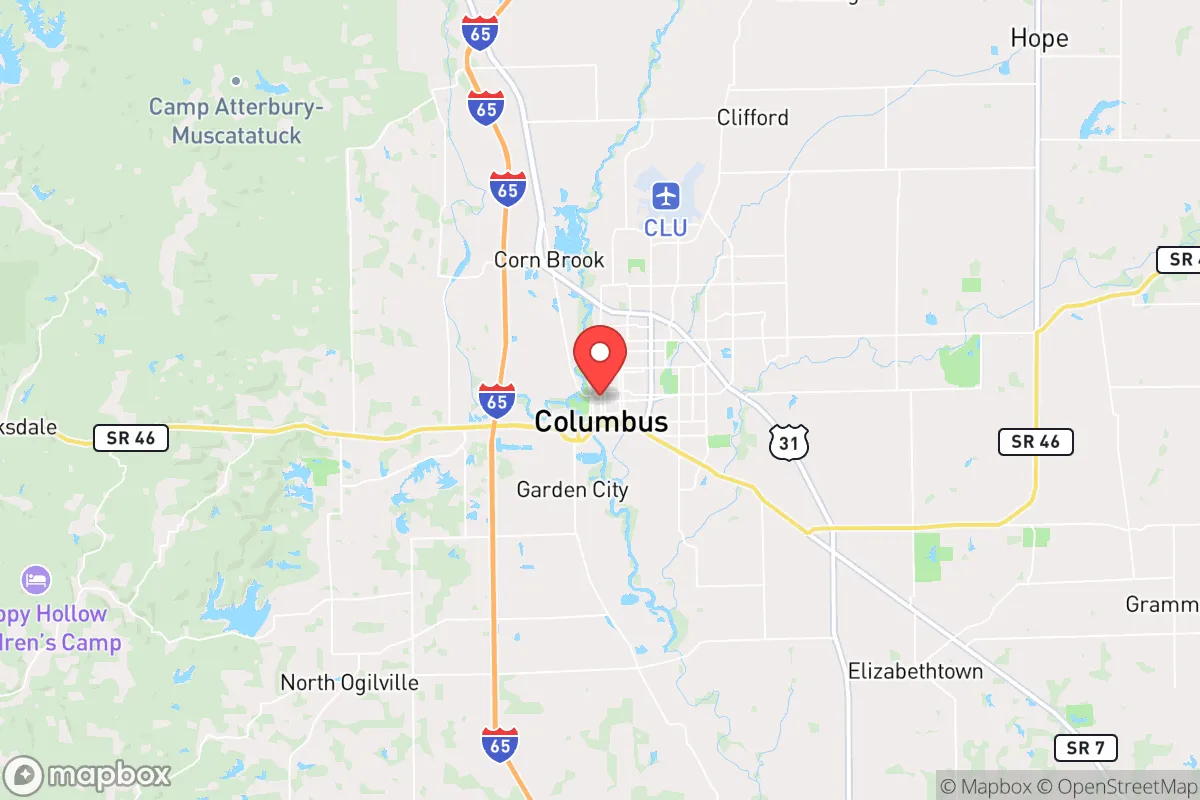
District shown is the primary district for this city’s centroid. Cities may span multiple districts.
Local Political AnalysisPolitical Analysis of Columbus, IN
Columbus, Indiana, has long been a solidly conservative community, and the numbers back that up. The Cook PVI rating of R+16 tells you the real story: this area leans heavily Republican, and it’s been that way for decades. You’ll find a deep-rooted respect for personal responsibility, limited government, and traditional values here. But like a lot of places, you can feel the winds shifting, and it’s something folks who’ve been around a while are keeping a close eye on.
How it compares
Drive just 45 minutes north to Indianapolis, and you’re in a completely different world politically. Indy’s Marion County is a deep blue stronghold, with progressive policies on everything from taxes to social issues that would never fly here. Even closer, Bloomington, about 30 minutes southwest, is another liberal pocket thanks to Indiana University. Columbus stands in stark contrast to both. The surrounding rural counties—like Bartholomew, Jennings, and Jackson—are even more conservative, often voting +20 or more for Republican candidates. So while Columbus itself is a bit of a manufacturing and design hub, its political heart beats with the same conservative rhythm as the farmland around it. That’s been a source of stability for a long time.
What this means for residents
For the most part, it means you’re left alone to live your life. The local government has historically been hands-off, keeping taxes low and regulations light. You don’t see the kind of overreach you hear about in bigger cities—no heavy-handed mandates on small businesses, no aggressive zoning that tells you what you can and can’t do with your own property. The school system, while good, has stayed focused on core academics and local control, not national ideological experiments. That’s the kind of freedom that makes a place feel like home. But there’s a quiet concern among long-time residents that some of that is starting to fray. You see it in small ways: a push for more diversity, equity, and inclusion programs in local institutions, or a growing tolerance for policies that prioritize group identity over individual merit. It’s not a crisis yet, but it’s a trend that feels like a slow creep toward the kind of government overreach that’s made other places unlivable for people who just want to be left alone.
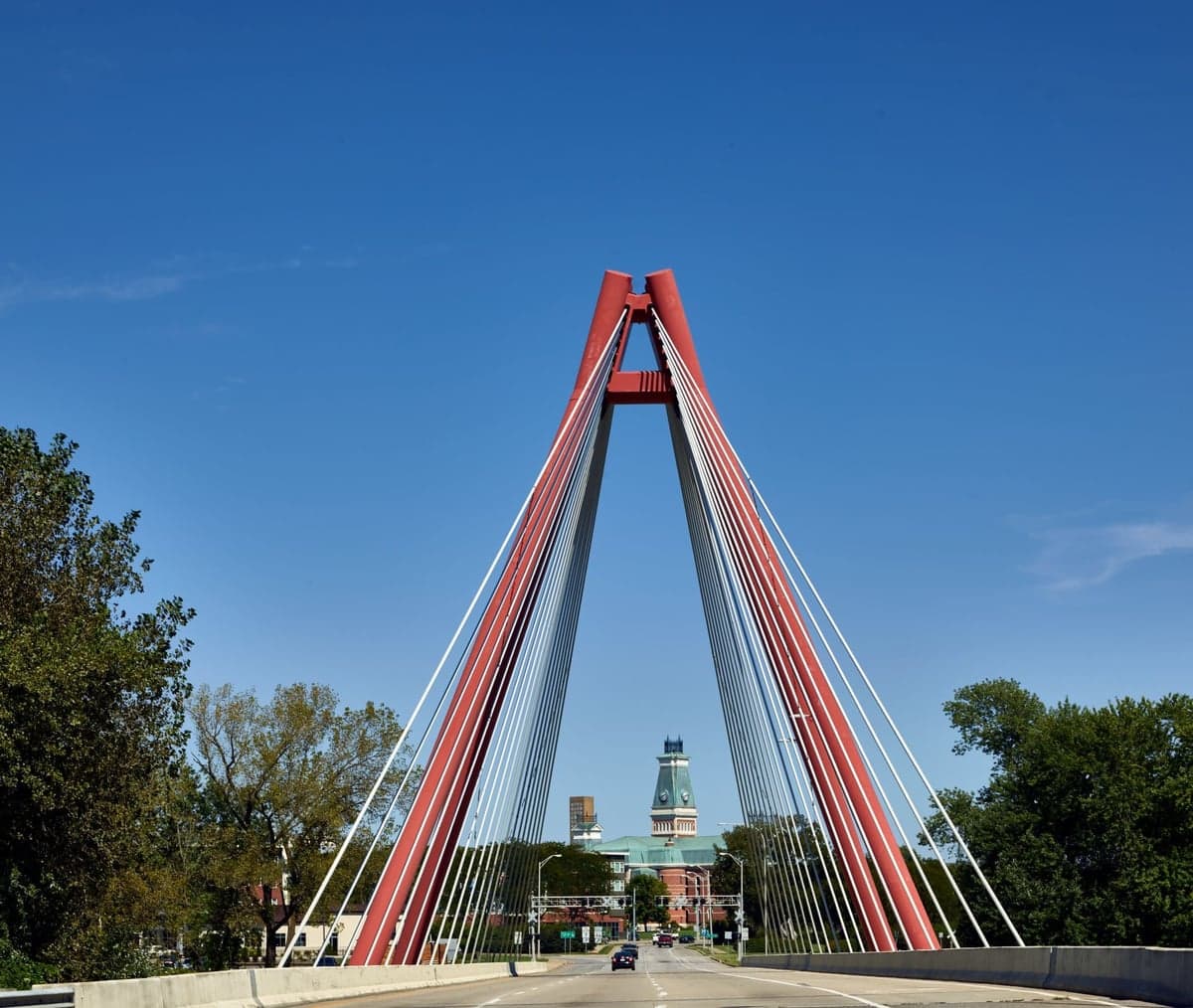
One thing that’s worth noting is how the local culture still pushes back. Columbus is famous for its modern architecture, but that’s about as progressive as it gets. The real heart of the community is in its churches, its small businesses, and its strong sense of neighborly obligation. You won’t find a lot of public protests or political grandstanding here. People vote with their feet and their wallets. If the local government ever tried to impose the kind of heavy-handed policies you see in places like Portland or Chicago, you’d see a swift and serious backlash. For now, Columbus remains a place where personal freedom and common sense still carry the day, but it’s worth watching how the next few elections shake out. The trajectory matters, and right now, it’s a little too uncertain for comfort.

State Political ClimatePolitical Climate in Indiana
State Political AnalysisPolitical Environment in the State
Indiana has long been a reliably Republican state, but the flavor of that conservatism has shifted significantly over the past two decades. The state’s overall partisan lean is solidly red, with Republicans holding supermajorities in both chambers of the General Assembly and every statewide office. However, the coalition that delivers those victories has changed: the old-school, union-friendly, culturally conservative Democrats who once dominated places like Lake County and the industrial towns of the north have largely been replaced by a more suburban, exurban, and rural Republican base. The 10-20 year trajectory shows a state that was once a competitive swing state in presidential elections (voting for Obama in 2008) now consistently voting +15 to +20 points Republican, driven by a combination of out-migration from blue states, a growing evangelical and rural population, and a Democratic party that has become increasingly concentrated in a few urban islands.
Urban vs. rural divide
The political map of Indiana is a textbook case of the urban-rural chasm. The state’s two major population centers, Indianapolis (Marion County) and Lake County (the Chicago suburbs), are the only reliably blue areas, and even they are shrinking in relative political power. Marion County has become a Democratic stronghold, voting for Biden by 25 points in 2020, but its growth is stagnant compared to the surrounding suburban and exurban counties like Hamilton County (Carmel, Fishers, Noblesville), which is now one of the most Republican counties in the nation. Lake County is still Democratic, but its influence is waning as the rest of the state’s population grows faster in red areas. The real engine of Republican power is the vast rural and small-town expanse: Allen County (Fort Wayne) is a reliable red anchor in the northeast, Vanderburgh County (Evansville) in the southwest is solidly Republican, and the entire central and southern tier of the state—places like Monroe County (Bloomington) being the lone blue outlier due to Indiana University—is deeply conservative. The divide isn’t just about population; it’s about culture. The rural counties vote on gun rights, religious liberty, and opposition to federal overreach, while the urban cores vote on labor, social services, and environmental regulation. This split is hardening, not softening.
Policy environment
Indiana’s policy environment is a mixed bag for a conservative audience. On the plus side, the state has a flat income tax rate of 3.15% (down from 3.23% in 2024, with a scheduled phase-down to 2.9% by 2027), no estate tax, and a relatively low corporate tax rate. The regulatory posture is generally business-friendly, with a right-to-work law (passed in 2012) and a weak labor union environment. Education policy has been a battleground: Indiana has a robust school choice program, including vouchers and charter schools, which is a major draw for conservative parents. However, the state has also seen a push for comprehensive sex education mandates in some districts and a controversial 2023 law requiring schools to notify parents of changes in a student’s gender identity—a win for parental rights, but one that has sparked legal challenges and school board fights. On healthcare, Indiana expanded Medicaid under the Affordable Care Act (the HIP 2.0 waiver), which was a pragmatic move by then-Governor Mike Pence, but the state has resisted further expansion of government-run healthcare. Election laws are relatively secure: Indiana has a strict voter ID law (one of the first in the nation) and has resisted mail-in ballot expansions, though the 2020 election saw a temporary increase in absentee voting due to COVID. The state also has a constitutional carry law (permitless carry) passed in 2022, which is a strong point for Second Amendment advocates.
Trajectory & freedom
The trajectory of freedom in Indiana is a story of two steps forward, one step back. On the positive side, the state has expanded gun rights significantly with the 2022 permitless carry law and the 2015 Religious Freedom Restoration Act (RFRA), which protects religious liberty from government overreach (though it was watered down after a national backlash). The state also passed a 2023 law banning gender-affirming care for minors, which is a major win for parental rights and medical autonomy. However, there are concerning trends. The state has seen a creeping expansion of government power in the name of public health, including a 2021 law that gave the governor broad emergency powers during a declared disaster, which was used to impose lockdowns and mask mandates. That law has since been reformed, but the precedent is worrying. Property rights have been under pressure from renewable energy projects—wind and solar farms—that have been imposed on rural counties via state-level preemption, overriding local zoning decisions. The 2023 law allowing the state to take over failing school districts (the "school takeover" law) is another example of state-level control overriding local autonomy. Overall, Indiana is moving in a more conservative direction on cultural issues, but the trend toward centralized state power—whether in education, energy, or emergency management—is a red flag for those who value local control.
Civil unrest & political movements
Indiana has seen its share of political flashpoints, though they are less dramatic than in coastal states. The most visible recent unrest was the 2020 George Floyd protests in Indianapolis, which turned violent with looting and arson, leading to a heavy police response and a lasting distrust between the city’s progressive leadership and the state’s Republican governor. The 2022 protests over the repeal of Roe v. Wade were smaller but still drew crowds in Bloomington and Indianapolis. On the right, the Moms for Liberty movement has been active in school board races, particularly in Hamilton County and Johnson County, pushing back against critical race theory and LGBTQ+ curriculum. Immigration politics are less heated than in border states, but there have been localized controversies, such as the 2023 fight over a proposed immigrant detention center in Gary, which was blocked by local opposition. Election integrity has been a simmering issue, with the 2020 election audit in Allen County (requested by the county GOP) finding no evidence of widespread fraud, but the distrust persists. The most visible political movement is the Indiana Freedom Coalition, a grassroots group that has been active in opposing vaccine mandates and school mask requirements. A new resident would notice that political signs and flags are common in rural areas, and that local politics—especially school board and county commissioner races—are where the real action happens.
Projection
Over the next 5-10 years, Indiana is likely to become more Republican, but also more internally divided. The demographic trends are clear: the state is growing fastest in the suburban and exurban counties around Indianapolis (Hamilton, Hendricks, Boone), which are becoming even more conservative, while the urban cores (Marion, Lake) are aging and losing population. In-migration from blue states like Illinois and California is accelerating, but these newcomers are often drawn to the low taxes and conservative culture, not to progressive politics. The state’s flat tax phase-down will continue to attract businesses and families, but the trade-off is that the state will have less revenue for infrastructure and services, which could lead to a push for more state-level control over local spending. The biggest wildcard is the education and parental rights movement: if the state continues to expand school choice and restrict LGBTQ+ curriculum, it will draw more conservative families but could also trigger a backlash from the business community, which has been increasingly vocal about diversity and inclusion. The 2024 election results showed that Indiana is solidly red at the presidential level, but the margins in suburban counties are tightening slightly as some college-educated voters drift left. A new resident moving in now should expect to find a state that is culturally conservative, with a strong emphasis on local control, but with a growing tension between the rural and suburban wings of the Republican party over issues like energy policy and education funding.
Bottom line for a new resident: Indiana is a good bet if you value low taxes, gun rights, and school choice, but don’t expect a libertarian paradise. The state government is increasingly willing to override local decisions on everything from school takeovers to renewable energy siting, and the emergency powers debate is far from settled. If you’re moving here, get involved in your local school board and county commission—that’s where the real fights over freedom are happening. The state is trending in the right direction on most cultural issues, but the trend toward centralized state power is something to watch closely.
* Values derived from national, state, county, city and local statistics and may differ in a specific area. Last updated: 2026-04-30T02:18:37.000Z
Narrative content on this page is AI-generated and may contain mistakes. Verify any details that matter before acting on them.
ReloMaps may earn a commission from affiliate links at no extra cost to you.

