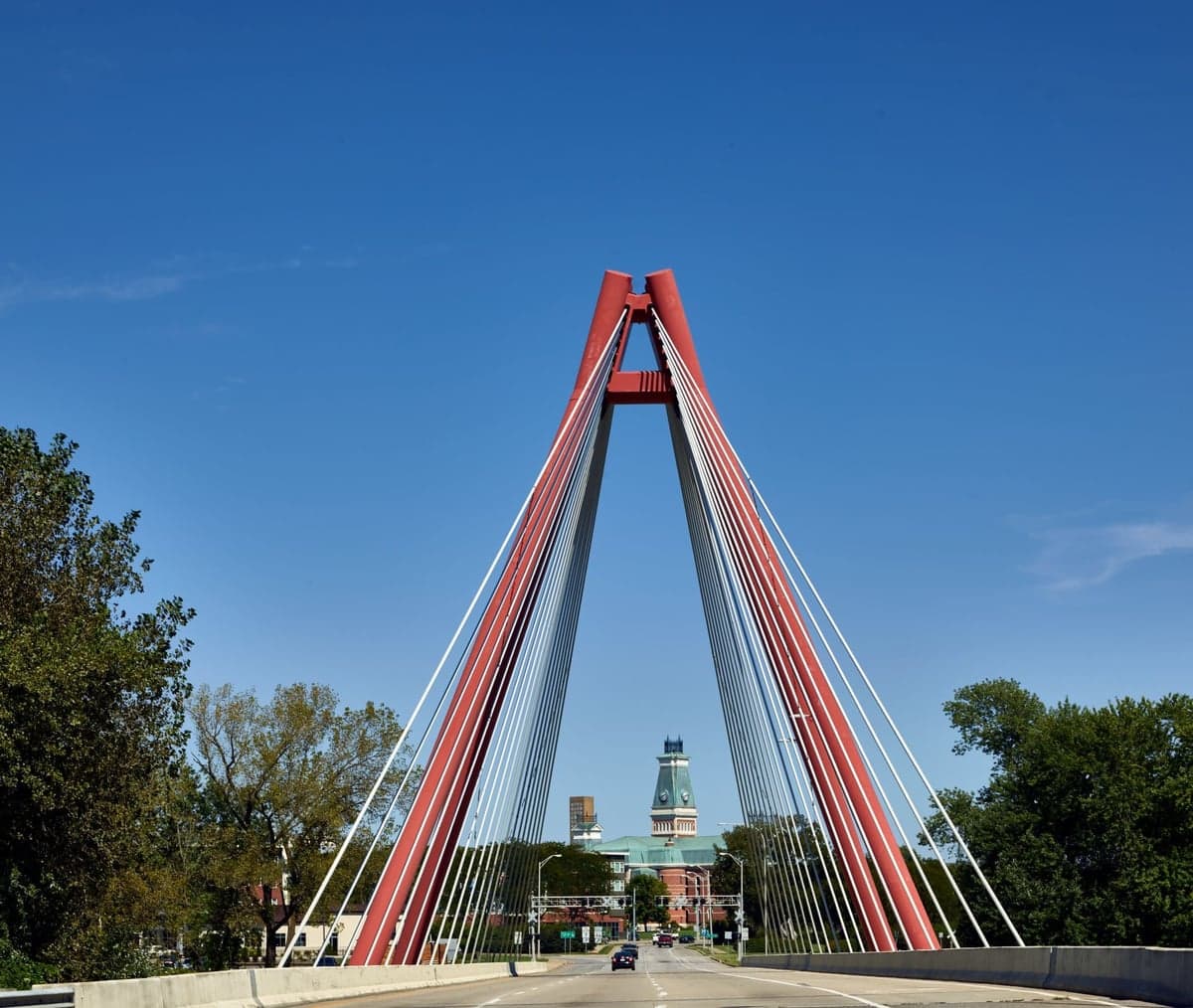
Photo: Wikipedia
Quality of Life in Columbus, IN
Above-average quality of iife. The area offers a reasonable cost of living, decent mobility, and a mix of neighborhood amenities.
What does Quality of Life tell us?
Quality of Life blends cost of living, nearby amenities, socioeconomic signals, and neighborhood character. City-level scores represent the whole municipality; individual neighborhoods can differ.
What does this tell us?
Quality of Life blends cost of living, nearby amenities, socioeconomic signals, and neighborhood character. City-level scores represent the whole municipality; individual neighborhoods can differ.
Cost of Living
9% below national average
The Real Cost of Living in Columbus, IN for 2026
| Tier | Individual | Family (4) |
|---|---|---|
| Survival | $18k | $34k |
| Comfortable | $45k | $66k |
| Luxury | $136k+ | $211k+ |
| Elite (Top 5%) | $160k+ | $249k+ |
116%
The Area Signal
A metric tracking the socioeconomic signals of the area.
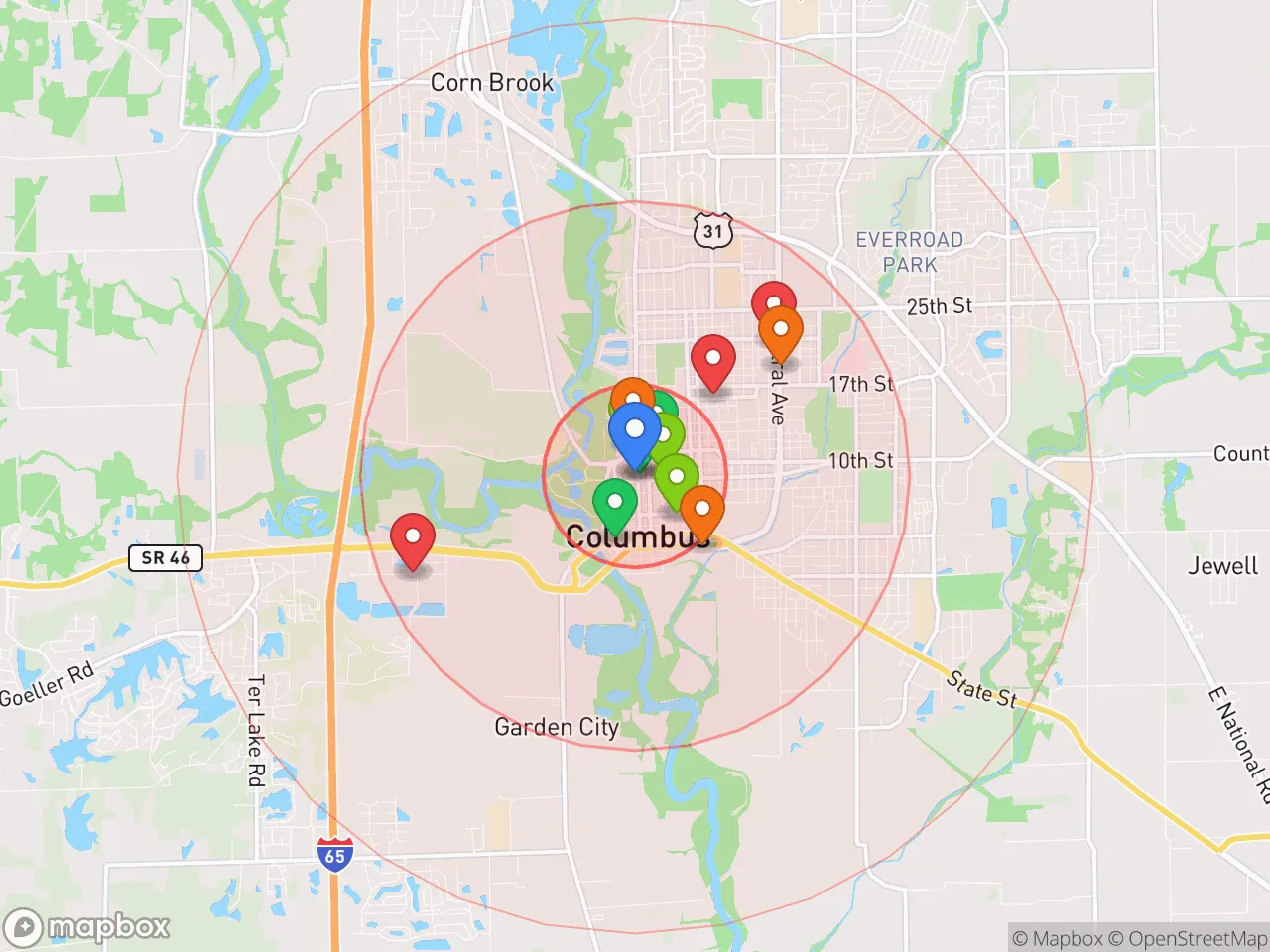
Hobbies
Explore the areaGroceries
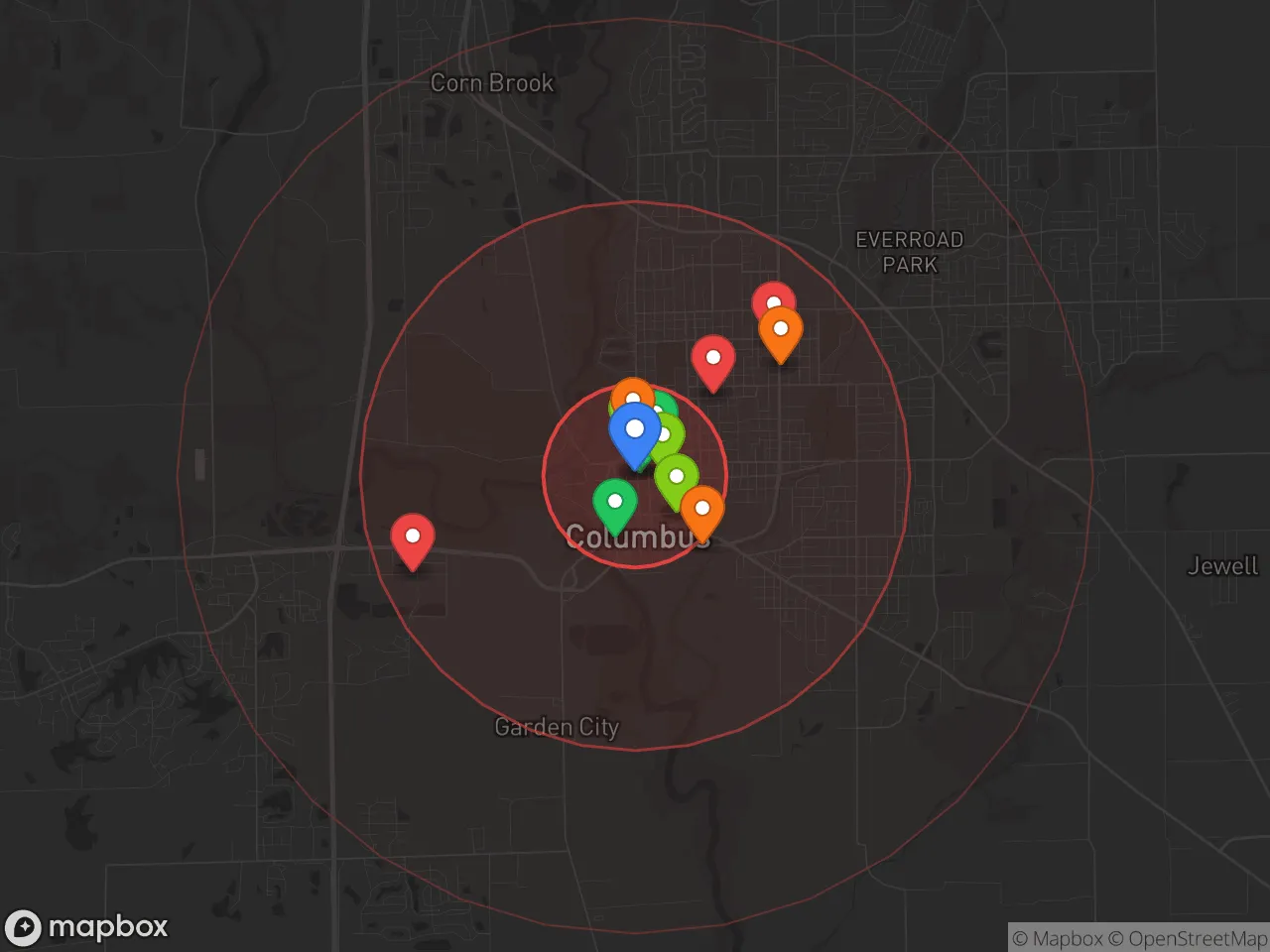
5 within 10 miles
Gas
20 within 10 miles
Hospital
3 within 20 miles
Airport
Indianapolis International Airport
Post Office
USPS — Columbus, IN
Critical Amenities
Quality-of-Life Analysis
Columbus, Indiana, presents a distinctive quality-of-life profile shaped by its unusual blend of small-town Midwestern affordability and world-class architectural design, driven by a highly educated, white-collar workforce anchored by Cummins Inc. The city’s cost of living index of 91 (9% below the U.S. average) attracts a population that is notably more affluent and college-educated than the typical Indiana town, with a median household income around $60,000. This creates a community where professionals, engineers, and designers live alongside long-time residents, fostering a culture that values both economic stability and aesthetic excellence.
Cost of living, housing costs, and how Columbus compares to nearby cities
Housing in Columbus remains a significant value proposition compared to larger Midwestern metros. The median home value of $231,000 is roughly $50,000 less than the national median, while the median rent of $1,135 is about $200 below the U.S. average. This affordability is especially striking when compared to Indianapolis, 45 miles north, where median home values exceed $280,000 and rents average $1,400. The average commute of 18.3 minutes is a full 8 minutes shorter than the national average, meaning residents spend far less time in traffic and more time at home or in the community. For a household earning the area’s median income, the typical mortgage payment consumes only about 22% of gross income, well within the standard affordability threshold. However, property taxes in Bartholomew County are slightly above the state average, so buyers should factor that into their total monthly cost.
What daily life is like for families: schools, amenities, and local rhythm
Daily life in Columbus revolves around a walkable downtown core, a strong public school system, and an unusually rich cultural calendar for a city of its size. The Bartholomew Consolidated School Corporation consistently ranks among Indiana’s top districts, with graduation rates above 90% and strong STEM programs supported by local industry partnerships. The city’s 60+ modernist buildings—including works by I.M. Pei, Eero Saarinen, and Robert Venturi—are not just tourist attractions but integrated into daily routines, with the public library, city hall, and several churches all housed in architecturally significant structures. The People Trails system offers over 40 miles of paved paths connecting neighborhoods, parks, and schools, making biking and walking viable for many errands. For shopping and dining, the downtown Commons area hosts a farmers market, local restaurants like ZwanzigZ Pizza, and the historic Crump Theatre. While Columbus lacks the nightlife of a major city, its low crime rate and family-oriented events—such as the annual Republic 4th of July Festival and the Ethnic Expo—create a predictable, safe rhythm that appeals strongly to families and retirees alike.
Columbus is best suited for professionals and families who prioritize a short commute, high-quality public education, and a community with a distinct cultural identity over urban nightlife or extreme housing bargains. The city’s unique combination of affordable homes, a 18-minute average commute, and a nationally recognized architectural heritage makes it a compelling choice for remote workers, engineers at Cummins or its suppliers, and anyone seeking a slower pace without sacrificing access to good schools and cultural amenities. Those who thrive here are typically comfortable with a quieter social scene and value the stability and safety of a tight-knit, design-conscious community.

Crime in Columbus, IN
Lower crime rates than 97% of comparable U.S. locations.
Violent CrimeViolent Crime Analysis
Property CrimeProperty Crime Analysis
Crime Analysis
Columbus, Indiana, reports a violent crime rate of 7.6 incidents per 100,000 residents and a property crime rate of 53.5 per 100,000, figures that are dramatically lower than both the Indiana state average and national benchmarks. These numbers place Columbus among the safest cities of its size in the Midwest, with a safety profile that rivals many small towns. However, the city’s location within a large metro area—just 45 miles south of Indianapolis—means that regional crime trends and the policies of the surrounding county’s justice system can influence local conditions.
Crime in context
To understand Columbus’s safety, it’s essential to compare its rates to broader averages. The national violent crime rate stands at roughly 380 per 100,000, meaning Columbus’s rate is 50 times lower than the U.S. average. Property crime nationally hovers around 1,950 per 100,000, while Columbus’s rate is 36 times lower. Even within Indiana, where the state violent crime rate is approximately 350 per 100,000, Columbus is an extreme outlier for safety. These figures are drawn from the most recent FBI Uniform Crime Reporting data and reflect a community where serious crime is rare. The city benefits from a strong local economy anchored by Cummins Inc., which supports stable employment and community investment.
What residents experience
For daily life in Columbus, the low crime rates translate into a tangible sense of security. Residents commonly report leaving doors unlocked in many neighborhoods, children walking to school without concern, and a low fear of property theft. The city’s police department maintains a visible community presence, and response times are generally quick due to the low call volume. However, readers should be aware that Columbus is part of Bartholomew County, which falls under the jurisdiction of the local prosecutor’s office and court system. While the city itself has not adopted the progressive prosecutorial policies seen in larger liberal metros like Indianapolis or Chicago, the broader regional trend toward leniency in some Indiana counties is a factor to monitor. If Bartholomew County were to shift toward a more progressive justice philosophy—emphasizing diversion and reduced sentencing for property crimes—the current low property crime rate could face upward pressure, as similar policy changes in other Midwestern counties have correlated with increased recidivism for theft and burglary.
Neighborhood-level variation
Safety in Columbus is not uniform across all areas. The downtown core and historic districts like the Tipton Lakes neighborhood enjoy the lowest crime rates, with virtually no violent incidents reported in recent years. The west side, near the industrial parks and along State Road 46, sees slightly higher property crime, particularly vehicle break-ins and package theft. The safest neighborhoods are generally those with higher home values and active neighborhood watch programs. For families and retirees, the northeast quadrant—including the areas around Clifty Creek and Rocky Ford—offers the most consistent safety record. Prospective residents should verify specific street-level data through the Columbus Police Department’s online crime map, as block-by-block variation can be significant, especially near apartment complexes with higher turnover.
* Values derived from national, state, county, city and local statistics and may differ in a specific area. Last updated: 2026-04-30T02:18:37.000Z
Narrative content on this page is AI-generated and may contain mistakes. Verify any details that matter before acting on them.
ReloMaps may earn a commission from affiliate links at no extra cost to you.

