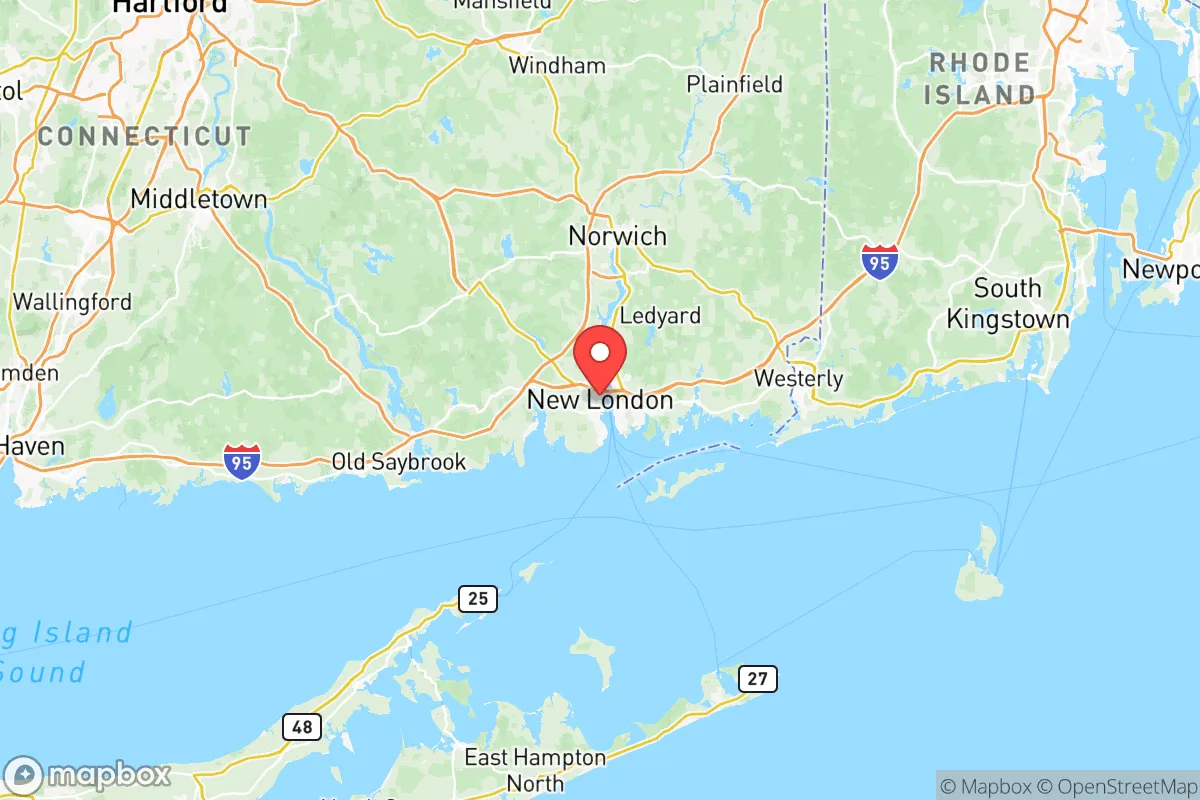
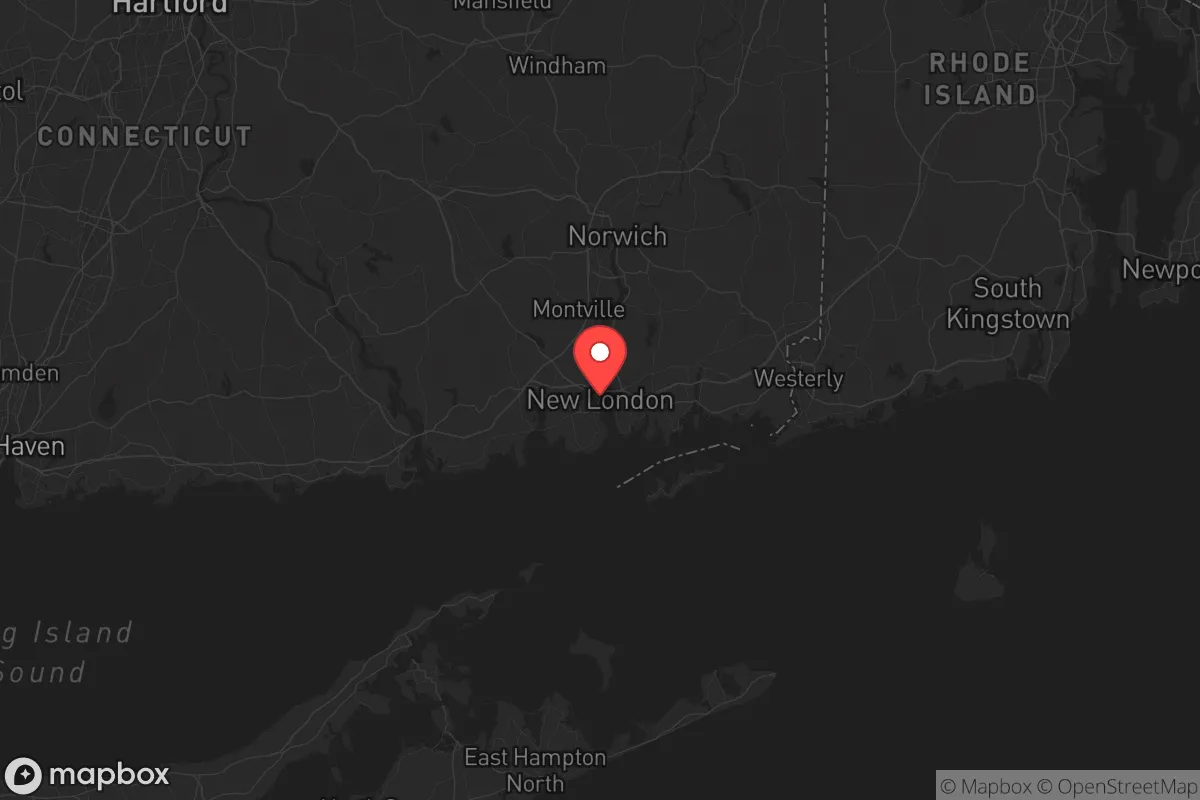
Demographics of Southeastern Connecticut Planning Region County
Historical data isn't available for Southeastern Connecticut Planning Region County. Trends shown are for Connecticut.
Affluence Level in Southeastern Connecticut Planning Region County
A middle-class area roughly in line with national averages across income, home values, education, and employment.
People of Southeastern Connecticut Planning Region County
The people of Southeastern Connecticut Planning Region County are a predominantly white, historically rooted population of 279,025, shaped by centuries of maritime industry, manufacturing, and suburban expansion. With a foreign-born share of just 3.7%—well below the national average—the region remains one of Connecticut's most ethnically homogeneous areas, though a growing Hispanic population (14.7%) and small but established Black (5.0%) and East/Southeast Asian (2.7%) communities add modest diversity. The county's identity is anchored in its coastal villages, former mill towns, and the enduring presence of descendants of English, Irish, Italian, and Polish immigrants who arrived between the 17th and early 20th centuries.
Settlement & growth (pre-1960)
Long before European contact, the region was home to the Pequot, Mohegan, and Niantic peoples, who lived along the Thames River and the Long Island Sound coastline. The Pequot War of 1636–1638 and subsequent colonial expansion decimated Native populations, with survivors concentrated on the Mohegan Reservation near Uncasville and the Mashantucket Pequot Reservation near Ledyard. English Puritans from the Massachusetts Bay Colony established the first permanent European settlements in the 1640s and 1650s, founding New London (1646), Stonington (1649), and Groton (1655) as farming and fishing outposts. These towns became the region's early population anchors, with English surnames and Congregational church traditions dominating for generations.
The 19th century brought two transformative waves. First, Irish immigrants fleeing the Great Famine (1845–1852) arrived in large numbers, settling in Norwich and New London to work on the expanding railroad lines and in the growing textile mills along the Shetucket and Yantic Rivers. By 1870, Irish-born residents made up roughly 15% of Norwich's population. Second, French-Canadian families from Quebec migrated south between 1860 and 1900, drawn by jobs in the region's cotton and woolen mills. They concentrated in Jewett City (part of Griswold) and Lisbon, where French was spoken in homes and churches well into the 20th century. Italian immigrants arrived in a third wave between 1890 and 1920, settling in Mystic and Stonington to work in the shipbuilding and granite quarrying industries. Polish immigrants followed a similar timeline, establishing a tight-knit community in New London's "Polish Hill" neighborhood and in Norwich's Greeneville section.
The region's maritime economy—whaling, shipbuilding, and later submarine manufacturing at Electric Boat in Groton—kept population growth steady through the early 20th century. The Great Migration of Black Americans from the South (1910–1970) brought a smaller but significant wave to New London and Norwich, where they found work in the naval shipyard and service industries. By 1950, the county was overwhelmingly white (over 95%), with English, Irish, Italian, Polish, and French-Canadian ancestries forming the core of the population. The post-World War II baby boom and the expansion of the submarine base at Groton spurred suburban development in Waterford and East Lyme, as returning veterans and defense workers sought single-family homes.
Modern era (post-1965)
The 1965 Hart-Cellar Act had a muted effect on Southeastern Connecticut compared to urban centers. The foreign-born population remained low—just 3.7% in 2024—because the region lacked the large industrial base or chain-migration networks that drew immigrants to cities like Hartford or Bridgeport. The most notable post-1965 shift has been the growth of the Hispanic population, which rose from under 2% in 1980 to 14.7% today. This wave is primarily Puerto Rican and Dominican, with smaller numbers of Mexicans and Central Americans. They have concentrated in New London (where Hispanics now make up roughly 30% of the city's population) and in Norwich's eastern neighborhoods, working in healthcare, hospitality, and construction.
The East/Southeast Asian community (2.7%) is a more recent arrival, driven by professional employment at Pfizer's global research headquarters in Groton and at the General Dynamics Electric Boat facility. Chinese and Indian engineers and scientists have settled in Waterford and Ledyard, drawn by high-paying technical jobs. The Indian-subcontinent population (1.0%) follows a similar pattern, with families concentrated in the same suburban towns. The Black population (5.0%) has remained stable since 1970, with historic communities in New London and Norwich supplemented by a small number of African immigrants, particularly from Ghana and Nigeria, who have settled in Montville.
Domestic migration since 2000 has been modest but notable. The county has seen a net outflow of young adults (ages 20–34) to Boston, New York, and southern states, offset by an inflow of retirees from other parts of Connecticut and the Northeast. Suburbanization has continued, with Stonington and North Stonington absorbing families seeking lower taxes and larger lots, while New London and Norwich have experienced population stagnation or slight decline. The college-educated share (34.6%) is above the national average, reflecting the presence of Connecticut College in New London, the U.S. Coast Guard Academy, and the professional workforce at Pfizer and Electric Boat.
The future
The population is heading toward slow, gradual diversification, but the region is unlikely to become a major immigrant destination. The Hispanic share is projected to reach 18–20% by 2040, driven by natural increase and continued migration from Puerto Rico and the Dominican Republic. The East/Southeast Asian and Indian communities will grow modestly as Pfizer and Electric Boat continue to recruit globally, but these groups will remain small enclaves in Waterford and Groton rather than forming large ethnic neighborhoods. The white population, currently 71.3%, will decline in share but remain the majority for at least another generation.
The region is not tribalizing into distinct enclaves in the way that larger metropolitan areas have. Instead, the pattern is one of gradual assimilation: Hispanic families in New London and Norwich are increasingly English-dominant by the second generation, and Asian professionals in the suburbs are highly integrated into the broader community. The cultural identity of the county—rooted in maritime heritage, defense industry employment, and small-town New England norms—is absorbing newcomers rather than being transformed by them. The most significant demographic pressure is out-migration of young adults, which could lead to population decline if not offset by increased in-migration of families or retirees.
For someone moving in now, Southeastern Connecticut offers a stable, predominantly white, and culturally traditional environment with modest but growing diversity. The region's identity remains anchored in its historic towns—New London, Norwich, Groton, Stonington, Mystic—and in the industries that have defined it for over a century. The population is aging, but the presence of major employers and a strong sense of local place suggest the county will retain its character even as it slowly becomes more varied.

* Values derived from national, state, county, city and local statistics and may differ in a specific area. Last updated: 2026-05-11T23:02:15.000Z
Narrative content on this page is AI-generated and may contain mistakes. Verify any details that matter before acting on them.
ReloMaps may earn a commission from affiliate links at no extra cost to you.

