Photo: Wikipedia
Demographics of Cordova, AK
Affluence Level in Cordova, AK
A middle-class area roughly in line with national averages across income, home values, education, and employment.
People of Cordova, AK
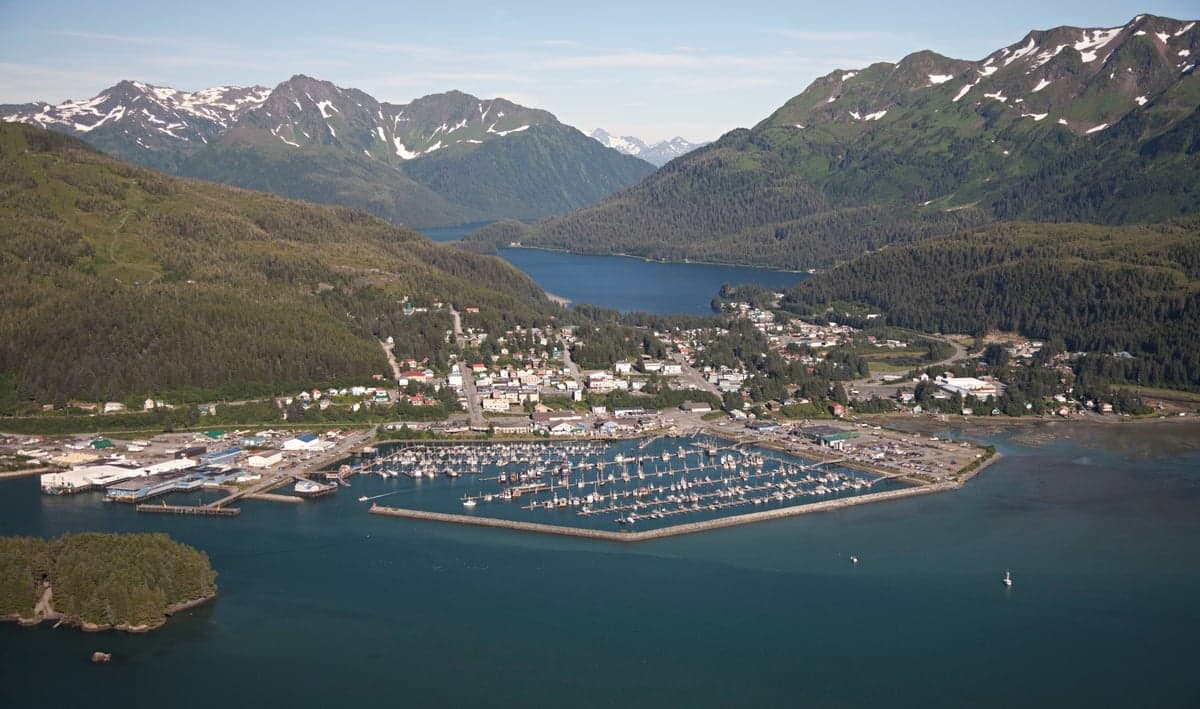
The people of Cordova, Alaska, today number roughly 2,405, forming a tight-knit, predominantly white community with a distinctive working-class and outdoors-oriented character. The city’s identity is deeply rooted in commercial fishing and the surrounding Chugach National Forest, giving it a reputation as a resilient, independent-minded place where self-reliance is valued. With a foreign-born population of just 3.0% and a notable East/Southeast Asian community at 9.9%, Cordova is less ethnically diverse than Alaska’s urban centers but retains a unique multicultural thread from its fishing industry. The population is stable but aging, with a median age around 40, and the city’s remote location—accessible only by plane or ferry—shapes a culture where newcomers are welcomed if they contribute to the local economy and way of life.
How the city was settled and grew
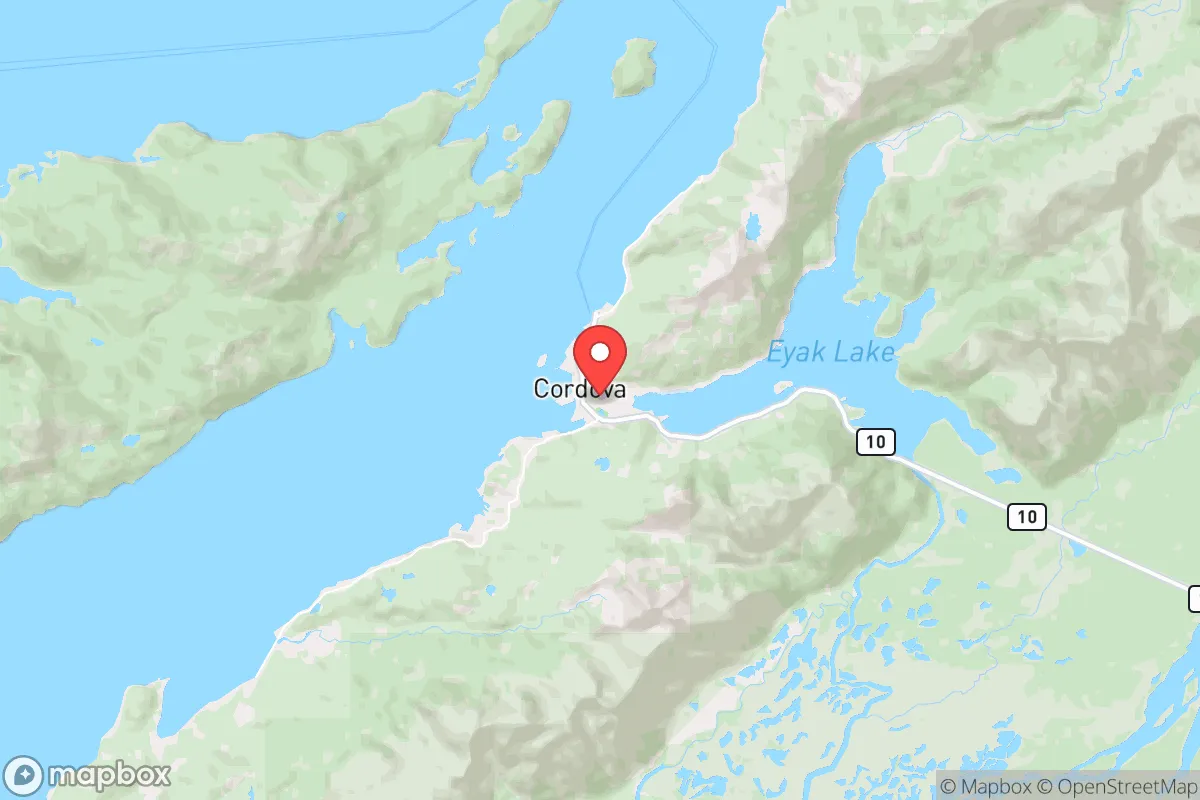
Cordova’s human history begins with the indigenous Eyak people, who inhabited the Copper River Delta for millennia, with their primary village site near what is now the Eyak Lake area. Russian fur traders arrived in the late 18th century, but sustained settlement began only after the U.S. purchased Alaska in 1867. The city’s modern founding dates to 1906, when the Copper River and Northwestern Railway was built to transport copper from the Kennicott mines. This railroad boom drew a wave of European immigrants—primarily Scandinavian, Irish, and Italian laborers—who settled in the Old Town district along the waterfront, building the wharves and rail yards. By 1910, Cordova’s population peaked at over 2,000, but the mine closure in 1938 triggered a sharp decline. The fishing industry then became the economic anchor, attracting a second wave of settlers: first, more Scandinavians and Finns who established the Odiak Slough neighborhood as a base for salmon trolling, and later, a small but significant group of Filipino and Japanese fishermen who settled in the South Harbor area. These early East/Southeast Asian arrivals formed the nucleus of the 9.9% Asian community seen today, concentrated in fishing-related trades.
Modern era (post-1965)
After the 1964 Good Friday earthquake devastated Cordova’s canneries and infrastructure, the city rebuilt with a focus on sustainable fisheries and tourism. The post-1965 era saw limited immigration from new source countries, as Cordova’s remote location and specialized economy did not attract the large-scale immigrant flows seen in Anchorage. Instead, domestic in-migration from the Lower 48—particularly from the Pacific Northwest and Midwest—became the primary driver of population change. These newcomers, often drawn by fishing, outdoor recreation, or a desire for a slower pace, settled in the Whitshed area, a residential district of single-family homes on the road to the ferry terminal. The Hispanic population, at 2.5%, is small and largely composed of seasonal cannery workers, many of whom live in temporary housing near the Copper River Highway corridor. The East/Southeast Asian community, now third-generation in many cases, has assimilated into the broader fishing culture, with families in South Harbor and Odiak Slough maintaining ties to Filipino and Japanese traditions while participating fully in local civic life. The white population, at 71.8%, remains dominant, with a strong presence of multi-generational Alaskan families in Old Town and newer arrivals in Whitshed. College-educated residents make up 28.4%, a figure that reflects the growing number of professionals in fisheries management, tourism, and remote work, though the overall educational attainment is below the national average.
The future
Cordova’s population is projected to remain stable or decline slightly over the next decade, as the aging workforce and high cost of living limit in-migration. The city is not homogenizing into a single identity but rather tribalizing into distinct enclaves based on economic role and length of residence: long-time fishing families in Old Town and Odiak Slough, newer remote workers and retirees in Whitshed, and seasonal cannery workers in temporary housing near the harbor. The East/Southeast Asian community is plateauing, with younger generations often leaving for education and careers in Anchorage or the Lower 48, while the Hispanic population remains small and transient. No significant growth is expected from Indian subcontinent or Arab communities, given the lack of economic pull factors. The next 10–20 years will likely see Cordova become whiter and older, with a shrinking tax base and increasing reliance on tourism and fisheries management to sustain services.
For someone moving in now, Cordova is becoming a place where deep roots in the fishing industry and a strong sense of community are essential for belonging. Newcomers who buy property in Whitshed or South Harbor and engage in local civic life—whether through the school board, the fishermen’s union, or volunteer fire department—will find a welcoming but demanding environment. The city rewards self-sufficiency and a willingness to adapt to its remote, weather-driven rhythms, but offers little room for those seeking urban amenities or rapid demographic change.

* Values derived from national, state, county, city and local statistics and may differ in a specific area. Last updated: 2026-04-19T19:16:19.000Z
Narrative content on this page is AI-generated and may contain mistakes. Verify any details that matter before acting on them.
ReloMaps may earn a commission from affiliate links at no extra cost to you.

