
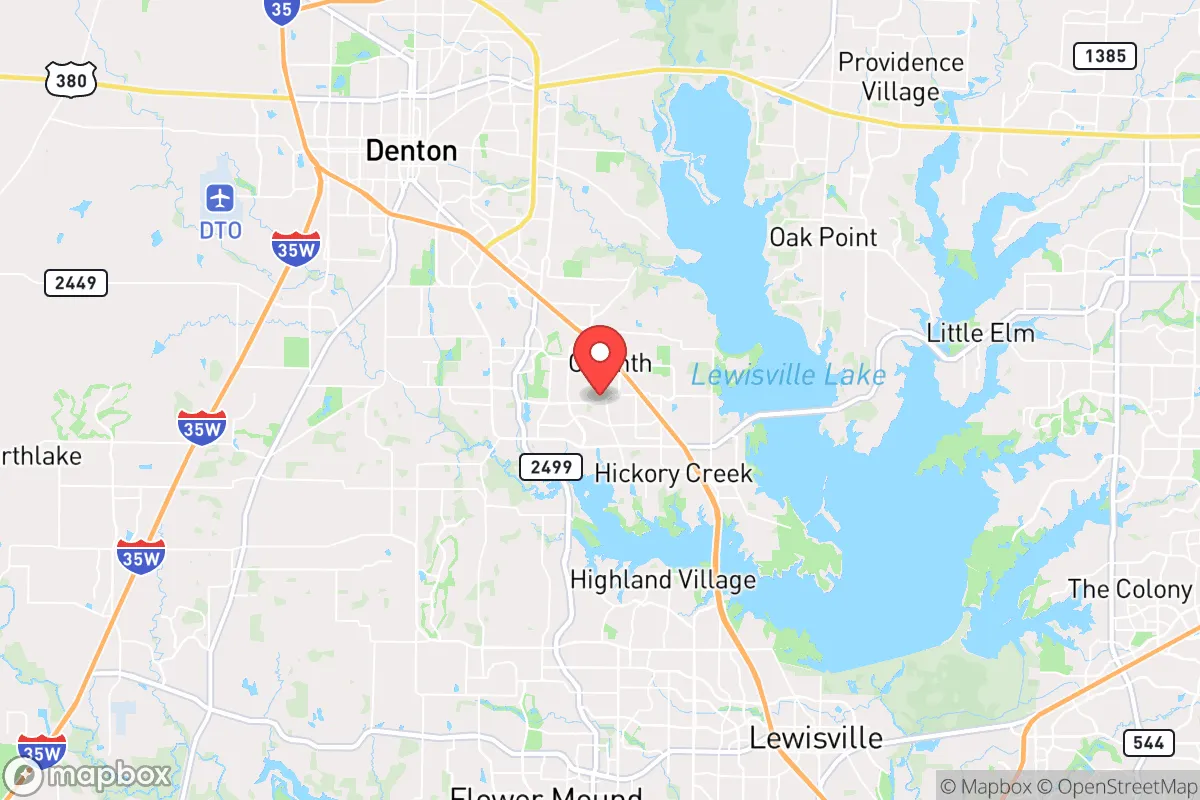
Personal Sovereignty in Corinth, TX
Strong independent fundamentals that actively favor personal liberty and low regulation.
What does Personal Sovereignty tell us?
Personal Sovereignty measures your capacity for self-reliance and independence with minimal government friction. Higher scores mean fewer barriers between you and the way you want to live... but it assumes you have the space you need and good neighbors.
What does this tell us?
Personal Sovereignty measures your capacity for self-reliance and independence with minimal government friction. Higher scores mean fewer barriers between you and the way you want to live... but it assumes you have the space you need and good neighbors.
State Policy
Energy independence: Net exporter (220% of energy produced in-state)
Personal Liberty
Homesteading

Personal Liberty Analysis
Corinth, Texas offers a notably high degree of personal sovereignty compared to many suburban enclaves, largely because it sits within a state that has aggressively pushed back against federal overreach on multiple fronts. For the survivalist or prepper-minded individual, this means fewer layers of government interference in daily life, from the tools you can own to the way you raise your children. While no city is a libertarian utopia, Corinth’s location in Denton County—a region that has consistently voted conservative and resisted lockdown-style mandates—creates an environment where self-reliance is not just tolerated but expected.
Tax burden and regulatory posture: how Corinth compares to surrounding areas
Texas has no state income tax, which immediately puts more money back into your pocket for supplies, land improvements, or savings. Corinth’s property tax rate hovers around 2.3% of assessed value, which is slightly above the national average but typical for the Dallas-Fort Worth metroplex. However, the city’s regulatory posture is light: there are no city-level income taxes, no business inventory taxes, and no onerous licensing requirements for home-based enterprises. The permitting process for structures like sheds, workshops, or even small livestock shelters is straightforward, with most applications processed within a few weeks. Compared to nearby cities like Lewisville or Carrollton, Corinth has fewer zoning overlays and historic district restrictions, meaning you have more freedom to modify your property without bureaucratic headaches. The absence of a citywide rental inspection program also means less government intrusion into private property agreements.
Self-defense and gun law specifics: what you can legally own and carry
Texas is a constitutional carry state, and Corinth fully aligns with that. As of 2026, you can carry a handgun openly or concealed without a permit, provided you are not a prohibited person. There are no city-specific magazine capacity bans, no assault weapon restrictions, and no waiting periods for firearm purchases. Corinth’s police department has a stated policy of not enforcing any federal gun laws they deem unconstitutional, which is a meaningful signal for those concerned about future federal overreach. The city also allows the discharge of firearms on private property for self-defense and, with proper safety measures, for target practice on lots of two acres or more. Stand-your-ground laws apply fully, meaning you have no duty to retreat before using deadly force if you reasonably believe it’s necessary to prevent imminent harm. For preppers, this means you can build a defensive capability without worrying about local ordinances that might restrict magazine sizes or firearm types.
Self-reliance and homesteading viability: lot sizes, zoning, and off-grid feasibility
Corinth’s zoning code is more permissive than many DFW suburbs. Minimum lot sizes in the city’s residential zones range from 7,500 square feet to one acre, with several neighborhoods featuring half-acre or larger parcels. This is critical for anyone wanting to raise chickens, keep bees, or maintain a substantial vegetable garden—all of which are allowed without special permits as long as nuisance conditions are avoided. Goats and other small livestock are permitted on lots of one acre or more, though you’ll need to check HOA covenants if you’re in a planned community. Off-grid feasibility is moderate: while the city requires connection to municipal water and sewer for new construction, existing homes on larger lots can install rainwater catchment systems and solar panels without excessive red tape. The city’s building code does not mandate connection to the natural gas grid, so you can opt for propane or wood heat. Composting toilets are not explicitly prohibited, though they would require a variance for a new build. For the serious prepper, the unincorporated areas just outside Corinth’s city limits—particularly along the Lake Lewisville corridor—offer even more freedom, with no building permits required for agricultural structures under 200 square feet.
Personal liberties: parental rights, medical autonomy, speech, and property
Parental rights are strongly protected in Texas, and Corinth reflects that. The city has no local ordinances that override state law regarding medical consent, vaccination requirements, or educational choice. Homeschooling is straightforward: you file a simple affidavit with the Texas Education Agency, and there are no curriculum mandates, no standardized testing requirements, and no home visits. Medical autonomy is similarly robust—Texas law prohibits local governments from banning ivermectin or hydroxychloroquine prescriptions, and Corinth has no city-level health mandates that could override your personal medical decisions. Free speech is protected by both the Texas Religious Freedom Restoration Act and the city’s own policies; there are no noise ordinances that would prevent political or religious expression on your own property during reasonable hours. Property rights are reinforced by Texas’s strong eminent domain protections—Corinth cannot seize your land for private economic development, and the city must pay fair market value plus relocation costs for any public project. For those concerned about government overreach, Corinth’s city council has a track record of opposing federal mandates, including a 2021 resolution declaring the city a “Second Amendment Sanctuary” and a 2023 resolution opposing federal vaccine mandates for private businesses.
Overall, Corinth ranks among the top-tier suburbs in North Texas for personal sovereignty, especially when compared to more restrictive cities like Austin or Dallas. The combination of no state income tax, constitutional carry, permissive zoning for homesteading, and strong parental rights protections creates a legal environment where a self-reliant individual can operate with minimal government friction. The main trade-off is the property tax burden, which funds a well-regarded police department and good schools—but for those who value autonomy over amenities, Corinth’s proximity to rural Denton County offers an easy escape route to even less regulated land. If you’re looking for a base where you can live by your own rules while still having access to DFW’s economic opportunities, Corinth is a solid strategic choice.

* Values derived from national, state, county, city and local statistics and may differ in a specific area. Last updated: 2026-05-16T22:45:52.000Z
Narrative content on this page is AI-generated and may contain mistakes. Verify any details that matter before acting on them.
ReloMaps may earn a commission from affiliate links at no extra cost to you.

