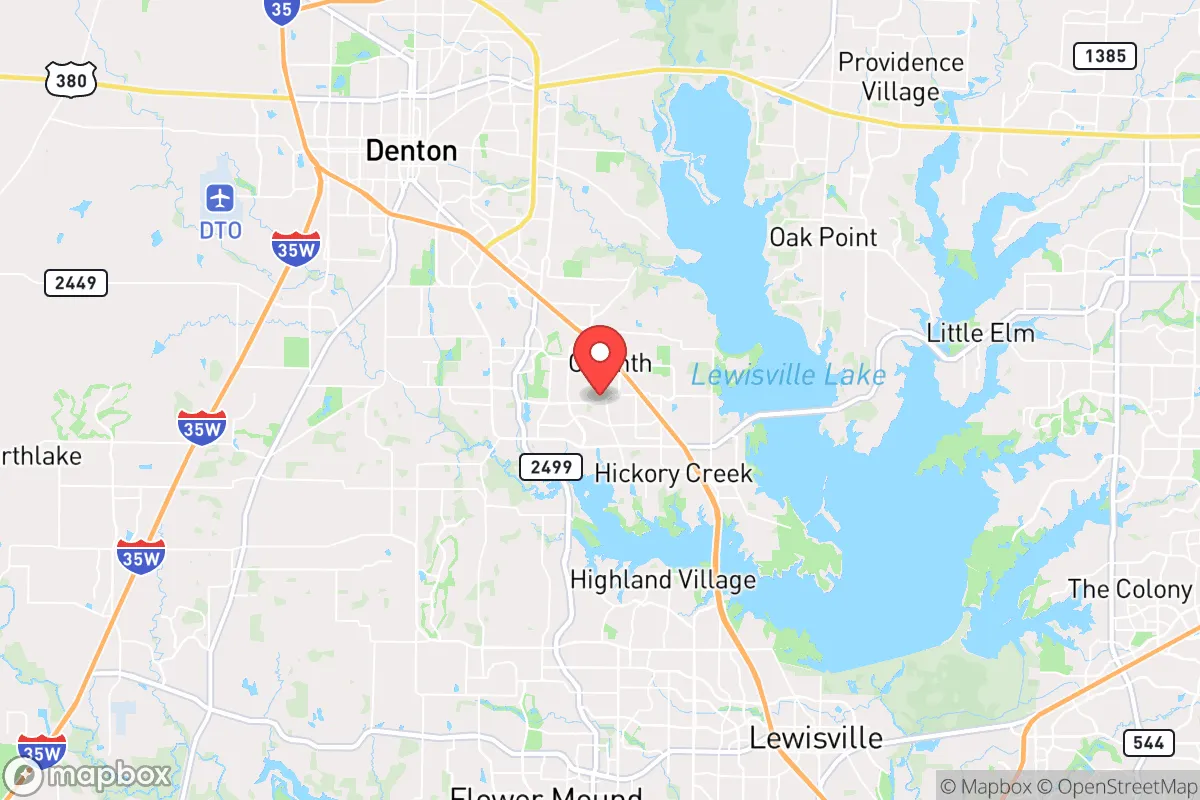
Strategic Assessment of Corinth, TX
Multiple tactical vulnerabilities. Population density, target proximity, or disaster risk are likely compounding. A retreat property and exit planning is required.
What does the Strategic Assessment tell us?
Our Strategic Assessment grades tactical survivability of an area. Major population centers, military targets, fallout zones, natural disasters, and border exposure all drive risk — lower exposure means a more defensible position in a crisis.
This is heavily inspired by Joel Skousen's Strategic Relocation book. Highly recommended you checkout the book ($)What does this tell us?
Our Strategic Assessment grades tactical survivability of an area. Major population centers, military targets, fallout zones, natural disasters, and border exposure all drive risk — lower exposure means a more defensible position in a crisis.
This is heavily inspired by Joel Skousen's Strategic Relocation book. Highly recommended you checkout the book ($)Strategic Pillars

Key Distances
Regional Safe Places
Below is our recommended "safe zones" in Texas and the surrounding area based on our strategic heuristics. For most people, it's unrealistic to live in a “safe zone” full-time due to work, family or other personal reasons. They tend to be more rural. However, many of these areas are perfect for second homes and retreat properties that double as a vacation home or even a short-term rental.

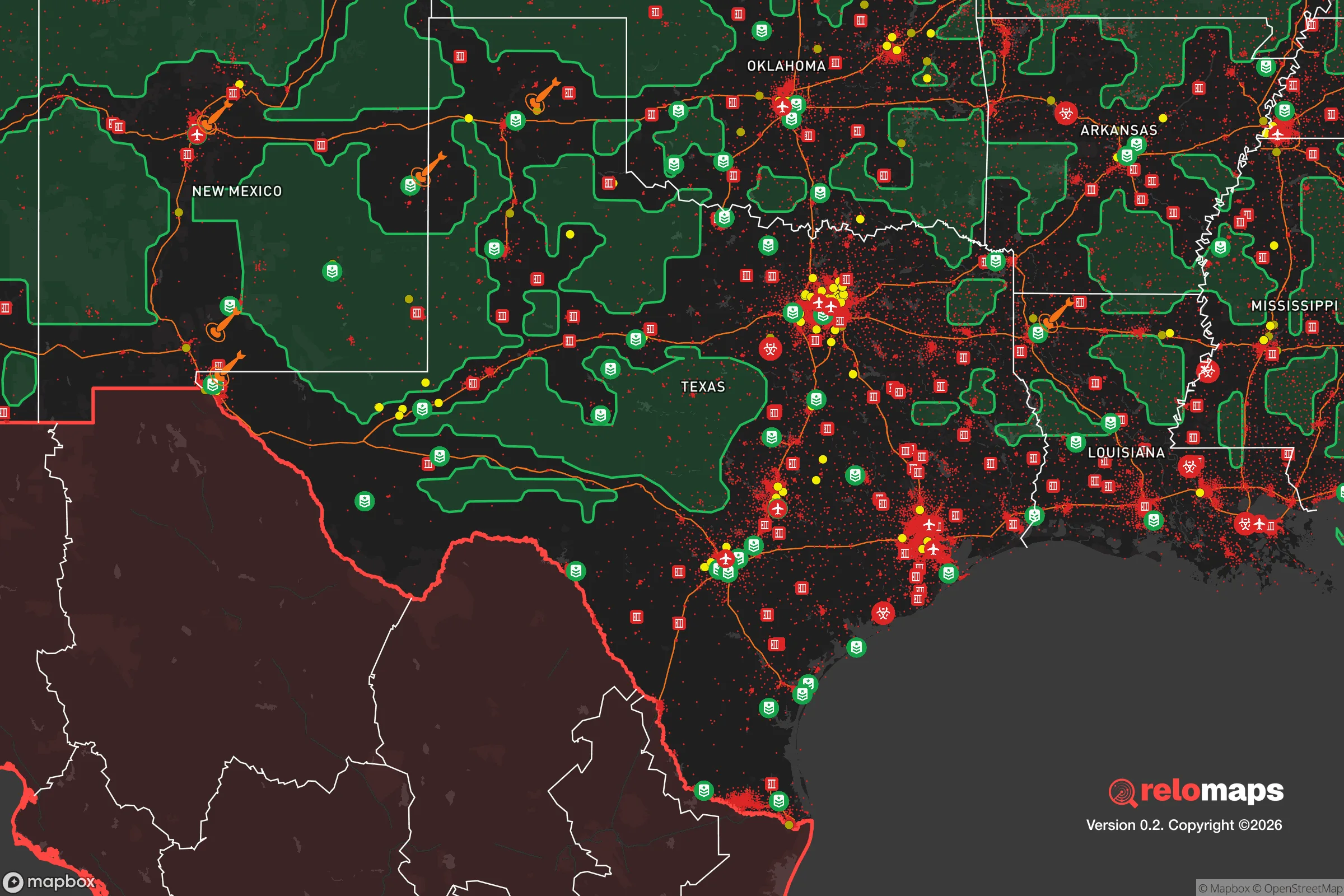


Important Note: For informational purposes only. This does not mean nothing bad ever happens in the green zones. Please use common sense. This is based on public data and modeled with AI. We tried to take a conservative approach but mistakes happen. We update this regularly as new information becomes available.
Solar Generator Recommendations
Backup power matters more here than in safer locations. We've picked three solar generators across budgets and capacity tiers — start with the budget unit if you only need a few essentials, or step up if you want to run a fridge and HVAC for days at a time.

Jackery Portable Power Station Explorer 300
Budget OptionPower on the Go: Weighing only 11 lbs, it's convenient to set up and store with book-sized foldable solar panels

BLUETTI Portable Power Station AC180
Designed for both indoor and outdoor scenarios, AC180 is highly capable as it has a robost capacity and continuous output power.

EF ECOFLOW DELTA Pro Ultra Power Station
Upgraded PickEcoFlow DELTA Pro Ultra is a whole-home energy system designed to grow with your family. Integrated with the Smart Home Panel 2, it scales to meet your evolving energy needs — keeping your home powered, intelligent, and secure through every stage of life.
We earn a commission, at no additional cost to you.
Strategic Assessment Analysis
Corinth, Texas, offers a strategic paradox for the conservative prepper: it sits in the northern Dallas-Fort Worth metroplex, yet its position on the edge of Denton County provides a buffer that many closer-in suburbs lack. The city’s resilience stems from its location along the I-35E corridor, giving quick access to both the resources of Denton and the open country to the north and west, while still being far enough from downtown Dallas (about 35 miles) to avoid the worst of a sudden urban collapse. For a relocator thinking about civic unrest or supply chain disruptions, Corinth’s real advantage is its ability to function as a transition zone—close enough to metro amenities for normal life, but with a clear escape route into the less populated areas of Cooke and Grayson counties if things go sideways.
Geographic position and natural advantages for long-term security
Corinth sits on the eastern edge of the Cross Timbers region, a band of post oak and blackjack forest that historically provided cover and resources for settlers. The terrain is gently rolling, with elevations around 600 feet, which means no floodplain issues like you’d see closer to the Trinity River. The city is bordered by Lake Lewisville to the south and east, a 29,000-acre reservoir that serves as a primary water source for the region. For a prepper, that lake is a double-edged sword: it’s a reliable water supply if you can treat it, but it also concentrates population and infrastructure along its shores. The natural advantage here is the Bartonville and Copper Canyon greenbelts to the west, which are sparsely developed and offer potential retreat corridors. The area’s limestone bedrock means good well water potential in the surrounding unincorporated zones, though Corinth itself is on municipal supply. The climate is typical North Texas—hot summers, occasional ice storms—but the lack of hurricane risk (unlike Houston or the coast) and minimal tornado activity compared to points farther west make it a lower-risk natural disaster zone overall.
Risks, exposures, and proximity to fallout-relevant landmarks
The biggest exposure for Corinth is its proximity to DFW Airport (about 20 miles south) and the Denton Energy Center (a natural gas power plant about 8 miles west). In a mass casualty event or EMP scenario, those are primary targets. The I-35E corridor itself is a chokepoint—if a major incident shuts down that highway, Corinth becomes a dead end, with only FM 2181 and Swisher Road as secondary exits. The city is also within 30 miles of the Pantex nuclear weapons plant near Amarillo? No, that’s 300 miles west—correction: the relevant risk is the Comanche Peak Nuclear Power Plant in Glen Rose, about 70 miles southwest. That’s outside the 50-mile emergency planning zone, but fallout patterns could still affect the area depending on wind. More immediate is the Denton Municipal Airport (10 miles west), which handles general aviation and could be a target for civil unrest-related sabotage. The Ray Roberts Lake State Park to the north is a potential FEMA staging area, which means military or law enforcement presence could surge into the region during a crisis. For a relocator, the key risk is being trapped between the lake and the highway—Corinth’s residential neighborhoods are well-planned but have limited egress points.
Practical resilience for a relocator: food, water, energy, and defensibility
Corinth’s practical resilience is mixed. On the positive side, the city has no zoning for high-density apartments—it’s almost entirely single-family homes on quarter-acre to half-acre lots, which means you can garden, install rainwater catchment, and keep a reasonable supply of firewood without HOA interference in most neighborhoods. The Denton County Master Gardener program is active here, and the soil is workable for vegetables with amendment. Water is the weak point: the municipal supply comes from Lake Lewisville via the Upper Trinity Regional Water District, which is vulnerable to contamination or pump failure. A prepper should budget for a Berkey filter or equivalent and at least 55 gallons of stored water per person. Energy is decent—CoServ Electric serves the area and has a reputation for faster storm restoration than Oncor in Dallas, but the grid is still part of ERCOT, meaning rolling blackouts are a real possibility during winter storms (see 2021). Solar panels are allowed, but HOAs may restrict placement. Defensibility is moderate: the neighborhoods are cul-de-sac heavy, which limits through traffic, but the lack of natural barriers (no rivers, no steep hills) means a determined group could move through the area. The Denton County Sheriff’s Office has a substation in Corinth, and response times are under 10 minutes for most calls, but in a widespread unrest scenario, that coverage will thin out fast. The best defensive feature is the community’s demographic stability—Corinth is 75% owner-occupied, with low turnover, which means neighbors are likely to know each other and form mutual aid networks organically.
Overall, Corinth scores as a B-tier relocation target for the serious prepper. It’s not remote enough to be a true bug-out location, but it’s far better than anything inside the 635 loop. The strategic picture is this: you get the economic and medical infrastructure of Denton (hospitals, Home Depot, grocery stores) within a 10-minute drive, while maintaining a residential footprint that can be hardened over time. The biggest threat is not a single event but a slow unraveling of supply chains—Corinth’s dependence on I-35 for food and fuel deliveries means any prolonged disruption will hit the local Walmart and Kroger within days. The solution is to treat Corinth as a base camp, not a fortress: build relationships with farmers in Sanger and Krum to the north, establish a secondary cache in the Lake Ray Roberts area, and keep your vehicle’s gas tank above half at all times. If you’re looking for a place that balances normal suburban life with a realistic preparation posture, Corinth works—just don’t mistake its quiet streets for true safety. The world is unstable, and this town is a good place to watch it from, not to hide from it.

* Values derived from national, state, county, city and local statistics and may differ in a specific area. Last updated: 2026-05-16T22:45:52.000Z
Narrative content on this page is AI-generated and may contain mistakes. Verify any details that matter before acting on them.
ReloMaps may earn a commission from affiliate links at no extra cost to you.

