Political ClimatePolitical Climate in Corinth, TX
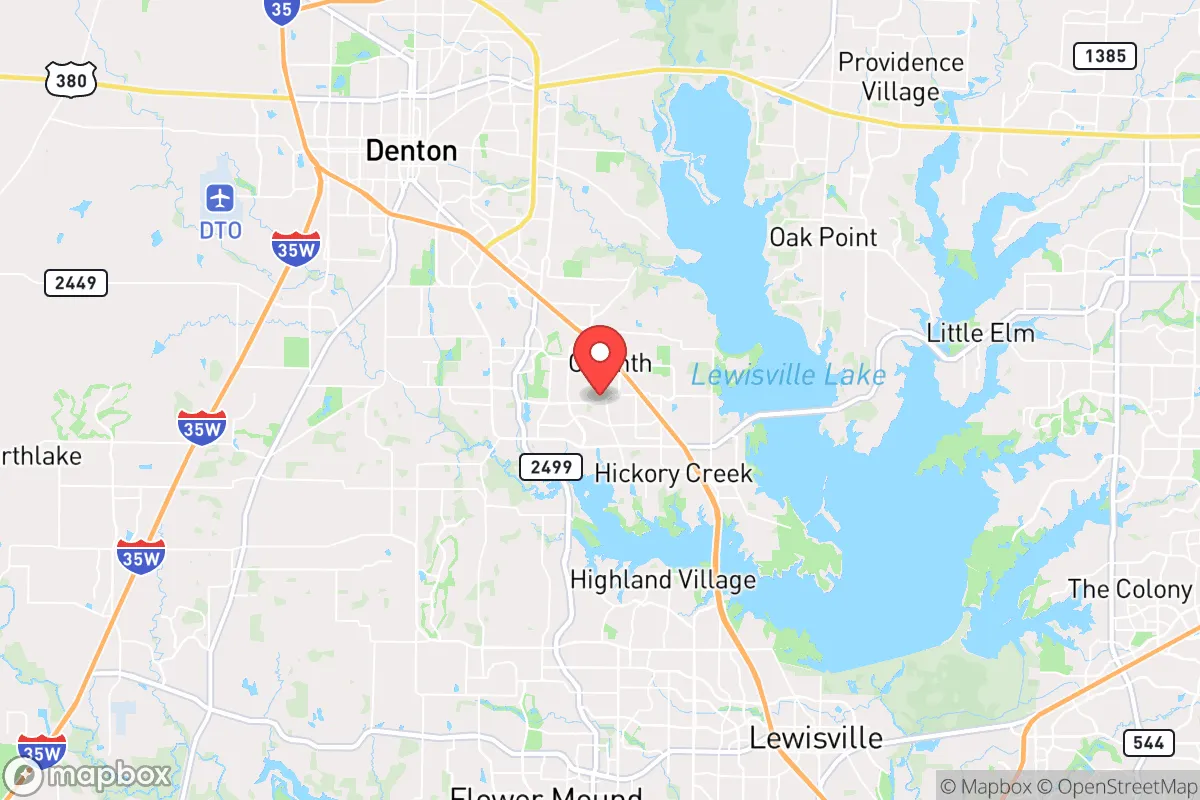
District shown is the primary district for this city’s centroid. Cities may span multiple districts.
Local Political AnalysisPolitical Analysis of Corinth, TX
Corinth, Texas, has long been a reliably conservative stronghold, and that hasn’t changed much even as the Dallas-Fort Worth metroplex has grown outward. With a Cook Partisan Voting Index (PVI) of R+11, this Denton County community votes Republican by a significantly wider margin than the state of Texas as a whole, which sits at R+4. You can feel it in the local elections, the school board meetings, and the general attitude around town—people here value limited government, personal responsibility, and the freedom to live without a lot of bureaucratic interference. If you’ve been around for a while, you’ve seen Corinth hold steady while some nearby towns have started to shift, and that stability is something a lot of folks appreciate.
How it compares
When you stack Corinth up against the rest of Texas, the difference is more than just a number on a chart. The state’s R+4 PVI reflects a mix of deep-red rural areas, purple suburbs, and increasingly blue urban centers like Austin, Houston, and Dallas. Corinth, by contrast, sits in a pocket of Denton County that has stayed reliably conservative even as the county itself has become more competitive. Drive a few miles south to parts of Carrollton or Lewisville, and you’ll start to see more progressive-leaning voters and policies—things like higher property tax proposals and more aggressive zoning regulations. Corinth has largely avoided that drift. The city council and local leadership tend to focus on keeping taxes low, protecting property rights, and pushing back on state or federal overreach. It’s the kind of place where people still believe the government that governs least governs best.
What this means for residents
For someone living in Corinth, the political climate translates directly into daily life. You’re less likely to see the kind of heavy-handed local ordinances that pop up in more progressive suburbs—things like strict rental caps, mandated affordable housing quotas, or overreaching environmental regulations that tell you what you can do with your own land. The schools here tend to emphasize parental rights and local control, and there’s a general wariness of any policy that feels like it’s coming from Austin or Washington rather than from the community itself. That said, as the metroplex continues to expand, there’s a real concern among long-time residents that outside pressure could start to erode those freedoms. The key is staying engaged—showing up at city council meetings, voting in every local election, and keeping an eye on who’s running for school board. Complacency is how you lose a place like this.
Culturally, Corinth still feels like a small town in a lot of ways, even though it’s part of a major metropolitan area. You won’t find the kind of progressive activism you might see in Denton proper, which has a more college-town vibe and a city council that’s leaned left in recent years. The contrast is pretty stark: Denton has embraced things like sanctuary city policies and higher minimum wage ordinances, while Corinth has stayed focused on public safety, low taxes, and keeping government out of people’s personal lives. For residents who value those principles, Corinth offers a refuge from the creeping overreach that’s becoming more common in other parts of the state. The trajectory here depends on whether the community can hold the line as new people move in, but for now, it remains one of the more reliably conservative spots in North Texas.

State Political ClimatePolitical Climate in Texas
State Political AnalysisPolitical Environment in the State
Texas has been a reliably Republican state for decades, with a Cook PVI of R+4, but the coalition that keeps it red is shifting underfoot. The dominant political force remains a mix of rural conservatives, suburban families, and business interests, but the 10-20 year arc shows a slow squeeze: the GOP’s margin of victory in presidential races has shrunk from 16 points in 2012 to about 9 points in 2024, driven by explosive growth in the blue-leaning metros of Austin, Dallas, Houston, and San Antonio. Meanwhile, the state legislature and statewide offices have moved further right on cultural and economic issues, creating a tension between the state’s policy direction and its changing electorate.
Urban vs. rural divide
The political map of Texas is a stark checkerboard. The big four metros — Houston (Harris County), Dallas (Dallas County), San Antonio (Bexar County), and Austin (Travis County) — now vote reliably Democratic, with Harris County flipping blue in 2018 and staying there. Austin is the epicenter of progressive activism, with Travis County delivering a 40-point margin for Democrats in 2024. The suburbs that once anchored GOP strength are splitting: Collin County (north of Dallas) went from +18 R in 2012 to +6 R in 2024, while Tarrant County (Fort Worth) flipped to blue in 2020 and stayed close in 2024. Meanwhile, rural and exurban counties like Smith (Tyler), Ector (Odessa), and Hidalgo (McAllen) have only deepened their red hues, with some rural precincts hitting 80-90% Republican. The Panhandle — think Lubbock and Amarillo — remains deeply conservative, but it’s losing population share to the booming I-35 corridor, where the political battle lines are drawn.
Policy environment
Texas’s policy environment is defined by a low-tax, low-regulation posture that appeals to conservatives. There is no state income tax, and property taxes are high but capped at 10% annual growth for homesteads (Prop 4, 2023). The regulatory climate is business-friendly, with no state-level occupational licensing for many trades and a right-to-work law that weakens unions. Education policy is a flashpoint: the 2023 school voucher bill (SB 8) passed, allowing families to use public funds for private or homeschool expenses, though it’s tied up in court challenges. Healthcare is a mixed bag — Texas refused Medicaid expansion under Obamacare, leaving 18% of residents uninsured (the highest rate in the nation), but the state has expanded telehealth and loosened scope-of-practice laws for nurse practitioners. Election laws tightened after 2020: SB 1 (2021) banned 24-hour and drive-through voting, added ID requirements for mail ballots, and empowered partisan poll watchers. For a conservative, the policy environment is largely aligned with limited government, but the lack of Medicaid expansion and high property taxes are persistent gripes.
Trajectory & freedom
On personal liberty, Texas has moved in two directions simultaneously. On the freedom side, the state expanded gun rights with permitless carry (HB 1927, 2021), allowing any law-abiding adult to carry a handgun without a license. Parental rights were strengthened with the 2023 ban on gender transition procedures for minors (SB 14) and a law requiring schools to get parental consent for sex education materials (HB 1525). Medical autonomy took a hit with the near-total abortion ban (SB 8, 2021, and the trigger law in 2022), which prohibits abortion from conception with narrow exceptions — a win for pro-life conservatives but a loss for those who prioritize medical privacy. Property rights saw a boost with the 2023 law limiting eminent domain for private projects (HB 2730). On the concerning side, the state has expanded surveillance: the 2023 law requiring social media platforms to verify user ages (HB 18) and the 2021 law banning certain content moderation practices (HB 20) both increase government oversight of private platforms. The net trajectory is more freedom on guns, family, and property, but less on medical choice and digital privacy — a trade-off that many conservatives accept but some find troubling.
Civil unrest & political movements
Texas has been a stage for high-profile political flashpoints. The 2020 protests in Austin and Dallas over George Floyd’s death saw property damage and curfews, but the state responded with the 2021 law protecting police from defunding efforts (HB 1900) and increasing penalties for rioting (SB 1). Immigration politics are a constant: Governor Abbott’s Operation Lone Star (2021-present) deployed state troopers and National Guard to the border, bused migrants to northern cities, and installed razor wire in Eagle Pass, sparking lawsuits from the Biden administration. Sanctuary city bans remain in place, and the 2023 law allowing state police to arrest suspected illegal immigrants (SB 4) is being challenged in court. Secession rhetoric flares up occasionally — the Texas Nationalist Movement pushes for independence, but it’s fringe. Election integrity remains a live issue: the 2020 audit of Harris County found no widespread fraud, but the 2021 law tightened procedures anyway. A new resident in a blue city like Austin will see regular protests on the Capitol steps, while in a red town like Midland, the political energy is around border security and school choice rallies.
Projection
Over the next 5-10 years, Texas will likely remain Republican at the state level but with a shrinking margin. In-migration from California and the Northeast — roughly 1,000 people per day — is bringing more moderate and left-leaning voters to the suburbs of Dallas, Houston, and Austin. The state’s fast-growing Hispanic population, historically more conservative than national averages, is trending younger and more Democratic, especially in border cities like El Paso and the Rio Grande Valley. The GOP will likely double down on cultural issues (school choice, border security, parental rights) to hold its base, while Democrats will target the suburbs and Hispanic voters. The state legislature is gerrymandered to protect Republican majorities through 2030, so major policy shifts are unlikely. A new resident moving in now should expect a state that stays red on taxes and guns, but where the cultural wars intensify — especially in the suburbs of Collin County and Fort Bend County, where the political future of Texas will be decided.
For a conservative moving to Texas, the bottom line is this: you’ll find a state that generally respects your right to keep your money, raise your family, and defend your home, but you’ll need to pick your county carefully. The rural and exurban areas — think the Hill Country around Kerrville or the Panhandle near Amarillo — offer the most aligned political culture. The big cities and their inner suburbs are increasingly blue, so if you want to avoid the culture wars, look at the outer ring suburbs like Celina or Forney, or the smaller cities like Tyler and Waco. The state’s trajectory is toward more friction, not less, but the policy environment remains one of the most freedom-oriented in the country for those who value low taxes, gun rights, and parental control over education.
* Values derived from national, state, county, city and local statistics and may differ in a specific area. Last updated: 2026-05-16T22:45:52.000Z
Narrative content on this page is AI-generated and may contain mistakes. Verify any details that matter before acting on them.
ReloMaps may earn a commission from affiliate links at no extra cost to you.

