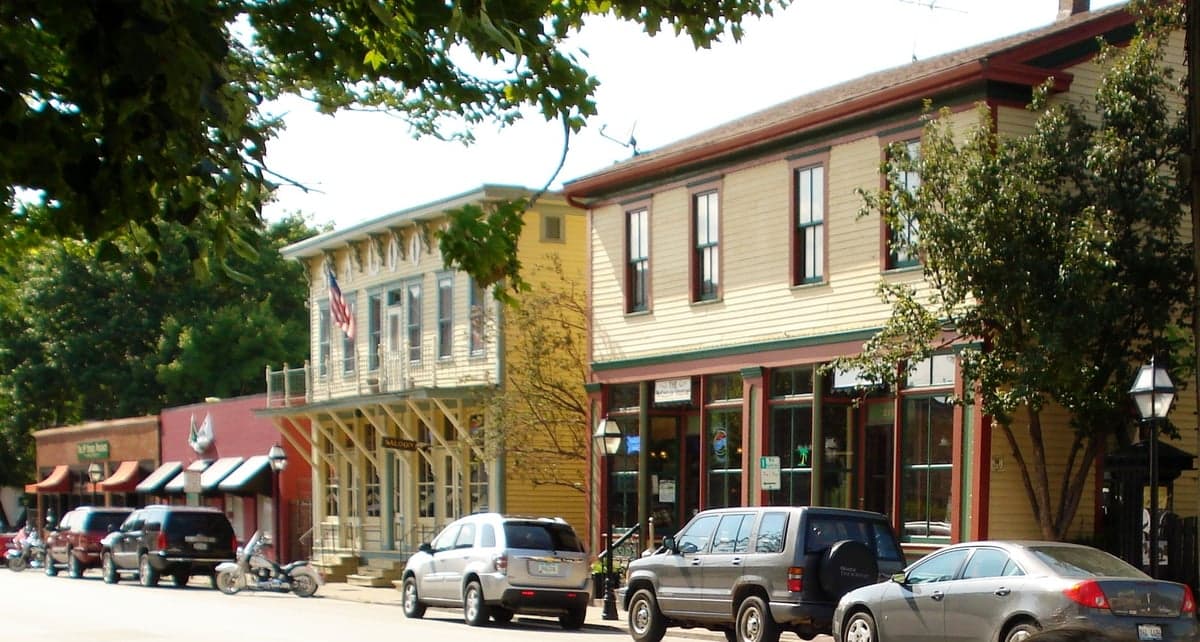
Photo: Wikipedia
Political ClimatePolitical Climate in Davenport, IA
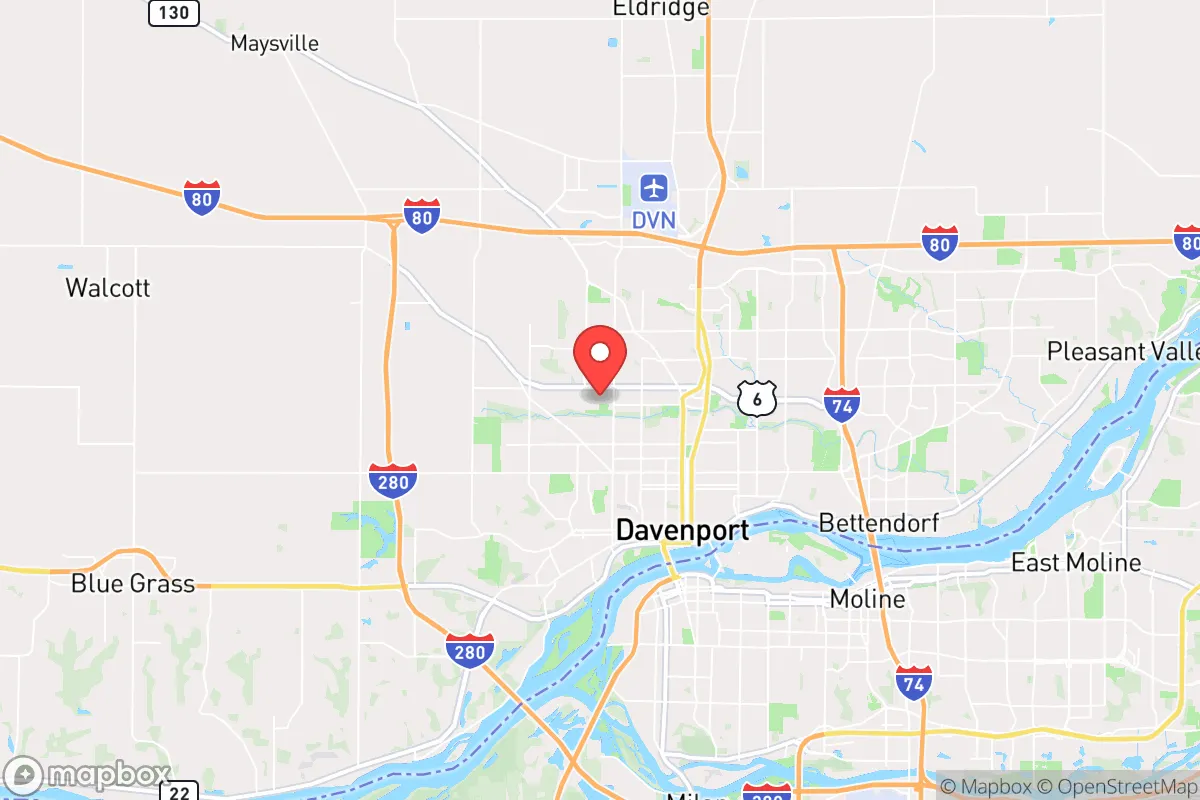
District shown is the primary district for this city’s centroid. Cities may span multiple districts.
Local Political AnalysisPolitical Analysis of Davenport, IA
Davenport leans Republican, but it’s not the deep-red stronghold you might expect for a Quad Cities hub. The Cook PVI sits at R+4, meaning the district is about four points more Republican than the national average—solidly conservative, but with a notable blue streak running through the city itself. If you’ve been around here long enough, you’ve watched the political center of gravity shift: Scott County used to be a reliable GOP lock, but over the last decade, Davenport proper has drifted left, especially in the downtown and near-west side precincts. The rural townships and suburbs like Bettendorf and LeClaire still lean right, but the city council and county board have seen a steady influx of progressive voices that would’ve been unthinkable twenty years ago.
How it compares
Drive ten miles east to Moline, Illinois, and you’re in a solidly blue county (Rock Island) where property taxes are higher and gun laws are stricter. Head west to Muscatine or north to Clinton, and you’ll find communities that vote more reliably Republican than Davenport. The real contrast, though, is inside Scott County itself: Bettendorf, with its newer subdivisions and higher median income, votes about 10-15 points more Republican than Davenport. Meanwhile, the city’s core—especially around the Village of East Davenport and the Hilltop campus of St. Ambrose University—has become a pocket of progressive activism that can feel out of step with the rest of the county. If you value limited government and personal freedom, you’ll notice the difference in how the two cities handle everything from zoning to mask mandates.
What this means for residents
For a conservative resident, the biggest concern is the slow creep of government overreach into everyday life. The city council has pushed for more restrictive rental inspection ordinances, higher minimum wages, and a “welcoming city” resolution that limits cooperation with federal immigration enforcement. These aren’t radical by coastal standards, but they’re a far cry from the hands-off approach that made Davenport a low-regulation haven for small businesses and gun owners. Property taxes in Scott County have risen about 18% over the last five years, partly to fund expanded social services and public transit that many rural residents see as unnecessary. On the flip side, the Second Amendment is still respected here—Iowa’s permitless carry law passed in 2021, and Davenport’s range and gun shops remain busy. The school board has also stayed relatively moderate, avoiding the culture-war battles that have consumed districts in Des Moines or Cedar Rapids.
If you’re looking at the long-term trajectory, the trend is concerning. The 2024 election saw Scott County flip back to Trump after a narrow Biden win in 2020, but the margin was razor-thin—less than 1,000 votes out of 80,000 cast. The city’s growing Hispanic population (now about 12% of residents) and the influx of remote workers from Chicago are slowly tilting the electorate. The Quad Cities has always been a pragmatic, blue-collar region where people care more about potholes and property taxes than partisan labels, but the nationalization of local politics is real. If you value personal freedom and limited government, you’ll find plenty of like-minded neighbors in the suburbs and rural areas, but you’ll need to stay engaged to keep Davenport from sliding into the kind of progressive overreach that’s already hit Moline and Rock Island.

State Political ClimatePolitical Climate in Iowa
State Political AnalysisPolitical Environment in the State
Iowa has been a reliably Republican state in presidential elections since 2016, but it wasn’t always that way. For decades, it was a classic swing state, voting for Barack Obama twice and Al Gore once. The shift has been dramatic: in 2020, Donald Trump won the state by 8.5 points, and in 2024, he carried it by 13 points. The dominant coalition is now a mix of rural conservatives, evangelical Christians, and working-class voters in smaller industrial towns, while the old Democratic strongholds in union-heavy cities like Dubuque and Waterloo have eroded. The trajectory over the last 20 years is a clear march rightward, driven by cultural and economic realignment.
Urban vs. rural divide
The political map of Iowa is a textbook case of the urban-rural split. The state’s two largest metros, Des Moines and Iowa City, are blue islands in a red sea. Polk County (Des Moines) went for Biden in 2020 by 16 points, and Johnson County (Iowa City) by a whopping 40 points. But outside those bubbles, the landscape flips hard. The rural northwest, including counties like Sioux and Lyon, regularly vote 80%+ Republican. The real story is the suburbs: places like Ankeny and Waukee, once purple, have shifted right as families flee Des Moines for lower taxes and better schools. Meanwhile, the old Democratic base in the Mississippi River towns—Davenport, Clinton, Burlington—has shrunk as manufacturing jobs disappeared. The divide isn’t just geographic; it’s cultural. A farmer in Carroll County and a professor in Iowa City live in different worlds.
Policy environment
Iowa’s policy environment is aggressively conservative on most fronts, but with some pragmatic wrinkles. The state has a flat income tax of 3.8% (down from 8.98% a decade ago), with a plan to hit 3.5% by 2027. Property taxes are low, and there’s no inheritance tax. Governor Kim Reynolds signed a six-week abortion ban in 2023, which the state supreme court upheld in 2024. Education policy is a flashpoint: the 2023 “Students First” law created universal Education Savings Accounts (ESAs), letting parents use public funds for private or homeschool costs. That’s a huge win for school choice. On the flip side, the state’s medical cannabis program is still restrictive—no smokable flower, only oils and edibles—which frustrates some libertarian-leaning residents. Election laws tightened in 2021 with a voter ID requirement and reduced early voting days, which conservatives see as integrity measures and progressives call suppression. Overall, the policy tilt is toward lower taxes, parental rights, and limited government, but with a strong social conservative streak.
Trajectory & freedom
Iowa is becoming more free in several key areas, especially compared to neighboring states like Illinois or Minnesota. The 2021 “Stand Your Ground” law expanded self-defense rights, and in 2024, the legislature passed a permitless carry law for handguns—no license, no training required. That’s a big deal for gun owners. On parental rights, the 2023 law banning instruction on sexual orientation and gender identity in K-6 classrooms (SF 496) was a major win for conservatives who felt schools were overstepping. Property rights got a boost with a 2022 law limiting eminent domain for carbon pipelines, though the fight over the Summit Carbon Solutions pipeline continues. The downside? The state’s medical freedom took a hit during COVID, with Reynolds imposing mask mandates and business closures early on, though she later reversed course. More recently, a 2024 law banned COVID vaccine mandates for state employees and contractors. The trajectory is toward more personal liberty on guns, education, and taxes, but with a heavy hand on social issues like abortion and transgender rights.
Civil unrest & political movements
Iowa has seen its share of political flashpoints, but nothing like the riots in Portland or Minneapolis. The 2020 Black Lives Matter protests in Des Moines and Iowa City were largely peaceful, though there were some property damage incidents. The bigger story is the organized conservative movement. The Iowa Faith & Freedom Coalition is a powerful force, driving turnout on abortion and religious liberty. On the left, the Iowa Citizens for Community Improvement (CCI) is active on environmental and labor issues, but they’ve lost influence as unions have shrunk. Immigration politics are relatively quiet—Iowa has a small foreign-born population (about 5%), and there are no sanctuary cities. The state did pass a 2024 law requiring local law enforcement to cooperate with ICE, which drew protests from immigrant rights groups but little broader unrest. Election integrity was a hot topic after 2020, with the state GOP pushing for audits and the voter ID law. You won’t see daily protests, but the political energy is real—especially in rural areas where “Trump 2024” signs are still up. The biggest visible flashpoint is the pipeline fight, with farmers and environmentalists (an odd alliance) blocking construction in places like Palo Alto County.
Projection
Over the next 5-10 years, Iowa will likely get more Republican and more conservative. The demographic trends favor the GOP: the state is aging (median age 38.7), and older voters lean right. In-migration is modest, but the people moving in tend to be conservatives fleeing high-tax states like Illinois and California. The Des Moines suburbs will continue to grow and shift right, while the rural areas will stay deep red. The wild card is the urban cores: Des Moines and Iowa City are attracting young progressives, but they’re not growing fast enough to offset the rural advantage. The state’s congressional delegation is already all-Republican, and that’s unlikely to change. The biggest threat to the conservative agenda is internal: fights between the establishment (Reynolds) and the populist wing over issues like trade and immigration. Expect more school choice expansion, further tax cuts, and continued battles over transgender rights and abortion. If you’re moving here, you’ll find a state that’s solidly red and getting redder, with a government that’s generally on your side if you value low taxes, gun rights, and local control.
Bottom line for a new resident: Iowa is a safe bet if you want a state that respects your wallet, your guns, and your right to choose your kids’ education. The politics are stable and predictable—no surprise blue flips coming. You’ll find a community that values hard work and common sense, but don’t expect a libertarian paradise; the government still has opinions on your personal life, especially around abortion and medical choices. If you’re okay with that trade-off, you’ll feel right at home in places like Ankeny, Waukee, or even small towns like Pella or Orange City. Just avoid Iowa City if you’re looking for conservative neighbors.
* Values derived from national, state, county, city and local statistics and may differ in a specific area. Last updated: 2026-04-22T23:51:42.000Z
Narrative content on this page is AI-generated and may contain mistakes. Verify any details that matter before acting on them.
ReloMaps may earn a commission from affiliate links at no extra cost to you.

