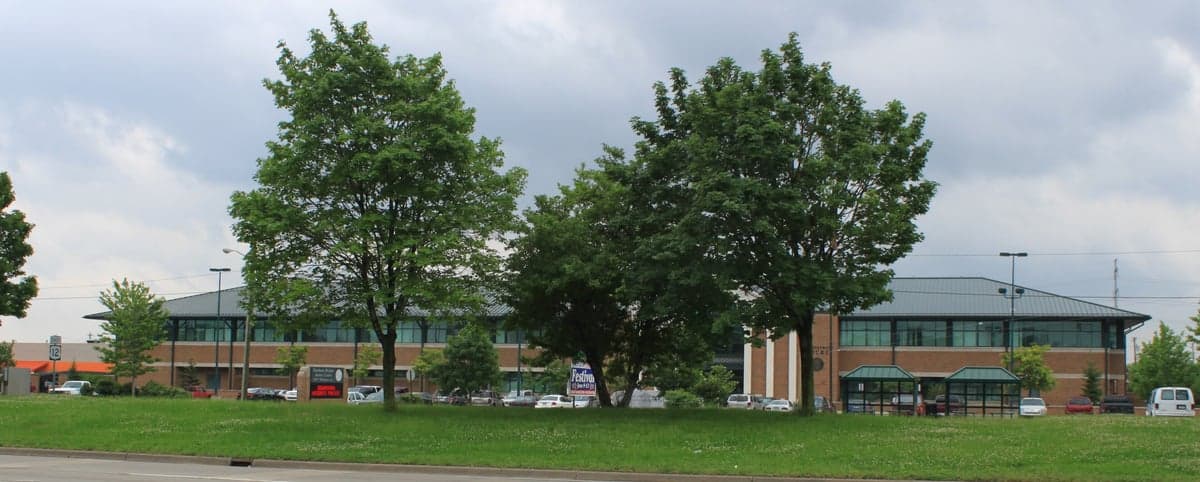
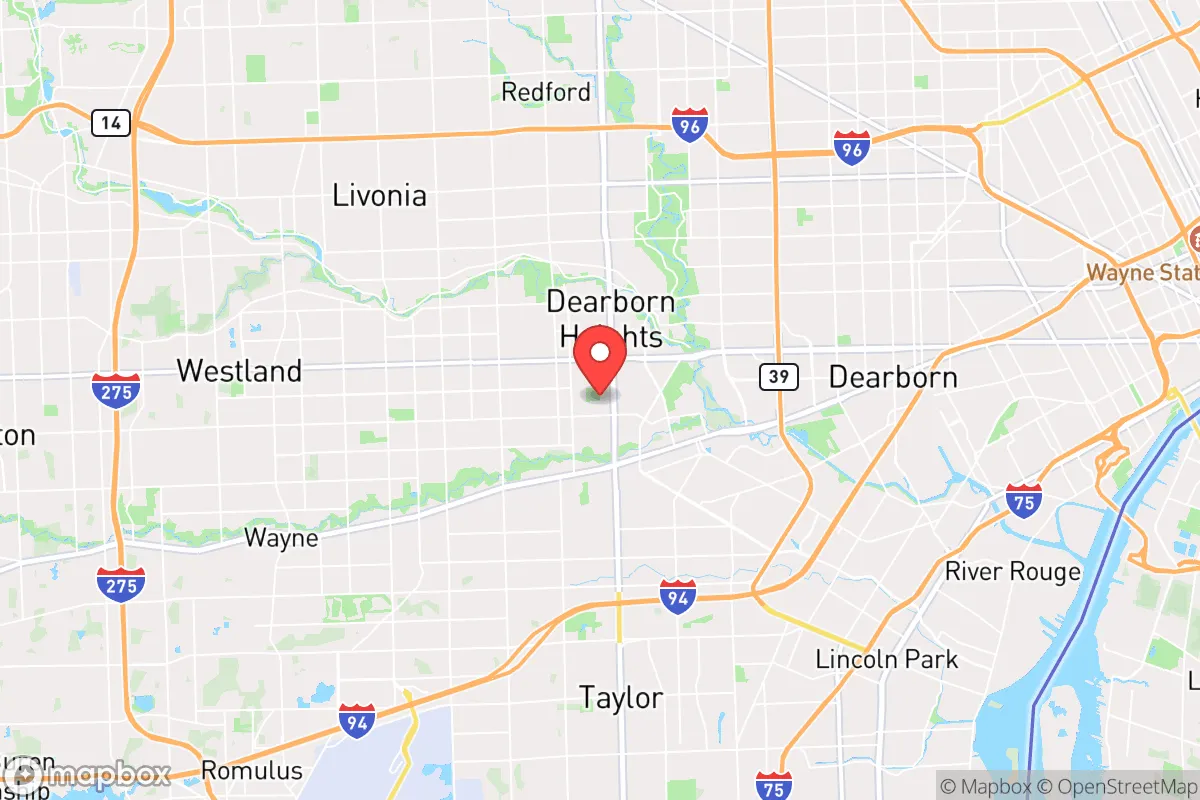
Photo: Wikipedia
Demographics of Dearborn Heights, MI
Affluence Level in Dearborn Heights, MI
A below-average socioeconomic profile. Incomes, home values, and educational attainment trail the U.S., with higher poverty and unemployment.
People of Dearborn Heights, MI
Dearborn Heights, Michigan, is a predominantly white, middle-class suburb of 62,099 residents that retains a distinctly blue-collar, family-oriented character. The city is notably less diverse than neighboring Dearborn, with a foreign-born population of just 5.7% and a population that is 81.7% white, 8.9% Black, and 5.1% Hispanic. Its identity is shaped by a legacy of Polish and Eastern European Catholic settlement, a strong sense of local independence, and a population that is older and less college-educated (23.9%) than the regional average, making it a stable but slowly aging community.
How the city was settled and grew
Dearborn Heights was not a historic 19th-century settlement but rather a product of post-World War II suburbanization. The land was originally part of Dearborn and Inkster townships, consisting of farms and scattered homes. The city was formally incorporated in 1960, a consolidation of several unincorporated areas that had been rapidly filling with returning veterans and auto workers. The first major wave of settlers were Polish and Eastern European Catholic families who moved out of Detroit’s older neighborhoods like Poletown and Hamtramck in the 1950s and 1960s. They built their homes and parishes in what are now the Warrendale and Beverly Hills neighborhoods (the latter a local name, not the California city), creating a dense network of churches, bingo halls, and social clubs. A smaller but significant wave of Italian-American families settled in the Garden City Road corridor, establishing a distinct enclave around St. Linus Catholic Church. These groups were drawn by affordable ranch-style homes on larger lots, proximity to Ford Motor Company plants in Dearborn, and the desire for a safe, ethnically homogeneous environment away from Detroit’s growing racial tensions.
Modern era (post-1965)
The post-1965 era brought two notable demographic shifts. First, a modest wave of Arab-American families, primarily from Lebanon and Yemen, began moving into the eastern edge of the city near the Dearborn border, particularly around the North Beech Daly area. This group remains a small but visible minority, distinct from the much larger Arab-American population in neighboring Dearborn. Second, Black families began moving into the city in the 1980s and 1990s, primarily settling in the southwest quadrant near the Inkster border, an area that had seen white flight from older housing stock. Today, the Black population stands at 8.9%, concentrated in that southern corridor. The East/Southeast Asian population (0.7%) and Indian subcontinent population (0.4%) remain very small, with no single neighborhood concentration. The city’s white population has declined from over 95% in 1980 to 81.7% today, but the pace of change has slowed considerably since 2010, as the city has not attracted significant new immigrant flows.
The future
The population of Dearborn Heights is heading toward slow decline and further homogenization. The city lost roughly 1,500 residents between 2010 and 2020, and the population is aging, with a median age above 40. The Polish and Eastern European Catholic base is shrinking as younger generations move to farther-out suburbs like Canton or Novi. The Arab-American community is plateauing, not growing, as most new Arab immigrants bypass Dearborn Heights for Dearborn or Hamtramck. The Black population is stable but not expanding, as the city lacks the affordable housing stock to attract significant new Black families from Detroit. The Hispanic population (5.1%) is the only group showing modest growth, driven by Mexican-American families moving from southwest Detroit into the southwest corner near the Inkster line. Over the next 10-20 years, Dearborn Heights will likely become a whiter, older, and more economically stagnant suburb, with its remaining ethnic enclaves slowly dissolving into a general, non-ethnic white middle-class identity.
For a conservative-leaning individual or family moving in now, Dearborn Heights offers a stable, safe, and affordable environment with low crime and good schools, but it is a community that is aging in place rather than growing or diversifying. The city is becoming a quiet, residential haven for those who value familiarity and low taxes over urban energy or rapid change. New residents should expect a place where the population is slowly shrinking, the local economy is tied to nearby Dearborn and Detroit, and the social fabric remains rooted in the Polish-Catholic traditions of the 1960s, even as those traditions fade with each passing year.

* Values derived from national, state, county, city and local statistics and may differ in a specific area. Last updated: 2026-04-29T20:59:35.000Z
Narrative content on this page is AI-generated and may contain mistakes. Verify any details that matter before acting on them.
ReloMaps may earn a commission from affiliate links at no extra cost to you.

