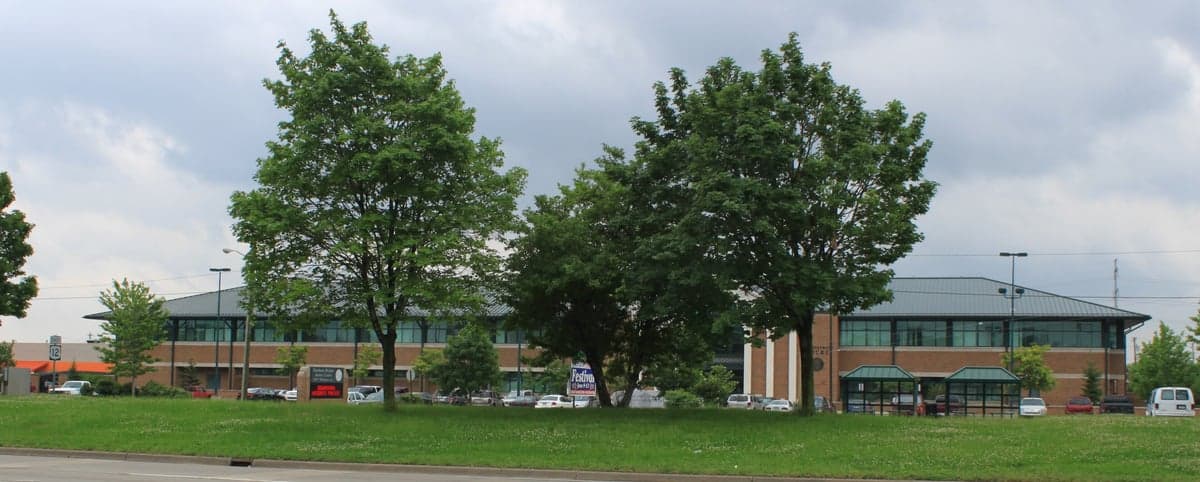
Photo: Wikipedia
Political ClimatePolitical Climate in Dearborn Heights, MI
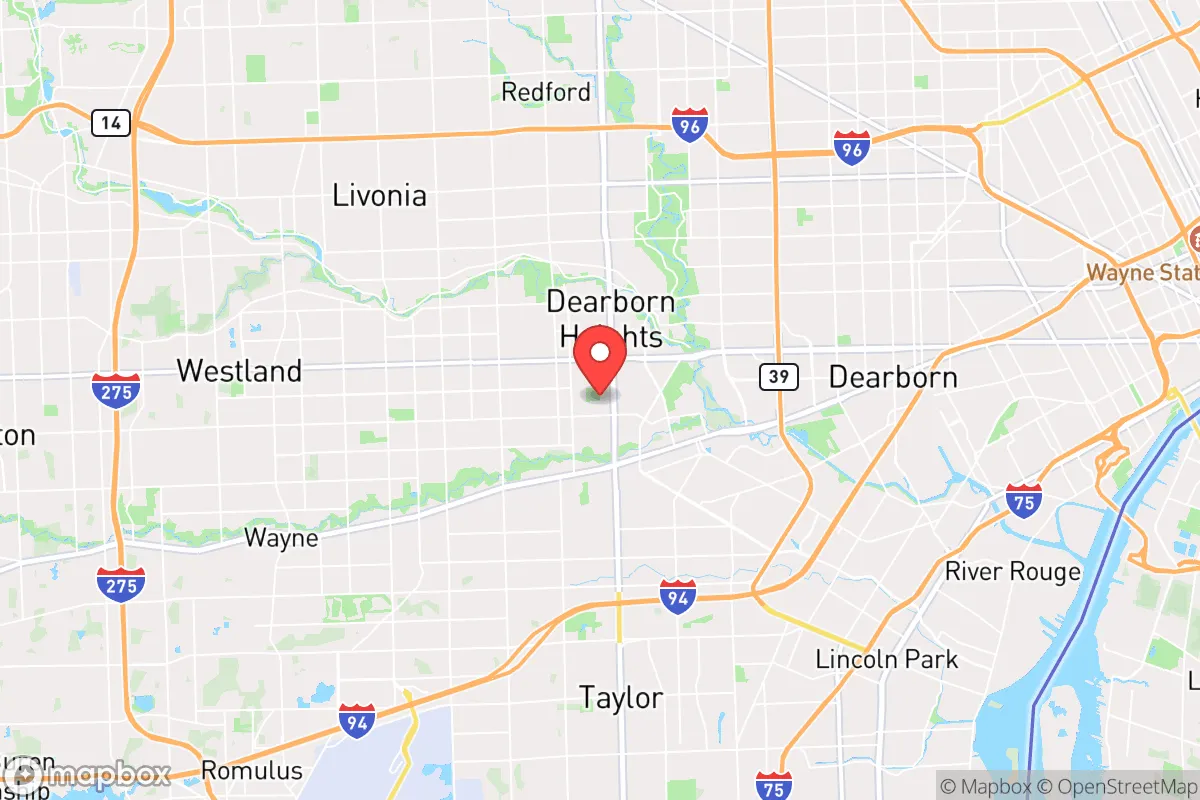
District shown is the primary district for this city’s centroid. Cities may span multiple districts.
Local Political AnalysisPolitical Analysis of Dearborn Heights, MI
Look, I’ve lived in Dearborn Heights my whole life, and I’ve watched this town shift from a solid, blue-collar, middle-class community into something that feels a lot more one-sided politically. The Cook PVI of D+21 tells you the headline: this is a heavily Democratic area, and it’s been trending that way for a while. But the real story is how that shift has changed the feel of the place, especially for folks who lean conservative or just want to be left alone.
How it compares
If you drive ten minutes west to Livonia or head north to Farmington Hills, you’ll notice a different vibe. Livonia still has a strong conservative streak—it’s a place where people actually talk about property taxes and school board meetings without getting labeled. Dearborn Heights, though, is surrounded by cities that are even more progressive. Dearborn itself is a Democratic stronghold, and Allen Park and Taylor are moving in the same direction. The contrast is stark: in Livonia, you can still find a local diner where folks openly complain about government spending. In Dearborn Heights, that same conversation gets you side-eyes. The political machine here is well-oiled, and it’s not friendly to dissent.
What this means for residents
For a conservative or even a moderate who values personal freedom, living here means picking your battles carefully. The city council and school board have leaned hard into progressive policies over the last decade. You’ve got zoning rules that feel more like social engineering, and the local government has a habit of getting involved in things that used to be private matters. Want to put up a fence without a permit? Good luck. The bureaucracy has grown, and it’s not just about paperwork—it’s about control. Property taxes have crept up, and there’s a sense that the city sees itself as a manager of your life, not a servant of your rights. The police presence is decent, but the overall attitude from city hall is “we know what’s best for you.” That’s a red flag for anyone who remembers when this town was more about minding your own business.
The cultural shift is real, too. The old Polish and Arab-American communities that gave Dearborn Heights its character are still here, but the political energy has moved toward identity politics and top-down mandates. You see it in the school curriculum, in the local library’s programming, and in the way city events are run. It’s not the same place where you could just let your kids play in the yard without worrying about some new ordinance or “inclusive” policy that actually limits your choices. The long-term trajectory is concerning: if the current trend holds, Dearborn Heights will become a place where conservative voices are not just outnumbered but actively marginalized. For now, it’s still possible to live here and keep your head down, but the pressure to conform is real. If you value your privacy and your right to live without government overreach, you might want to keep an eye on the next few election cycles—or start looking at Livonia.

State Political ClimatePolitical Climate in Michigan
State Political AnalysisPolitical Environment in the State
Michigan has long been a political bellwether, but over the past 20 years it’s shifted from a reliably purple battleground to a state where Democrats now hold all three levers of state government—the governorship, the state House, and the state Senate—after the 2022 elections. The dominant coalition is a union-heavy, suburban, and increasingly progressive bloc centered in Southeast Michigan, while the rest of the state has trended hard red. If you’re a conservative looking to relocate, the key takeaway is that Michigan is no longer the moderate, blue-collar swing state it was in 2000; it’s now a state where one-party control has rapidly enacted a progressive agenda that many residents in the northern Lower Peninsula and Upper Peninsula feel disconnected from.
Urban vs. rural divide
The political map of Michigan is a stark study in contrast. The Democratic stronghold is the Detroit metro area—specifically Wayne County (Detroit), Washtenaw County (Ann Arbor), and Oakland County (the wealthy northern suburbs). These three counties alone deliver roughly 40% of the state’s Democratic votes. Ann Arbor is a progressive college town that drives policy on environmental and social issues, while Detroit’s declining population still yields a massive Democratic base. On the flip side, rural and exurban Michigan is deeply Republican. The western side of the state—Kent County (Grand Rapids) and Ottawa County (Holland)—has historically been a conservative anchor, but even Grand Rapids is now trending purple as younger professionals move in. The real red strongholds are the northern Lower Peninsula (counties like Antrim, Charlevoix, and Emmet) and the entire Upper Peninsula, where Trump won by double digits in 2020. Macomb County, just north of Detroit, remains the classic bellwether—it voted for Obama twice, then Trump twice, then narrowly for Biden in 2020. That county’s blue-collar, culturally conservative voters are the ones who feel most alienated by the current Democratic trifecta.
Policy environment
Michigan’s policy environment has shifted dramatically since Democrats took full control in 2023. The state has a flat income tax rate of 4.25%, but that’s set to drop to 4.05% in 2026 due to a 2015 law that triggers automatic cuts when revenues exceed inflation—a rare pro-taxpayer mechanism. Property taxes are moderate, but the real concern for conservatives is the regulatory creep. In 2023, the legislature repealed the state’s right-to-work law, which had been in place since 2012, allowing unions to once again require dues as a condition of employment. They also restored prevailing wage requirements on state construction projects. On education, Michigan has adopted a “whole child” approach that includes social-emotional learning standards, and the state board of education has pushed for LGBTQ-inclusive curricula. Election laws were loosened via a 2022 ballot initiative (Proposal 2) that expanded early voting, allowed same-day voter registration, and mandated drop boxes—changes supporters call access and critics call security risks. The state also has a Democratic-appointed Supreme Court majority, which has upheld these changes.
Trajectory & freedom
Michigan is clearly moving in a less free direction for conservatives. The most glaring example is the 2023 repeal of right-to-work, which directly reduces individual workers’ freedom to choose whether to pay union dues. On gun rights, Michigan went from a shall-issue concealed carry state to one that now requires a license to purchase a pistol (already the law) and, in 2023, passed universal background checks and a “red flag” law (extreme risk protection orders) that allows courts to temporarily seize firearms from individuals deemed a threat. These laws were passed without a single Republican vote. On parental rights, the state has expanded the Elliott-Larsen Civil Rights Act to include sexual orientation and gender identity as protected classes, which has led to conflicts over school policies on transgender athletes and library materials. Medical freedom took a hit with the 2023 repeal of the state’s 1931 abortion ban, replaced by a constitutional amendment (Proposal 3) that enshrines abortion access up to viability—a move that passed with 57% of the vote but has energized conservative opposition. Property rights are relatively stable, but the state’s aggressive renewable energy mandates (100% clean energy by 2040) are leading to conflicts over wind and solar siting on private land.
Civil unrest & political movements
Michigan has been a flashpoint for political activism on both sides. The 2020 COVID lockdowns sparked the “Operation Gridlock” protest in Lansing, where thousands of armed protesters—many from rural counties—surrounded the state capitol to demand an end to the stay-at-home order. That event became a national symbol of conservative resistance. The Wolverine Watchmen militia plot to kidnap Governor Gretchen Whitmer in 2020 further polarized the state, with left-leaning residents viewing it as evidence of domestic terrorism and right-leaning residents seeing it as a federal entrapment operation. Since then, organized conservative groups like the Michigan Conservative Coalition and local Moms for Liberty chapters have been active in school board meetings and county commission races. On the left, groups like Michigan United and the ACLU of Michigan have pushed for criminal justice reform and immigrant protections. The state has a “sanctuary” policy in some cities—Detroit and Ann Arbor limit cooperation with ICE—but no statewide sanctuary law. Election integrity remains a hot-button issue: the 2020 election in Michigan saw widespread allegations of irregularities in Detroit’s absentee ballot counting, though multiple audits and court rulings found no evidence of fraud that would have changed the outcome. The 2024 election will be closely watched, with new voting laws in place.
Projection
Over the next 5-10 years, Michigan is likely to become more polarized, not less. The Democratic trifecta is pushing through a progressive agenda that will be hard to reverse even if Republicans retake the legislature in 2026 or 2028. Demographic trends favor Democrats: the Detroit suburbs are diversifying and becoming more liberal, while rural counties are aging and shrinking. However, the Upper Peninsula and northern Lower Peninsula are seeing an influx of remote workers from other states, many of whom are conservative-leaning and drawn by lower housing costs and outdoor recreation. The wild card is Macomb County—if it continues to drift right, it could flip the state back to purple. But for now, a conservative moving to Michigan should expect a state government that is actively expanding its role in healthcare, education, and labor markets. The best bet for like-minded community is the Grand Rapids exurbs (Rockford, Byron Center) or the Lake Michigan shoreline towns (St. Joseph, Saugatuck), where local politics remain conservative even as the state tilts left.
Bottom line for a new resident: Michigan offers beautiful natural resources, affordable housing outside of the southeast, and a strong manufacturing and tech economy, but you’ll be living under a state government that is actively working against many conservative values—from union power to gun rights to parental control in schools. If you’re willing to engage locally in school boards and county commissions, you can carve out a good life, but don’t expect the state-level political winds to shift anytime soon. Choose your county carefully, and understand that the Michigan you’re moving to is not the Michigan of 2010.
* Values derived from national, state, county, city and local statistics and may differ in a specific area. Last updated: 2026-04-29T20:59:35.000Z
Narrative content on this page is AI-generated and may contain mistakes. Verify any details that matter before acting on them.
ReloMaps may earn a commission from affiliate links at no extra cost to you.

