Photo: Wikipedia
Quality of Life in Dearborn Heights, MI
A high quality of life with strong walkability, manageable living costs, healthy neighborhood signals, and solid amenity access.
What does Quality of Life tell us?
Quality of Life blends cost of living, nearby amenities, socioeconomic signals, and neighborhood character. City-level scores represent the whole municipality; individual neighborhoods can differ.
What does this tell us?
Quality of Life blends cost of living, nearby amenities, socioeconomic signals, and neighborhood character. City-level scores represent the whole municipality; individual neighborhoods can differ.
Cost of Living
10% below national average
The Real Cost of Living in Dearborn Heights, MI for 2026
| Tier | Individual | Family (4) |
|---|---|---|
| Survival | $20k | $38k |
| Comfortable | $34k | $50k |
| Luxury | $107k+ | $165k+ |
| Elite (Top 5%) | $125k+ | $194k+ |
122%
The Area Signal
A metric tracking the socioeconomic signals of the area.
Hobbies
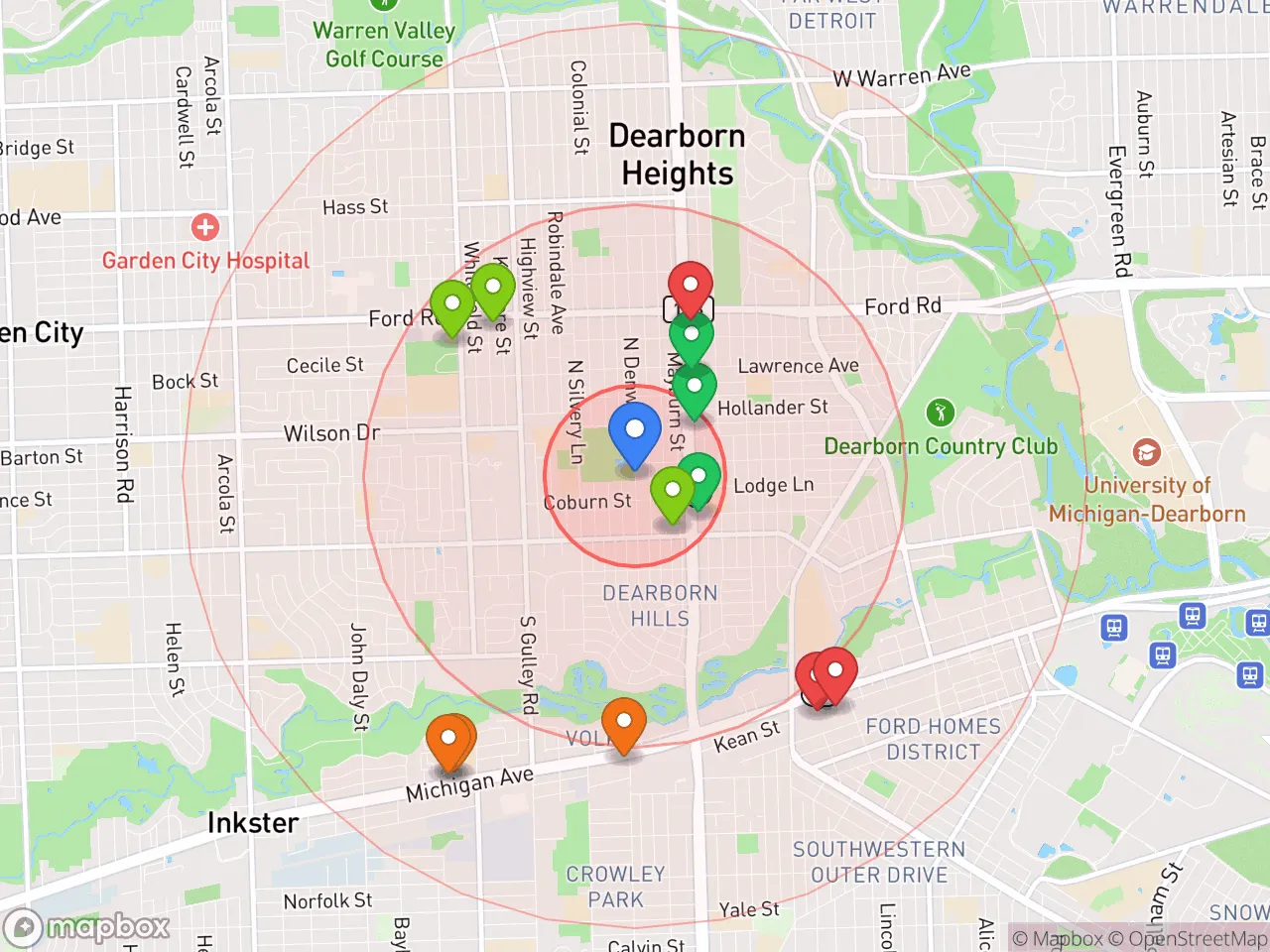
Explore the areaGroceries
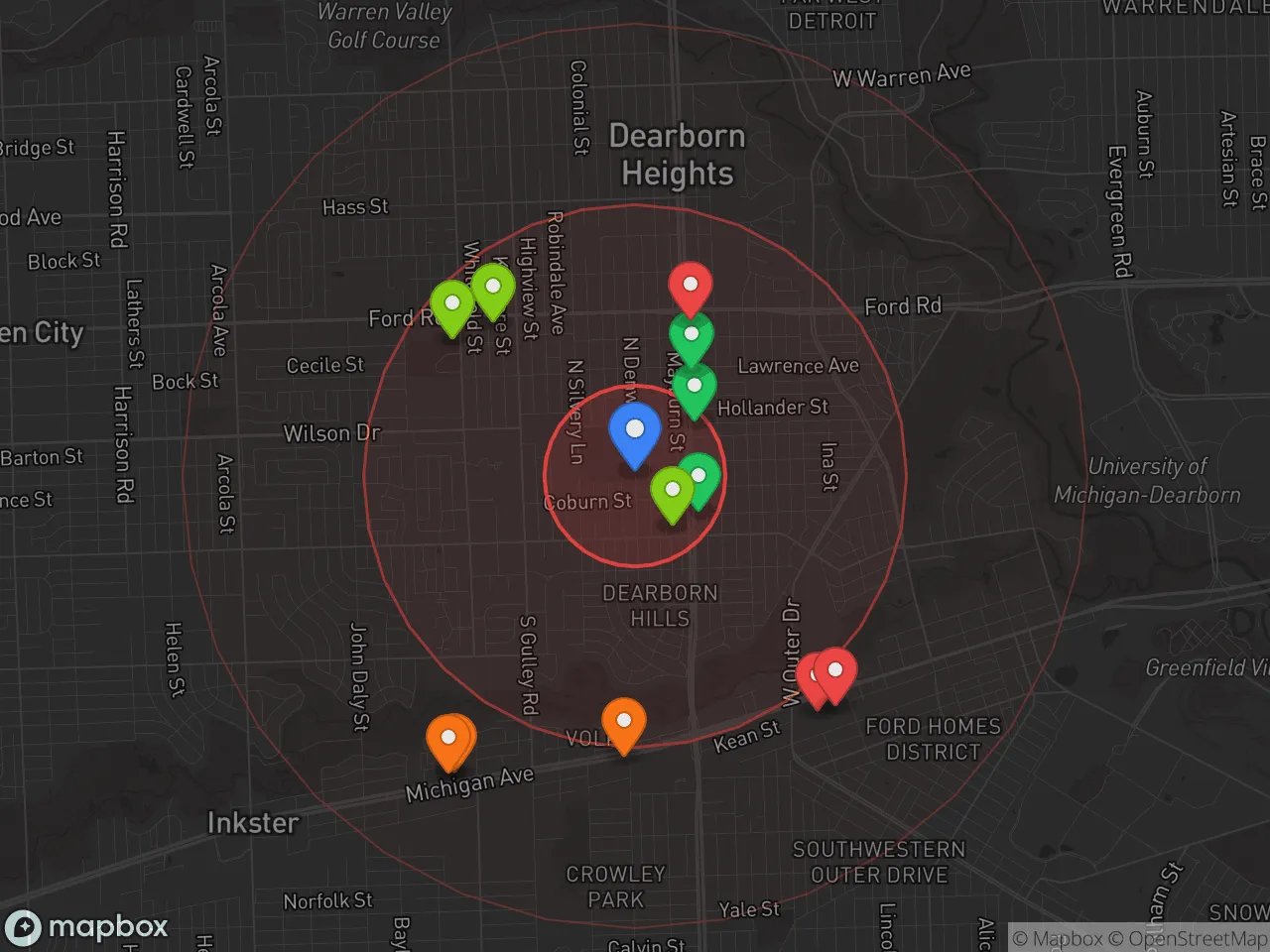
4 within 10 miles
Gas
20 within 10 miles
Hospital
20 within 20 miles
Airport
DTW — Detroit Metropolitan Wayne County
Post Office
USPS — Dearborn, MI
Critical Amenities
Quality-of-Life Analysis
Dearborn Heights offers a middle-class, family-oriented lifestyle at a cost of living that is notably lower than both the national average and many neighboring communities in metro Detroit. With a cost of living index of 90 (where 100 equals the U.S. average), the city attracts a mix of long-term homeowners, young families, and retirees who value affordability without sacrificing proximity to Detroit’s job centers. The population is predominantly white and Arab American, creating a culturally distinct community where modest ranch homes and well-kept bungalows line quiet, tree-shaded streets.
How housing costs and affordability compare to nearby cities
Housing in Dearborn Heights is a clear value proposition. The median home value sits at $174,900, which is roughly 30% lower than the median in neighboring Dearborn and well below the metro Detroit average of around $230,000. Median rent is $1,260, making it one of the more affordable rental markets in Wayne County for a two-bedroom unit. For context, a comparable apartment in Dearborn or Livonia typically rents for $1,400–$1,600. The average commute time of 24.3 minutes is slightly shorter than the national average, reflecting the city’s position along major arteries like Ford Road and Telegraph Road, which provide direct access to Detroit (20 minutes), Dearborn’s Ford Motor Company campus, and the I-94 corridor. Property taxes in Dearborn Heights are moderate for Wayne County, though Michigan’s 6% income tax and the city’s own 1% local income tax mean total tax burden is higher than in some outlying suburbs like Canton or Plymouth.
What daily life is like for families: schools, parks, and local amenities
Daily life in Dearborn Heights revolves around its strong network of public schools, community parks, and family-run businesses. The city is served primarily by the Dearborn Heights School District No. 7 and the Crestwood School District, both of which offer elementary and middle schools with solid state ratings, though high school options often lead families to consider nearby Dearborn’s public schools or private institutions like Divine Child High School. For recreation, the city maintains over 20 parks, with Levagood Park and Berwyn Park being popular for youth sports leagues, playgrounds, and summer concerts. The retail landscape is dominated by strip malls along Ford Road and Michigan Avenue, featuring national chains like Meijer and Kroger alongside Middle Eastern grocery stores and shawarma restaurants that reflect the area’s Arab American heritage. The city lacks a walkable downtown core—most errands require a car—but the 24-minute average commute means residents spend less time in traffic than many metro Detroiters. Cultural amenities are a short drive away: the Arab American National Museum in Dearborn, the Henry Ford Museum, and Detroit’s Midtown arts district are all within 20–30 minutes.
Dearborn Heights is best suited for budget-conscious families, first-time homebuyers, and retirees who prioritize a quiet, suburban setting with easy access to urban employment. The city’s affordability, combined with its low crime rate relative to Detroit proper and its strong sense of community identity, makes it a practical choice for those who want a stable home base without the premium prices of Dearborn or Livonia. However, residents seeking a vibrant nightlife, walkable neighborhoods, or top-tier public high schools may find the city too subdued and should look to Ann Arbor or Royal Oak instead. For the right buyer—someone who values space, value, and a culturally rich but low-key environment—Dearborn Heights delivers a solid quality of life at a price that is increasingly rare in southeast Michigan.

Crime in Dearborn Heights, MI
Crime rates similar to the national median for U.S. locations.
Violent CrimeViolent Crime Analysis
Property CrimeProperty Crime Analysis
Crime Analysis
Dearborn Heights, Michigan, presents a crime profile that warrants careful consideration for potential residents, particularly given its location within the larger Wayne County and Detroit metro area. With a violent crime rate of 383.2 per 100,000 residents and a property crime rate of 1,251.9 per 100,000, the city's safety metrics are significantly elevated compared to national averages. These figures place Dearborn Heights in a category where proactive safety awareness and neighborhood-specific research are essential for anyone considering a move.
Crime in context
To understand Dearborn Heights' safety landscape, it is crucial to compare its rates to broader benchmarks. The city's violent crime rate of 383.2 per 100,000 is roughly double the national average of approximately 380 per 100,000, though it is lower than the rate in nearby Detroit. Property crime, at 1,251.9 per 100,000, also exceeds the national average of about 1,954 per 100,000, but remains a concern. A key factor influencing these numbers is the legal and prosecutorial environment in Wayne County. The area operates under a progressive prosecutorial philosophy, with elected officials and judges who often prioritize diversion programs and reduced sentencing over strict enforcement. While intended to reduce incarceration, this approach has been linked to higher recidivism and a perception that property and low-level violent crimes carry fewer consequences, potentially emboldening offenders and increasing risks for law-abiding residents.
What residents experience
Residents of Dearborn Heights report that property crime—including theft from vehicles, burglary, and package theft—is the most common safety issue they encounter. The city's layout, with many older homes and accessible side streets, can make it a target for opportunistic crime. Violent incidents, while less frequent than property crimes, do occur and are often concentrated in specific areas or tied to disputes. The local police department maintains a visible presence, but the broader judicial climate means that even when arrests are made, offenders may face minimal jail time or be released quickly, which can erode public confidence in the justice system. For families and individuals, this translates to a need for home security systems, neighborhood watch participation, and vigilance when out after dark.
Neighborhood-level variation is notable in Dearborn Heights. Areas closer to the Detroit border, particularly along Warren Avenue and Van Born Road, tend to experience higher crime rates, while the more residential, tree-lined sections near the city's western edge (closer to Dearborn) are generally quieter. The area south of Ford Road and west of Telegraph Road is often cited by residents as having fewer incidents. However, no part of the city is immune to the spillover effects of regional crime trends, and the progressive justice policies at the county level mean that even in safer pockets, residents should remain aware that offenders may face minimal deterrents. A thorough visit to specific blocks and conversations with local police precincts are strongly recommended before committing to a home purchase or lease.
* Values derived from national, state, county, city and local statistics and may differ in a specific area. Last updated: 2026-04-29T20:59:35.000Z
Narrative content on this page is AI-generated and may contain mistakes. Verify any details that matter before acting on them.
ReloMaps may earn a commission from affiliate links at no extra cost to you.

