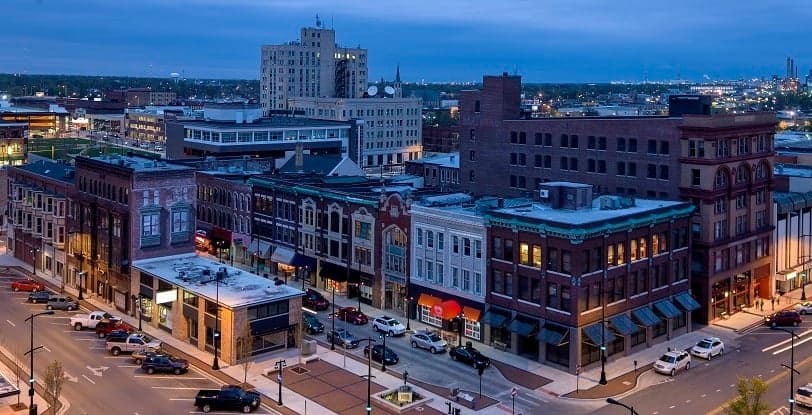
Photo: Wikipedia
Quality of Life in Decatur, IL
A high quality of life with strong walkability, manageable living costs, healthy neighborhood signals, and solid amenity access.
What does Quality of Life tell us?
Quality of Life blends cost of living, nearby amenities, socioeconomic signals, and neighborhood character. City-level scores represent the whole municipality; individual neighborhoods can differ.
What does this tell us?
Quality of Life blends cost of living, nearby amenities, socioeconomic signals, and neighborhood character. City-level scores represent the whole municipality; individual neighborhoods can differ.
Cost of Living
45% below national average
The Real Cost of Living in Decatur, IL for 2026
| Tier | Individual | Family (4) |
|---|---|---|
| Survival | $13k | $24k |
| Comfortable | $22k | $33k |
| Luxury | $92k+ | $142k+ |
| Elite (Top 5%) | $117k+ | $182k+ |
154%
The Area Signal
A metric tracking the socioeconomic signals of the area.
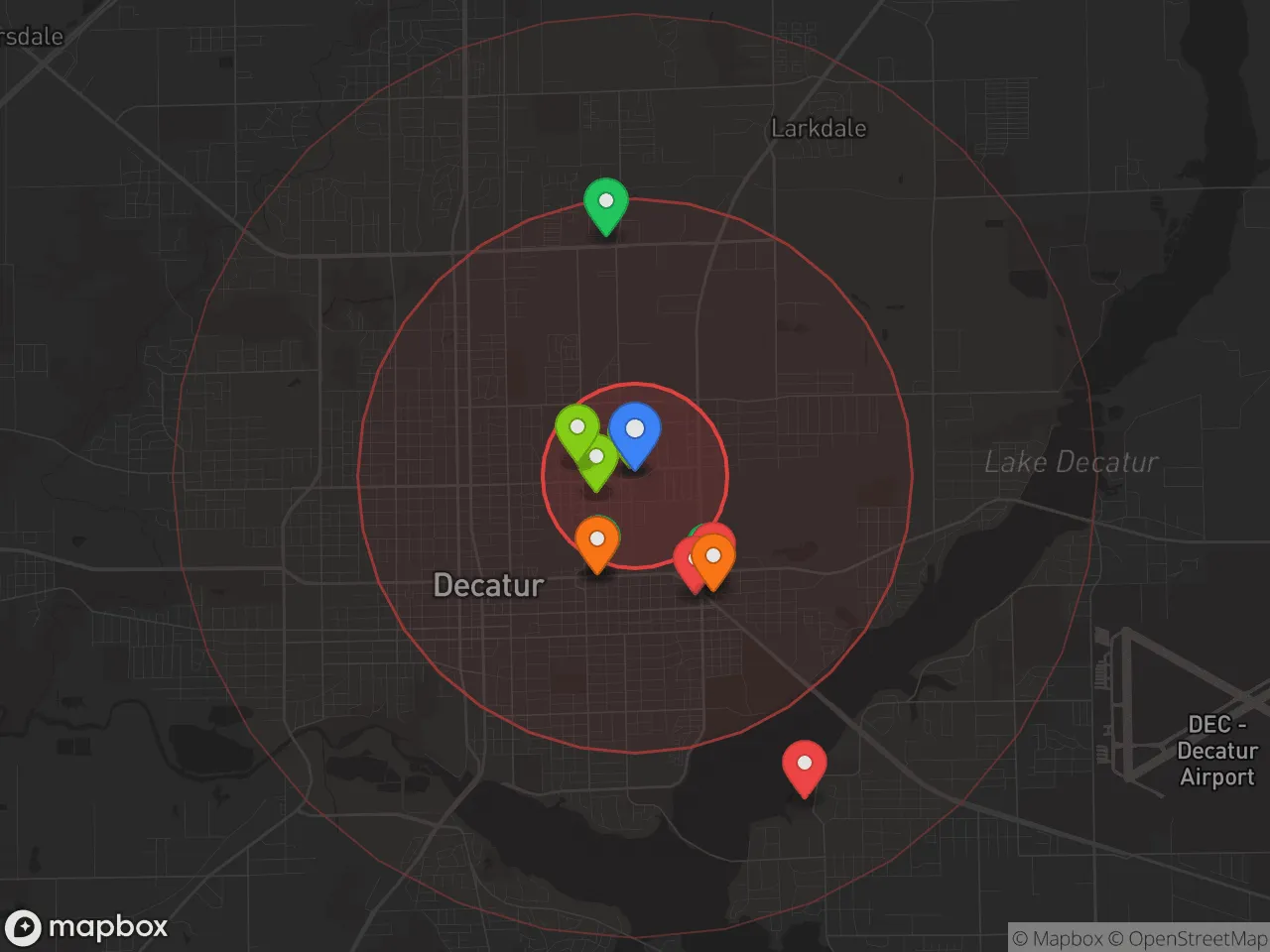
Hobbies
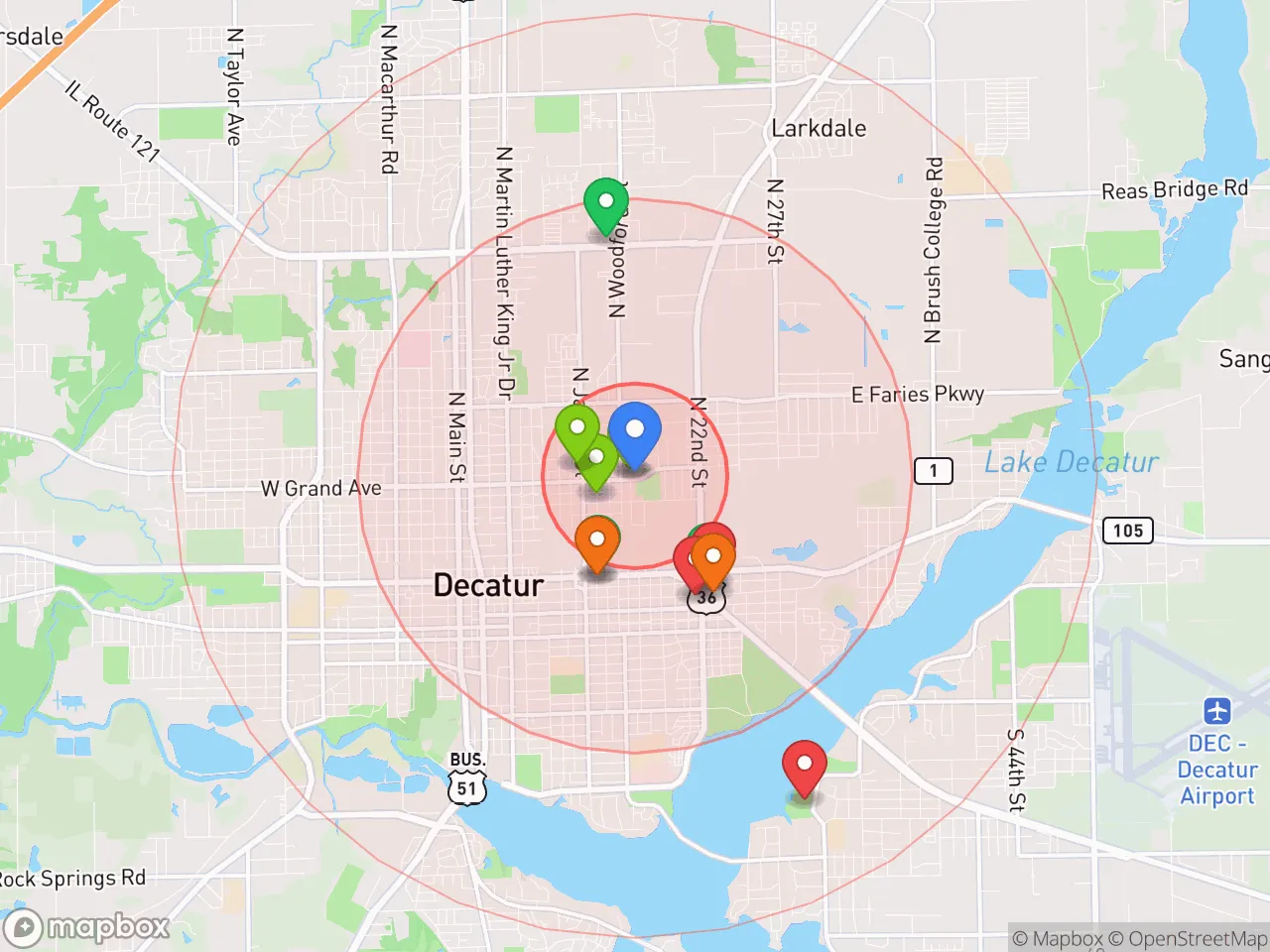
Explore the areaGroceries
5 within 10 miles
Gas
15 within 10 miles
Hospital
3 within 20 miles
Airport
Indianapolis International Airport
Post Office
USPS — Decatur, IL
Critical Amenities
Quality-of-Life Analysis
Decatur, Illinois, presents a notably affordable quality of life that attracts a mix of working-class families, retirees, and manufacturing professionals. With a cost-of-living index of just 55—well below the national average of 100—the city offers a financial cushion rarely found in larger Midwestern metros. The population skews toward long-term residents and blue-collar workers employed in agriculture, industrial manufacturing, and healthcare, creating a stable, community-oriented atmosphere rather than a transient or high-growth one.
How affordable is Decatur compared to Springfield and Champaign?
Decatur’s housing market is among the most budget-friendly in Central Illinois. The median home value sits at $97,300, roughly one-third of the national median, while the median rent is $796 per month. These figures are significantly lower than in nearby Champaign-Urbana (where median home values exceed $180,000) and Springfield (around $130,000). The average commute of just 17.4 minutes further reduces transportation costs, as most residents live within a short drive of major employers like Archer Daniels Midland (ADM) and Caterpillar. Property taxes in Macon County are moderate for Illinois—around 2.1% of assessed value—but the low home prices keep annual tax bills manageable, often under $2,500 for a typical starter home. For renters, the $796 average is nearly 40% below the state average, making Decatur one of the most accessible rental markets in the region for those earning median wages.
What daily life is like for families and professionals in Decatur
Daily life in Decatur centers on a mix of local parks, community events, and practical amenities. The Decatur Public Schools district operates 12 elementary schools, three middle schools, and two high schools, with Eisenhower and MacArthur high schools serving the majority of students. For higher education, Richland Community College offers associate degrees and workforce training, while Millikin University provides four-year programs in business, nursing, and the arts. Healthcare is anchored by HSHS St. Mary’s Hospital and Decatur Memorial Hospital, both offering emergency and specialty care. Outdoor recreation includes the 1,400-acre Lake Decatur for fishing and boating, plus the 30-mile Sangamon Valley Trail for cycling and walking. The city’s dining and retail scene is modest but functional, with local staples like The Gin Mill and Dos Reales providing casual options, while larger shopping trips often lead residents to Forsyth or Champaign. The rhythm of life is slower than in larger cities, with a strong emphasis on high school sports, church communities, and seasonal festivals like the Decatur Celebration.
Decatur is best suited for those who prioritize low housing costs, short commutes, and a tight-knit community over urban nightlife or rapid career advancement. Families on a budget, retirees seeking to stretch fixed incomes, and manufacturing or logistics workers will find the affordability and stability appealing. Professionals in tech or creative fields may feel limited by the local job market, but remote workers can leverage the low cost of living while earning salaries from higher-cost areas. For anyone willing to trade some cultural density for financial breathing room, Decatur offers a grounded, practical quality of life that is increasingly rare in the Midwest.

Crime in Decatur, IL
Higher crime rates than 73% of comparable U.S. locations.
Violent CrimeViolent Crime Analysis
Property CrimeProperty Crime Analysis
Crime Analysis
Decatur, Illinois, reports a violent crime rate of 671.3 incidents per 100,000 residents and a property crime rate of 2,597.4 per 100,000, placing it well above both state and national averages for safety. These figures indicate that residents face a significantly elevated risk of experiencing crime compared to typical U.S. cities, a concern amplified by the area's proximity to larger metropolitan influences and the progressive judicial policies common in Illinois. The overall safety picture is one of heightened caution, particularly regarding property offenses and violent encounters.
Crime in context
Decatur's violent crime rate of 671.3 per 100,000 is nearly double the national average of roughly 380 per 100,000 and substantially higher than the Illinois state average of about 440 per 100,000. Property crime in Decatur, at 2,597.4 per 100,000, also exceeds the national benchmark of approximately 1,950 per 100,000. These statistics place Decatur among the more dangerous communities in central Illinois. A critical factor contributing to these elevated rates is the prevailing progressive ideology within the local and state justice system. Liberal district attorneys and judges, who often prioritize rehabilitation and reduced incarceration over strict enforcement, have been linked to higher recidivism and a greater number of offenders remaining on the streets. This approach, while sympathetic to offenders, directly undermines public safety and justice for victims, creating an environment where criminal activity is less deterred.
What residents experience
For those living in Decatur, the high crime rates translate into tangible daily concerns. Property crime, including theft, burglary, and motor vehicle theft, is the most common threat, with residents frequently reporting break-ins and stolen property. Violent crime, while less frequent, is a serious issue, with aggravated assault and robbery being the most reported offenses. The presence of progressive judicial policies means that even when arrests are made, offenders often face lenient sentences or early release, eroding trust in the system and leaving victims feeling underserved. This cycle contributes to a sense of insecurity, particularly in neighborhoods near commercial corridors or areas with lower socioeconomic stability. Residents are advised to take proactive security measures, such as installing home surveillance systems and participating in neighborhood watch programs, to mitigate these risks.
Neighborhood-level safety in Decatur varies considerably. Areas like the northwest side, particularly near Lake Decatur and newer subdivisions, tend to report lower crime rates, while central and eastern neighborhoods, including those around the downtown core and older industrial zones, experience higher concentrations of both property and violent crime. The presence of progressive judicial policies, however, means that even in relatively safer neighborhoods, the risk of encountering repeat offenders released under lenient conditions remains elevated. Prospective residents should research specific census tracts and consult local police crime maps to identify blocks with lower incident rates, as the city's overall high crime numbers mask significant internal variation.
* Values derived from national, state, county, city and local statistics and may differ in a specific area. Last updated: 2026-04-23T11:04:36.000Z
Narrative content on this page is AI-generated and may contain mistakes. Verify any details that matter before acting on them.
ReloMaps may earn a commission from affiliate links at no extra cost to you.

