Photo: Wikipedia
Political ClimatePolitical Climate in Decatur, IL
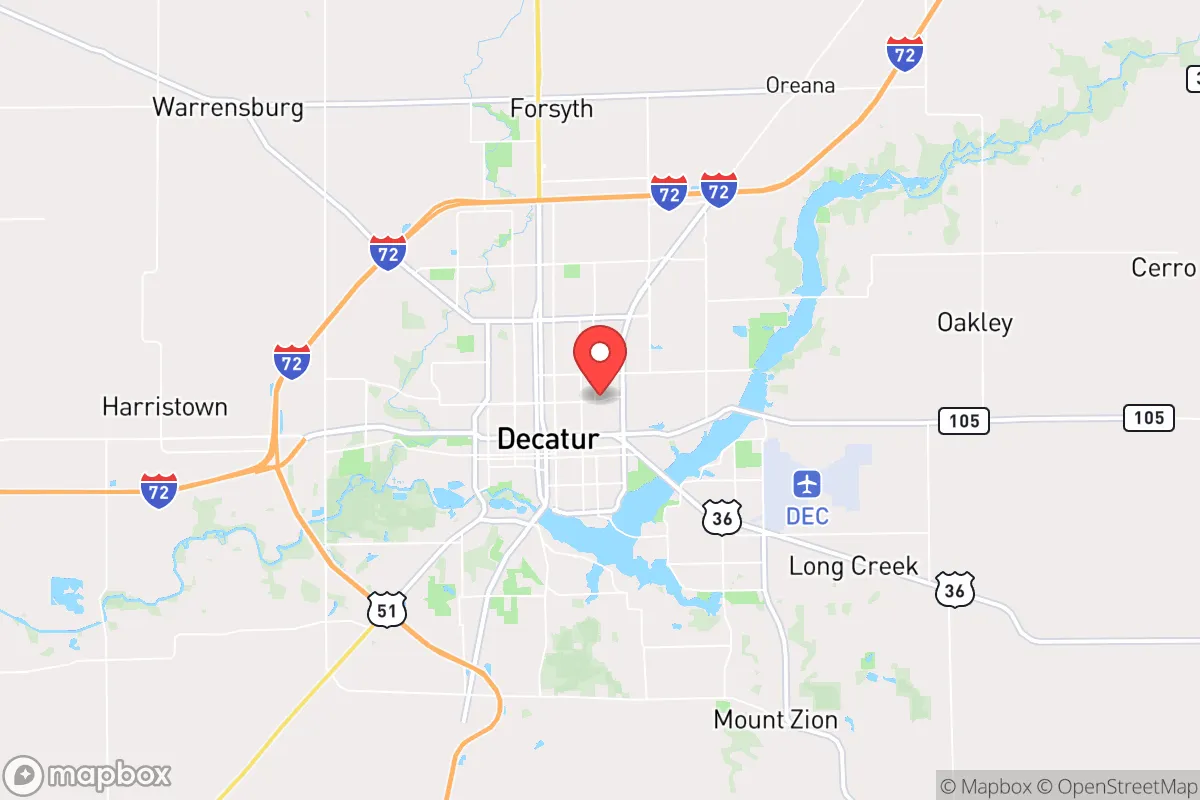
District shown is the primary district for this city’s centroid. Cities may span multiple districts.
Local Political AnalysisPolitical Analysis of Decatur, IL
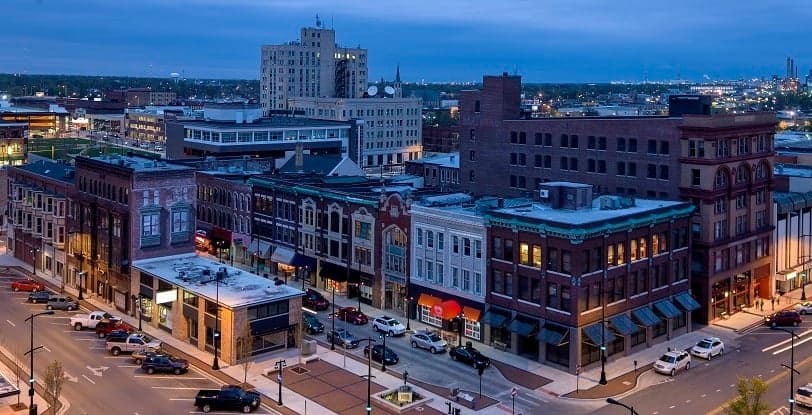
Decatur, Illinois, sits in a political landscape that’s shifted noticeably over the past couple decades. The Cook PVI rating of D+5 tells you the city leans Democratic by about five points compared to the national average, but that number doesn’t capture the full story. If you’ve lived here a while, you remember when the area was a lot more purple—union Democrats and conservative farmers used to find common ground on things like fiscal restraint and local control. Now, the progressive wing has a firmer grip on city hall and county offices, and you can feel the change in how policies are pushed through, often with less debate than you’d expect in a place that used to pride itself on common-sense independence.
How it compares
Drive twenty miles in almost any direction, and the political contrast is stark. Surrounding Macon County voted for Trump in 2020 by a narrow margin, but Decatur itself is the blue island in a sea of red. Head north to Bloomington-Normal—McLean County is reliably Republican—or south to Effingham, where conservative values dominate local boards. Even neighboring towns like Mount Zion and Forsyth lean noticeably more to the right, with lower taxes and fewer zoning restrictions. What that means for Decatur is a constant tug-of-war: state-level mandates from Springfield (another deep-blue city) get layered on top of local progressive priorities, and residents end up feeling like they have less say over their own property taxes, school curriculum, and business regulations than folks just a few miles down the road.
What this means for residents
For the average person living here, the political tilt translates into real-life friction. Property taxes in Decatur are among the highest in central Illinois, partly because the city and school district have taken on debt for projects that some residents view as unnecessary or ideologically driven. You’ll also see more ordinances around things like rental inspections, sign restrictions, and even how you can use your own backyard—little encroachments that add up over time. The city council has moved toward more progressive stances on social issues, which doesn’t sit well with the many families who moved here for the quiet, affordable lifestyle, not to be part of a social experiment. If you value keeping government out of your personal decisions—whether that’s how you raise your kids, what you build on your property, or how you run your small business—you’ll find yourself increasingly at odds with the direction things are heading.
One cultural distinction worth noting: Decatur has a strong tradition of civic pride tied to its industrial roots—ADM and Caterpillar were the backbone for generations. That working-class identity used to keep politics grounded in practical concerns like jobs and infrastructure. Today, you see more energy spent on symbolic gestures and diversity initiatives than on fixing potholes or cutting red tape for new businesses. The long-term concern among many locals is that if this trend continues, Decatur will lose the very things that made it a good place to raise a family: low cost of living, straightforward governance, and a sense that your vote actually matters. For now, it’s still a decent place to live if you keep your head down, but the political drift is something to watch closely if you’re considering a move here.

State Political ClimatePolitical Climate in Illinois
State Political AnalysisPolitical Environment in the State
Illinois is a deeply blue state in statewide elections, but that label masks a fierce internal war between the Chicago machine and the rest of the state. The Democratic coalition, anchored by Cook County and the collar counties, has held a supermajority in the legislature for most of the last decade, while downstate Republicans have been reduced to a rump faction. Over the past 20 years, the state has lurched leftward on fiscal and social policy, driven by a shrinking rural population and a growing, heavily Democratic Chicago metro area. If you’re a conservative looking at Illinois, you’re essentially looking at a state where your vote for president or Senate is almost certainly wasted, but where local control in the right county can still buy you a measure of breathing room.
Urban vs. rural divide
The political map of Illinois is a tale of two worlds. Chicago and its immediate suburbs—Cook, DuPage, Lake, Will, and Kane counties—generate roughly 65% of the state’s vote, and they vote Democratic by margins of 20 to 50 points. The city itself is a Democratic fortress; in 2024, Chicago gave Joe Biden 82% of the vote. The collar counties have been trending blue for a generation, with once-Republican strongholds like Naperville and Arlington Heights now reliably Democratic. Drive two hours southwest, and you hit the heart of red Illinois: counties like Effingham, Shelby, and Jasper routinely vote 70-80% Republican. The divide is starkest in the central and southern parts of the state, where towns like Quincy, Carbondale, and Marion are conservative islands in a sea of blue. The I-55 corridor from Chicago to Springfield is a political fault line: the closer you get to the capital, the more the state government’s progressive agenda clashes with the rural, gun-owning, churchgoing culture of the surrounding farmland.
Policy environment
Illinois’s policy environment is a case study in progressive governance run amok. The state has the second-highest property tax burden in the nation, with effective rates averaging 2.1% of home value—double the national average. The income tax is a flat 4.95%, but the legislature has repeatedly flirted with a progressive income tax, which voters rejected in a 2020 referendum. Sales taxes can exceed 10% in Chicago. The regulatory posture is hostile to business: Illinois is one of only a handful of states with a statewide ban on right-to-work laws, and it has a $15 minimum wage that is indexed to inflation. On education, the state has a universal school choice program in name only—the Invest in Kids tax credit scholarship program expired in 2023, effectively killing private school options for low-income families. Healthcare is dominated by the state’s Medicaid expansion and a robust insurance exchange. Election laws are among the most permissive in the country: no-excuse mail-in voting, automatic voter registration, and same-day registration are all law. For a conservative, the policy environment feels like a slow-motion squeeze: higher taxes, less local control, and a government that sees itself as the primary solution to every problem.
Trajectory & freedom
Illinois is becoming less free by almost any measure. The most glaring example is the 2023 ban on assault weapons and high-capacity magazines, signed by Governor J.B. Pritzker, which effectively criminalized the most popular rifle platform in America. The law also requires existing owners to register their firearms with the state police—a registry that many gun owners see as a prelude to confiscation. On parental rights, the state passed a law in 2021 that prohibits schools from notifying parents if a child changes their gender identity or pronouns, overriding local school board discretion. Medical autonomy took a hit with the 2019 Reproductive Health Act, which removed nearly all restrictions on abortion and mandated insurance coverage. Property rights are under constant assault from the state’s aggressive use of eminent domain for private development, particularly in Chicago. The tax burden is the biggest freedom killer: the state’s pension debt, now over $140 billion, means that property taxes will keep rising for decades, effectively making you a renter of your own home. The trajectory is clear: more mandates, less local control, and a government that sees personal liberty as an obstacle to its agenda.
Civil unrest & political movements
Illinois has a long history of political flashpoints. The 2020 George Floyd protests in Chicago turned into widespread looting and arson, with over $60 million in damage and the city’s mayor, Lori Lightfoot, drawing national criticism for her hands-off response. The state’s sanctuary policies—Illinois is a “Welcoming City” state, meaning local law enforcement cannot cooperate with federal immigration authorities—have created tension in downstate counties like Macoupin and Madison, where sheriffs have publicly refused to comply. Election integrity has been a persistent concern: the 2020 election saw widespread use of mail-in ballots with no signature verification requirement, and the state’s automatic voter registration system has been criticized for registering non-citizens. On the right, the Illinois State Rifle Association and the Illinois Family Institute are the most organized activist groups, but they’re fighting a rear-guard action against a supermajority that rarely listens. The most visible flashpoint for a new resident would be the annual “Second Amendment March” in Springfield, which draws thousands of gun owners to the capitol—a stark reminder that the cultural war is alive and well in the Land of Lincoln.
Projection
Over the next 5-10 years, Illinois will likely continue its leftward drift, but with a twist: the state is losing population, and the people leaving are disproportionately conservative and middle-class. The 2020 census cost Illinois a congressional seat, and the trend is accelerating. The Chicago metro area is growing slightly, but it’s being offset by a hollowing out of rural and small-town Illinois. This demographic shift means the Democratic supermajority will probably hold, but it also means the state’s tax base is eroding. Expect more tax increases, more mandates, and more fights over gun rights and parental rights. The wild card is the state’s pension crisis: if the market takes a dive, the state could face a fiscal emergency that forces real cuts or a federal bailout. For a conservative moving in now, the realistic expectation is that you’ll be living in a state where your values are increasingly out of step with the government, but where you can still find a good life in the right county—if you’re willing to pay the price in taxes and political frustration.
Bottom line: Illinois is a beautiful state with world-class cities, great universities, and a rich cultural heritage, but it’s also a state where the government is actively hostile to conservative values. If you’re a single professional or a parent looking for a place where your vote matters and your freedoms are respected, Illinois is a tough sell. The best you can do is pick a county like Ogle or DeKalb that still leans red, and accept that you’ll be fighting a rear-guard action against a state government that sees you as a problem to be managed. If you’re okay with that trade-off, Illinois can still be a great place to live. If you’re not, you’re better off looking west or south.
* Values derived from national, state, county, city and local statistics and may differ in a specific area. Last updated: 2026-04-23T11:04:36.000Z
Narrative content on this page is AI-generated and may contain mistakes. Verify any details that matter before acting on them.
ReloMaps may earn a commission from affiliate links at no extra cost to you.

