
Photo: Wikipedia
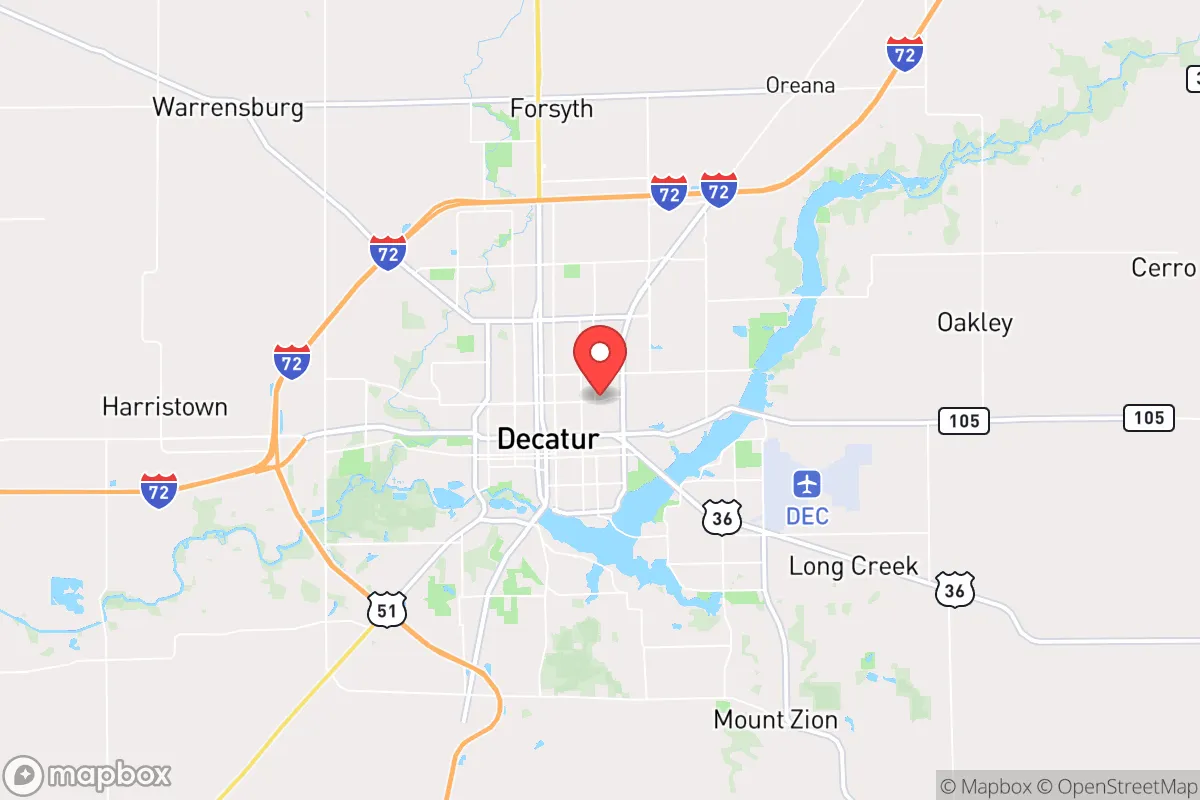
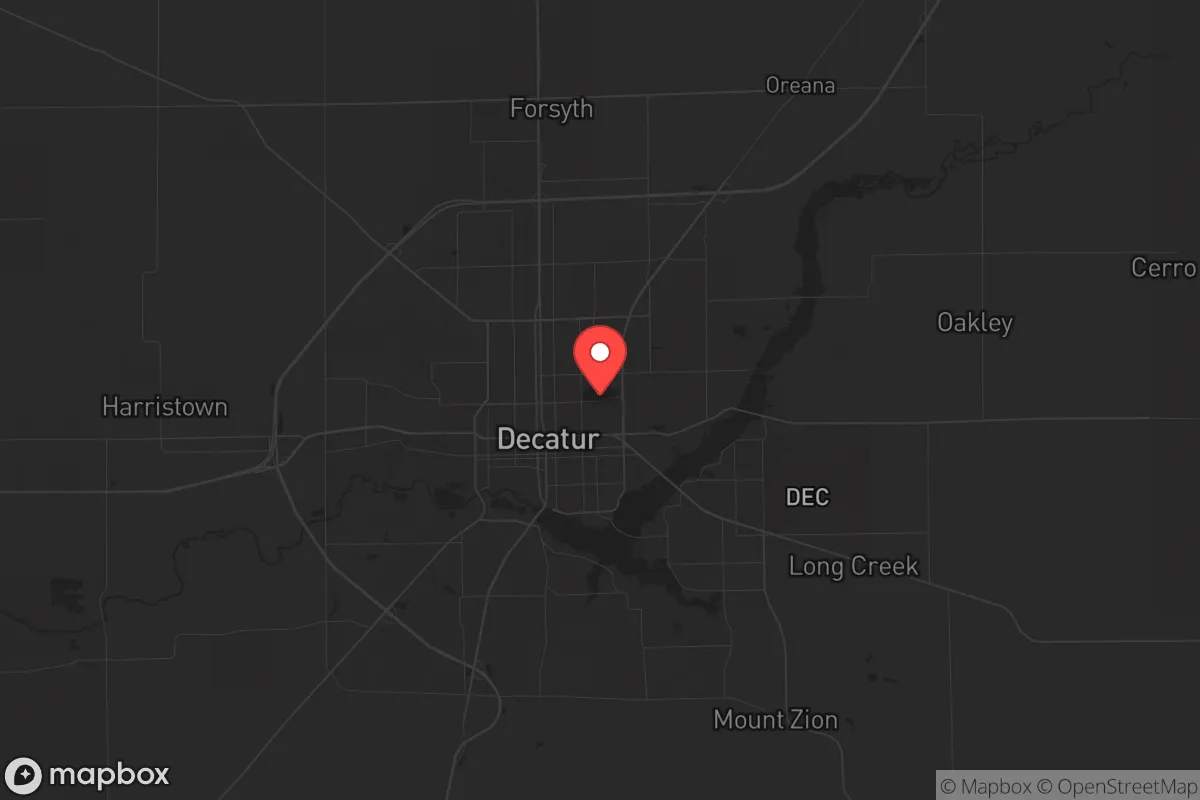
Strategic Assessment of Decatur, IL
Meaningful friction. Expect exposure to either population pressure, blast zones, or natural disaster risk. Consider buying a retreat property.
What does the Strategic Assessment tell us?
Our Strategic Assessment grades tactical survivability of an area. Major population centers, military targets, fallout zones, natural disasters, and border exposure all drive risk — lower exposure means a more defensible position in a crisis.
This is heavily inspired by Joel Skousen's Strategic Relocation book. Highly recommended you checkout the book ($)What does this tell us?
Our Strategic Assessment grades tactical survivability of an area. Major population centers, military targets, fallout zones, natural disasters, and border exposure all drive risk — lower exposure means a more defensible position in a crisis.
This is heavily inspired by Joel Skousen's Strategic Relocation book. Highly recommended you checkout the book ($)Strategic Pillars

Key Distances
Regional Safe Places
Below is our recommended "safe zones" in Illinois and the surrounding area based on our strategic heuristics. For most people, it's unrealistic to live in a “safe zone” full-time due to work, family or other personal reasons. They tend to be more rural. However, many of these areas are perfect for second homes and retreat properties that double as a vacation home or even a short-term rental.
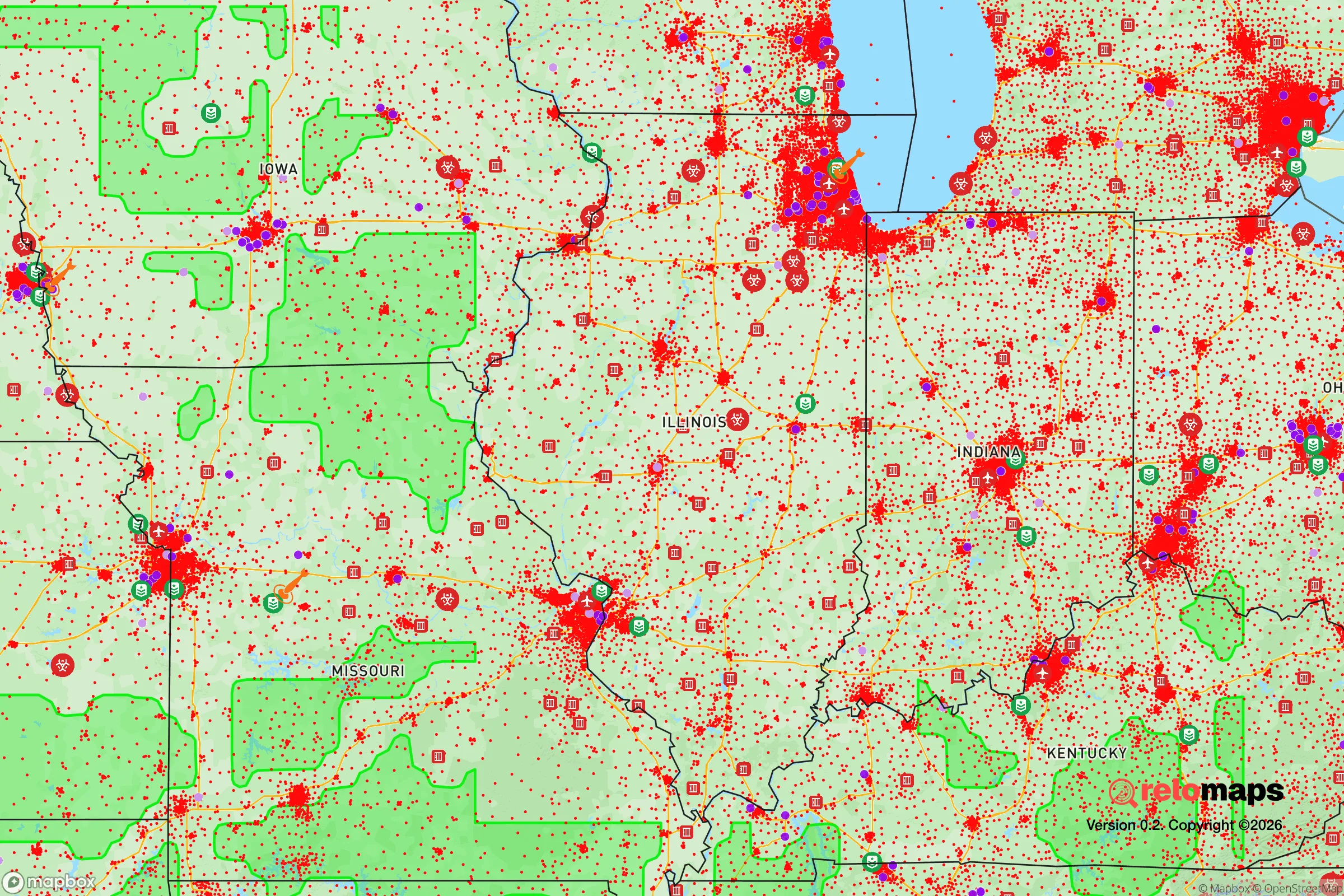
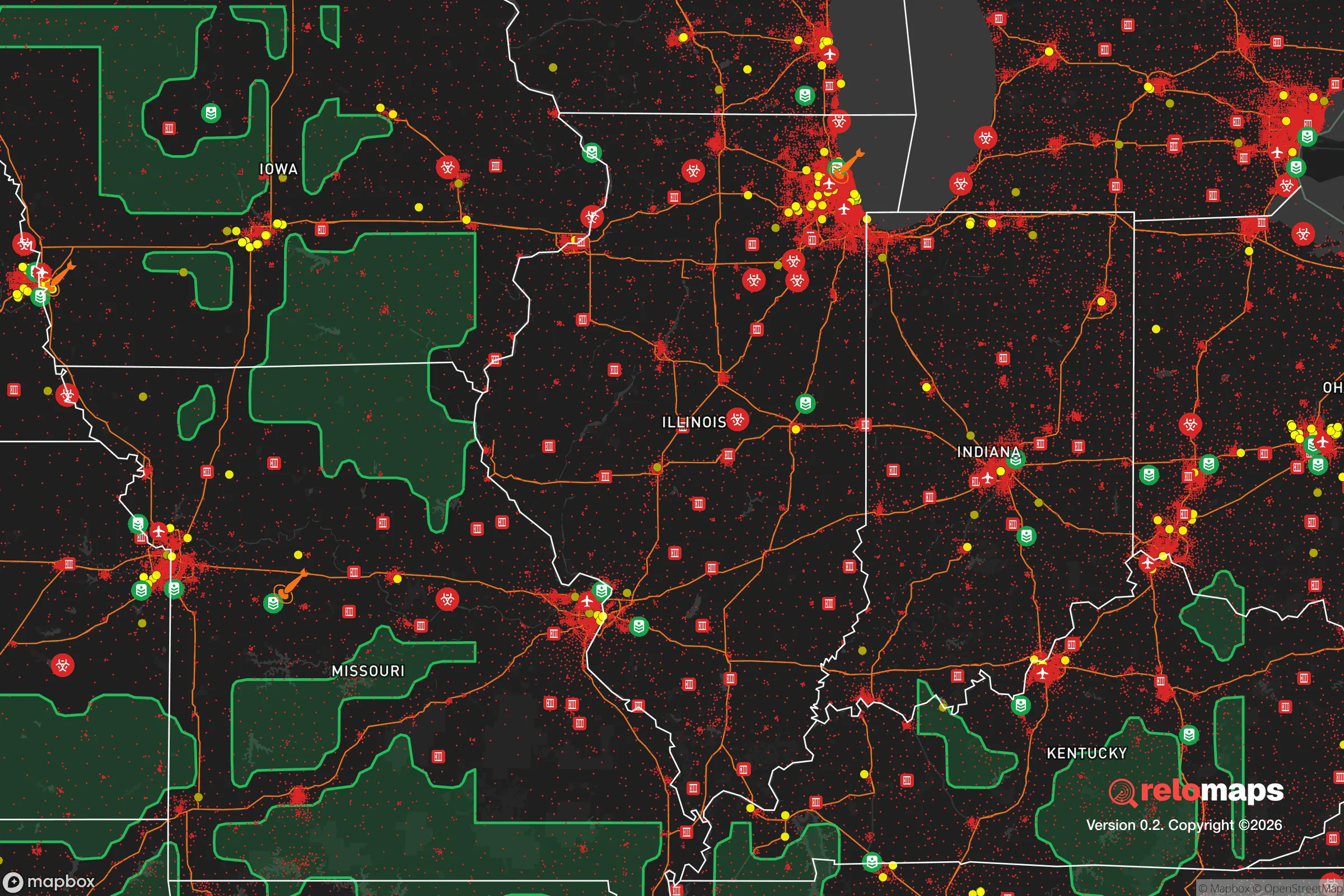


Important Note: For informational purposes only. This does not mean nothing bad ever happens in the green zones. Please use common sense. This is based on public data and modeled with AI. We tried to take a conservative approach but mistakes happen. We update this regularly as new information becomes available.
Solar Generator Recommendations
Backup power matters more here than in safer locations. We've picked three solar generators across budgets and capacity tiers — start with the budget unit if you only need a few essentials, or step up if you want to run a fridge and HVAC for days at a time.

Jackery Portable Power Station Explorer 300
Budget OptionPower on the Go: Weighing only 11 lbs, it's convenient to set up and store with book-sized foldable solar panels

BLUETTI Portable Power Station AC180
Designed for both indoor and outdoor scenarios, AC180 is highly capable as it has a robost capacity and continuous output power.

EF ECOFLOW DELTA Pro Ultra Power Station
Upgraded PickEcoFlow DELTA Pro Ultra is a whole-home energy system designed to grow with your family. Integrated with the Smart Home Panel 2, it scales to meet your evolving energy needs — keeping your home powered, intelligent, and secure through every stage of life.
We earn a commission, at no additional cost to you.
Strategic Assessment Analysis
Decatur, Illinois, sits in a position that is both strategically underrated and quietly resilient, offering a blend of industrial self-sufficiency and geographic isolation that appeals to those thinking long-term about stability. Located in the heart of the state, roughly 40 miles from Springfield and 45 from Champaign, it avoids the direct blast radius and immediate fallout zones of major metropolitan targets like Chicago or St. Louis, while still being close enough to access their resources if needed. The city’s historical identity as a manufacturing and grain processing hub gives it a practical, no-nonsense foundation that aligns well with a prepper mindset—this isn’t a place of flashy growth, but one of steady, functional survival.
Geographic position and natural advantages for long-term stability
Decatur’s location in Central Illinois places it squarely within the fertile agricultural belt of the Midwest, which is a massive natural advantage for anyone concerned about food security. The surrounding flatlands are dominated by corn and soybean fields, meaning local food production is not just possible but deeply ingrained in the regional economy. The city itself sits on the Sangamon River, providing a surface water source that, while not pristine, offers a baseline for water security in a grid-down scenario. The terrain is flat and open, which limits natural cover but also eliminates the risk of landslides, wildfires, or seismic activity that plague other regions. Winters are cold and summers humid, but the climate is predictable and manageable with basic preparedness—no hurricanes, no earthquakes, and only occasional tornadoes, which are a known risk you can plan for with a basement or storm shelter. The lack of major mountain ranges or dense forests means travel and supply routes are straightforward, and the grid infrastructure is relatively stable compared to coastal or mountainous areas.
Risks, exposures, and proximity to fallout-relevant landmarks
The most significant risk for Decatur is its proximity to several industrial and logistical targets that could become secondary fallout sources during a major conflict or collapse. The city is home to a major Archer Daniels Midland (ADM) complex, one of the largest grain processing facilities in the world, which processes corn and soybeans into everything from ethanol to animal feed. While this is an asset for food and fuel production, it also makes Decatur a potential target for sabotage, cyberattack, or even conventional strike in a broader conflict, given its role in the national food supply chain. Additionally, the city lies within roughly 150 miles of Scott Air Force Base near St. Louis, a major military logistics hub, and within 200 miles of the nation’s nuclear arsenal at Whiteman Air Force Base in Missouri. In a worst-case scenario involving nuclear exchange, fallout patterns from strikes on those bases could drift over Central Illinois depending on wind direction, though Decatur is far enough away to avoid direct blast effects. The nearby rail lines and interstate highways (I-72 and I-57) are double-edged swords: they provide good evacuation routes but also serve as corridors for unrest or military movement. For a relocator, the key is to understand that Decatur is not a zero-risk zone, but its risks are industrial and logistical rather than strategic—meaning you can mitigate them with proper planning, such as having a rural retreat within 30 miles to the south or east, away from the ADM complex and major highways.
Practical resilience for a relocator: food, water, energy, and defensibility
For someone serious about self-sufficiency, Decatur offers a rare combination of urban infrastructure and rural access that makes it a strong base for a prepared lifestyle. The city’s water supply comes from Lake Decatur, a 2,800-acre reservoir created by damming the Sangamon River, which provides a reliable municipal water source. In a prolonged grid-down scenario, this reservoir is a strategic asset, but it also means the city’s water treatment plant is a critical vulnerability—if it goes down, you’ll need your own filtration or a well. The agricultural abundance in the region means you can source bulk grains, livestock feed, and even ethanol fuel locally, often at wholesale prices. Decatur’s industrial base includes not just ADM but also Caterpillar’s large manufacturing plant, which produces heavy machinery and diesel engines—skills and equipment that could be invaluable for rebuilding or repair work after a collapse. Energy resilience is decent: the city has its own coal-fired power plant and is near several wind farms, but the grid is interconnected with the rest of the Midwest, so a regional blackout would hit Decatur too. Solar is viable here, though winter cloud cover reduces output, so a backup generator with stored fuel is a smart investment. Defensibility is a mixed bag: the flat terrain offers few natural chokepoints, but the city’s layout—with industrial zones, rail yards, and the lake—creates some natural barriers. A relocator should look at properties on the outskirts, particularly to the south or east, where you can have acreage, a well, and a clear line of sight to approaching threats. The local gun culture is strong, with several gun shops and ranges in the area, and Illinois’s firearm laws are restrictive but manageable for those who plan ahead—concealed carry is legal with a license, and the rural counties around Decatur are more permissive than Cook County.
The overall strategic picture for Decatur is that of a solid, unglamorous fallback position—not a fortress, but a functional hub with real industrial and agricultural depth. It’s not a place you go to hide from the world, but a place you go to ride out a crisis with the tools to rebuild. The biggest threat is not a direct attack but the slow unraveling of supply chains and civil order, and Decatur’s economy is already built on the kind of heavy, essential work that becomes critical in a breakdown. The local population is aging and the city has seen better days economically, which means property is affordable and there’s less competition for resources than in boomtowns. For a conservative-minded relocator who values self-reliance, community, and practical skills over urban amenities, Decatur offers a realistic path: buy a modest house with a basement on the edge of town, stockpile grain and fuel, get to know your neighbors at the local gun club, and keep a vehicle ready for a quick move south if the wind shifts. It’s not a paradise, but it’s a place where you can build a life that doesn’t depend on the system working perfectly—and that’s the whole point.

* Values derived from national, state, county, city and local statistics and may differ in a specific area. Last updated: 2026-04-23T11:04:36.000Z
Narrative content on this page is AI-generated and may contain mistakes. Verify any details that matter before acting on them.
ReloMaps may earn a commission from affiliate links at no extra cost to you.

