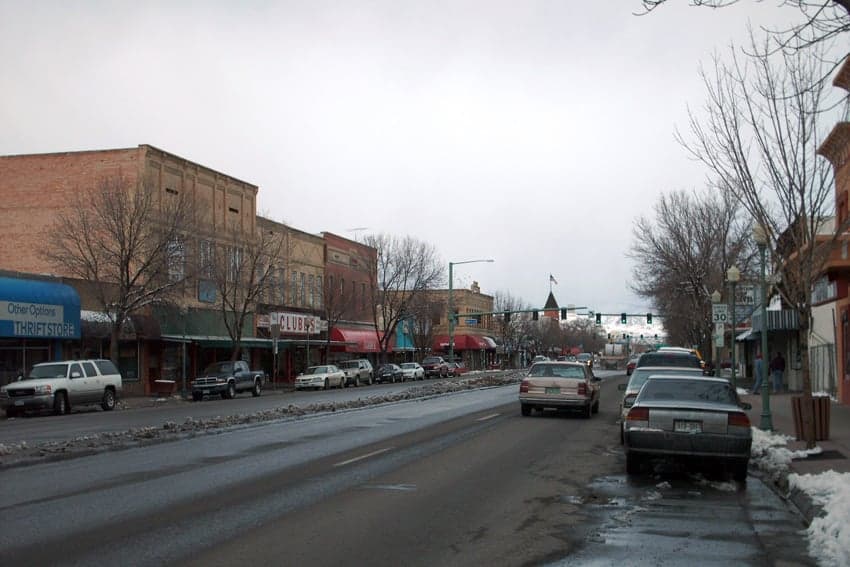
Photo: Wikipedia
Strategic Assessment of Delta, CO
Strong survivability profile. Good buffer from population centers, with manageable environmental and tactical risks.
What does the Strategic Assessment tell us?
Our Strategic Assessment grades tactical survivability of an area. Major population centers, military targets, fallout zones, natural disasters, and border exposure all drive risk — lower exposure means a more defensible position in a crisis.
This is heavily inspired by Joel Skousen's Strategic Relocation book. Highly recommended you checkout the book ($)What does this tell us?
Our Strategic Assessment grades tactical survivability of an area. Major population centers, military targets, fallout zones, natural disasters, and border exposure all drive risk — lower exposure means a more defensible position in a crisis.
This is heavily inspired by Joel Skousen's Strategic Relocation book. Highly recommended you checkout the book ($)Strategic Pillars

Key Distances
Regional Safe Places
Below is our recommended "safe zones" in Colorado and the surrounding area based on our strategic heuristics. For most people, it's unrealistic to live in a “safe zone” full-time due to work, family or other personal reasons. They tend to be more rural. However, many of these areas are perfect for second homes and retreat properties that double as a vacation home or even a short-term rental.
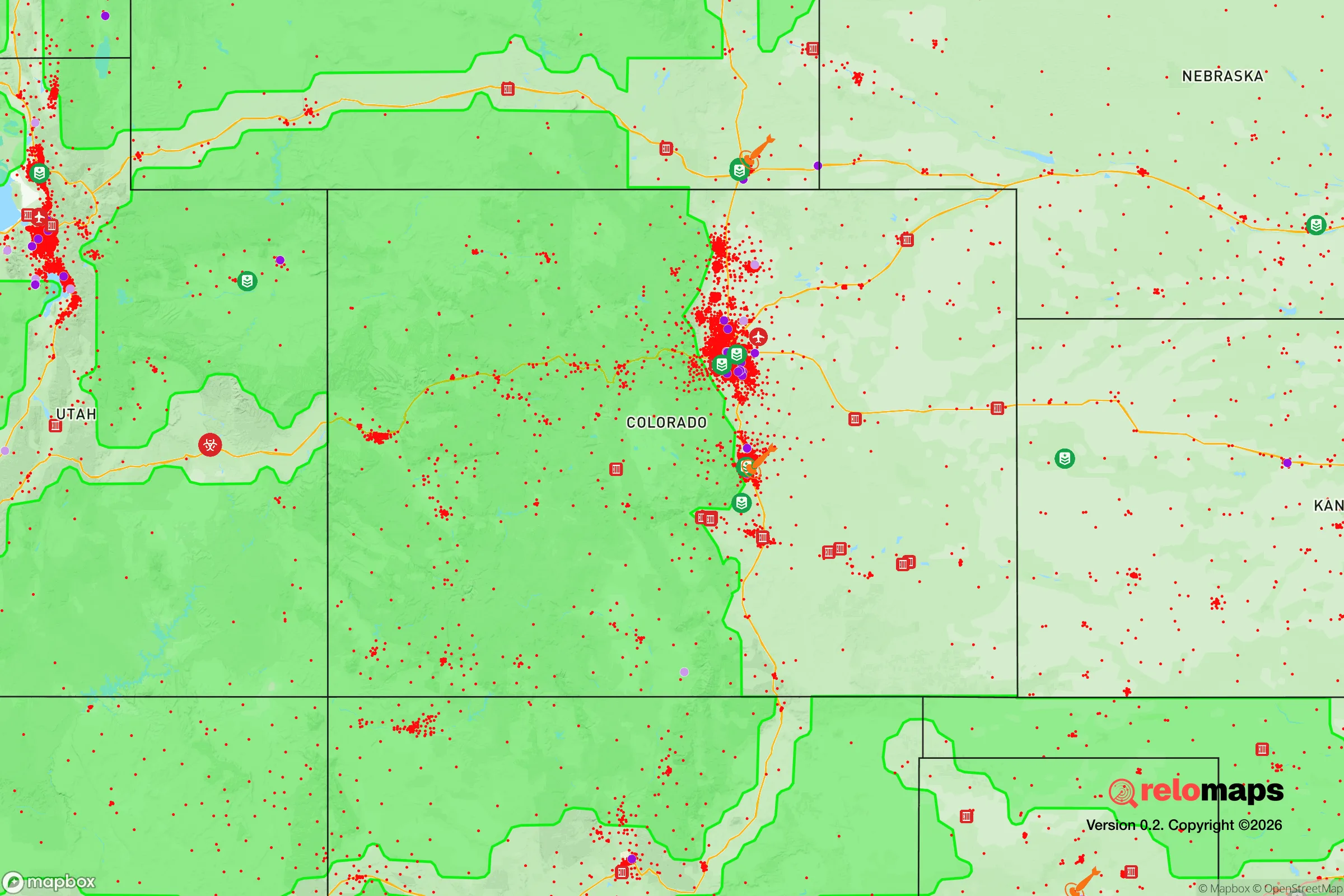
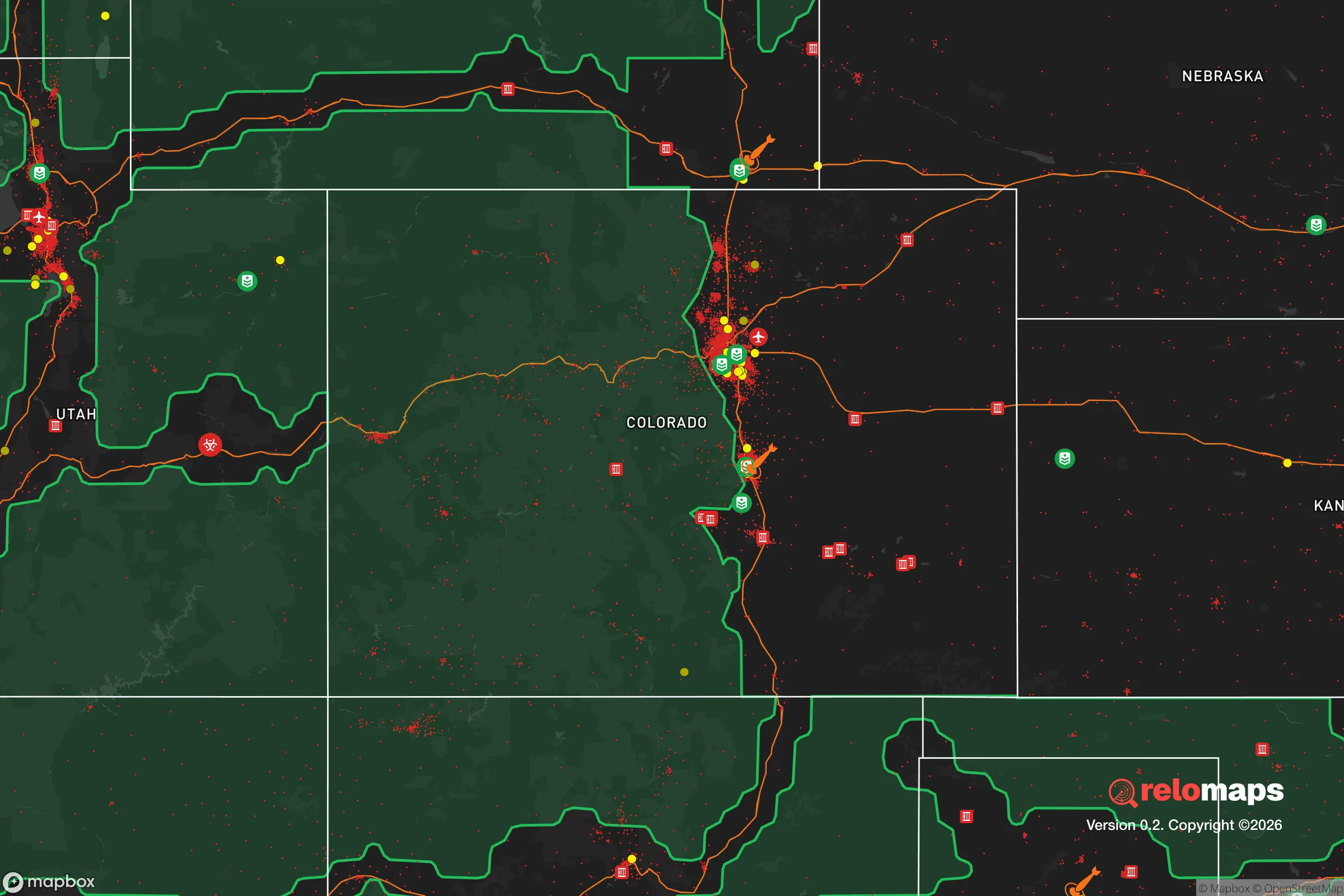


Important Note: For informational purposes only. This does not mean nothing bad ever happens in the green zones. Please use common sense. This is based on public data and modeled with AI. We tried to take a conservative approach but mistakes happen. We update this regularly as new information becomes available.
Solar Generator Recommendations
Backup power matters more here than in safer locations. We've picked three solar generators across budgets and capacity tiers — start with the budget unit if you only need a few essentials, or step up if you want to run a fridge and HVAC for days at a time.

Jackery Portable Power Station Explorer 300
Budget OptionPower on the Go: Weighing only 11 lbs, it's convenient to set up and store with book-sized foldable solar panels

BLUETTI Portable Power Station AC180
Designed for both indoor and outdoor scenarios, AC180 is highly capable as it has a robost capacity and continuous output power.

EF ECOFLOW DELTA Pro Ultra Power Station
Upgraded PickEcoFlow DELTA Pro Ultra is a whole-home energy system designed to grow with your family. Integrated with the Smart Home Panel 2, it scales to meet your evolving energy needs — keeping your home powered, intelligent, and secure through every stage of life.
We earn a commission, at no additional cost to you.
Strategic Assessment Analysis
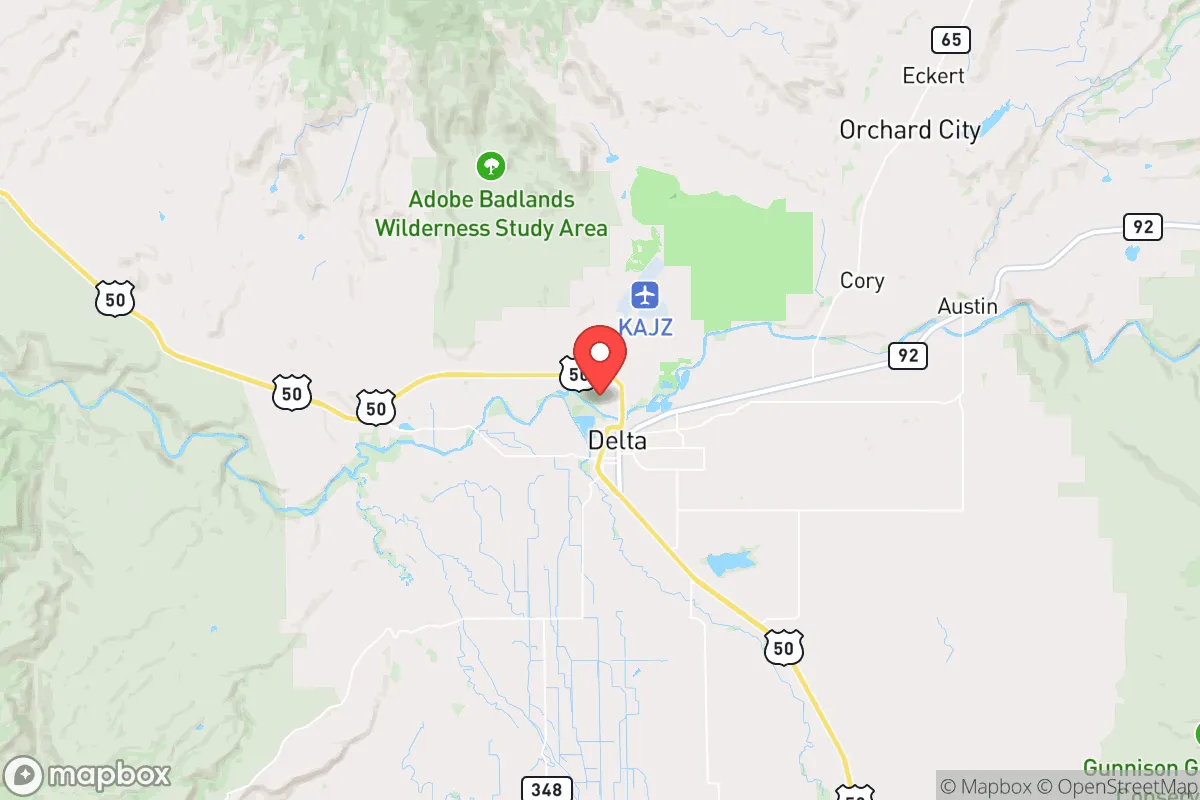
Delta, Colorado, sits in a geographic sweet spot that offers genuine strategic depth for those thinking long-term about resilience. Tucked into the western slope of the Rocky Mountains, roughly 250 miles southwest of Denver and 180 miles east of Salt Lake City, the town of roughly 9,000 people benefits from being far enough from major population centers to avoid the immediate chaos of a collapse event, yet close enough to access critical supplies and medical care if needed. The surrounding Mesa, Delta, and Montrose counties form a region that has historically been a quiet agricultural and energy hub, with a conservative, self-reliant culture that aligns well with a prepper mindset. The area’s elevation—around 5,000 feet—and dry climate mean fewer natural disaster risks than coastal or tornado-prone zones, though winter snow can be a logistical challenge. For a relocator prioritizing escape from urban decay, civil unrest, or grid-down scenarios, Delta offers a solid foundation, but it’s not without trade-offs that demand careful planning.
Geographic position and natural advantages for long-term security
Delta’s location is its primary strategic asset. It sits at the confluence of the Gunnison and Uncompahgre rivers, providing a reliable freshwater source that is rare in the arid West. The surrounding Grand Mesa—the largest flat-topped mountain in the world—acts as a natural barrier to the east, while the San Juan Mountains to the south and the Book Cliffs to the north create a bowl-like topography that limits easy access from major highways. This means any large-scale movement of people or military assets would be funneled through a few choke points: U.S. Highway 50 from the east, U.S. 550 from the south, and Colorado Highway 92 from the north. In a scenario where civil unrest or mass casualty events trigger mass migration, these routes could be monitored or blocked by a prepared community. The area’s agricultural base—orchards, hay fields, and cattle ranches—means local food production is viable, and the region’s history of mining and energy extraction (coal, natural gas, and uranium) provides potential for off-grid fuel sources. The climate is semi-arid, with about 10 inches of annual precipitation, so water storage and irrigation are non-negotiable, but the rivers mitigate the worst of drought concerns. For a single individual or family, the ability to grow food, access clean water, and defend a property from a defensible position is real here, not theoretical.
Risks, exposures, and proximity to fallout-relevant landmarks
No location is immune to risk, and Delta has specific vulnerabilities that a strategic relocator must weigh. The most immediate concern is its proximity to the Uncompahgre Plateau and the San Juan Mountains, which contain active uranium mining sites and legacy waste from the Cold War era. The Uravan Mineral Belt, just 30 miles south, has been a source of uranium and vanadium extraction for decades, and while most operations are shuttered, the potential for a tailings spill or contamination event exists. More critically, Delta sits within 150 miles of the Colorado River headwaters and the Glen Canyon Dam complex, which, if targeted in a conflict or sabotage event, could trigger downstream flooding or water supply disruptions. The town is also roughly 100 miles from the Grand Junction Regional Airport, which hosts a U.S. Army aviation unit and could become a staging area for federal response in a crisis—drawing unwanted attention. On the plus side, Delta is far from any major nuclear power plant (the nearest is Palo Verde in Arizona, over 400 miles away) and well outside the blast radius of any likely strategic target. The biggest risk is not a direct hit but the secondary effects of a collapse: refugees from the Front Range (Denver, Colorado Springs) could flood the western slope via I-70, and Delta is a natural stopping point. A prepared individual should plan for a 72-hour bug-out route into the high country or a hardened retreat with stored supplies to ride out the initial wave.
Practical resilience for a relocator: food, water, energy, and defensibility
For someone serious about self-sufficiency, Delta’s practical infrastructure is a mixed bag. Water is the strongest card: the Gunnison and Uncompahgre rivers are perennial, and the area’s irrigation canals are extensive. A property with a well and a hand pump is ideal, but even a rainwater catchment system on a 2,000-square-foot roof can yield 12,000 gallons annually in this climate. Food production is viable but requires work—the growing season is short (about 120 frost-free days), so cold frames, greenhouses, and heirloom seeds suited to high-altitude conditions are essential. Local farmers’ markets and co-ops exist, but they’ll dry up fast in a crisis. Energy is a weak point: the grid is served by Xcel Energy and the Delta-Montrose Electric Association, both of which rely on coal and natural gas plants that could be disrupted. Solar is a strong option—the area averages 300 sunny days per year—but battery storage is mandatory for winter nights. Natural gas is available in town, but rural properties may rely on propane, which requires resupply. Defensibility is where Delta shines for a prepared relocator: the town itself is compact, with a grid layout that’s easy to patrol, but the surrounding rural areas offer isolated properties with clear sightlines and natural barriers. The local sheriff’s office is well-funded and conservative-leaning, but in a total grid-down scenario, community defense will fall to neighbors. Building relationships with like-minded locals—many of whom are already hunters, ranchers, or off-grid enthusiasts—is the single best investment you can make. Medical care is limited to a small hospital (Delta County Memorial Hospital) with basic ER capabilities; serious trauma or chronic conditions will require a trip to Montrose or Grand Junction, which could be compromised in a crisis.
The overall strategic picture for Delta, Colorado, is one of cautious optimism for a relocator with a survivalist mindset. It offers a rare combination of natural defenses, water security, and a culture that values independence and preparedness, all while being far enough from the chaos of the Front Range to buy you time. The trade-offs are real: a short growing season, reliance on stored energy, and the risk of refugee flows from the east. But for a single individual or family willing to invest in off-grid infrastructure, build local alliances, and plan for the worst, Delta is a solid bet. It’s not a fortress—no place is—but it’s a place where a prepared person can thrive when the world outside goes sideways. The key is to move now, before the next wave of urban refugees discovers what you already know.

* Values derived from national, state, county, city and local statistics and may differ in a specific area. Last updated: 2026-05-16T10:03:42.000Z
Narrative content on this page is AI-generated and may contain mistakes. Verify any details that matter before acting on them.
ReloMaps may earn a commission from affiliate links at no extra cost to you.

