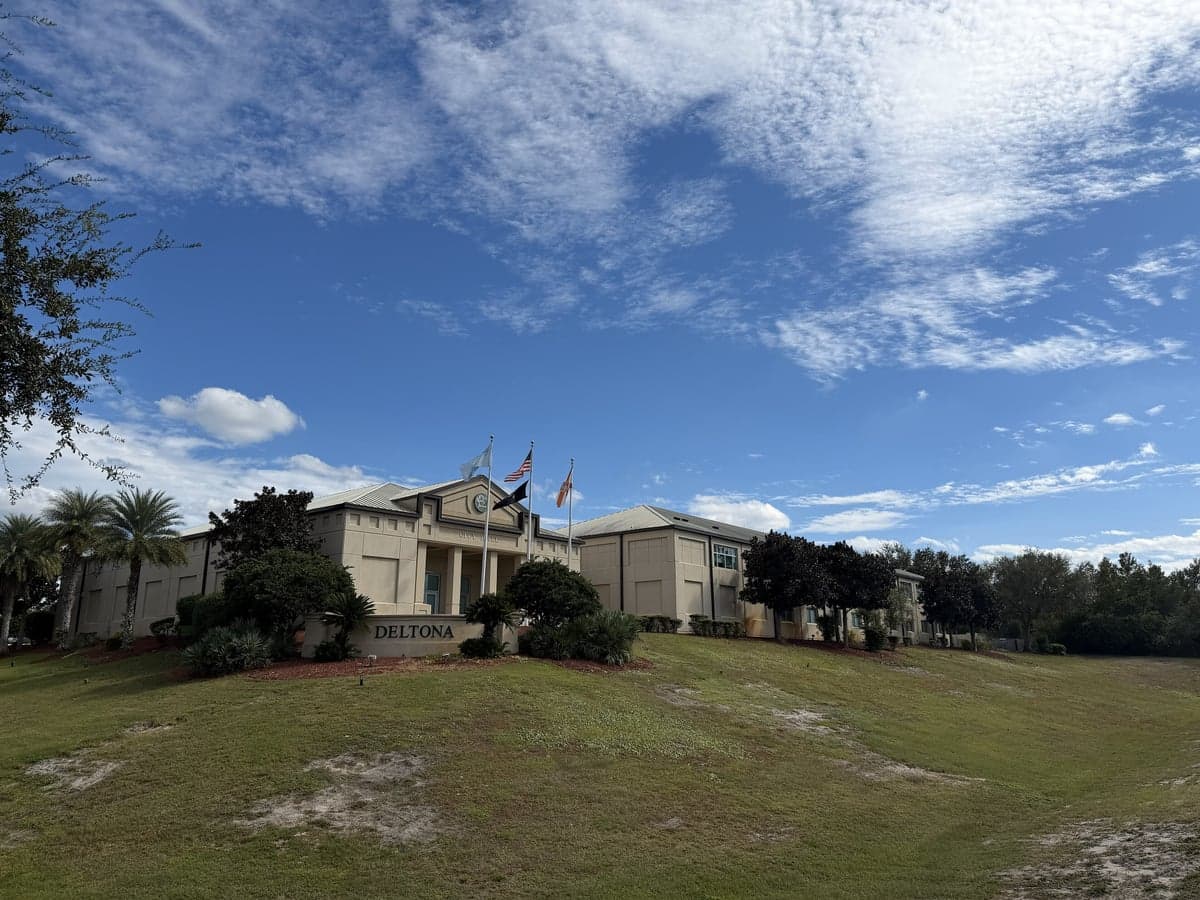
Photo: Wikipedia
Strategic Assessment of Deltona, FL
Meaningful friction. Expect exposure to either population pressure, blast zones, or natural disaster risk. Consider buying a retreat property.
What does the Strategic Assessment tell us?
Our Strategic Assessment grades tactical survivability of an area. Major population centers, military targets, fallout zones, natural disasters, and border exposure all drive risk — lower exposure means a more defensible position in a crisis.
This is heavily inspired by Joel Skousen's Strategic Relocation book. Highly recommended you checkout the book ($)What does this tell us?
Our Strategic Assessment grades tactical survivability of an area. Major population centers, military targets, fallout zones, natural disasters, and border exposure all drive risk — lower exposure means a more defensible position in a crisis.
This is heavily inspired by Joel Skousen's Strategic Relocation book. Highly recommended you checkout the book ($)Strategic Pillars

Key Distances
Regional Safe Places
Below is our recommended "safe zones" in Florida and the surrounding area based on our strategic heuristics. For most people, it's unrealistic to live in a “safe zone” full-time due to work, family or other personal reasons. They tend to be more rural. However, many of these areas are perfect for second homes and retreat properties that double as a vacation home or even a short-term rental.

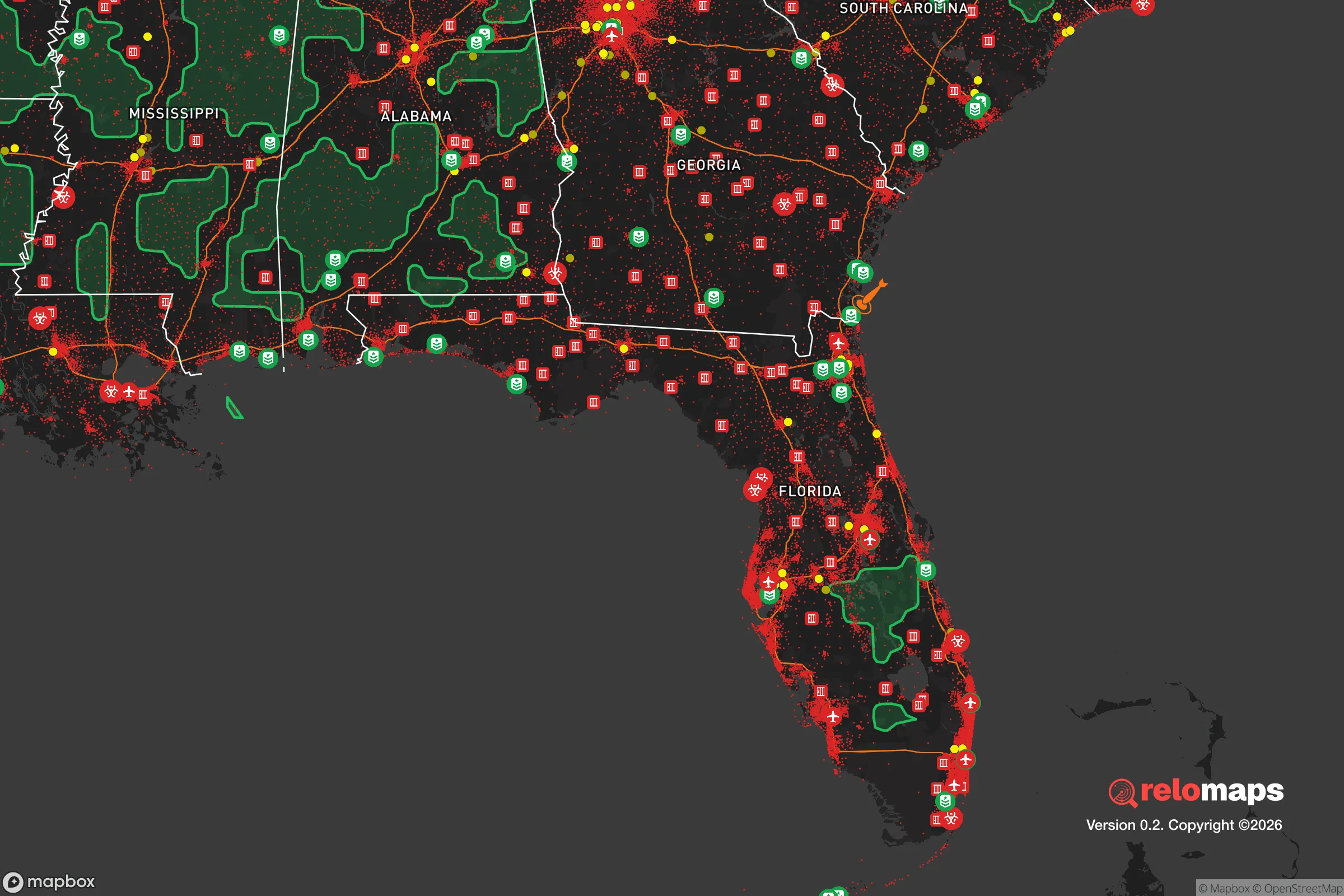


Important Note: For informational purposes only. This does not mean nothing bad ever happens in the green zones. Please use common sense. This is based on public data and modeled with AI. We tried to take a conservative approach but mistakes happen. We update this regularly as new information becomes available.
Solar Generator Recommendations
Backup power matters more here than in safer locations. We've picked three solar generators across budgets and capacity tiers — start with the budget unit if you only need a few essentials, or step up if you want to run a fridge and HVAC for days at a time.

Jackery Portable Power Station Explorer 300
Budget OptionPower on the Go: Weighing only 11 lbs, it's convenient to set up and store with book-sized foldable solar panels

BLUETTI Portable Power Station AC180
Designed for both indoor and outdoor scenarios, AC180 is highly capable as it has a robost capacity and continuous output power.

EF ECOFLOW DELTA Pro Ultra Power Station
Upgraded PickEcoFlow DELTA Pro Ultra is a whole-home energy system designed to grow with your family. Integrated with the Smart Home Panel 2, it scales to meet your evolving energy needs — keeping your home powered, intelligent, and secure through every stage of life.
We earn a commission, at no additional cost to you.
Strategic Assessment Analysis
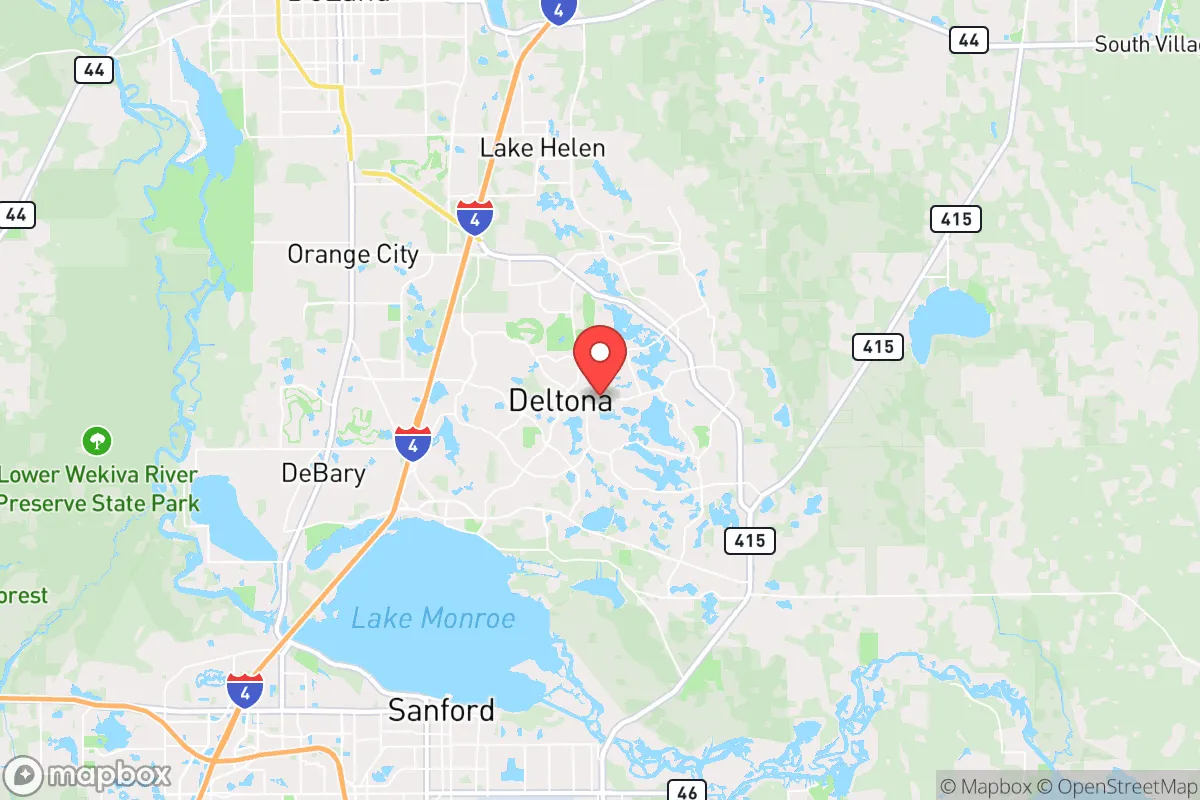
Deltona, Florida, sits in a precarious but potentially strategic position for those prioritizing resilience and self-sufficiency. Located roughly 30 miles inland from Daytona Beach and 25 miles from Orlando, it offers a buffer from immediate coastal storm surges and the densest urban chaos, yet remains close enough to major infrastructure to be a concern. For a relocator with a survivalist mindset, Deltona’s real advantage is its location within Volusia County, which provides a mix of suburban density and rural fringe access, but its proximity to I-4 and the Orlando metro area introduces significant vulnerabilities that must be weighed carefully.
Geographic position and natural advantages for long-term stability
Deltona’s inland position on the St. Johns River floodplain gives it a few natural pluses. The area is elevated relative to coastal zones—averaging about 30 to 50 feet above sea level—which reduces the risk of catastrophic storm surge from a major hurricane, a common concern for Florida preppers. The St. Johns River and nearby Lake Monroe offer freshwater sources, though they are not pristine; with proper filtration and treatment, they could serve as emergency water supplies. The surrounding landscape includes pockets of pine flatwoods and scrub, which provide some natural cover and limited hunting opportunities for small game like deer and wild hogs. The climate is subtropical, meaning year-round growing seasons for food production, a critical factor for long-term self-sufficiency. However, the summer heat and humidity can be brutal, and the area’s sandy soils require significant amendment for productive gardening. The proximity to the Ocala National Forest, about 40 minutes northwest, offers a larger buffer zone and potential retreat area, but Deltona itself is not a remote or defensible location—it’s a sprawling suburban development with a population of over 100,000, meaning you’ll have neighbors, and lots of them.
Risks, exposures, and proximity to fallout-relevant landmarks
The biggest strategic downside of Deltona is its location in the I-4 corridor, a major evacuation and supply route that connects Orlando, Tampa, and Daytona Beach. In a crisis—whether a hurricane, civil unrest, or a mass casualty event—this highway becomes a chokepoint and a target. Orlando, with its theme parks, convention centers, and major airport (MCO), is a high-density population center that could see rapid destabilization. Deltona is close enough that fallout from urban chaos—looting, refugee flows, resource shortages—would likely spill over within hours. The area is also near the Daytona Beach International Airport and the Cape Canaveral Space Force Station (about 60 miles southeast), which, while not a direct nuclear target, is a strategic military asset that could be a secondary concern in a broader conflict. Volusia County has a history of hurricane impacts, and while Deltona avoids the worst of storm surge, it is not immune to wind damage, flooding from the St. Johns River, and prolonged power outages. The county’s emergency management infrastructure is decent but not exceptional; during Hurricane Ian in 2022, parts of Volusia saw significant flooding and extended recovery times. For a prepper, the key risk is that Deltona is too close to major population centers to be a true bug-out location, but too far from remote wilderness to offer a reliable fallback.
Practical resilience for a relocator: food, water, energy, and defensibility
For a single individual or family looking to establish a resilient setup, Deltona presents a mixed bag. Water is the most critical concern: the city relies on groundwater from the Floridan Aquifer, which is generally clean but vulnerable to saltwater intrusion and contamination from surface runoff. A well on your property is ideal, but many suburban lots in Deltona are on municipal water, so you’ll need a backup plan—rainwater catchment, a Berkey filter, or a drilled well if you have the space. Food production is feasible but requires work; the sandy soil needs heavy amendment with compost and mulch, and the summer heat can stress crops. A greenhouse or shade cloth setup is almost mandatory for year-round yields. Local farmers’ markets and the nearby Volusia County Agricultural Extension office can provide resources, but don’t expect to be fully self-sufficient on a quarter-acre lot. Energy resilience is a bright spot: Florida has strong solar potential, and net metering policies are favorable, though grid reliability during storms is a known issue. A solar array with battery storage (like Tesla Powerwall or a DIY setup) is a solid investment. Defensibility is the weakest link—Deltona is a typical suburban grid with cul-de-sacs and open lots, making it hard to secure a perimeter. A home on a larger lot with natural barriers (tree lines, fences) is better, but you’re still in a neighborhood. For a prepper, this means focusing on low-profile preparedness: hidden caches, a well-stocked pantry, and a plan to relocate if things get hot. The local gun culture is present but not extreme; Volusia County is a Second Amendment-friendly area with reasonable gun laws, and there are several shooting ranges nearby for training.
The overall strategic picture for Deltona is one of calculated compromise. It’s not a survivalist paradise—it’s a suburban bedroom community with real exposure to urban fallout and natural disaster risks. But for someone who needs to stay within commuting distance of Orlando or Daytona for work, while maintaining a baseline of preparedness, it can work if you’re disciplined. The key is to treat Deltona as a base of operations, not a final redoubt. Have a bug-out vehicle prepped, a secondary location identified (perhaps in the Ocala National Forest or further north in rural Volusia), and a network of like-minded neighbors. The area’s growth is steady, meaning more people and more strain on resources over time, so your window for establishing a resilient setup is now. If you’re willing to put in the work on water, food, and energy independence, and you keep your head down, Deltona offers a reasonable middle ground between convenience and readiness. Just don’t mistake it for a fortress—it’s a place to hold ground, not to make a last stand.

* Values derived from national, state, county, city and local statistics and may differ in a specific area. Last updated: 2026-04-24T02:42:41.000Z
Narrative content on this page is AI-generated and may contain mistakes. Verify any details that matter before acting on them.
ReloMaps may earn a commission from affiliate links at no extra cost to you.

