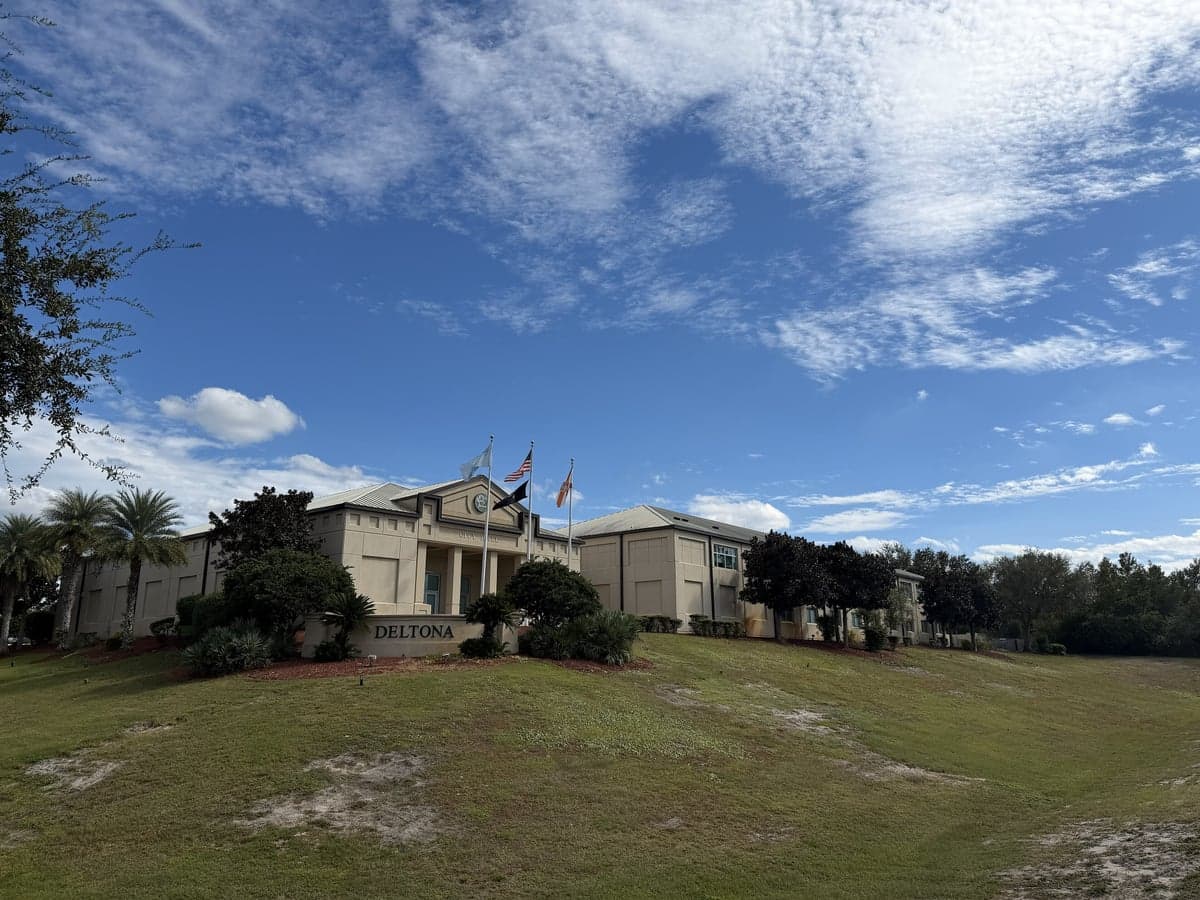
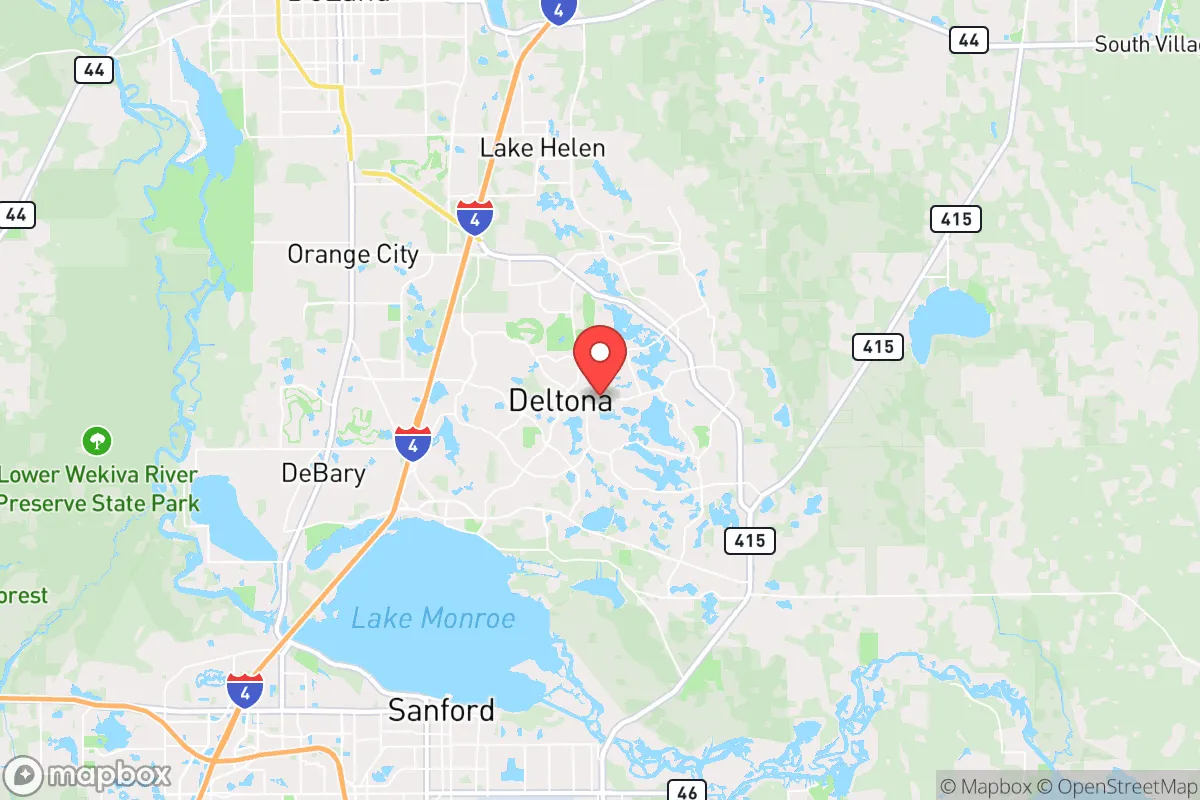
Photo: Wikipedia
Demographics of Deltona, FL
Affluence Level in Deltona, FL
A middle-class area roughly in line with national averages across income, home values, education, and employment.
People of Deltona, FL
Today, Deltona, Florida is a densely populated, majority-minority city of 95,682 residents, defined by its blend of working-class families, a large Puerto Rican and Hispanic community, and a growing Black population. Unlike many Florida cities with a historic downtown, Deltona is a planned suburban community with a distinctly modern character, where nearly 40% of residents identify as Hispanic and the foreign-born share sits at a modest 4.9%. The city’s identity is shaped by its role as an affordable bedroom community for commuters to Orlando, Daytona Beach, and Sanford, with a population that is younger and less college-educated than the state average. For a conservative-leaning audience, Deltona represents a place where traditional family values and homeownership remain strong, even as its demographic profile continues to diversify.
How the city was settled and grew
Deltona is a genuine post-1900 planned community, with no colonial or 19th-century settlement history. The land was originally part of vast Florida timber and turpentine holdings, but the city’s founding began in 1962 when the Mackle Brothers, a prominent Miami-based development firm, purchased 17,000 acres of scrubland in western Volusia County. They marketed Deltona as an affordable, master-planned retirement and second-home community for middle-class Northerners, particularly from the Northeast and Midwest. The first wave of residents were predominantly white, middle-class retirees and vacation-home buyers who purchased lots sight-unseen through aggressive mail-order campaigns. The original development centered around what is now the Deltona Lakes neighborhood, where the first homes were built along the chain of man-made lakes that gave the area its name. By the early 1970s, the city’s population had surged past 10,000, and the Enterprise area, near the intersection of Howland Boulevard and Deltona Boulevard, became the commercial and civic hub for these early settlers.
Modern era (post-1965)
The post-1965 era, driven by the Hart-Cellar Act and broader domestic migration patterns, fundamentally reshaped Deltona’s population. The 1980s and 1990s saw a massive influx of Puerto Rican families moving from the Northeast, particularly New York and New Jersey, drawn by affordable housing, warm weather, and existing family networks. This wave settled heavily in the Lake Helen and Osteen areas on the city’s eastern and southern edges, where larger lots and newer construction offered space for multigenerational households. By 2000, the Hispanic share of the population had risen to over 20%, and it has since nearly doubled. The 2000s brought a second domestic wave: Black families, many from the Orlando metropolitan area and other parts of the South, moved to Deltona seeking lower housing costs and newer schools. They concentrated in the Deltona Pines and West Deltona neighborhoods, where home prices remained below the county median. Today, the city’s racial composition reflects these waves: 44.6% White, 39.2% Hispanic (overwhelmingly Puerto Rican), 11.3% Black, 1.4% East/Southeast Asian, and 0.5% Indian (subcontinent). The foreign-born share remains low at 4.9%, indicating that most Hispanic and Black growth comes from domestic migration, not international immigration. The Deltona Highlands neighborhood, with its mix of older ranch homes and newer townhouses, exemplifies the city’s current demographic blend, where white retirees, Puerto Rican families, and Black professionals live side by side.
The future
Deltona’s population is heading toward continued diversification, but the city is not tribalizing into distinct ethnic enclaves. Instead, it is homogenizing into a broadly Hispanic-majority, working-class suburb. The Hispanic share is projected to surpass 45% by 2030, driven by natural increase and continued domestic migration from Puerto Rico and the Northeast. The White share is declining steadily as older retirees pass away or move to more rural areas, and the Black share is plateauing around 11-12% as housing prices rise. The East/Southeast Asian and Indian communities remain small and are likely to stay that way, as Deltona lacks the professional job base or ethnic infrastructure to attract significant numbers. The city’s low college attainment rate (19.6%) and heavy reliance on construction, retail, and healthcare jobs suggest that future growth will come from families seeking affordability rather than high-wage professionals. The Four Townes area, a newer development near the St. Johns River, is attracting a slightly more affluent mix, but it remains an outlier.
For someone moving in now, Deltona is becoming a solidly middle-class, Hispanic-majority suburb where homeownership is attainable but schools and infrastructure are stretched. The city’s political leanings are shifting: once reliably Republican, it voted for Donald Trump in 2020 but by a narrower margin than in 2016, reflecting the growing influence of Puerto Rican voters who often lean Democratic. The bottom line: Deltona is a place of upward mobility for working families, but its future depends on managing growth without losing the affordability that drew its residents in the first place.

* Values derived from national, state, county, city and local statistics and may differ in a specific area. Last updated: 2026-04-24T02:42:41.000Z
Narrative content on this page is AI-generated and may contain mistakes. Verify any details that matter before acting on them.
ReloMaps may earn a commission from affiliate links at no extra cost to you.

