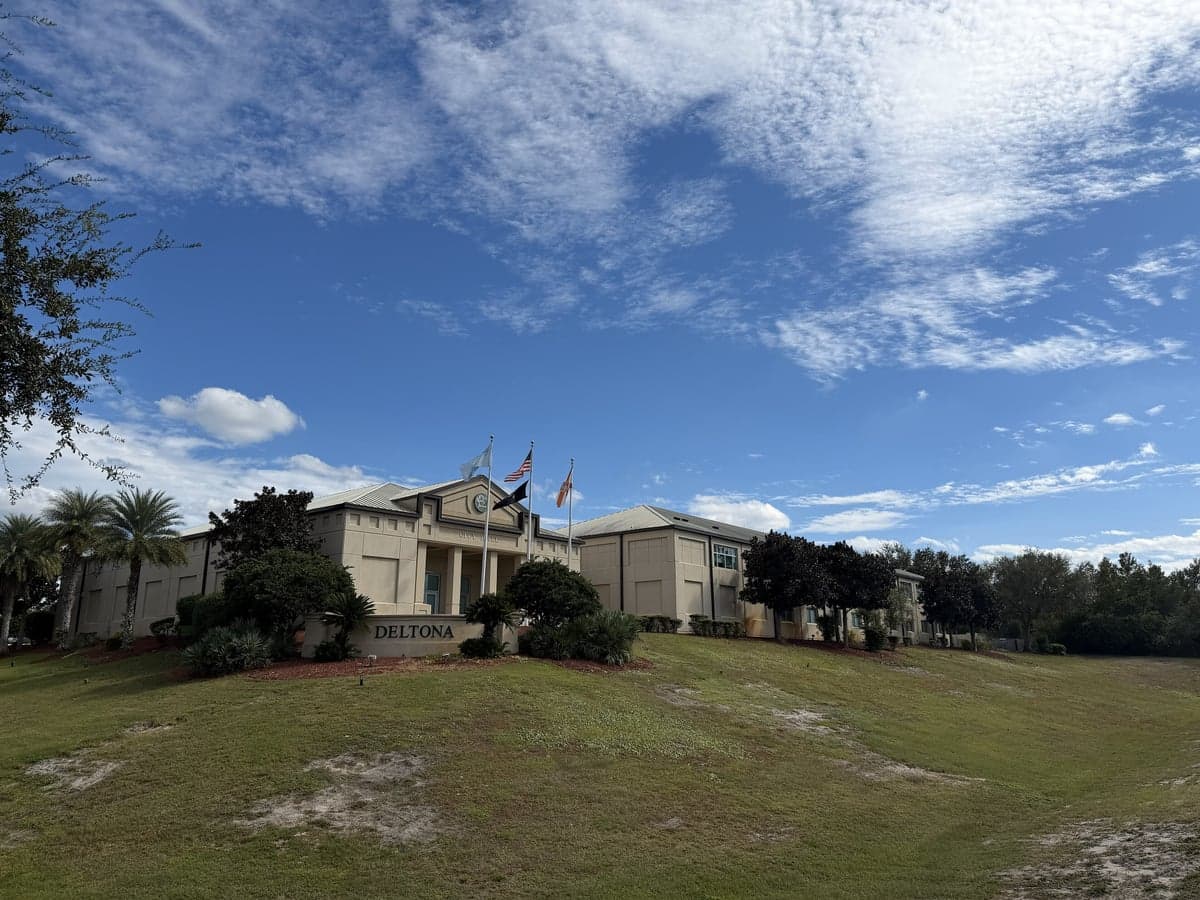
Photo: Wikipedia
Political ClimatePolitical Climate in Deltona, FL
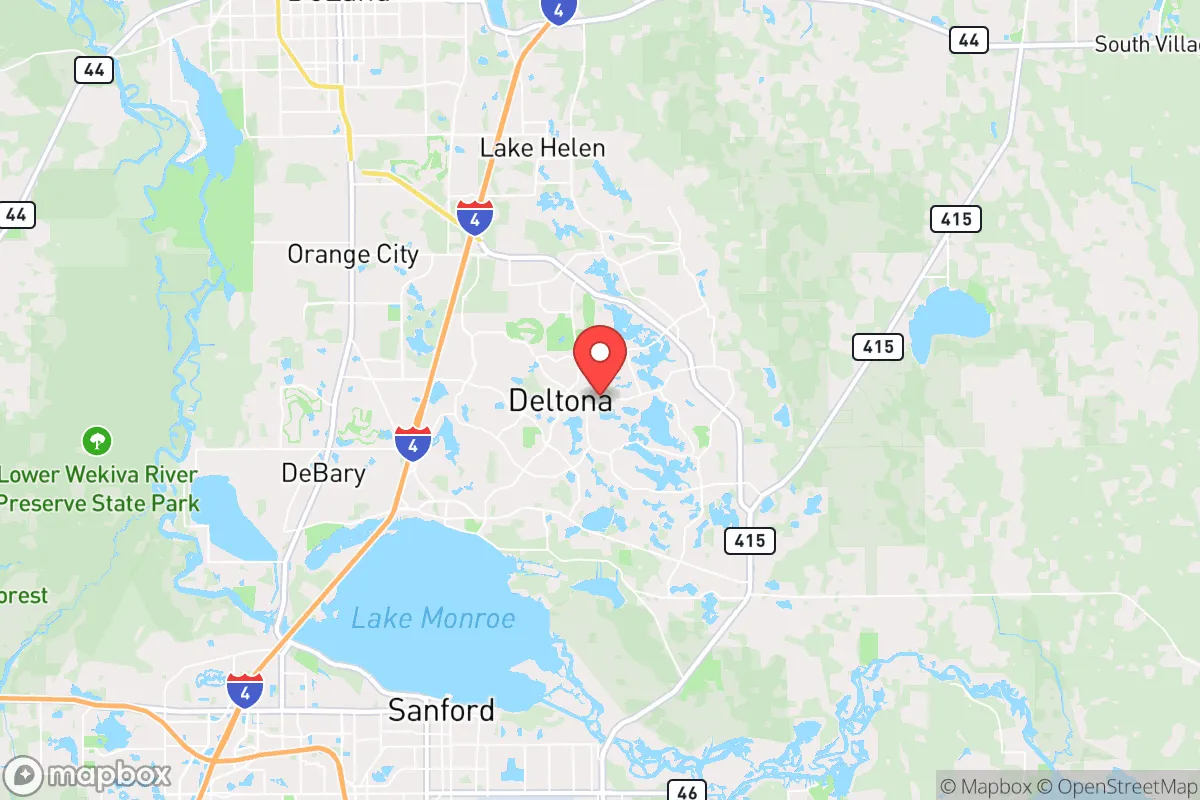
District shown is the primary district for this city’s centroid. Cities may span multiple districts.
Local Political AnalysisPolitical Analysis of Deltona, FL
Deltona’s political climate has long leaned conservative, and the Cook PVI of R+5 reflects a community that generally values limited government and personal responsibility. For years, this was a quiet, working-class town where folks just wanted to be left alone to raise their families without too much fuss from Tallahassee or Washington. But like a lot of Central Florida, you’re starting to see some shifts—nothing dramatic yet, but enough that a long-time resident might raise an eyebrow. The trajectory here is still solidly red, but the edges are fraying a bit as new folks move in from more progressive areas, bringing different ideas about what government should be doing in our daily lives.
How it compares
Compared to its neighbors, Deltona is a bit of a middle ground. Head west to DeLand, and you’ll find a more purple vibe—Stetson University and the arts scene there lean left, and the county seat politics can feel a little more “let’s try something new.” Drive east to Daytona Beach, and it’s a mixed bag: tourist dollars and a younger crowd have nudged Volusia County’s coastal areas toward a more moderate-to-liberal stance on things like zoning and social policies. But Deltona? It’s still mostly a bedroom community of Orlando commuters, and that means a lot of folks here are more concerned with property taxes and school choice than with the latest progressive trend. The contrast is sharpest when you look at Sanford just south, which has seen a bigger influx of younger, more diverse residents and a noticeable leftward tilt in local elections. Deltona, for now, holds the line—but you can feel the pressure.
What this means for residents
For the average Deltona family, this political climate means a few practical things. First, local government here still tends to keep its hands off—zoning is fairly permissive, business regulations aren’t overly burdensome, and there’s a general reluctance to impose new fees or mandates. That’s a breath of fresh air if you’ve ever dealt with the red tape in, say, Orange County. But there’s a growing concern among folks I talk to: the school board and city council races are getting more competitive, and some candidates are pushing for things like diversity, equity, and inclusion programs in schools or tighter rental ordinances that feel like government overreach. If you value personal freedom—whether it’s choosing your child’s curriculum or deciding how to use your own property—you’ll want to keep an eye on those local elections. The R+5 rating is a comfort, but it’s not a guarantee.
Culturally, Deltona still feels like old Florida in many ways: church potlucks, Friday night football at Deltona High, and a general “live and let live” attitude. But there’s a creeping sense that the character is changing. You see more out-of-state license plates in the Publix parking lot, and with them come different expectations about what a community should look like. The biggest policy distinction here is that Deltona has resisted the kind of growth-management overreach that’s choked places like Winter Park or Maitland. No strict urban-growth boundaries, no heavy-handed affordable housing mandates—yet. The worry is that as the population swells, the pressure to “do something” will lead to more rules, more taxes, and less freedom. For now, it’s still a place where you can breathe, but the next few election cycles will tell the tale.

State Political ClimatePolitical Climate in Florida
State Political AnalysisPolitical Environment in the State
Florida is a solidly Republican state that has shifted rightward over the past decade, with a current partisan lean of roughly +3 to +5 points in statewide races, driven by a coalition of conservative retirees, suburban families, and Hispanic voters in the I-4 corridor. The state has not voted for a Democrat for president since 2012, and in 2024, Donald Trump carried it by over 13 points, a dramatic swing from the 2012 margin of less than 1 point. This trajectory reflects a broader realignment: once a quintessential swing state, Florida now functions as a conservative stronghold, with the GOP holding supermajorities in both legislative chambers and the governor’s mansion.
Urban vs. rural divide
The political map of Florida is starkly divided between its dense, liberal-leaning urban cores and its sprawling, conservative suburbs and rural counties. Miami-Dade County, once a Democratic bastion, has shifted right dramatically—Trump won it in 2024 by over 11 points, fueled by Cuban-American and Venezuelan voters who are deeply skeptical of socialism. Conversely, Orlando (Orange County) and Tampa (Hillsborough County) remain Democratic-leaning, but their suburbs—like Kissimmee in Osceola County and Lakeland in Polk County—are trending red. The Panhandle, including Pensacola and Panama City, is deeply conservative, while Gainesville (Alachua County) stands out as a liberal island due to the University of Florida. The I-4 corridor, stretching from Tampa to Daytona Beach, is the key battleground, but even here, Republican registration has surged in exurbs like Ocala (Marion County) and Port St. Lucie (St. Lucie County).
Policy environment
Florida’s policy environment is aggressively pro-business and individual liberty, with no state income tax, a right-to-work law, and a regulatory climate that attracts companies from high-tax states like New York and California. The state’s education policy, under Governor Ron DeSantis, has prioritized parental rights—the Parental Rights in Education Act (HB 1557, 2022) prohibits classroom instruction on sexual orientation and gender identity in K-3, and the “Stop WOKE Act” (HB 7, 2022) restricts critical race theory in schools and workplace training. Healthcare policy is mixed: Florida did not expand Medicaid, keeping costs lower for taxpayers, but it also has a high uninsured rate. Election integrity is a major focus—the state passed SB 90 (2021) to tighten voter ID requirements, limit drop boxes, and restrict mail-in ballot requests, which critics call suppression but supporters see as necessary to prevent fraud. Property taxes are relatively low, but homeowners insurance rates have skyrocketed due to litigation and hurricane risk, a growing concern for residents.
Trajectory & freedom
Florida is becoming more free in many respects, particularly in areas of parental rights, gun rights, and economic liberty. The state enacted constitutional carry (permitless carry) in 2023 (HB 543), allowing law-abiding adults to carry concealed firearms without a permit—a major win for Second Amendment advocates. On medical autonomy, Florida banned COVID-19 vaccine mandates for private employers (SB 252, 2023) and prohibited mask mandates in schools (HB 1557, 2022). Property rights were strengthened with the “Live Local Act” (SB 102, 2023), which preempts local zoning to allow affordable housing development, though some conservatives worry it infringes on local control. However, the state has also expanded government power in ways that concern libertarians: DeSantis’s feud with Disney over the “Don’t Say Gay” law led to the dissolution of the Reedy Creek Improvement District (2023), a move that some see as retaliatory government overreach. Overall, the trajectory is toward more personal liberty, but with a strong hand from Tallahassee on cultural issues.
Civil unrest & political movements
Florida has seen relatively little civil unrest compared to states like Oregon or Minnesota, but political movements are active on both sides. The “Moms for Liberty” movement, founded in Florida in 2021, has become a national force for parental rights in education, with chapters in Brevard County and Sarasota leading school board challenges. On the left, the “Dream Defenders” and other activist groups have organized protests against the “Stop WOKE Act” and the “Parental Rights in Education Act,” but these have been small and localized. Immigration politics are a flashpoint: Governor DeSantis’s flights of migrants to Martha’s Vineyard (2022) and the state’s crackdown on undocumented immigrants (SB 1718, 2023, which requires E-Verify and bans driver’s licenses for undocumented residents) have drawn national attention. Election integrity controversies persist, with Democrats alleging voter suppression and Republicans pointing to the state’s clean 2020 and 2022 elections as proof of success. A new resident would notice a palpable sense of political engagement, with yard signs and bumper stickers common, but little of the street-level chaos seen elsewhere.
Projection
Over the next 5-10 years, Florida will likely become more conservative as in-migration from blue states accelerates—roughly 1,000 people move to Florida daily, many from New York, California, and Illinois, and they tend to be older, wealthier, and more conservative than the national average. The Hispanic vote, particularly in Miami-Dade and Hialeah, will continue to shift right, making it harder for Democrats to win statewide. However, the influx of younger, more diverse residents to Orlando and Tampa could create new Democratic pockets. The biggest wildcard is climate change: rising sea levels and stronger hurricanes could drive up insurance costs and eventually slow migration, but for now, the trend is toward a redder, more culturally conservative state. A new resident moving in now should expect a decade of continued GOP dominance, with policies that prioritize low taxes, school choice, and individual rights—but also a growing tension between development and environmental sustainability.
For a conservative-leaning individual or parent, Florida offers a policy environment that aligns with many core values: low taxes, strong parental rights, gun freedom, and a government that pushes back against federal overreach. The state is not without its challenges—soaring insurance costs, traffic congestion in metro areas, and a growing gap between the wealthy coastal enclaves and inland communities—but the overall trajectory is toward more freedom, not less. If you’re looking for a place where your voice matters and your rights are respected, Florida is one of the few states where that promise is still being kept.
* Values derived from national, state, county, city and local statistics and may differ in a specific area. Last updated: 2026-04-24T02:42:41.000Z
Narrative content on this page is AI-generated and may contain mistakes. Verify any details that matter before acting on them.
ReloMaps may earn a commission from affiliate links at no extra cost to you.

