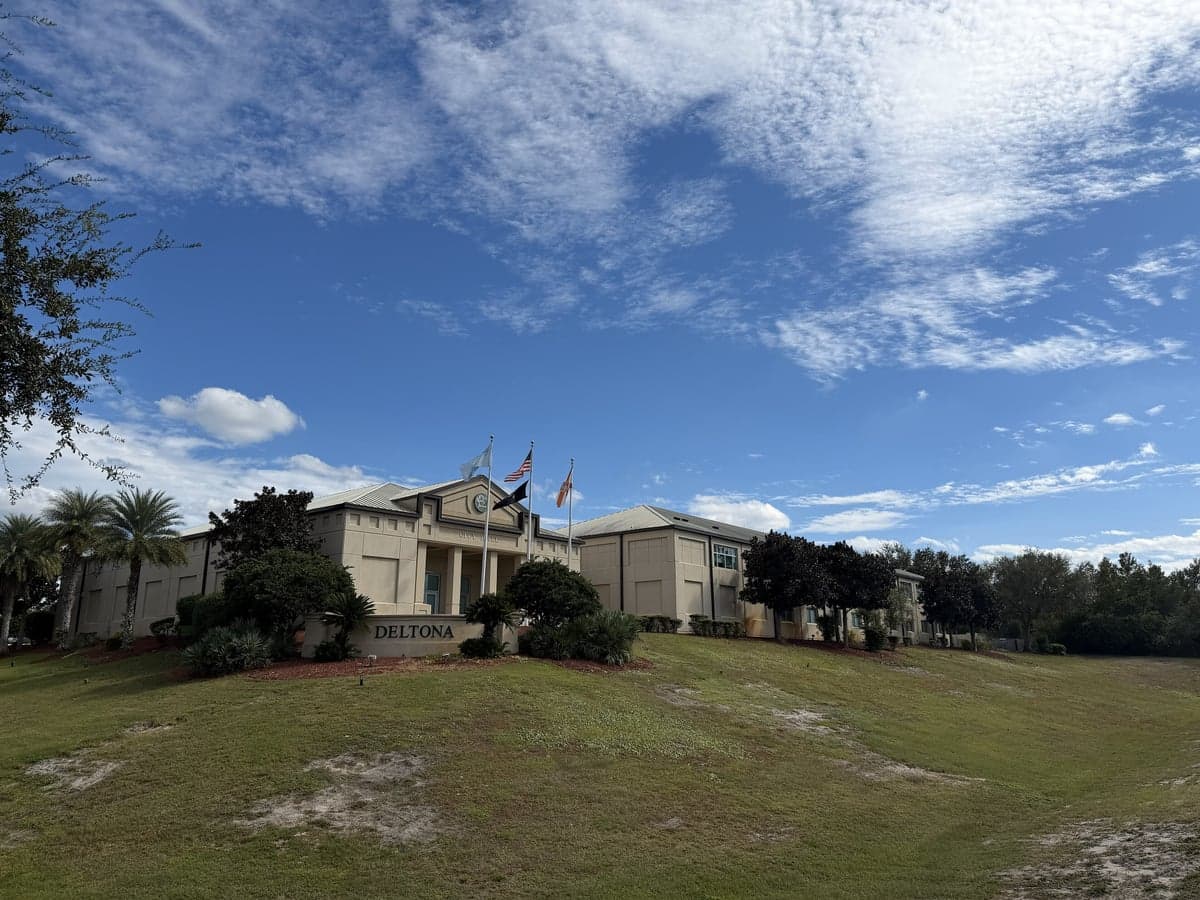
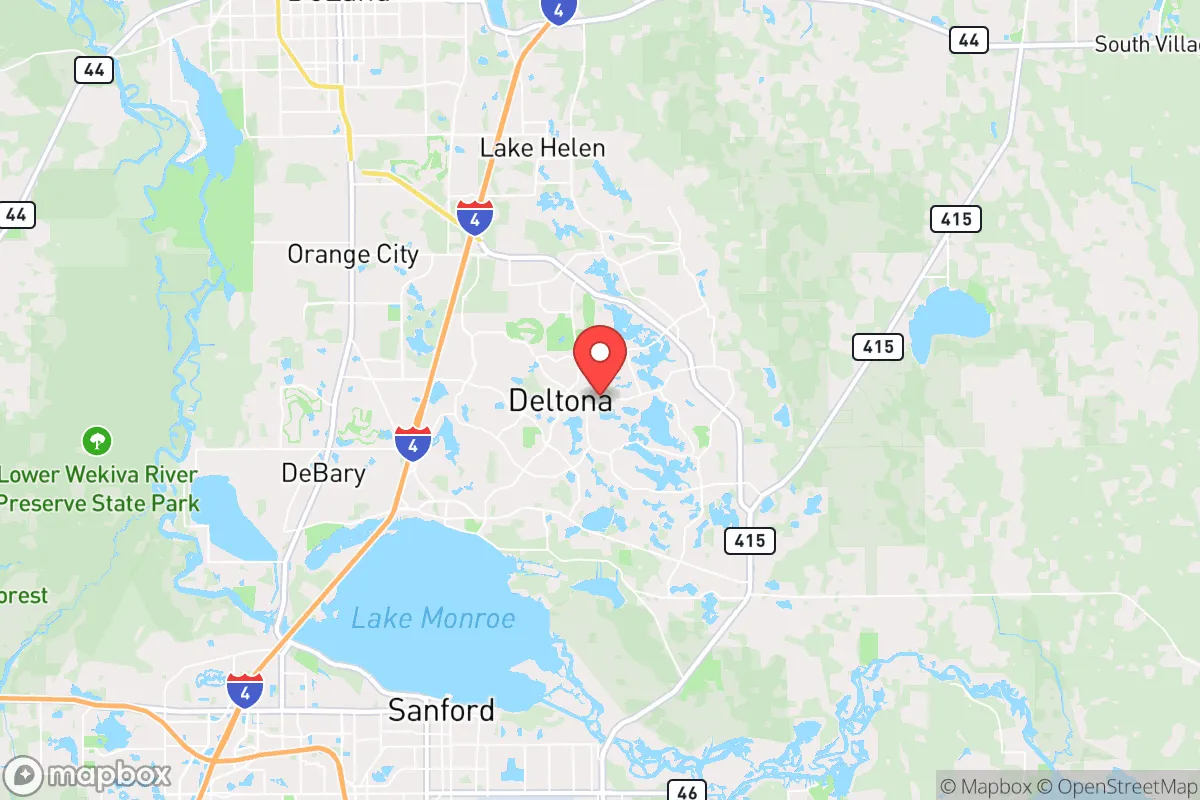
Photo: Wikipedia
Quality of Life in Deltona, FL
A high quality of life with strong walkability, manageable living costs, healthy neighborhood signals, and solid amenity access.
What does Quality of Life tell us?
Quality of Life blends cost of living, nearby amenities, socioeconomic signals, and neighborhood character. City-level scores represent the whole municipality; individual neighborhoods can differ.
What does this tell us?
Quality of Life blends cost of living, nearby amenities, socioeconomic signals, and neighborhood character. City-level scores represent the whole municipality; individual neighborhoods can differ.
Cost of Living
16% above national average
The Real Cost of Living in Deltona, FL for 2026
| Tier | Individual | Family (4) |
|---|---|---|
| Survival | $24k | $45k |
| Comfortable | $49k | $73k |
| Luxury | $99k+ | $154k+ |
| Elite (Top 5%) | $117k+ | $181k+ |
101%
The Area Signal
A metric tracking the socioeconomic signals of the area.
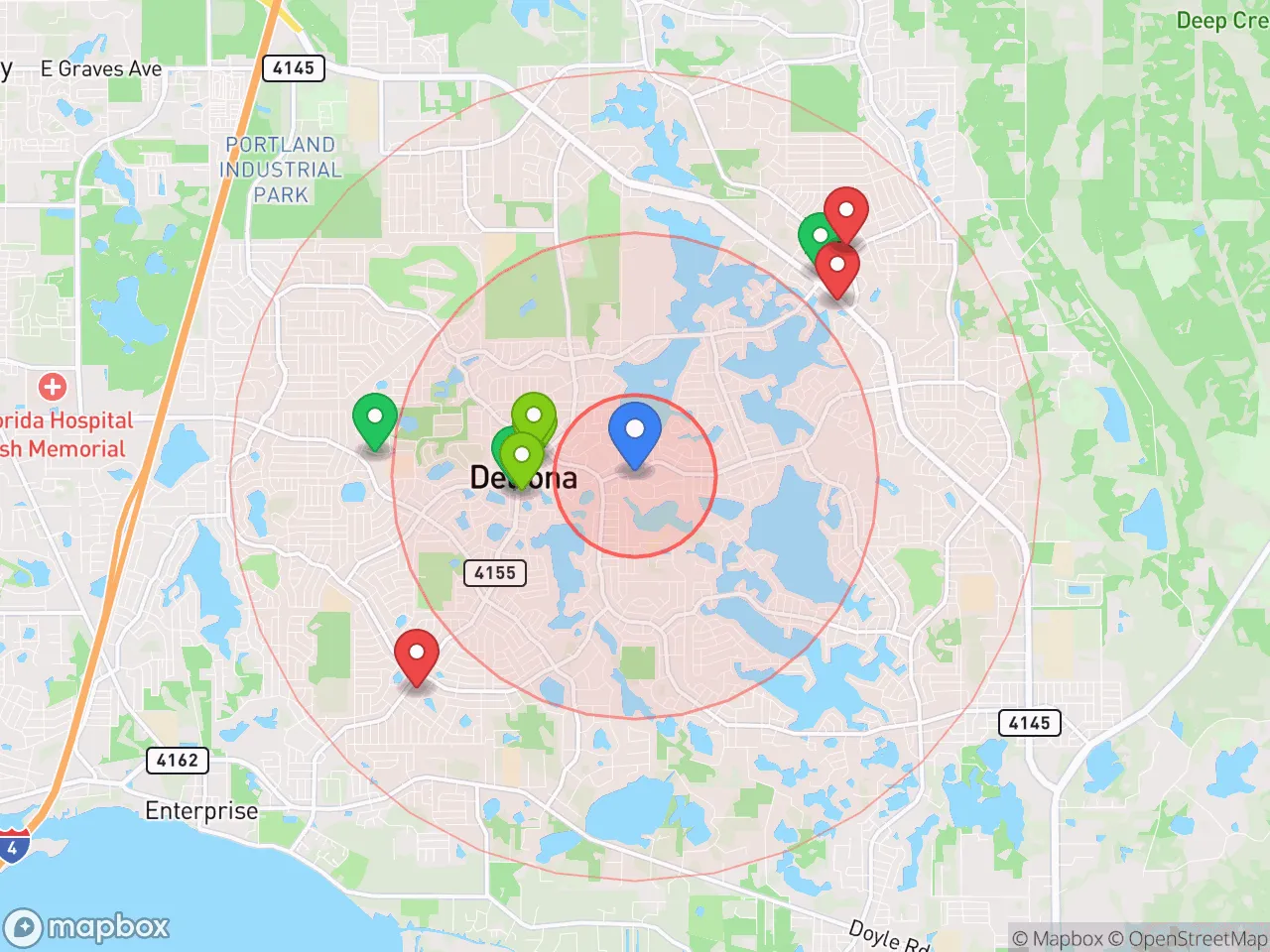
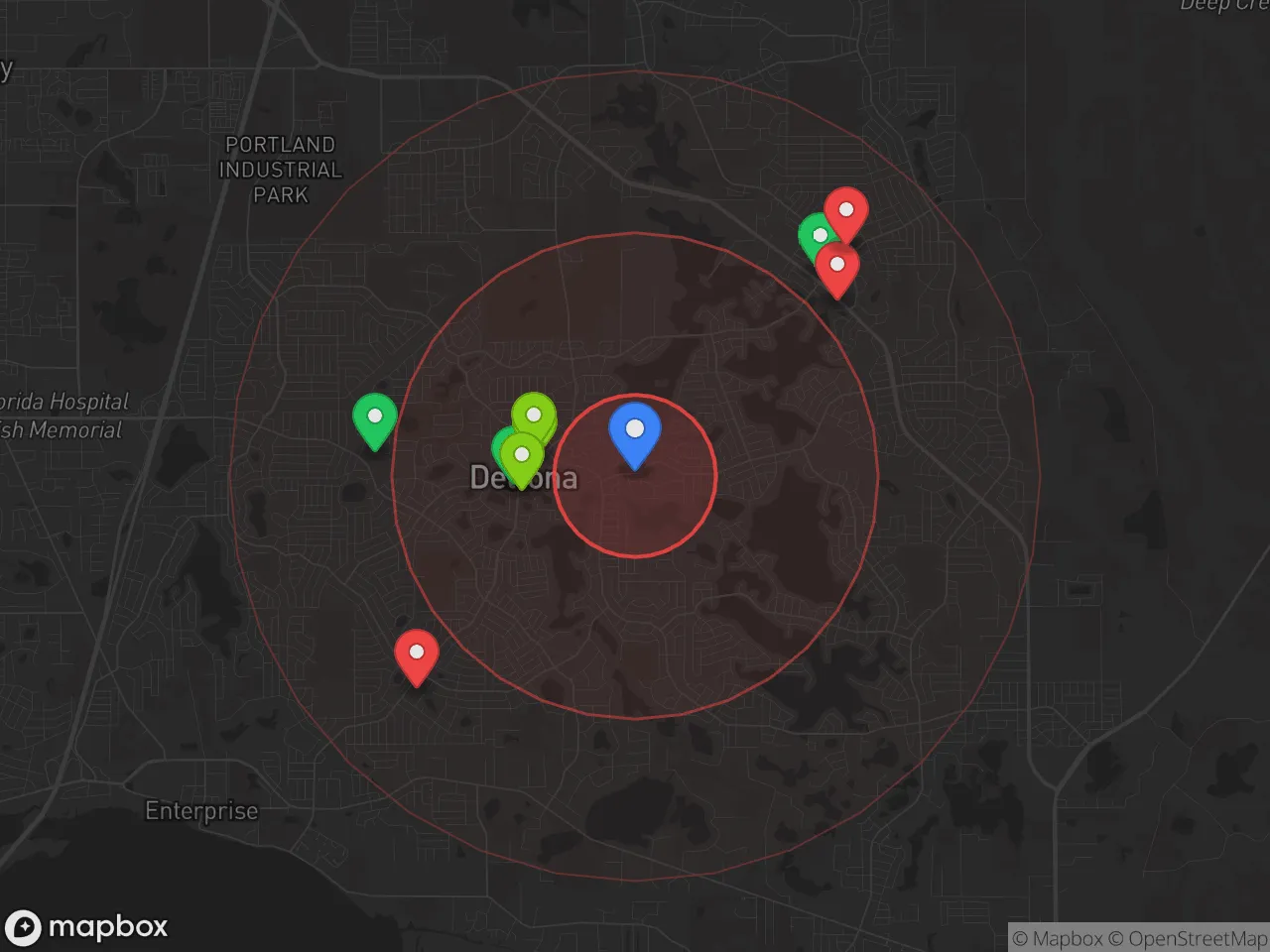
Hobbies
Explore the areaGroceries
4 within 10 miles
Gas
20 within 10 miles
Hospital
12 within 20 miles
Airport
MCO — Orlando International
Post Office
USPS — Deltona, FL
Critical Amenities
Quality-of-Life Analysis
Deltona, Florida, presents a middle-market quality of life shaped by its role as a commuter-heavy bedroom community in Volusia County. With a cost of living index of 116 (16% above the U.S. average), the city attracts a mix of working families, first-time homebuyers, and retirees seeking more space than coastal towns offer, though it lacks the affluence of nearby Winter Park or the beachside wealth of New Smyrna Beach. The population skews younger than the state median, with a median age around 38, and the city’s rapid growth since the 1990s has created a suburban environment where affordability relative to Orlando and Daytona Beach is the primary draw.
Cost of living and housing affordability compared to Orlando and Daytona Beach
Deltona’s cost of living index of 116 is notably lower than Orlando’s index of approximately 103 (which is actually below the national average due to heavy rental supply) but higher than Daytona Beach’s 95, reflecting Deltona’s position as a moderately priced inland suburb. The median home value of $254,100 is roughly 15% below the national median of $300,000 and significantly cheaper than Orlando’s median of $380,000, making it one of the more attainable markets in Central Florida for buyers. Median rent of $1,547 is about $200 less than the Orlando metro average, though it has risen 22% since 2020, squeezing renters. The average commute of 34.3 minutes is a critical trade-off: many residents drive to jobs in Orlando (45 minutes via I-4) or Daytona Beach (30 minutes via I-95), and the lack of robust public transit means car ownership is essential. Property taxes in Volusia County average 0.87% of assessed value, slightly below the Florida average of 0.98%, which helps offset the higher-than-average cost of living for homeowners.
Schools, parks, and daily life for families and commuters
Daily life in Deltona revolves around its 50+ neighborhood parks, including the 80-acre Deltona Lakes Recreation Area and the popular Lyonia Preserve, a 360-acre scrub-jay habitat with hiking trails. The city’s public schools fall under Volusia County Schools, with Deltona High School and University High School both rated C by the Florida Department of Education, while nearby Heritage Middle School earns a B—families often factor school choice into housing decisions. Retail and dining are concentrated along the I-4 corridor at Deltona Plaza and the newer Saxon Boulevard commercial strip, but the city lacks a traditional downtown; most entertainment and nightlife require a 20-minute drive to Sanford or DeLand. Healthcare access is adequate, with Halifax Health Medical Center in Daytona Beach and AdventHealth Fish Memorial in Orange City both within 15 minutes. The rhythm is car-dependent and commuter-focused: residents leave early to beat I-4 traffic, and weekends are often spent at the nearby beaches (30 minutes to Daytona Beach Shores) or at the St. Johns River for boating and fishing.
Deltona works best for buyers and renters who prioritize square footage and a suburban yard over walkability and urban amenities. Families on a budget, especially those with jobs in Orlando or Daytona Beach, will find the housing stock—mostly single-family homes built between 1990 and 2010—offers good value compared to coastal alternatives. Retirees on fixed incomes may struggle with the commute-dependent layout and rising rents, while young professionals without cars will find the lack of transit limiting. For those who can tolerate the 34-minute average drive and want a quieter, more affordable base near Central Florida’s job centers, Deltona delivers a practical, if unglamorous, quality of life.

Crime in Deltona, FL
Generally safer than 73% of comparable U.S. locations.
Violent CrimeViolent Crime Analysis
Property CrimeProperty Crime Analysis
Crime Analysis
Deltona, Florida, presents a mixed safety profile that requires careful consideration, particularly for those concerned about the impact of progressive criminal justice policies in larger metro areas. While the city’s violent crime rate of 166.8 incidents per 100,000 residents is notably lower than both the Florida state average and the national median, its property crime rate of 735.6 per 100,000 exceeds state and national benchmarks. As a bedroom community within the Orlando–Deltona–Daytona Beach metropolitan statistical area, Deltona is subject to the broader judicial and prosecutorial trends of Volusia County, which can influence overall public safety outcomes.
Crime in context
Deltona’s violent crime rate is roughly 30% below the national average, a figure that may initially seem reassuring. However, this statistic must be weighed against the reality that Volusia County, like many jurisdictions in large Florida metro areas, has seen shifts toward more progressive prosecutorial policies in recent years. These policies, which emphasize diversion programs and reduced sentencing for non-violent offenders, can lead to higher recidivism and a greater number of individuals with criminal records remaining in the community. Property crime in Deltona, at 735.6 per 100,000, is approximately 15% higher than the national rate, reflecting a pattern common in sprawling suburban areas with easy access to major highways—a factor that facilitates property theft and vehicle break-ins.
What residents experience
Day-to-day safety in Deltona is heavily shaped by its car-dependent, suburban layout. Residents frequently report that vehicle burglaries and package thefts are the most common nuisances, particularly in neighborhoods near Interstate 4 and State Road 472. The city’s police department has responded with targeted patrols and a neighborhood watch program, but the effectiveness of these efforts is undermined when county-level courts, influenced by progressive ideology, prioritize offender rehabilitation over victim restitution. This approach can result in repeat property offenders cycling through the system without meaningful deterrents, directly impacting residents’ sense of security. For families and retirees, the low violent crime rate is a positive, but the persistent property crime and the philosophical leanings of the local judiciary remain valid concerns.
Neighborhood-level variation in Deltona is significant. Areas west of I-4, particularly around the Deltona Lakes and Enterprise communities, tend to report higher property crime incidents due to their proximity to commercial corridors and highway access points. In contrast, gated communities and newer developments in the northern and eastern sections of the city, such as those near Lake Monroe, often experience lower crime rates. Prospective residents should research specific subdivisions and consider that the overall crime statistics may not reflect the experience of a particular block. The broader metro-area context—including the influence of progressive judges and district attorneys in Volusia County—should be a central factor in any relocation decision, as it directly affects the likelihood of swift justice and long-term community safety.
* Values derived from national, state, county, city and local statistics and may differ in a specific area. Last updated: 2026-04-24T02:42:41.000Z
Narrative content on this page is AI-generated and may contain mistakes. Verify any details that matter before acting on them.
ReloMaps may earn a commission from affiliate links at no extra cost to you.

