 Popular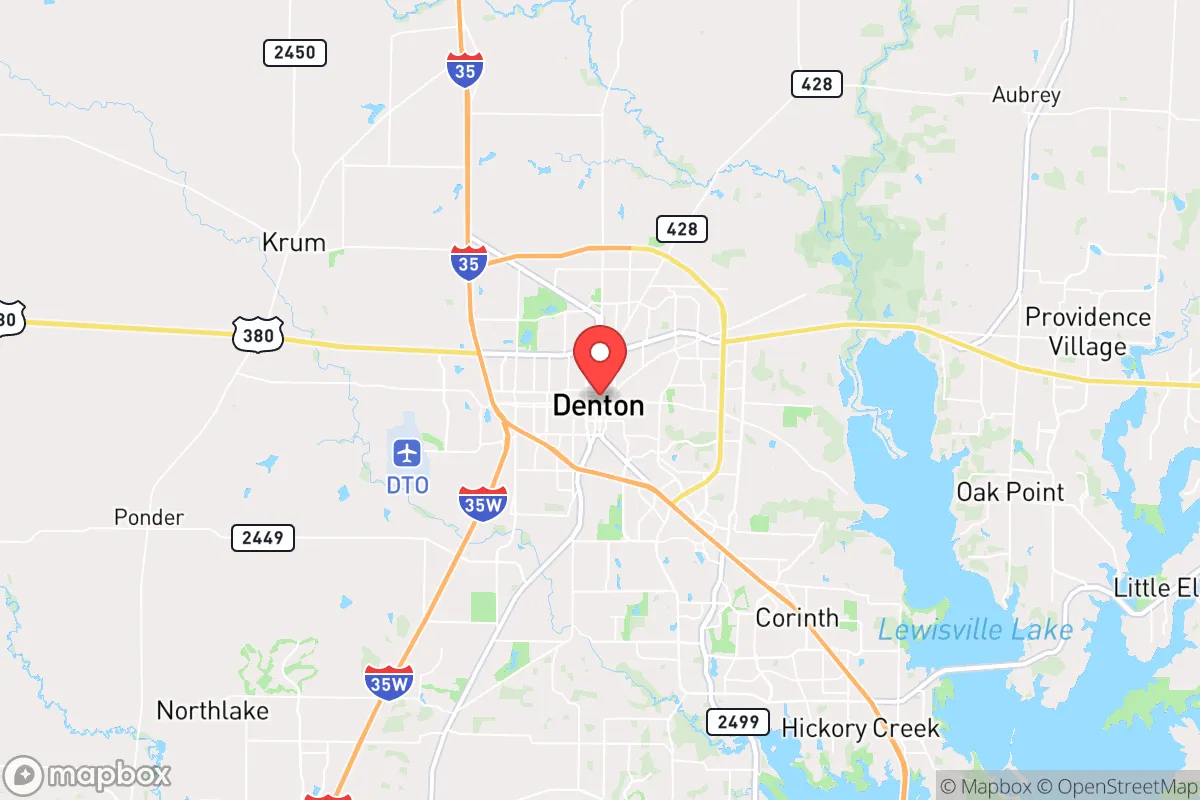
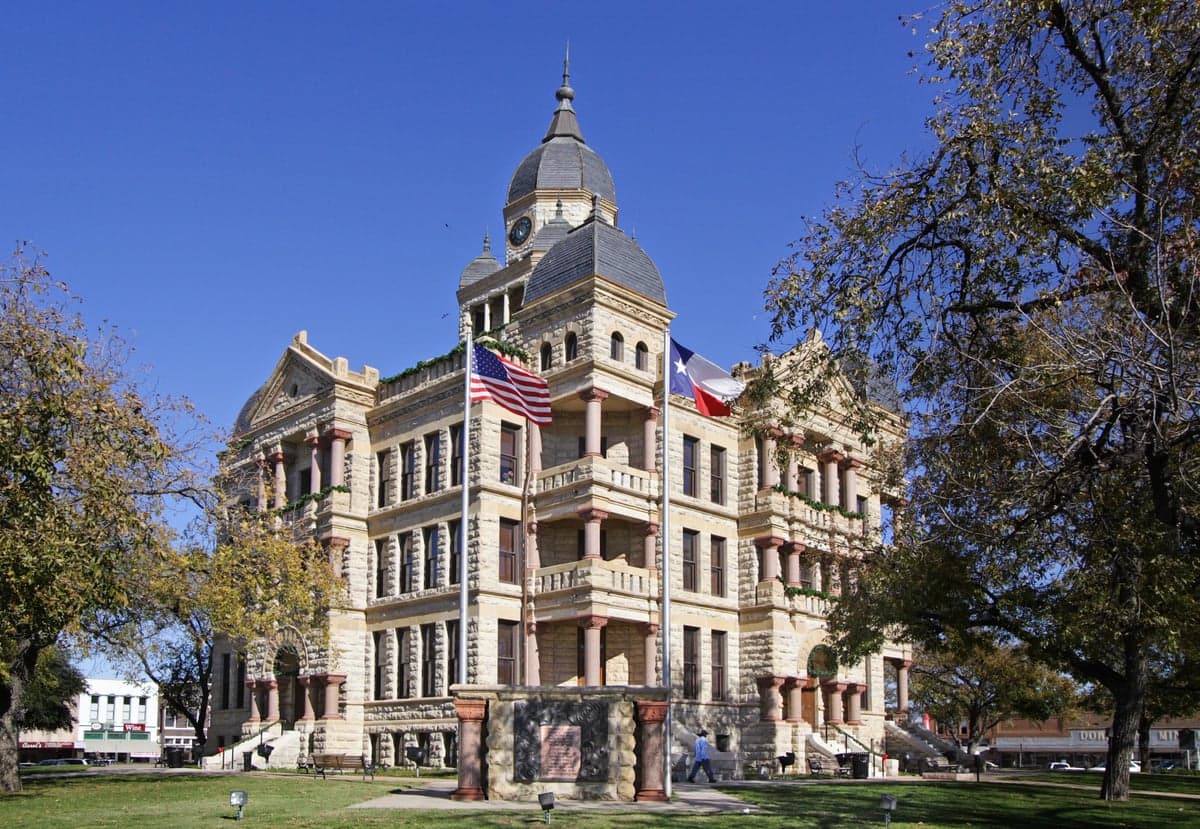
Photo: Wikipedia
Strategic Assessment of Denton, TX
Multiple tactical vulnerabilities. Population density, target proximity, or disaster risk are likely compounding. A retreat property and exit planning is required.
What does the Strategic Assessment tell us?
Our Strategic Assessment grades tactical survivability of an area. Major population centers, military targets, fallout zones, natural disasters, and border exposure all drive risk — lower exposure means a more defensible position in a crisis.
This is heavily inspired by Joel Skousen's Strategic Relocation book. Highly recommended you checkout the book ($)What does this tell us?
Our Strategic Assessment grades tactical survivability of an area. Major population centers, military targets, fallout zones, natural disasters, and border exposure all drive risk — lower exposure means a more defensible position in a crisis.
This is heavily inspired by Joel Skousen's Strategic Relocation book. Highly recommended you checkout the book ($)Strategic Pillars

Key Distances
Regional Safe Places
Below is our recommended "safe zones" in Texas and the surrounding area based on our strategic heuristics. For most people, it's unrealistic to live in a “safe zone” full-time due to work, family or other personal reasons. They tend to be more rural. However, many of these areas are perfect for second homes and retreat properties that double as a vacation home or even a short-term rental.

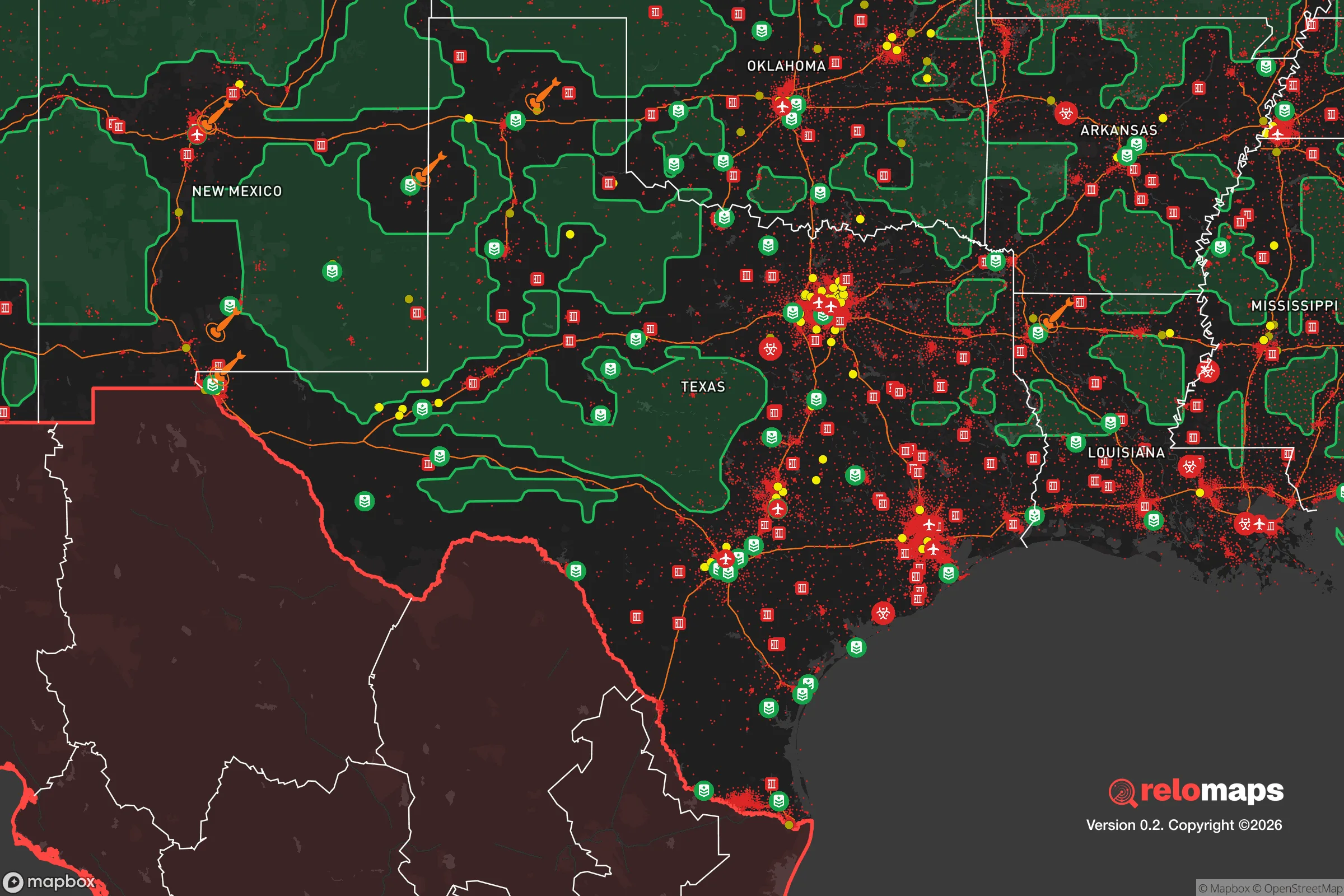


Important Note: For informational purposes only. This does not mean nothing bad ever happens in the green zones. Please use common sense. This is based on public data and modeled with AI. We tried to take a conservative approach but mistakes happen. We update this regularly as new information becomes available.
Solar Generator Recommendations
Backup power matters more here than in safer locations. We've picked three solar generators across budgets and capacity tiers — start with the budget unit if you only need a few essentials, or step up if you want to run a fridge and HVAC for days at a time.

Jackery Portable Power Station Explorer 300
Budget OptionPower on the Go: Weighing only 11 lbs, it's convenient to set up and store with book-sized foldable solar panels

BLUETTI Portable Power Station AC180
Designed for both indoor and outdoor scenarios, AC180 is highly capable as it has a robost capacity and continuous output power.

EF ECOFLOW DELTA Pro Ultra Power Station
Upgraded PickEcoFlow DELTA Pro Ultra is a whole-home energy system designed to grow with your family. Integrated with the Smart Home Panel 2, it scales to meet your evolving energy needs — keeping your home powered, intelligent, and secure through every stage of life.
We earn a commission, at no additional cost to you.
Strategic Assessment Analysis
Denton, Texas, sits in a precarious but potentially strategic pocket of the North Texas region, roughly 40 miles north of Dallas and 35 miles south of the Oklahoma border. Its position offers a mix of proximity to major economic hubs and a buffer from the densest urban core, but for a survivalist or prepper mindset, the calculus is more complex. The city’s resilience hinges on its ability to leverage local resources while mitigating the risks of being within the blast radius of a major metropolitan target. For a conservative-leaning relocator concerned with civic unrest, mass casualty events, and long-term disaster preparedness, Denton presents both opportunities and liabilities that demand a hard-nosed assessment.
Geographic position and natural advantages for long-term survival
Denton’s location along the Interstate 35 corridor is a double-edged sword. On one hand, it provides rapid access to supply chains, medical facilities, and evacuation routes north toward less populated areas of Oklahoma and the Red River Valley. On the other, it sits squarely in the path of any mass exodus from Dallas-Fort Worth during a crisis. The city’s natural advantages are modest but real. The area sits atop the Trinity Aquifer, a significant groundwater source that, while not unlimited, offers a more reliable water supply than many parts of West Texas. The rolling hills and scattered woodlands of the Cross Timbers ecoregion provide some natural cover and fuel for foraging, though the landscape is largely agricultural and suburban. Denton’s elevation—around 650 feet—offers no defensive high ground, but the terrain is not flat enough to be a complete tactical liability. The presence of Ray Roberts Lake State Park and Lake Lewisville to the east and south provides both recreational water access and potential emergency water sources, though both are heavily trafficked and would be contested in a collapse scenario. For a relocator, the key advantage is the ability to tap into regional resources without being immediately overrun by urban refugees—at least in the first 48 hours.
Risks, exposures, and proximity to fallout-relevant landmarks
The most glaring risk for Denton is its proximity to the Dallas-Fort Worth metroplex, a population center of over 7.5 million people and a high-value target for any adversary. In a nuclear exchange scenario, Denton is within the moderate fallout zone of a ground burst on DFW, with prevailing winds typically carrying debris northeast—meaning Denton could see significant contamination depending on the strike’s specifics. The city is also within 50 miles of Naval Air Station Joint Reserve Base Fort Worth and Dyess Air Force Base in Abilene, both likely primary targets. Closer to home, the Denton Municipal Airport and the Texas Motor Speedway in nearby Fort Worth are potential staging areas for military or FEMA operations, which could attract secondary attacks or civil unrest. For a prepper, the Interstate 35 corridor is a choke point that will clog within hours of any major event. The city’s reliance on the Eagle Mountain Lake and Lewisville Lake water treatment plants means a single point of failure for municipal water. On the plus side, Denton’s relatively low population density (roughly 150,000 residents) compared to Dallas means less competition for resources in the immediate aftermath, but the surrounding suburbs—Lewisville, Carrollton, Frisco—will push hundreds of thousands of evacuees northward. The risk of civil unrest is moderate but real: Denton has a visible university population (University of North Texas, Texas Woman’s University) that could become a flashpoint during political or economic turmoil, as seen in the 2020 protests that shut down the downtown square.
Practical resilience for a relocator: food, water, energy, and defensibility
For a relocator serious about self-sufficiency, Denton offers a mixed bag. Water is the most critical resource, and the Trinity Aquifer is accessible via private wells in the rural outskirts, but drilling costs run $10,000–$20,000 and permits are required. Surface water from Ray Roberts or Lewisville is abundant but requires filtration and is vulnerable to contamination from upstream runoff. Food production is feasible: the area’s growing season runs from March to November, and soil quality in the Blackland Prairie region is decent for row crops like corn, beans, and squash. However, Denton County is heavily developed, and finding affordable acreage for a homestead within 20 miles of the city center is increasingly difficult—prices for raw land have tripled since 2020. Energy resilience is a bright spot. Texas’s independent grid (ERCOT) means Denton is subject to the same blackouts that plagued the state in 2021, but the city has its own municipal electric utility, Denton Municipal Electric, which has invested in local solar and battery storage. For a prepper, installing off-grid solar panels is straightforward, and natural gas backup generators are common in the area. Defensibility is the weakest link. Denton’s suburban layout—sprawling subdivisions, strip malls, and open fields—offers few natural chokepoints. The downtown square is a historic grid that could be barricaded, but the surrounding neighborhoods are porous. The best defensive posture is to locate on the northern or western fringe, where rural properties offer more standoff distance and fewer ingress routes. The Denton County Sheriff’s Office and local police are well-funded but would be overwhelmed in a widespread event. For a relocator, the practical takeaway is that Denton is viable only if you secure a property with a well, solar panels, and a defensible perimeter—and you accept that you’ll be competing with a wave of urban refugees within 72 hours of any major disaster.
The overall strategic picture for Denton is one of calculated risk. It is not a remote survivalist haven like the Texas Hill Country or the Panhandle, but it offers a middle ground for someone who needs to stay connected to professional opportunities while maintaining a prepper mindset. The city’s location near major highways and water sources is an asset, but its proximity to DFW and military targets is a liability that cannot be ignored. For a conservative relocator who values community, local governance, and a relatively low crime rate (violent crime in Denton is about 30% below the national average), the city can work—provided you treat it as a base camp, not a fortress. The key is to have a bug-out plan north to less populated counties like Cooke or Grayson, and to stockpile supplies for at least 90 days of self-sufficiency. Denton is not a place to ride out a nuclear exchange or a full societal collapse, but for the more likely scenarios—grid failures, economic disruption, localized unrest—it offers enough infrastructure and resources to be a viable relocation target for the prepared individual or family.

* Values derived from national, state, county, city and local statistics and may differ in a specific area. Last updated: 2026-04-19T07:27:44.000Z
Narrative content on this page is AI-generated and may contain mistakes. Verify any details that matter before acting on them.
ReloMaps may earn a commission from affiliate links at no extra cost to you.

