 Popular
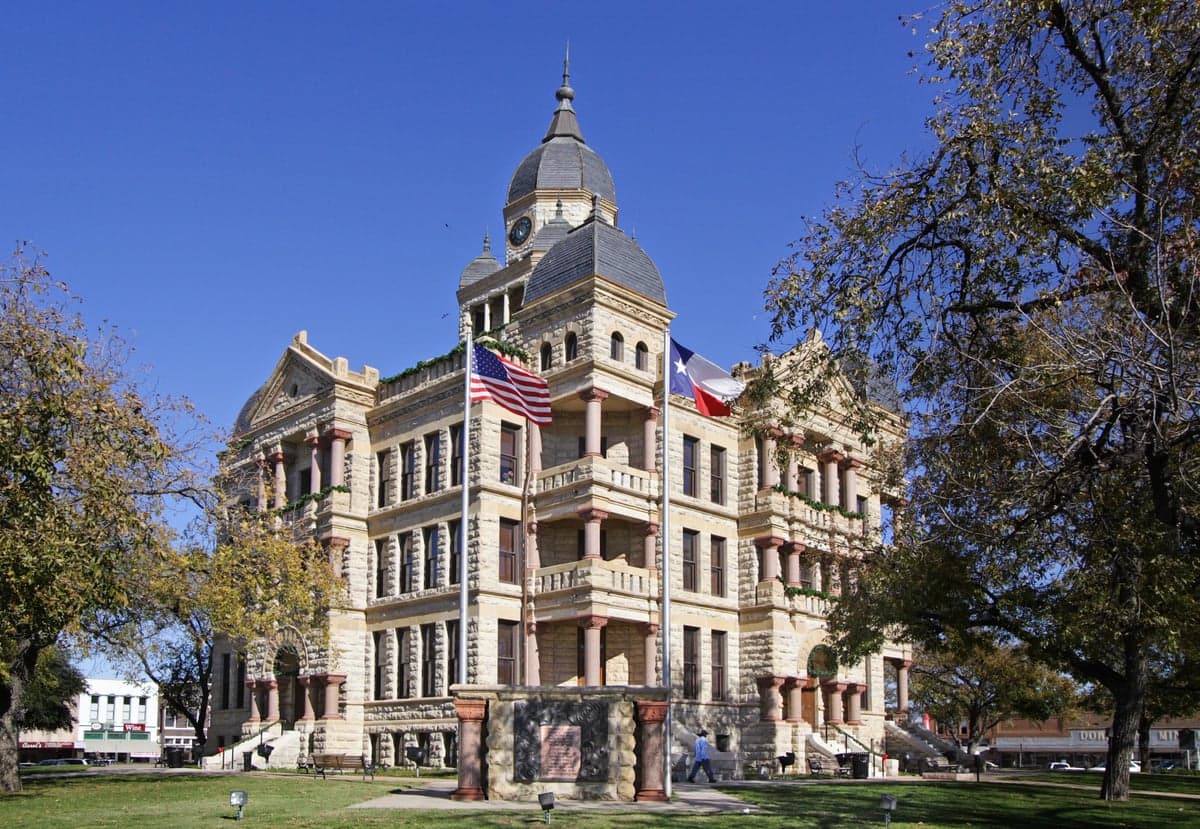
Photo: Wikipedia
Personal Sovereignty in Denton, TX
Strong independent fundamentals that actively favor personal liberty and low regulation.
What does Personal Sovereignty tell us?
Personal Sovereignty measures your capacity for self-reliance and independence with minimal government friction. Higher scores mean fewer barriers between you and the way you want to live... but it assumes you have the space you need and good neighbors.
What does this tell us?
Personal Sovereignty measures your capacity for self-reliance and independence with minimal government friction. Higher scores mean fewer barriers between you and the way you want to live... but it assumes you have the space you need and good neighbors.
State Policy
Energy independence: Net exporter (220% of energy produced in-state)
Personal Liberty
Homesteading

Personal Liberty Analysis
For the liberty-minded individual or family evaluating Denton, Texas, the personal sovereignty picture is a study in contrasts: the city sits within a state that constitutionally prioritizes individual rights, yet it operates under a municipal government that has increasingly tested the limits of local control. Denton offers a strong baseline of freedom—no state income tax, robust gun protections, and a legal climate that favors property owners—but prospective residents must navigate a city council that has shown willingness to impose local ordinances on everything from short-term rentals to energy sourcing. The net effect is that Denton provides a higher degree of personal autonomy than most of the Northeast or West Coast, but it is not the libertarian free-zone some might hope for. Understanding where the city’s governance ends and the state’s preemption begins is critical for anyone prioritizing self-reliance and minimal government interference.
Tax burden and regulatory posture: how Denton compares to surrounding areas
Texas’s lack of a personal income tax is the single most powerful tool for preserving personal sovereignty here, and Denton residents benefit directly from that state-level choice. The city’s combined property tax rate, however, is worth scrutiny: Denton County levies roughly $0.23 per $100 of assessed value, the city itself adds about $0.54, and the Denton Independent School District tacks on approximately $1.27, yielding a total effective rate near 2.1%—higher than many unincorporated areas in the county but still below the national average for high-tax states. The regulatory posture at city hall has become more interventionist in recent years, particularly around housing. Denton’s short-term rental ordinance requires a permit and caps the number of licenses, which limits a property owner’s ability to use their home as a business asset. The city also maintains a strict tree preservation ordinance that can restrict what you do on your own lot, and its zoning code is more detailed than in nearby rural communities like Aubrey or Krum. For a prepper or survivalist, the key takeaway is that Denton’s regulatory burden is moderate by Texas standards but noticeably heavier than the county’s unincorporated areas—meaning you trade some autonomy for access to city utilities and services.
Self-defense and gun law specifics: what Denton allows and restricts
Texas law provides strong preemption for firearm rights, and Denton generally respects that framework. The city does not have its own gun registration, waiting periods, or magazine capacity bans, so the state’s permitless carry law (effective 2021) applies fully within city limits. You can carry a handgun openly or concealed without a license, provided you are not prohibited by state or federal law. Denton does, however, enforce the standard state restrictions: firearms are prohibited in government buildings, schools (with limited exceptions for licensed carriers in vehicles), and establishments that derive 51% or more of revenue from alcohol sales. The city’s police department has not been aggressive in enforcing local gun ordinances beyond state law, and there have been no recent attempts to pass a municipal assault weapon ban—a contrast to cities like Austin or Dallas. For the self-defense-minded, Denton offers a solid legal environment: you can keep a firearm in your vehicle on school parking lots (a key provision for parents), and the castle doctrine and stand-your-ground laws apply fully. The only practical friction point is that some private businesses in the downtown square post 30.06 or 30.07 signage, which legally prohibits concealed or open carry on their premises—so situational awareness of posted signs is necessary.
Self-reliance and homesteading viability: lot sizes, zoning, and off-grid feasibility
Denton’s zoning code is a mixed bag for anyone seeking true self-reliance. Within the city limits, standard residential lots average 6,000 to 8,000 square feet in newer subdivisions, with older neighborhoods near the square offering slightly larger parcels—but few exceed a quarter-acre. The city’s zoning ordinance explicitly prohibits keeping livestock (chickens are allowed only with a permit and strict coop requirements, and larger animals like goats or pigs are banned in most residential zones). Gardening is unrestricted, but the city’s water restrictions during drought periods can limit irrigation. Off-grid living is effectively impossible inside city limits: Denton requires connection to municipal water and sewer for any habitable structure, and solar panel installations must comply with building codes and HOA covenants where applicable. The real opportunity for homesteading lies in the extraterritorial jurisdiction (ETJ) or unincorporated Denton County, where lot sizes of one to five acres are common and zoning restrictions are far looser. Areas like the Bolivar or Lake Ray Roberts vicinity allow chickens, goats, and even small-scale farming without city permits. For the prepper, the strategic play is to buy land in the county while working or accessing services in Denton—giving you the tax and regulatory benefits of rural living with the city’s economic base nearby.
Personal liberties: parental rights, medical autonomy, speech, and property
Texas law provides strong protections for parental rights, and Denton families benefit from that state-level framework. The Texas Parental Bill of Rights (codified in 2023) affirms that parents have the fundamental right to direct their children’s education, healthcare, and moral upbringing—and Denton ISD has not been a flashpoint for curriculum battles compared to districts like Austin or Dallas. School board meetings have seen debates over library materials and gender policies, but the district has largely deferred to state law. On medical autonomy, Texas’s ban on vaccine passports and its prohibition of local health mandates (enacted during the COVID-era legislative sessions) mean Denton cannot impose vaccine requirements for entry to businesses or public spaces. The city did, however, maintain a mask mandate longer than some neighboring towns in 2020-2021, which is a data point for those concerned about future public health overreach. Free speech is protected under both the U.S. and Texas constitutions, and Denton has not passed any local ordinances restricting public assembly or protest beyond standard time-place-manner rules. Property rights are generally strong, but the city’s tree ordinance and historic preservation overlay in the downtown district can limit what you do with your land—a reminder that municipal zoning is the primary vehicle for government overreach at the local level. For the liberty-minded, the key is that state preemption laws shield Denton residents from the worst local overreach, but vigilance at city council meetings is still necessary to prevent future encroachments.
Overall, Denton offers a sovereignty profile that is solidly above average for a mid-sized Texas city but falls short of the full autonomy available in rural counties. The state’s constitutional protections for gun rights, parental authority, and tax freedom create a strong foundation, while the city’s moderate regulatory creep and higher property taxes are the main trade-offs. Compared to cities like Austin or Portland, Denton is a clear win for personal freedom; compared to unincorporated areas of Denton County or neighboring Cooke County, it requires accepting more government involvement in daily life. For the strategic relocator who values self-reliance and wants access to urban amenities without sacrificing core liberties, Denton is a viable option—provided you choose your neighborhood carefully and stay engaged with local governance to keep the city council in check.

* Values derived from national, state, county, city and local statistics and may differ in a specific area. Last updated: 2026-04-19T07:27:44.000Z
Narrative content on this page is AI-generated and may contain mistakes. Verify any details that matter before acting on them.
ReloMaps may earn a commission from affiliate links at no extra cost to you.

