 Popular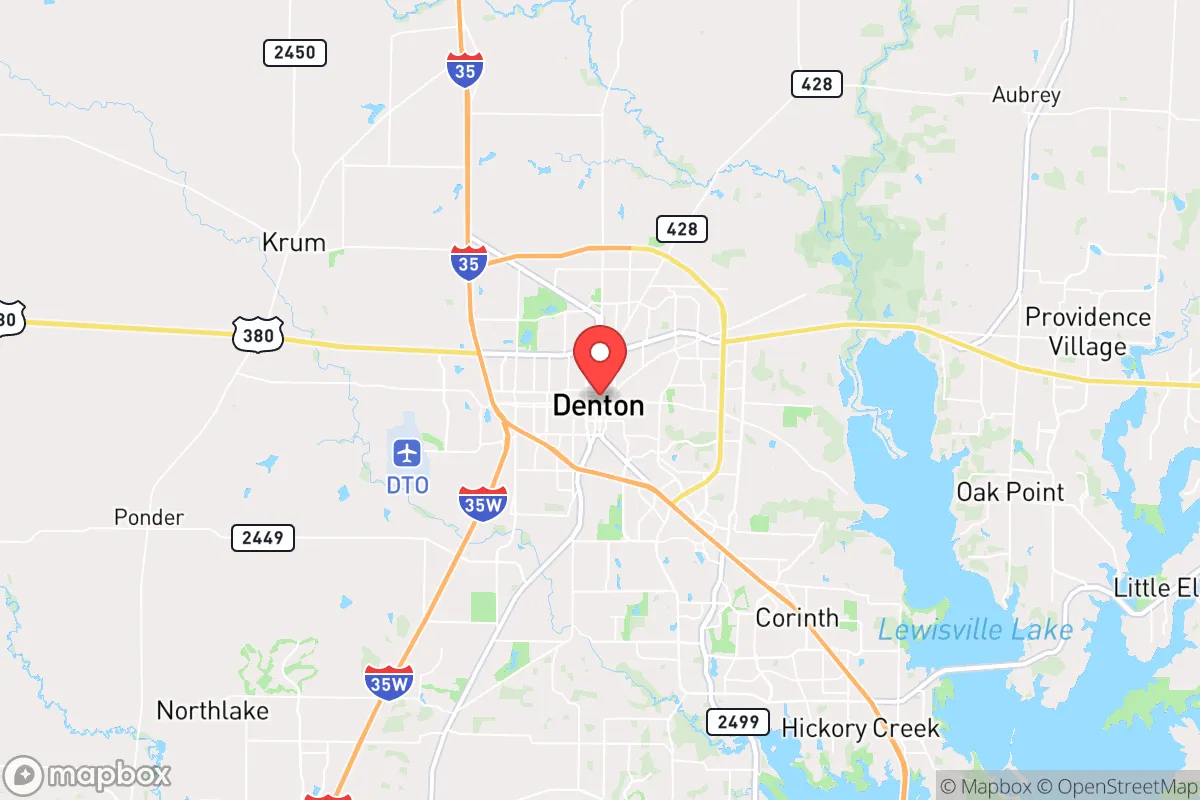
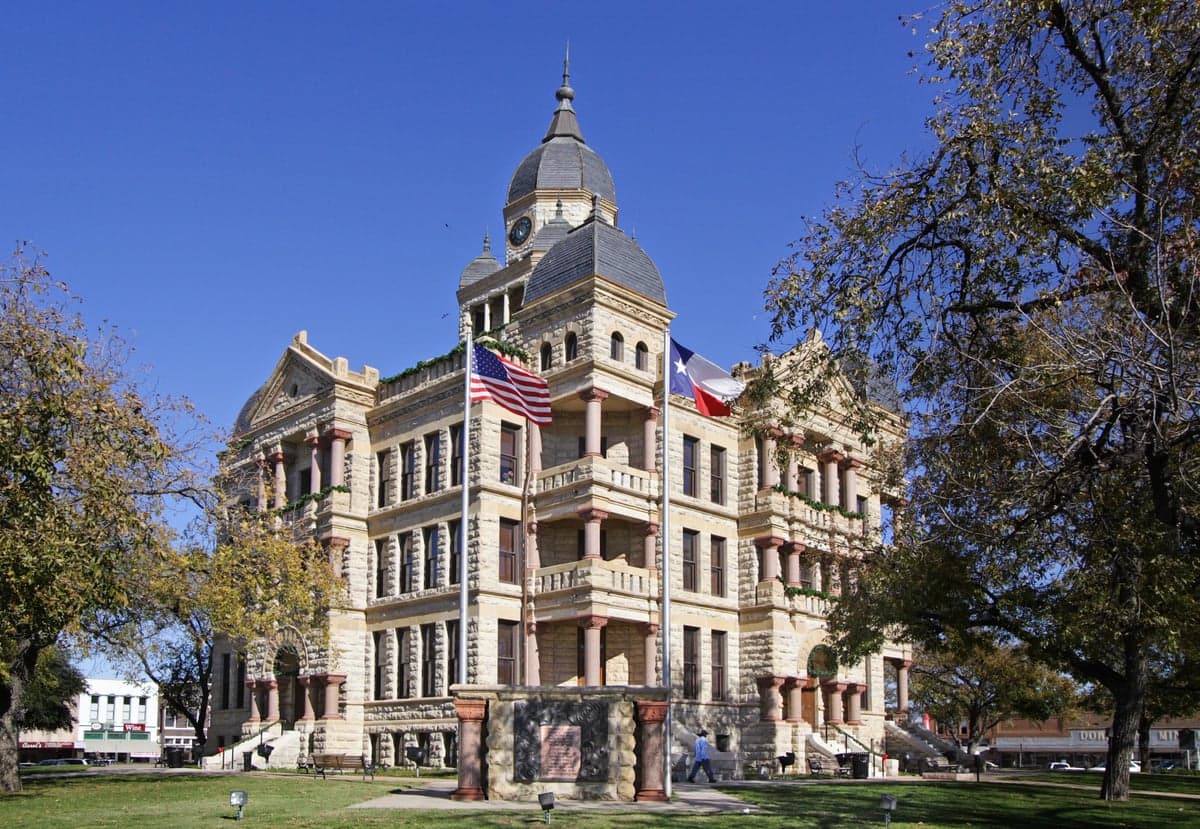
Photo: Wikipedia
Political ClimatePolitical Climate in Denton, TX
District shown is the primary district for this city’s centroid. Cities may span multiple districts.
Local Political AnalysisPolitical Analysis of Denton, TX
Denton, Texas, sits in a political tug-of-war that’s become more pronounced over the last decade. While the city itself has drifted leftward—thanks largely to the University of North Texas and a growing young professional class—the surrounding Denton County remains deeply conservative, with a Cook PVI of R+24. That means the county as a whole leans Republican by a hefty 24 points, but if you look just inside the city limits, you’ll find a different story. The 2024 election saw Denton precincts split almost evenly, with some voting blue by 10-15 points, while the rural and suburban parts of the county—places like Argyle, Highland Village, and Little Elm—voted red by 30-40 points. It’s a classic college-town dynamic, but the tension is real, and it’s growing.
How it compares
Drive 15 minutes south and you hit Lewisville, which leans slightly more moderate but still tracks with the county’s conservative baseline. Head 20 minutes east to Frisco, and you’re in a booming suburb that’s reliably red, though shifting slowly as transplants arrive from blue states. The real contrast is with nearby cities like Dallas (D+28) and Austin (D+35)—Denton is nowhere near that level of progressive dominance. But compared to its own county, Denton is an outlier. The rural towns west of I-35, like Sanger and Krum, vote red by margins of 50-60 points. So when you’re in Denton, you’re living in a blue bubble inside a red county. That creates friction, especially when county-level policies—like road funding or law enforcement priorities—clash with city council decisions. It’s not uncommon to hear longtime residents grumble that the city’s progressive tilt doesn’t reflect the values of the people who’ve been here for generations.
What this means for residents
For those who value limited government and personal freedoms, Denton’s shift is concerning. The city council has pushed ordinances that feel like overreach—like stricter rental inspection programs and noise curfews that target student housing, but also affect long-term homeowners. There’s been talk of a “sanctuary city” resolution, which would limit cooperation with federal immigration enforcement, a move that worries residents who believe in rule of law. Property taxes are another sore spot: Denton’s city tax rate is higher than most of its neighbors, and the school district (Denton ISD) has faced budget shortfalls partly due to state funding caps, leading to higher local burdens. Meanwhile, the county’s R+24 lean means that sheriff’s office and district attorney elections stay conservative, so you get a mixed bag—progressive city policies with a conservative law enforcement backbone. That can be confusing, but for now, it also means the worst excesses of progressive governance are checked by county-level resistance.
Culturally, Denton still has a strong independent streak—it’s known for its music scene and quirky local businesses—but the “Keep Denton Weird” vibe is increasingly being replaced by a more activist, identity-politics flavor. The university drives a lot of that, and it’s not going away. Long-term, if the city continues to annex more student-heavy areas and attract out-of-state transplants, the political balance could tip further left. But the county’s R+24 foundation isn’t crumbling anytime soon. For now, residents who lean conservative can still find their people in the county commissioner meetings and local GOP events, but they’re increasingly outnumbered at city hall. It’s a place where you have to pick your battles—and know which level of government is actually on your side.

State Political ClimatePolitical Climate in Texas
State Political AnalysisPolitical Environment in the State
Texas remains a solidly Republican state, but the margins have tightened noticeably over the past decade. In 2024, Donald Trump carried the state by about 5.5 points, down from the 9-point win in 2020 and the 16-point victory in 2012. The dominant coalition is still a mix of rural conservatives, suburban families, and business-oriented professionals, but explosive growth in the blue-leaning metros of Austin, Dallas, Houston, and San Antonio is slowly reshaping the map. For a conservative looking to relocate, Texas still offers a much friendlier political environment than most of the country, but the trends demand attention — especially if you're moving from a state that has already flipped.
Urban vs. rural divide
The political geography of Texas is stark. The vast rural and exurban areas — places like Lubbock, Midland, and the Panhandle — vote Republican by margins of 70-80%. These regions anchor the state's conservative majority. Meanwhile, the big cities are solidly Democratic. Austin is the most liberal major city in the state, with Travis County voting +50 points for Biden in 2020. El Paso and San Antonio are also deep blue, driven by large Hispanic populations and union influence. The real battleground is the suburbs. Places like Collin County (north of Dallas) and Fort Bend County (southwest of Houston) were once Republican strongholds but have shifted left as new arrivals from California and the Northeast have poured in. Denton County and Williamson County (north of Austin) are still red but trending purple. If you're looking for a reliably conservative community, you'll want to look at the smaller cities and exurbs — Tyler, Longview, College Station, or the Hill Country towns like Fredericksburg and Kerrville — rather than the inner-ring suburbs of the big metros.
Policy environment
Texas has one of the most conservative policy environments in the nation, and that's a big draw for freedom-minded movers. There is no state income tax — a constitutional prohibition that would require a supermajority vote to change. Property taxes are high (among the top 10 in the country), but the 2023 Texas property tax reform package, Senate Bill 2, cut school property tax rates and raised the homestead exemption to $100,000. The regulatory climate is business-friendly, with minimal zoning in many areas and a right-to-work law that keeps union power weak. On education, the state has a robust school choice movement: the 2023 legislative session saw a major push for Education Savings Accounts (ESAs), though it ultimately failed in the House. Governor Greg Abbott has made school choice a priority for 2025. Healthcare policy is limited — Texas did not expand Medicaid under the ACA, and the state has some of the strictest abortion laws in the country (the Heartbeat Act, SB 8, effectively bans abortion after six weeks). Election laws were tightened in 2021 with Senate Bill 1, which added ID requirements for mail-in voting, limited drop boxes, and banned drive-through voting. For a conservative, the policy environment is largely aligned with limited government principles, though property taxes remain a pain point.
Trajectory & freedom
On balance, Texas has been moving in a more freedom-oriented direction on several key fronts, but there are warning signs. The 2021 legislative session was a landmark for gun rights: permitless carry (HB 1927) became law, allowing most adults to carry a handgun without a license. Parental rights were strengthened with the 2023 passage of the "Parental Bill of Rights" (HB 900), which requires schools to get parental consent for certain health services and restricts sexually explicit content in school libraries. On medical freedom, Texas banned vaccine mandates for private employers in 2021 (SB 51) and has resisted federal COVID mandates. However, there are concerning trends. The state has aggressively used its power to prosecute doctors for providing abortion care, and the 2023 law allowing out-of-state lawsuits against providers (SB 8) has created a chilling effect on medical autonomy. Property rights are generally strong, but the Texas Supreme Court has upheld some controversial eminent domain cases for private development. The biggest freedom concern for many conservatives is the growing influence of local governments — cities like Austin and Dallas have passed their own progressive ordinances on housing, policing, and environmental regulations that preempt state law. The state has fought back with preemption bills (like the ban on local sanctuary policies and the prohibition on local rent control), but the battle is ongoing.
Civil unrest & political movements
Texas has seen its share of political flashpoints. The 2020 Black Lives Matter protests in Austin and Houston were large and sometimes violent, leading to property damage and a lasting shift in public safety policy in those cities. The "Defund the Police" movement gained traction in Austin, where the city council cut the police budget by $150 million in 2020 — though much of that was later restored after public backlash. On the right, the "Texas Nationalist Movement" (TEXIT) has been pushing for secession, though it remains a fringe idea with little legislative support. Immigration politics are a constant flashpoint. Governor Abbott's Operation Lone Star has deployed state troopers and National Guard to the border, bused migrants to sanctuary cities like New York and Chicago, and installed razor wire along the Rio Grande. This has created ongoing legal battles with the Biden administration and has made the border a visible, daily issue for residents in places like El Paso and the Rio Grande Valley. Election integrity remains a hot topic. The 2020 and 2022 elections saw no major fraud scandals, but the 2021 voting law (SB 1) was passed in response to widespread concerns among Republican voters. You'll hear about it at dinner parties and in church parking lots — it's a live issue.
Projection
Over the next 5-10 years, Texas is likely to become more competitive at the statewide level, but it's not going to flip blue anytime soon. The key demographic driver is in-migration: roughly 1,000 people move to Texas every day, and they are disproportionately young, diverse, and from blue states. However, many of these newcomers are conservatives or libertarians fleeing high taxes and lockdowns in California and New York. The net effect is a slow purple shift, not a blue wave. The suburbs of Dallas, Houston, and Austin will continue to trend left, but the rural and exurban areas will remain deeply red. The state's Republican leadership is aware of this and is likely to double down on conservative policies — school choice, tax cuts, border security — to solidify their base. The biggest wildcard is the Hispanic vote. Texas Hispanics have historically leaned Democratic, but recent elections show a shift to the right, especially among working-class men in the Rio Grande Valley. If that trend continues, Texas could remain red for another generation. For a conservative moving in now, expect a state that is still very friendly to your values, but one where you'll need to be politically engaged to keep it that way.
Bottom line for a new resident: Texas is still a great bet for a conservative looking for low taxes, gun rights, and a business-friendly environment. But don't assume it will stay that way automatically. If you're moving to a suburb of Austin or Dallas, you'll find yourself in a purple community where local elections matter. If you want a deep-red environment, aim for the smaller cities and rural counties. Get involved in local politics, join a homeowners association, and pay attention to school board races — that's where the real battles are being fought. Texas is still free, but freedom requires vigilance.
* Values derived from national, state, county, city and local statistics and may differ in a specific area. Last updated: 2026-04-19T07:27:44.000Z
Narrative content on this page is AI-generated and may contain mistakes. Verify any details that matter before acting on them.
ReloMaps may earn a commission from affiliate links at no extra cost to you.

