
Photo: Wikipedia
Political ClimatePolitical Climate in Derby, CT
District shown is the primary district for this city’s centroid. Cities may span multiple districts.
Local Political AnalysisPolitical Analysis of Derby, CT
Derby, Connecticut, has a Cook PVI of D+8, meaning it leans reliably Democratic by a solid eight points compared to the national average. But if you’ve lived here as long as I have, you know that number doesn’t tell the whole story. This used to be a blue-collar, common-sense town where folks voted for the person, not the party, and where your neighbor’s business was your own. Over the last decade or so, that’s shifted. The local machine has gotten stronger, and the progressive agenda has crept in—higher taxes, more regulations, and a general feeling that the government knows better than you do. It’s not a radical change overnight, but it’s a steady drift that has a lot of us watching closely.
How it compares
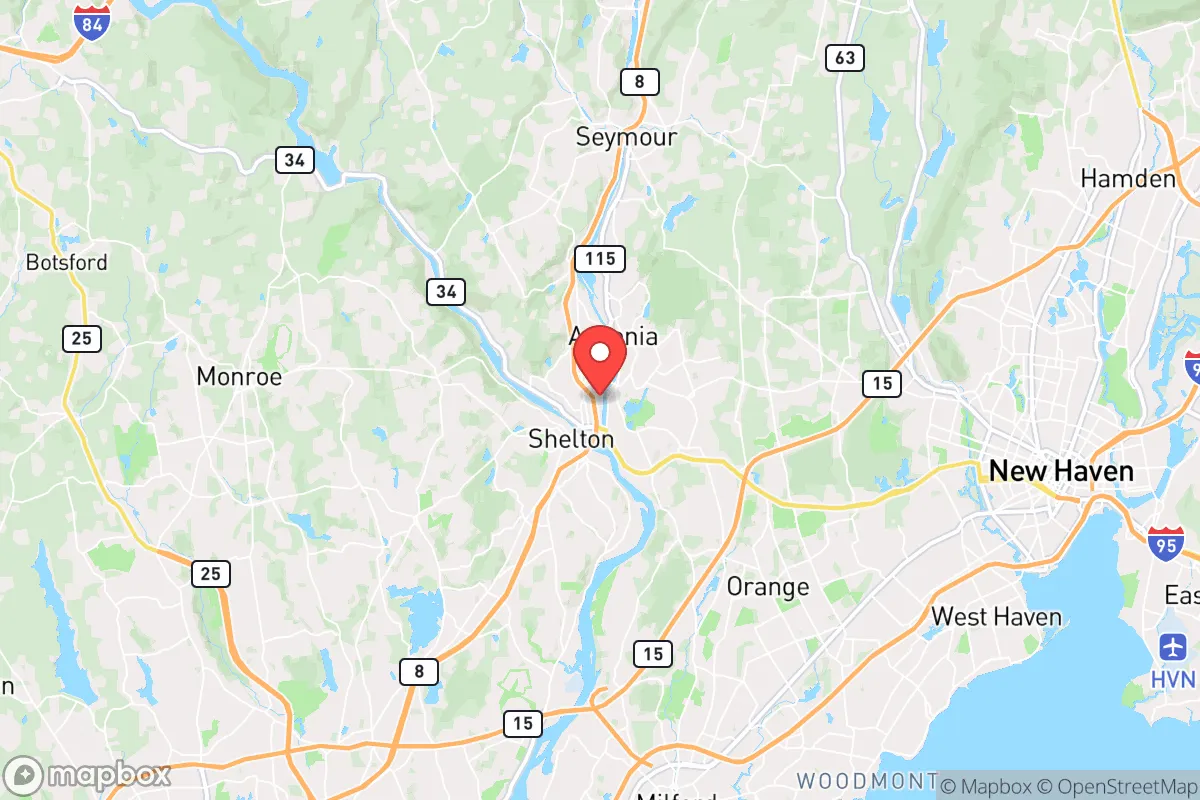
Drive ten minutes north to Shelton, and you’ll feel the difference. Shelton has held the line on taxes and kept a more business-friendly, hands-off approach to local governance. Ansonia, right next door, is a mixed bag—still some old-school independence, but it’s catching the same wave as Derby. Head south to Milford, and you’re in a different world entirely: more progressive, more zoning restrictions, and a lot more government involvement in daily life. Derby sits right in the middle of this corridor, but its D+8 rating puts it squarely in the camp of places like New Haven County’s more liberal towns. The contrast is stark when you compare property tax rates or the local response to state mandates. In Derby, the trend is toward more oversight, not less.
What this means for residents
For the average person living here, the biggest red flag is the slow creep of government overreach. It starts small—new fees on small businesses, stricter building codes, and a school board that’s more focused on social initiatives than reading and math. Then come the bigger things: zoning changes that make it harder to run a home-based business, or local ordinances that limit what you can do with your own property. The tax burden has been climbing, and with it, the feeling that your hard-earned money is being spent on programs you didn’t ask for. If you value personal freedom—the right to run your life without a bureaucrat’s permission—Derby is becoming a tougher place to hold that line. The local government’s appetite for control seems to grow every election cycle.
Looking ahead, the trajectory is concerning. The younger, more progressive voters moving in are reshaping the local political landscape, and the old guard of independent thinkers is aging out. I’ve seen it happen in other towns along the Naugatuck River—once they tip, they don’t tip back. The D+8 number might actually understate the shift, because local elections are where the real impact hits. If you’re considering a move here, pay attention to the school board meetings and the town budget votes. That’s where you’ll see the future. For now, Derby still has pockets of that old Yankee independence, but it’s getting harder to find. Keep an eye on the next few elections—they’ll tell you everything about whether this town stays a place where you can live your own life, or becomes just another stop on the progressive train.

State Political ClimatePolitical Climate in Connecticut
State Political AnalysisPolitical Environment in the State
Connecticut has shifted from a classic "Rockefeller Republican" swing state into a solidly blue stronghold over the past two decades, with Democrats now holding every statewide office, both U.S. Senate seats, and a supermajority in the state legislature. The state voted for Hillary Clinton by 13 points in 2016, Joe Biden by 20 points in 2020, and Kamala Harris by roughly 14 points in 2024 — a consistent leftward drift that masks a deep and growing urban-rural divide. For a conservative considering relocation, the state’s political trajectory is unmistakably progressive, driven by the affluent, educated suburbs of Fairfield County and the urban cores of Hartford and New Haven, while the eastern and northwestern corners remain stubbornly red but increasingly outnumbered.
Urban vs. rural divide
The political map of Connecticut is a tale of three regions. The southwestern corner — Fairfield County, home to hedge fund managers and New York commuters — is the Democratic engine, with towns like Greenwich, Stamford, and Westport routinely delivering 60-70% of their votes to Democratic presidential candidates. Hartford and New Haven are deep-blue urban centers, with the former’s 2020 vote hitting 85% for Biden. Meanwhile, the eastern half of the state — Windham County and New London County — and the rural northwest around Litchfield and Torrington are where Republicans still win. In 2024, Litchfield County’s rural towns like Kent and Sharon voted for Trump by margins of 10-15 points, but their populations are too small to offset the suburban and urban blocs. The divide isn’t just cultural; it’s demographic. Fairfield County’s population has grown slightly, while rural towns have stagnated or shrunk, giving Democrats a structural advantage that’s only widening.
Policy environment
Connecticut’s policy environment is among the most progressive in New England, and it shows in the numbers. The state has a progressive income tax with a top marginal rate of 6.99% on income over $500,000, plus a 7.5% corporate tax rate. Property taxes are among the highest in the nation — the median effective rate is 2.14%, nearly double the national average — and towns like West Hartford and Glastonbury routinely hit 3% or more. The state also has a paid family leave program funded by a 0.5% payroll tax, a $15 minimum wage indexed to inflation, and a sanctuary state law (2019’s HB 7107) that limits cooperation with federal immigration enforcement. On education, Connecticut spends more per pupil than almost any other state — over $20,000 annually — but the results are starkly unequal, with wealthy suburbs like Darien and New Canaan boasting top-tier schools while Bridgeport and Hartford struggle with chronic underperformance. Election laws are among the most liberal: no-excuse absentee voting, early voting (passed in 2023), and automatic voter registration. For a conservative, the policy environment feels like a one-way ratchet toward higher taxes, more regulation, and less local control.
Trajectory & freedom
Over the past five years, Connecticut has moved decisively toward expanding government authority and contracting individual freedoms, particularly in areas conservatives care about most. Gun rights took a major hit with the 2023 passage of HB 6667, which banned the open carry of firearms, raised the purchasing age for long guns to 21, and expanded the state’s assault weapons ban — one of the strictest in the nation. Parental rights have been eroded by the 2021 passage of a law allowing minors as young as 12 to consent to mental health and substance abuse treatment without parental notification, and by the state’s refusal to adopt any form of school choice or education savings accounts. Medical freedom was curtailed during COVID with one of the longest-running mask mandates in the country (lasting until February 2022) and a vaccine mandate for healthcare workers that remains in effect. On property rights, the state’s affordable housing statute (8-30g) allows developers to override local zoning in towns that don’t meet a 10% affordable housing threshold, effectively stripping suburban communities of control over their own land use. The only bright spot for liberty-minded residents was the 2023 repeal of the state’s death penalty — a rare instance of government shrinking — but that’s cold comfort when every other lever is pulling the other way.
Civil unrest & political movements
Connecticut hasn’t seen the kind of violent protests that rocked Portland or Seattle, but it has its own flashpoints. The 2020 Black Lives Matter protests in New Haven and Hartford were large but mostly peaceful, though they did lead to the toppling of a Christopher Columbus statue in New Haven’s Wooster Square. The state’s sanctuary policy has made it a target for ICE raids and political controversy — in 2022, a federal operation in Danbury arrested 13 undocumented immigrants, sparking protests from activist groups like CT Students for a Dream. On the right, the Connecticut Citizens Defense League (CCDL) has been a persistent force, organizing annual rallies at the state capitol against gun control measures, drawing hundreds of attendees. The 2020 election integrity debate was muted compared to swing states, but the state’s expansion of absentee voting without a Republican signature led to lawsuits and lingering distrust among conservatives. More recently, the 2024 controversy over transgender athlete participation in girls’ sports has galvanized parent groups in towns like Southington and Wallingford, where school board meetings have become battlegrounds. A new resident would notice that political activism here is less about street protests and more about legislative lobbying and school board fights — quieter, but just as intense.
Projection
Looking ahead five to ten years, Connecticut’s political trajectory is unlikely to reverse. The state’s population is aging and slowly declining — it lost about 0.5% of its residents between 2020 and 2024 — but the people leaving are disproportionately from rural and exurban areas, while the urban and suburban cores remain stable or grow slightly. The Fairfield County commuter belt continues to attract high-income professionals who lean Democratic, and the state’s Democratic supermajority shows no signs of cracking. The 2024 election results suggest the GOP is stuck in the low 40s statewide, with no realistic path to winning a statewide office unless a moderate Republican emerges in a low-turnout special election. The most likely scenario is continued progressive consolidation: more gun control, more tax increases (possibly a wealth tax or a mileage-based road tax), and more state preemption of local zoning. For a conservative moving in now, the expectation should be that the state will be more blue, more regulated, and more expensive in a decade than it is today. The only wildcard is a potential fiscal crisis — the state’s pension liabilities are among the worst in the nation, at over $40 billion unfunded — which could force austerity or a tax revolt, but that’s a long shot given the current political alignment.
Bottom line for a new resident: If you’re a conservative considering Connecticut, you’re moving into a state where your vote will be a permanent minority, your taxes will be high and rising, and your cultural values will be increasingly at odds with the dominant political class. The state offers excellent schools in a few wealthy suburbs, beautiful coastline, and proximity to New York, but those come at the cost of living under a government that actively works against gun rights, parental authority, and local control. If you can afford the taxes and are willing to fight for your values at the town level — in places like Litchfield or Mystic, where conservative communities still exist — you can carve out a life here. But don’t expect the state to change for you. It’s going the other way, and it’s not looking back.
* Values derived from national, state, county, city and local statistics and may differ in a specific area. Last updated: 2026-04-30T05:21:07.000Z
Narrative content on this page is AI-generated and may contain mistakes. Verify any details that matter before acting on them.
ReloMaps may earn a commission from affiliate links at no extra cost to you.

