Personal Sovereignty in Duncanville, TX
Strong independent fundamentals that actively favor personal liberty and low regulation.
What does Personal Sovereignty tell us?
Personal Sovereignty measures your capacity for self-reliance and independence with minimal government friction. Higher scores mean fewer barriers between you and the way you want to live... but it assumes you have the space you need and good neighbors.
What does this tell us?
Personal Sovereignty measures your capacity for self-reliance and independence with minimal government friction. Higher scores mean fewer barriers between you and the way you want to live... but it assumes you have the space you need and good neighbors.
State Policy
Energy independence: Net exporter (220% of energy produced in-state)
Personal Liberty
Homesteading

Personal Liberty Analysis
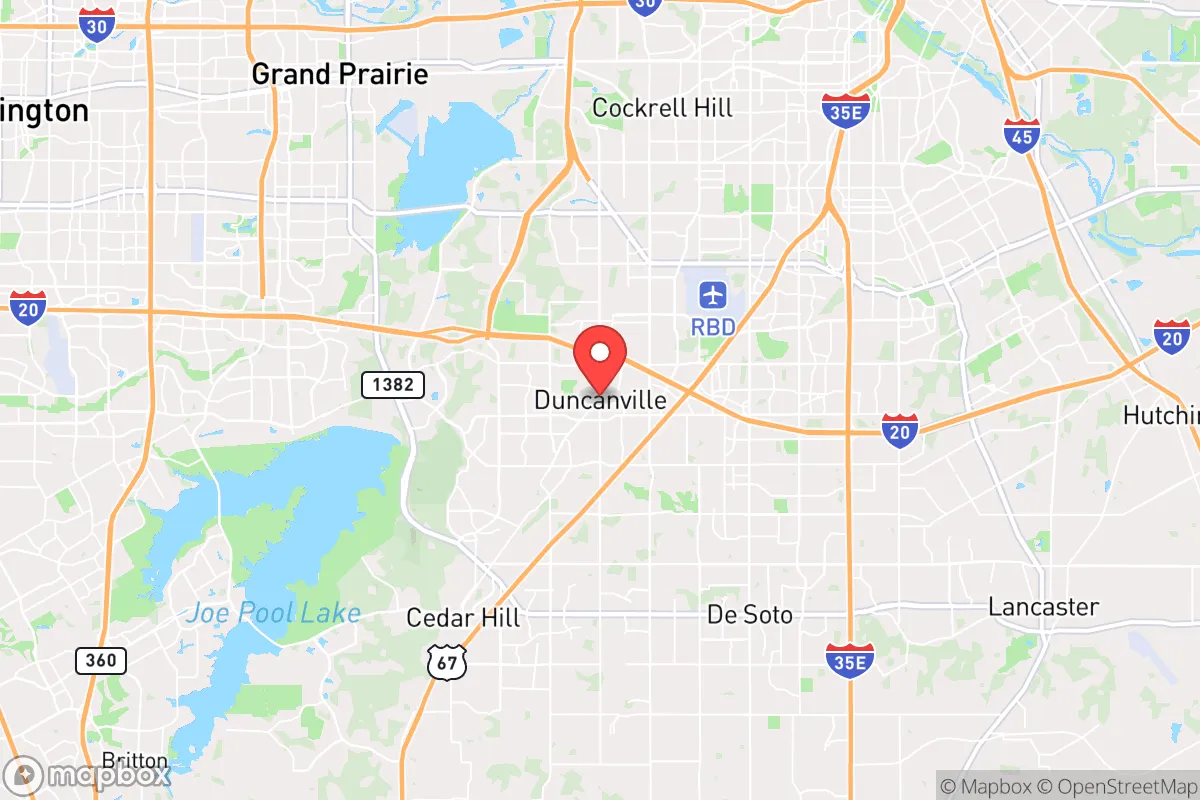
For the strategic-minded individual or family evaluating Duncanville, Texas, as a relocation destination, the concept of personal sovereignty is not an abstract ideal—it is the practical measure of how much control you retain over your life, your property, and your future in the face of expanding government reach. Located in the Dallas-Fort Worth metroplex, Duncanville offers a mixed sovereignty picture: the state of Texas provides a strong legal foundation for self-defense, low taxation, and parental rights, but the city’s proximity to a large urban center means you must navigate local zoning, HOA restrictions, and county-level regulations that can chip away at autonomy. The overall environment is far more favorable for personal liberty than coastal alternatives, but it demands vigilance—especially for those with a survivalist or prepper mindset who prioritize self-reliance over convenience.
Tax burden and regulatory posture in a growing metroplex
Texas’s lack of a state income tax is the single biggest win for personal sovereignty here, allowing you to keep more of what you earn and reducing the government’s claim on your labor. Duncanville’s total property tax rate hovers around 2.3% to 2.5% of assessed value, which is on par with Dallas County averages but higher than some rural Texas counties. This is a direct cost of living in a metro area with robust services—but for the sovereignty-minded, every dollar in property tax is a dollar you cannot redirect toward your own preparedness, land, or supplies. Sales tax in Duncanville is 8.25%, combining state (6.25%) and local (2.0%) rates, which adds up on everyday purchases. On the regulatory front, Texas has no statewide zoning, but Duncanville enforces its own zoning code, which restricts things like home-based businesses, vehicle storage, and livestock. For a prepper wanting to keep a backup generator, store bulk fuel, or run a small repair shop from a garage, you’ll need to check local ordinances carefully. The city’s building permit process is straightforward for standard improvements, but any major off-grid modifications—like solar panel arrays or rainwater catchment systems—may trigger inspections that slow you down. Compared to cities like Austin or Portland, the regulatory burden is light, but it is not absent.
Self-defense and gun law specifics for Duncanville residents
Texas is a constitutional carry state, meaning that as of 2021, you can carry a handgun openly or concealed without a permit if you are legally eligible. This is a bedrock of personal sovereignty—the right to defend yourself without asking the government for permission first. Duncanville is in Dallas County, which has a mixed record on Second Amendment support, but state law preempts local gun ordinances, so the city cannot ban carry in most public spaces. You can legally carry in your vehicle, on your property, and in most businesses unless they post 30.06 (concealed) or 30.07 (open carry) signage. For the survivalist, this means you can maintain a defensive firearm on your person while running errands or commuting. However, Duncanville is within 1,000 feet of several schools, which creates a federal Gun-Free School Zones Act complication—though Texas law provides an exception for licensed carry holders. If you plan to stockpile ammunition or build a home armory, there are no state-level restrictions on quantity, but local fire codes may limit storage of large amounts of powder or primers. Stand-your-ground and castle doctrine laws are fully in effect, meaning you have no duty to retreat before using deadly force in your home, vehicle, or workplace. For a prepper family, this legal clarity is invaluable—you are not expected to negotiate with an intruder.
Self-reliance and homesteading viability in a suburban setting
Duncanville is a fully developed suburb, so the classic homesteading dream of acreage, livestock, and off-grid independence is largely out of reach within city limits. Most residential lots are 0.15 to 0.25 acres, typical of post-war suburban development. Zoning prohibits keeping chickens, goats, or bees in most residential districts, and any attempt to install a wind turbine or large solar array will require a permit and likely face HOA pushback if you are in a deed-restricted neighborhood. For the serious prepper, this means Duncanville is a base of operations, not a self-sufficient retreat. You can, however, maximize what you have: vegetable gardens are allowed, rainwater collection for irrigation is permitted (though not for potable use without treatment), and you can install a backup generator without much hassle. The real sovereignty play here is proximity to rural land within an hour’s drive. Counties like Ellis, Johnson, and Hood offer 5- to 20-acre parcels at prices far below urban lots, allowing you to maintain a suburban home for work and school while building a separate retreat for long-term sustainability. Off-grid feasibility in those areas is high—well water, septic systems, solar power, and livestock are all legal and common. Duncanville itself is not a homesteading location, but it can serve as a strategic hub for those who want both urban income and rural resilience.
Personal liberties: parental rights, medical autonomy, speech, and property
Texas has some of the strongest parental rights laws in the country, which directly impacts sovereignty for families. The state’s Parental Bill of Rights (HB 1017, 2023) affirms that parents have the fundamental right to direct their children’s education, healthcare, and moral upbringing. In Duncanville ISD, this means you can opt your child out of sex education, review all instructional materials, and homeschool without excessive state interference. Medical autonomy is a mixed bag: Texas banned COVID-19 vaccine mandates for private employers and government entities, and it prohibits vaccine passports, but the state still mandates certain childhood immunizations for school attendance (with medical and philosophical exemptions available). For the sovereignty-minded, the ability to refuse medical treatment for yourself or your child is protected under state law, though emergency interventions can override parental consent in life-threatening situations. Free speech is robust—Texas has no hate speech laws that criminalize political or religious expression, and Duncanville has not enacted any local ordinances restricting public assembly or leafleting. Property rights are strong under Texas’s private property protections, but eminent domain is a real concern for those owning land near planned highway expansions (like the I-20 corridor). The Texas Property Code gives landowners significant leverage in condemnation proceedings, but the process still favors government infrastructure projects. Overall, personal liberties in Duncanville are well above the national average, but they are not absolute—you must remain informed and engaged to protect them.
In the broader landscape of American personal sovereignty, Duncanville ranks as a solid B-tier location. It lacks the wide-open autonomy of rural Texas counties where you can shoot on your own land, keep livestock, and ignore HOA rules, but it far surpasses cities like Chicago, Los Angeles, or New York in nearly every metric of freedom—tax burden, gun rights, parental control, and regulatory overhead. For the strategic relocator who values self-reliance and preparedness, Duncanville offers a workable compromise: you get the economic opportunities of the DFW metroplex, the legal protections of Texas state law, and the ability to build a suburban life without constant government intrusion. The key is to treat it as a launchpad—secure your primary residence here, but invest in rural land within a 60-minute radius for the long-term sovereignty that suburban zoning cannot provide. If you are willing to navigate the HOAs and city permits, Duncanville can be a stable base for a freedom-oriented lifestyle, but it is not the final destination for those seeking total autonomy.

* Values derived from national, state, county, city and local statistics and may differ in a specific area. Last updated: 2026-04-14T23:33:05.000Z
Narrative content on this page is AI-generated and may contain mistakes. Verify any details that matter before acting on them.
ReloMaps may earn a commission from affiliate links at no extra cost to you.

