Political ClimatePolitical Climate in Duncanville, TX
District shown is the primary district for this city’s centroid. Cities may span multiple districts.
Local Political AnalysisPolitical Analysis of Duncanville, TX
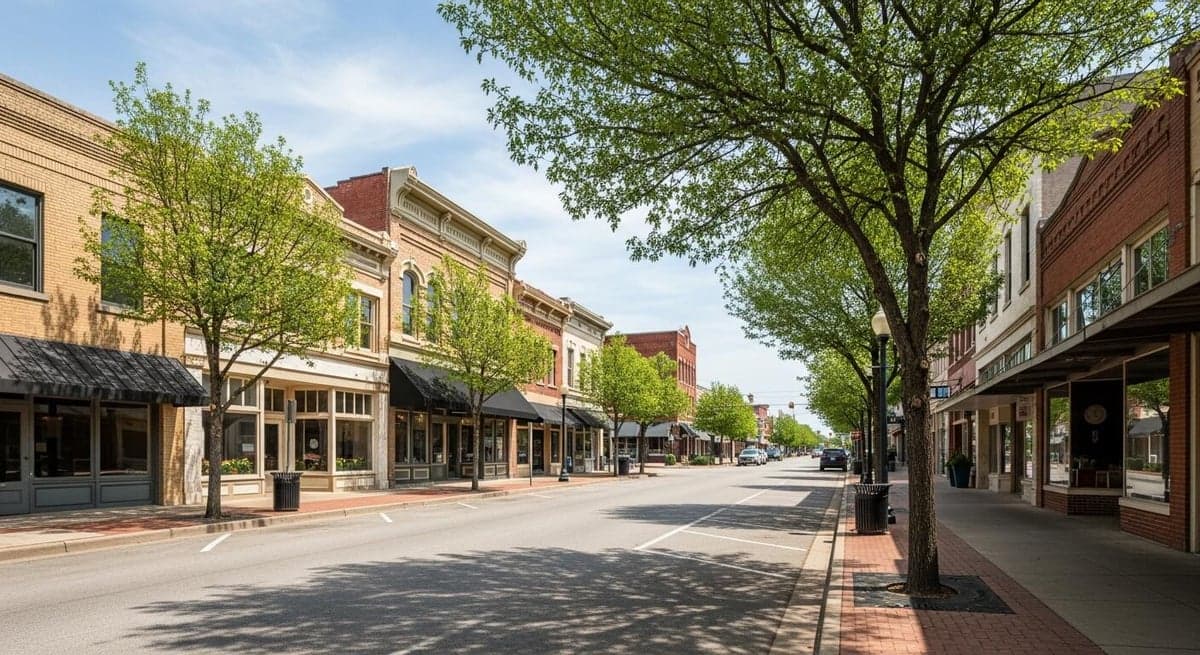
Duncanville, Texas, has a Cook PVI of D+25, meaning it leans heavily Democratic compared to the nation as a whole, but that number doesn't tell the whole story of what it's like to live here. If you've been around for a while, you remember when this was a quieter, more conservative-leaning suburb where folks kept to themselves and the local government stayed out of your business. Over the last decade or so, you've seen the political winds shift, and not necessarily for the better—more progressive policies creeping in, more red tape, and a growing sense that personal freedoms are getting squeezed.
How it compares
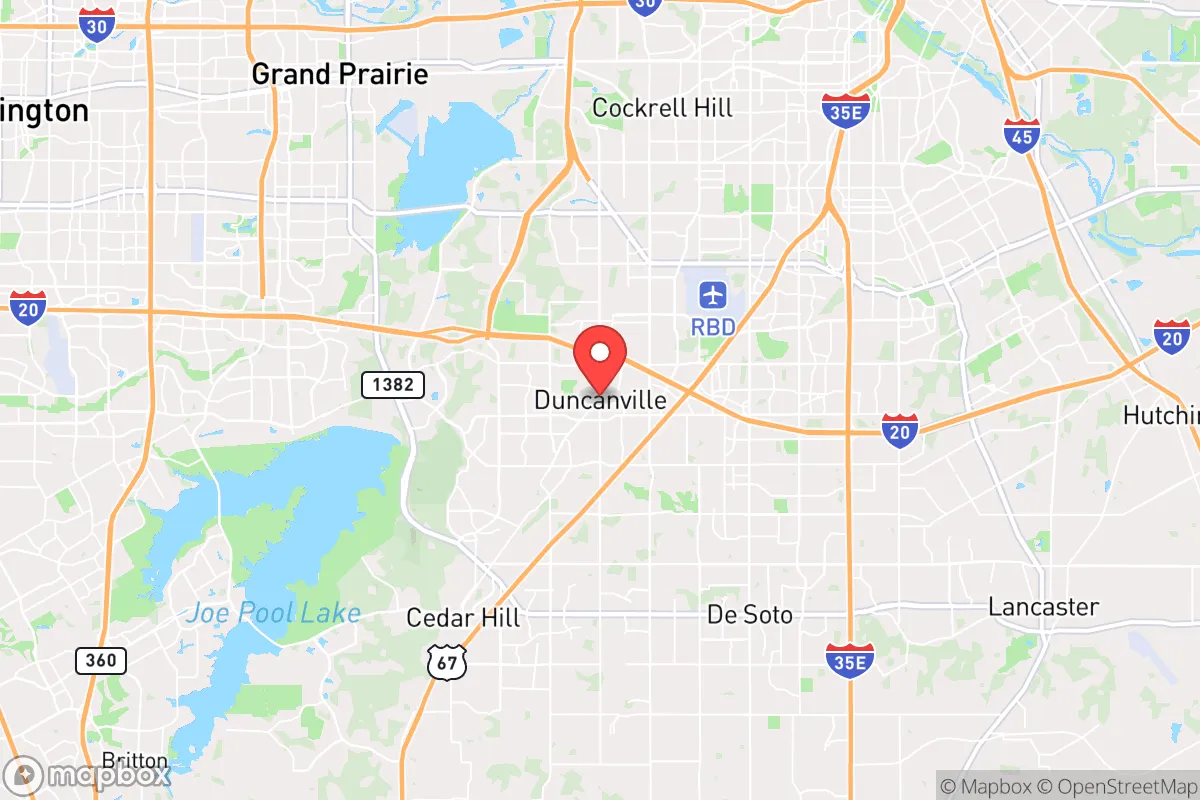
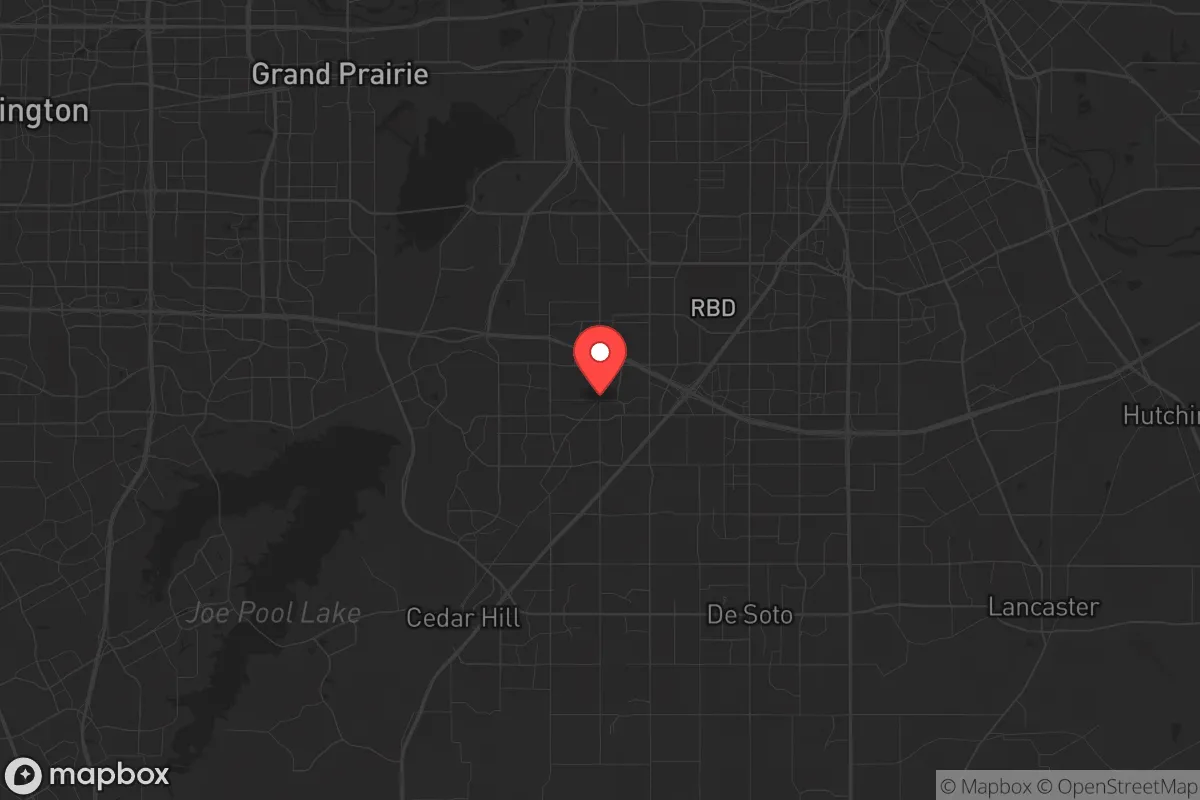
Drive ten minutes north to DeSoto or Cedar Hill, and you'll find a similar Democratic tilt, but the vibe is different—those towns have embraced a more activist local government, with higher taxes and more regulations on things like short-term rentals and home businesses. Head west to Grand Prairie, and it's a mixed bag, but still leans left. The real contrast is just a few miles south to Ovilla or Red Oak, where you'll find a much more conservative, hands-off approach—lower property taxes, fewer zoning headaches, and a general attitude that the government should be seen and not heard. Duncanville, by comparison, feels like it's caught in the middle: a historically blue-collar, family-oriented town that's now being pulled toward the progressive policies of Dallas, even though many residents just want to be left alone.
What this means for residents
For the average person, the biggest practical impact is on your wallet and your daily life. Property taxes here are already high—around 2.4% of assessed value—and there's constant talk of new bond packages for schools and parks that sound nice but mean more money out of your pocket. You'll also notice more restrictions popping up: stricter noise ordinances, limits on what you can do with your own property, and a local government that seems more interested in social engineering than in keeping the streets paved and the lights on. The school board has become a battleground, with progressive members pushing curriculum changes that many parents find intrusive, while conservative parents fight to keep control over what their kids are taught. It's a daily grind of watching your freedoms get nibbled away, one city council meeting at a time.
Looking ahead, the trend is concerning. As Dallas continues to expand its influence and more people move in from blue states, Duncanville's political center of gravity is shifting further left. You can expect more talk of "equity" initiatives, more zoning changes that favor developers over homeowners, and a continued erosion of the kind of local control that made this a great place to raise a family. The long-term outlook? Unless there's a serious pushback from residents who value personal liberty and fiscal restraint, Duncanville will likely become just another suburb where the government tells you what you can do with your own land, your own money, and your own kids. If that doesn't sit right with you, now's the time to get involved—or start looking at Ovilla.

State Political ClimatePolitical Climate in Texas
State Political AnalysisPolitical Environment in the State
Texas has been a reliably Republican state for decades, with the GOP holding every statewide office and both chambers of the legislature since the mid-1990s. The dominant coalition is a mix of suburban conservatives, rural traditionalists, and a growing number of Hispanic voters who lean right on economic and social issues. However, the 10-20 year arc shows a slow but steady shift: in 2020, Donald Trump won Texas by just 5.6 points, down from 9 points in 2016 and 16 points in 2012. The 2024 election saw Trump carry the state by roughly 7 points, a slight recovery, but the long-term trend is toward competitiveness, driven by explosive growth in the blue-leaning suburbs of Austin, Dallas, and Houston.
Urban vs. rural divide
The political map of Texas is a stark study in contrasts. The major metros — Austin, Dallas, Houston, San Antonio, and El Paso — are the engine of Democratic votes. Travis County (Austin) gave Biden 71% in 2020, while Harris County (Houston) went 56% blue. Dallas County has flipped from red to purple to solid blue over the past two decades. Meanwhile, rural and exurban counties like Lubbock’s Lubbock County and Amarillo’s Potter County remain deeply red, often voting 70-80% Republican. The real battleground is the suburbs: Collin County (north of Dallas) voted for Trump by 12 points in 2024, down from 24 points in 2016, while Fort Bend County (southwest of Houston) flipped to Biden in 2020 and stayed close in 2024. These suburban shifts are driven by college-educated professionals and new arrivals from blue states, making them the key to Texas’s political future.
Policy environment
Texas’s policy environment is a mixed bag for conservatives. On the plus side, there is no state income tax, which is a major draw for relocating families and businesses. The regulatory posture remains business-friendly, with right-to-work laws and limited zoning in many areas. Education policy has been a flashpoint: the 2023 passage of HB 900 (the READER Act) aimed to remove sexually explicit content from school libraries, though it was partially blocked by courts. School choice legislation, including Education Savings Accounts, has been debated but not yet passed due to rural Republican opposition. Healthcare policy is largely hands-off, with no state Medicaid expansion under the ACA, keeping government involvement low. Election laws tightened after 2020 with SB 1, which banned drive-through voting and added ID requirements for mail ballots — a move that drew national criticism but was praised by conservatives for election integrity. However, property taxes are high and rising, with no state income tax to offset them, and the 2023 SB 2 tax cut package provided only temporary relief. For a conservative, the policy environment is generally favorable but not without frustrations, especially on taxes and school choice.
Trajectory & freedom
On personal freedom, Texas has moved in both directions. On the positive side, the state expanded gun rights significantly: HB 1927 (2021) allowed permitless carry of handguns for adults 21 and older, a major win for Second Amendment advocates. Parental rights were strengthened with HB 18 (2023), which requires parental consent for minors to create social media accounts and restricts access to harmful content. Medical autonomy saw a boost with SB 8 (2021), the Heartbeat Act, which effectively banned abortion after six weeks and allowed private citizens to sue violators — a novel approach that bypassed federal courts. However, freedom has contracted in other areas. The state’s response to COVID-19 included business closures and mask mandates in some cities, though Governor Abbott ended them early. Property rights have been eroded by SB 2 (2023), which allowed for faster eminent domain for carbon capture pipelines, alarming rural landowners. Taxation remains a burden: while there’s no income tax, the effective property tax rate is among the highest in the nation, and the 2023 tax cut was largely a one-time rebate, not structural reform. Overall, Texas is freer than most states on guns, life, and parental rights, but less free on property and taxation.
Civil unrest & political movements
Texas has seen its share of political flashpoints. The 2020 Black Lives Matter protests in Austin and Dallas were large and occasionally violent, leading to property damage and a backlash that helped fuel the 2021 passage of HB 20, which increased penalties for rioting and protected drivers who accidentally strike protesters. Immigration politics are a constant: the 2023 SB 4 law, which allows state and local police to arrest illegal immigrants, is currently tied up in court but reflects the state’s aggressive posture. Governor Abbott’s Operation Lone Star has bused thousands of migrants to sanctuary cities like New York and Chicago, drawing both praise and lawsuits. Secession rhetoric, led by the Texas Nationalist Movement, remains a fringe but vocal force, though it has no real political traction. Election integrity remains a hot topic: after 2020, Harris County was investigated for ballot security issues, leading to the 2023 SB 1 reforms. A new resident would notice the strong presence of both pro-immigration enforcement and pro-immigrant advocacy groups, especially along the border in El Paso and the Rio Grande Valley.
Projection
Over the next 5-10 years, Texas is likely to become more politically competitive, but not necessarily blue. The key demographic shift is the continued influx of domestic migrants from California, New York, and Illinois — many of whom are moderate or conservative-leaning, but some bring blue-state voting habits. The Hispanic vote, long assumed to be Democratic, is trending right, especially in the Rio Grande Valley, where counties like Starr County flipped to Trump in 2024. Suburban women, however, are trending left, which could offset those gains. The state’s Republican leadership is likely to double down on cultural issues — school choice, border security, and parental rights — to maintain turnout. The biggest wildcard is property tax reform: if the state fails to address the rising burden, it could alienate the suburban base. For a conservative moving in now, expect a state that remains red but with a thinner margin, where local elections in suburbs like Collin County and Fort Bend County will be the real battlegrounds.
For a new resident, the bottom line is this: Texas offers a strong conservative policy foundation — no income tax, gun rights, and parental control in schools — but it’s not a libertarian paradise. Property taxes are high, government overreach on eminent domain is real, and the political climate is heating up as the state diversifies. If you’re moving for freedom, focus on the exurbs and rural areas where the culture is still deeply red, and keep an eye on local elections, because that’s where the future of Texas will be decided.
* Values derived from national, state, county, city and local statistics and may differ in a specific area. Last updated: 2026-04-14T23:33:05.000Z
Narrative content on this page is AI-generated and may contain mistakes. Verify any details that matter before acting on them.
ReloMaps may earn a commission from affiliate links at no extra cost to you.

