
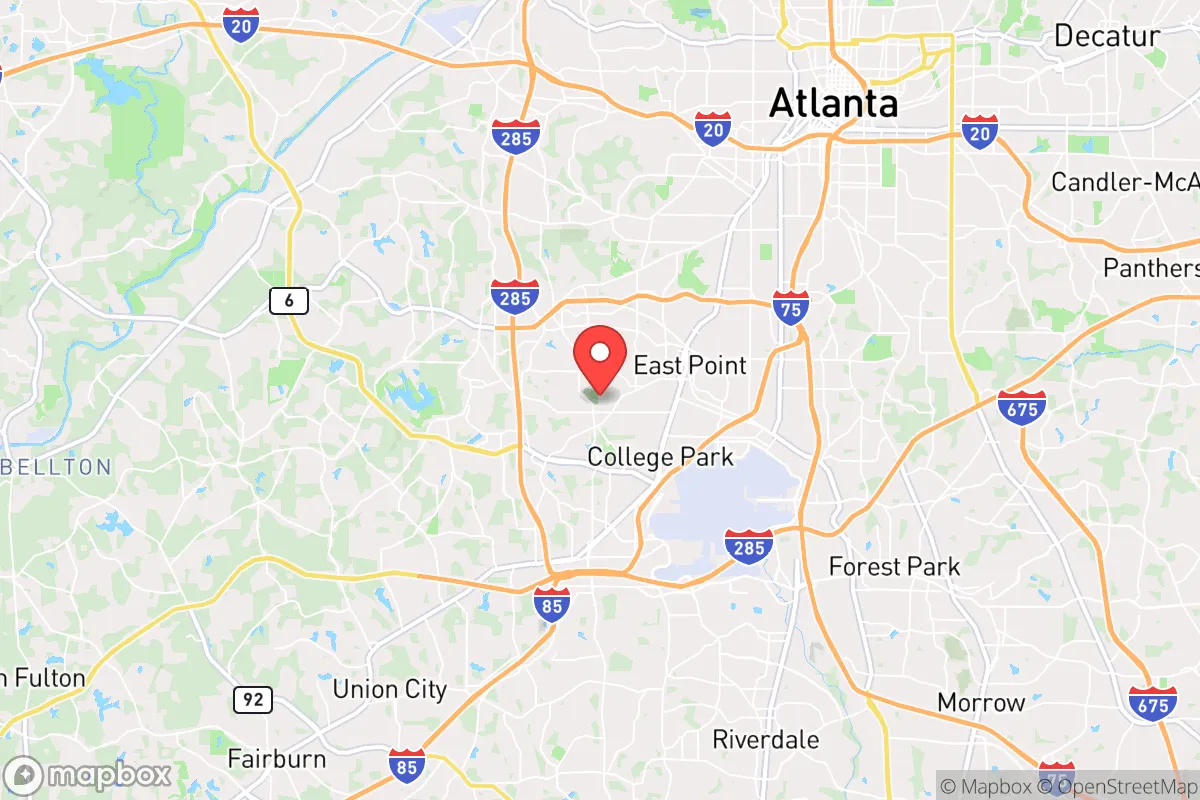
Photo: Wikipedia
Quality of Life in East Point, GA
Above-average quality of iife. The area offers a reasonable cost of living, decent mobility, and a mix of neighborhood amenities.
What does Quality of Life tell us?
Quality of Life blends cost of living, nearby amenities, socioeconomic signals, and neighborhood character. City-level scores represent the whole municipality; individual neighborhoods can differ.
What does this tell us?
Quality of Life blends cost of living, nearby amenities, socioeconomic signals, and neighborhood character. City-level scores represent the whole municipality; individual neighborhoods can differ.
Cost of Living
3% above national average
The Real Cost of Living in East Point, GA for 2026
| Tier | Individual | Family (4) |
|---|---|---|
| Survival | $21k | $39k |
| Comfortable | $48k | $71k |
| Luxury | $107k+ | $165k+ |
| Elite (Top 5%) | $126k+ | $196k+ |
83%
The Area Signal
A metric tracking the socioeconomic signals of the area.
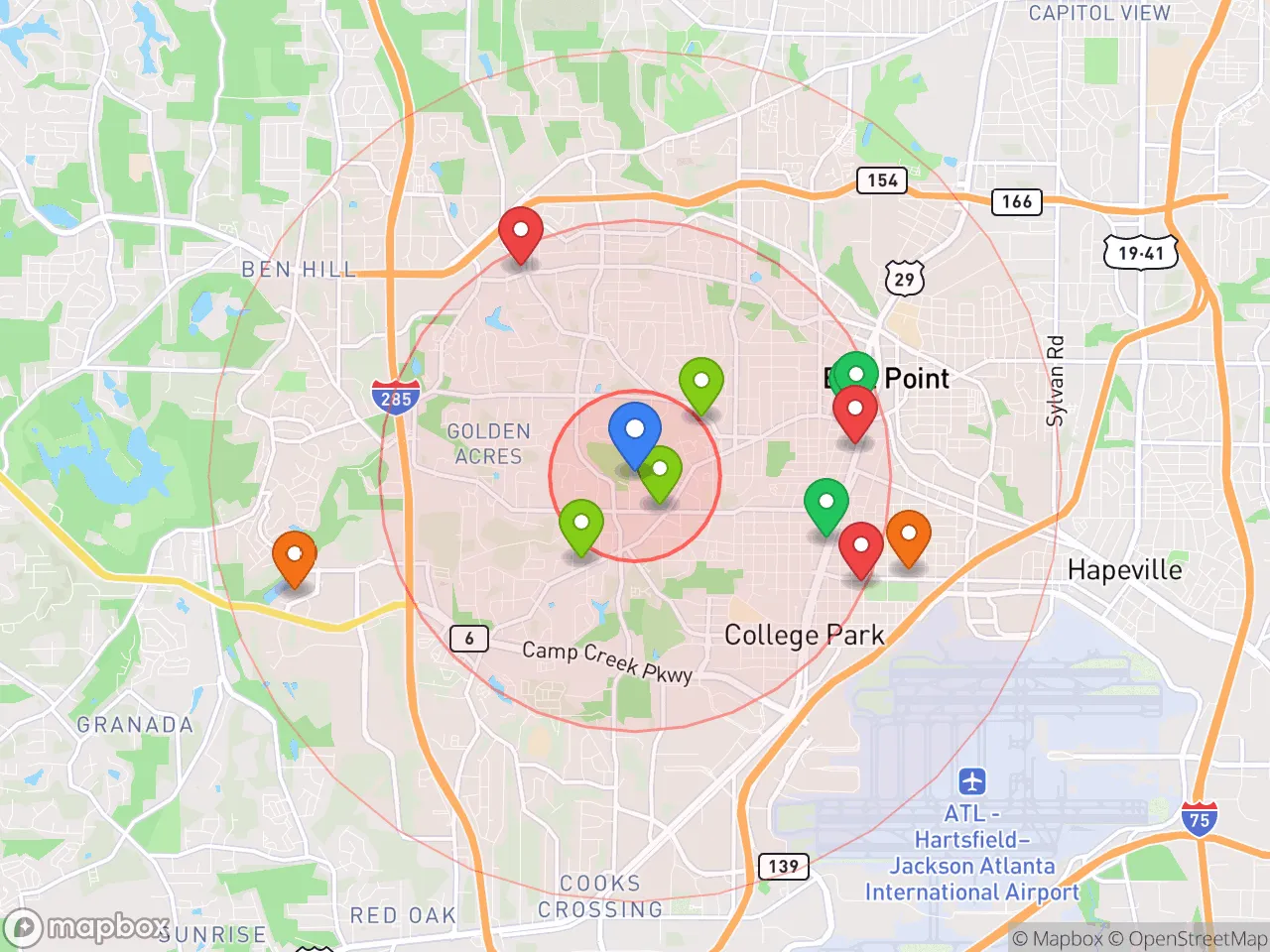
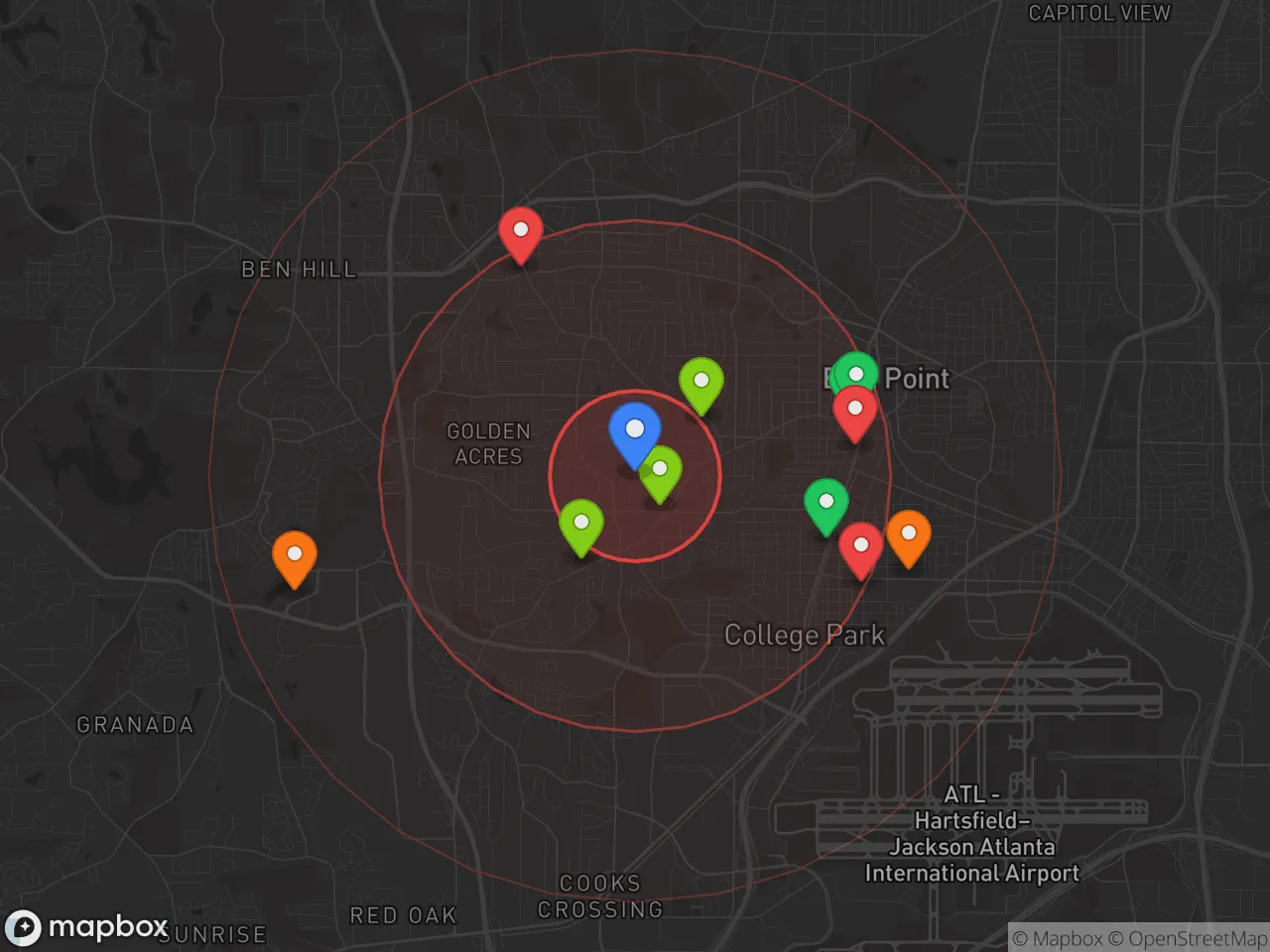
Hobbies
Explore the areaGroceries
6 within 10 miles
Gas
20 within 10 miles
Hospital
20 within 20 miles
Airport
ATL — Hartsfield–Jackson Atlanta International
Post Office
USPS — East Point, GA
Critical Amenities
Quality-of-Life Analysis
East Point, Georgia, presents a middle-market quality of life within metro Atlanta, appealing primarily to budget-conscious professionals, young families, and long-term residents who value urban proximity over suburban sprawl. With a cost-of-living index of 103 (just 3% above the national average), the city offers a notably more affordable entry point than intown neighborhoods like Midtown or Decatur, while still providing direct MARTA rail access to Hartsfield-Jackson Airport and downtown Atlanta. The population skews younger and more diverse than the surrounding region, creating a community that balances historic Southern character with a growing, transit-oriented workforce.
Cost of living, housing affordability, and how East Point compares to nearby cities
East Point’s housing market remains one of the most accessible in the Atlanta metro for buyers and renters alike. The median home value sits at $247,500, roughly $100,000 below the Atlanta citywide median and nearly half the price of homes in Buckhead or Sandy Springs. Median rent is $1,314, which undercuts nearby College Park ($1,450) and Decatur ($1,600) while staying competitive with Hapeville and Union City. The overall cost-of-living index of 103 is driven primarily by housing; groceries and healthcare costs track close to national averages, while transportation costs are slightly elevated due to the average commute of 29.6 minutes — a figure that aligns with the outer-I-285 corridor but is longer than intown neighborhoods. Property taxes in Fulton County are moderate, though homeowners should note that millage rates are higher than in neighboring Clayton or Coweta counties. For renters, the market has tightened since 2022, with vacancy rates below 5% in most East Point ZIP codes, pushing rents up roughly 8% year-over-year.
What daily life is like: amenities, schools, and neighborhood character
Daily life in East Point revolves around its historic downtown district, MARTA station, and a growing roster of local restaurants and breweries. The city operates several parks, including the 50-acre Sykes Park and the newly renovated Jefferson Park, which host youth sports leagues and community festivals. Public schools are served by Fulton County Schools, with Parklane Elementary and Woodland Middle School receiving above-average ratings for the district; however, many families opt for private or charter options like the highly regarded KIPP Metro Atlanta Schools. The city’s walkability is limited to the downtown core and a few historic neighborhoods, so most errands require a car. The Camp Creek Marketplace retail corridor, just west of the city limits, provides big-box shopping and dining, while the East Point Farmers Market runs Saturdays from April through October. Crime rates in East Point are mixed: property crime is slightly above the national average, but violent crime has declined 12% since 2020, per city police data. The overall rhythm is quieter than intown Atlanta but more connected than outer suburbs, with MARTA’s red and gold lines providing a 15-minute train ride to the airport or a 20-minute ride to Five Points station downtown.
East Point is best suited for residents who prioritize affordability and transit access over top-tier schools or low crime stats. It works well for young professionals commuting to Hartsfield-Jackson or downtown Atlanta, as well as families who can navigate the school choice system or afford private tuition. Retirees on fixed incomes may find the housing costs manageable, though the lack of age-restricted communities and limited healthcare facilities within city limits are drawbacks. For anyone seeking a lower-cost, transit-connected alternative to Atlanta’s pricier intown neighborhoods, East Point offers a pragmatic, community-oriented base with room for appreciation.

Crime in East Point, GA
Higher crime rates than 74% of comparable U.S. locations.
Violent CrimeViolent Crime Analysis
Property CrimeProperty Crime Analysis
Crime Analysis
East Point, Georgia, reports a violent crime rate of 556.3 incidents per 100,000 residents and a property crime rate of 2,423.5 per 100,000, placing it among the higher-risk suburbs within the Atlanta metropolitan area. These figures reflect a community where safety is a significant concern, particularly when factoring in the progressive judicial policies of Fulton County, which includes East Point. The county’s district attorney and judges, aligned with a liberal ideology focused on offender rehabilitation and reduced incarceration, have been linked to higher recidivism and a perception that public safety takes a backseat to criminal justice reform.
Crime in context
East Point’s violent crime rate of 556.3 per 100,000 is nearly 50% higher than the national average of roughly 380 per 100,000, while its property crime rate of 2,423.5 per 100,000 exceeds the U.S. average of about 1,950 per 100,000. Compared to Georgia’s state averages—approximately 400 violent crimes and 2,200 property crimes per 100,000—East Point is elevated in both categories. The city’s proximity to Atlanta, a major metro hub, compounds these risks, as crime often spills over from the larger urban core. Fulton County’s progressive district attorney, Fani Willis, has faced criticism for policies that prioritize diversion programs and reduced bail, which critics argue embolden repeat offenders and undermine victim justice.
What residents experience
Residents report that property crime, including vehicle break-ins and home burglaries, is a daily concern, particularly in areas near MARTA transit stations and commercial corridors like Cleveland Avenue. Violent incidents, while less frequent, are more concentrated in specific neighborhoods, with armed robberies and aggravated assaults occurring sporadically. The local East Point Police Department has implemented community policing initiatives, but officer-to-resident ratios remain strained, and response times can lag during peak hours. The progressive judicial environment in Fulton County means that many arrested individuals are quickly released on low or no bail, leading to a cycle where the same offenders are encountered repeatedly by residents and business owners.
Neighborhood-level variation
Safety in East Point varies sharply by neighborhood. Areas like Camp Creek Marketplace and the Jefferson Park neighborhood experience higher foot traffic and property crime, while more residential enclaves such as Colonial Hills and the historic district near East Point City Hall report lower incident rates. Gated communities and subdivisions with active homeowners’ associations tend to have fewer break-ins. However, the overarching influence of Fulton County’s liberal justice system means that even in safer pockets, residents remain wary of spillover crime from adjacent high-crime zones. Prospective residents should research specific street-level crime maps and consider that the county’s ideological approach to prosecution may limit the effectiveness of local policing efforts.
* Values derived from national, state, county, city and local statistics and may differ in a specific area. Last updated: 2026-04-29T21:03:35.000Z
Narrative content on this page is AI-generated and may contain mistakes. Verify any details that matter before acting on them.
ReloMaps may earn a commission from affiliate links at no extra cost to you.

