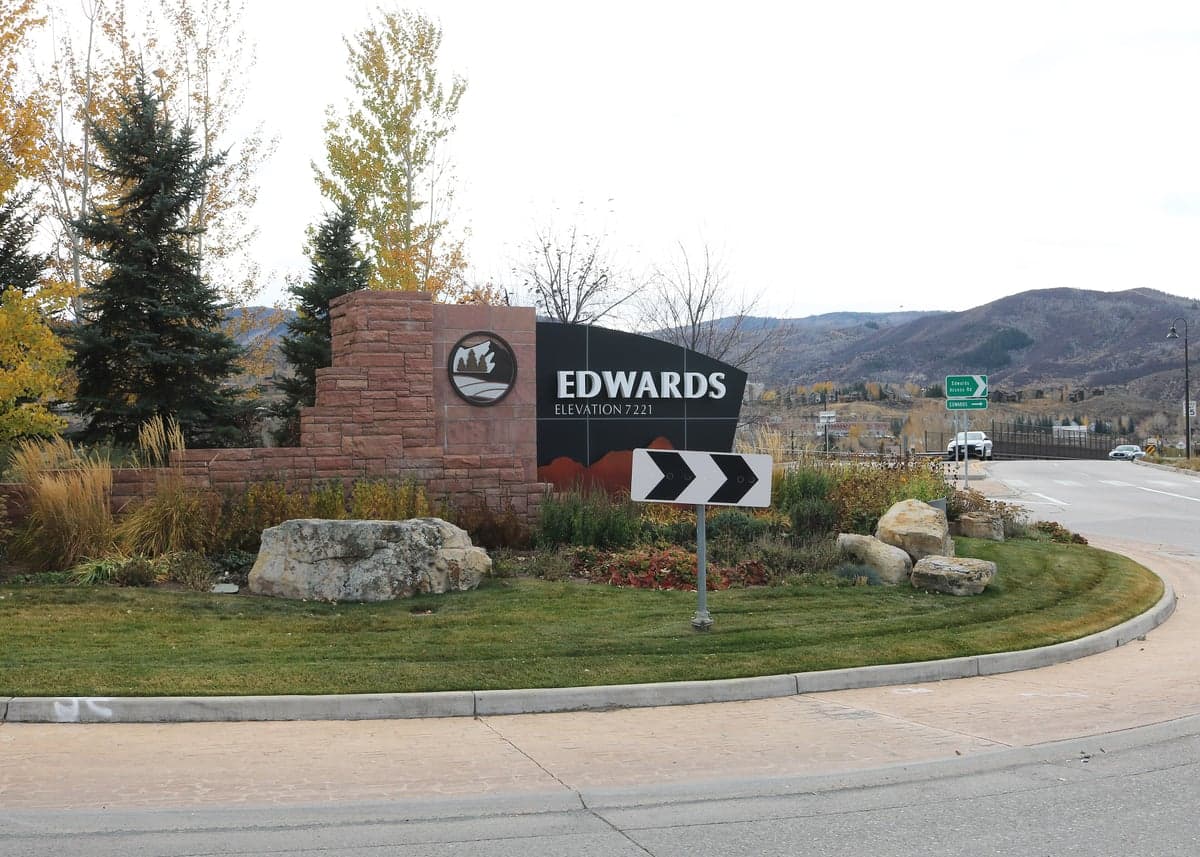
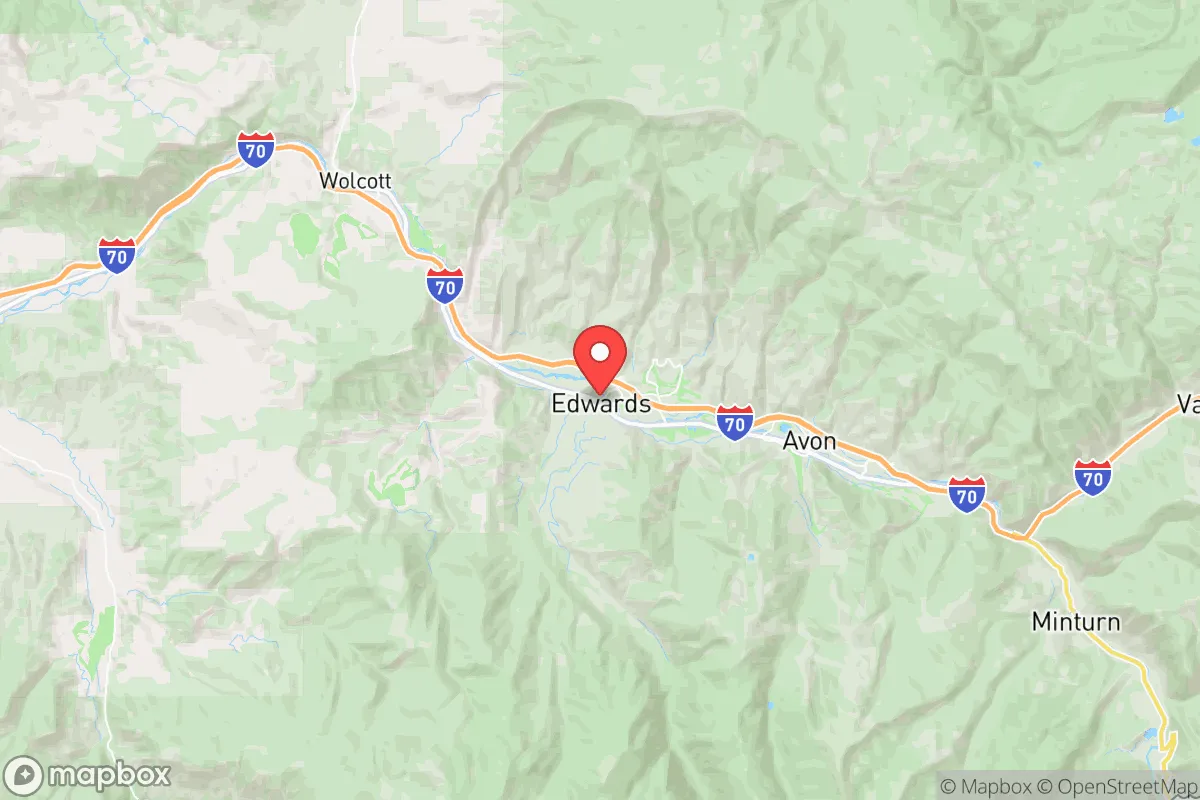
Photo: Wikipedia
Personal Sovereignty in Edwards, CO
Viable for self-reliance. Generally workable, though some barriers may limit total independence.
What does Personal Sovereignty tell us?
Personal Sovereignty measures your capacity for self-reliance and independence with minimal government friction. Higher scores mean fewer barriers between you and the way you want to live... but it assumes you have the space you need and good neighbors.
What does this tell us?
Personal Sovereignty measures your capacity for self-reliance and independence with minimal government friction. Higher scores mean fewer barriers between you and the way you want to live... but it assumes you have the space you need and good neighbors.
State Policy
Energy independence: Net exporter (110% of energy produced in-state)
Personal Liberty
Homesteading

Personal Liberty Analysis
Edwards, Colorado, offers a notably higher degree of personal sovereignty than many Front Range or coastal alternatives, but it is not a libertarian free-zone. Nestled in Eagle County, this unincorporated community sits in a state that has steadily moved left on social and environmental policy, creating a tension between local, rural norms and state-level mandates. For the survivalist or prepper seeking a balance of mountain seclusion, access to federal land, and a community that largely minds its own business, Edwards presents a strategic option—provided you understand where the real constraints on autonomy lie.
Tax burden and regulatory posture: How Colorado’s state policies affect your wallet and freedom
Colorado’s overall tax burden is moderate, but the regulatory climate in Eagle County adds layers that a sovereignty-minded individual must account for. The state’s flat income tax rate of 4.4% (as of 2025) is relatively low, and there is no state-level estate or inheritance tax—a clear advantage for preserving generational wealth. However, Eagle County’s property tax rates are among the highest in the state, driven by expensive real estate valuations and local school district funding. A typical home in Edwards can carry an effective property tax rate near 0.8–1.0% of actual value, which is significant on a $1.5 million median home. Sales tax in Edwards combines state (2.9%), county (1.5%), and local district taxes, totaling roughly 8.4%—manageable but not negligible for bulk prepping supplies. The real sovereignty hit comes from Colorado’s aggressive environmental regulations. The state’s strict building codes, wildfire mitigation requirements, and water rights administration mean you cannot simply build a remote cabin or dig a well without extensive permitting. Eagle County also enforces short-term rental restrictions, limiting your ability to monetize property as a bug-out asset. For the prepper, the key takeaway is that Colorado’s regulatory posture is permissive on personal lifestyle choices but restrictive on land use and resource extraction, making self-sufficient homesteading more paperwork-intensive than in states like Wyoming or Idaho.
Self-defense and gun law specifics: What you can and cannot do in Eagle County
Colorado is a “shall-issue” state for concealed carry permits, and Edwards residents enjoy relatively straightforward access to firearms. No state-level permit is required to purchase a rifle, shotgun, or handgun from a private seller, though background checks are mandatory for all commercial sales. Open carry is legal without a permit in unincorporated Eagle County, including Edwards, but local ordinances in nearby towns like Vail or Avon may restrict it. The state does have a magazine capacity limit of 15 rounds for handguns and 10 for long guns—a restriction that rankles many preppers. Red flag laws are in effect, allowing law enforcement to petition for temporary firearm seizure based on behavioral concerns, which is a clear point of government overreach for those prioritizing self-defense autonomy. Eagle County Sheriff’s Office has historically taken a moderate stance on Second Amendment issues, but the political climate in the county (which voted +14 for Biden in 2020) means you cannot rely on local officials to push back against state-level gun control. For the survivalist, the practical workaround is to maintain a low profile, store firearms securely, and consider neighboring states like Wyoming (a 90-minute drive) for less restricted purchases. Castle doctrine is recognized in Colorado, with no duty to retreat in your home or vehicle, but the state’s self-defense laws are less expansive than in stand-your-ground states like Texas or Florida.
Self-reliance and homesteading viability: Lot sizes, zoning, and off-grid feasibility in Edwards
Edwards sits in the Eagle River Valley, where land is expensive and subdivided into relatively small lots—typically 1–5 acres in the residential areas near the interstate. True off-grid homesteading is difficult here. Eagle County zoning requires minimum lot sizes of 35 acres for agricultural use, and most parcels near Edwards are zoned for single-family residential with strict building envelopes. Off-grid living is legally possible but practically constrained: Colorado law allows rainwater collection (up to 110 gallons per property), but you must have a well permit for groundwater, and the county enforces strict septic system standards. Solar panels are permitted, but homeowners associations (HOAs) in many Edwards subdivisions restrict visible installations. The growing season is short (Zone 4–5, with frost from mid-September to late May), making serious food production a greenhouse-dependent endeavor. For the prepper, the better play is to use Edwards as a base for accessing public lands—the White River National Forest and Bureau of Land Management (BLM) tracts are minutes away, offering dispersed camping, hunting, and emergency retreat options. If your goal is a fully self-sufficient homestead, look to the less regulated counties east of the Continental Divide, like Park or Fremont, where land is cheaper and zoning looser. Edwards works best as a “soft” prepper location: good for stockpiling, community networking, and quick access to wilderness, but not for true agricultural independence.
Personal liberties: Parental rights, medical autonomy, speech, and property rights
Colorado’s state-level policies create a mixed bag for personal liberties in Edwards. Parental rights are relatively strong in the abstract—Colorado does not have a statewide vaccine mandate for schoolchildren, and parents can opt out of sex education. However, the state’s 2023 law expanding access to abortion and gender-affirming care without parental consent for minors (effective for certain procedures) is a significant concern for conservative parents. Medical autonomy is constrained by Colorado’s heavy regulation of alternative treatments; while CBD and hemp products are widely available, the state’s recreational marijuana framework is tightly controlled, and raw milk sales are restricted to herd-share agreements. Free speech is protected under the First Amendment, but Eagle County’s social climate leans progressive, meaning public expression of conservative or survivalist views may invite social friction rather than legal penalty. Property rights are the most concerning area: Colorado’s strict land-use planning, combined with the state’s “public trust” doctrine for water, means your ability to use your land as you see fit is limited. Eagle County has actively pursued conservation easements and open-space acquisitions, which can restrict development on private land. For the sovereignty-minded individual, the practical advice is to buy property with clear deed restrictions, avoid HOA-governed subdivisions, and understand that Colorado’s regulatory state will always have a say in how you use your land.
Overall, Edwards offers a strategic middle ground for those seeking personal sovereignty in a state with significant government overreach. It is not a haven like rural Idaho or Montana, where county sheriffs openly defy state mandates and land is cheap and unregulated. But for the prepper or survivalist who values mountain access, a relatively low-crime environment, and a community that respects privacy, Edwards provides a viable base—provided you are willing to navigate Colorado’s tax and regulatory landscape. The real sovereignty advantage here is geographic: proximity to federal wilderness, a low population density, and a local economy that tolerates individual eccentricity. If you can accept that the state will control your water, your building permits, and your magazine capacity, Edwards gives you the space to live largely on your own terms.

* Values derived from national, state, county, city and local statistics and may differ in a specific area. Last updated: 2026-05-16T10:14:34.000Z
Narrative content on this page is AI-generated and may contain mistakes. Verify any details that matter before acting on them.
ReloMaps may earn a commission from affiliate links at no extra cost to you.

