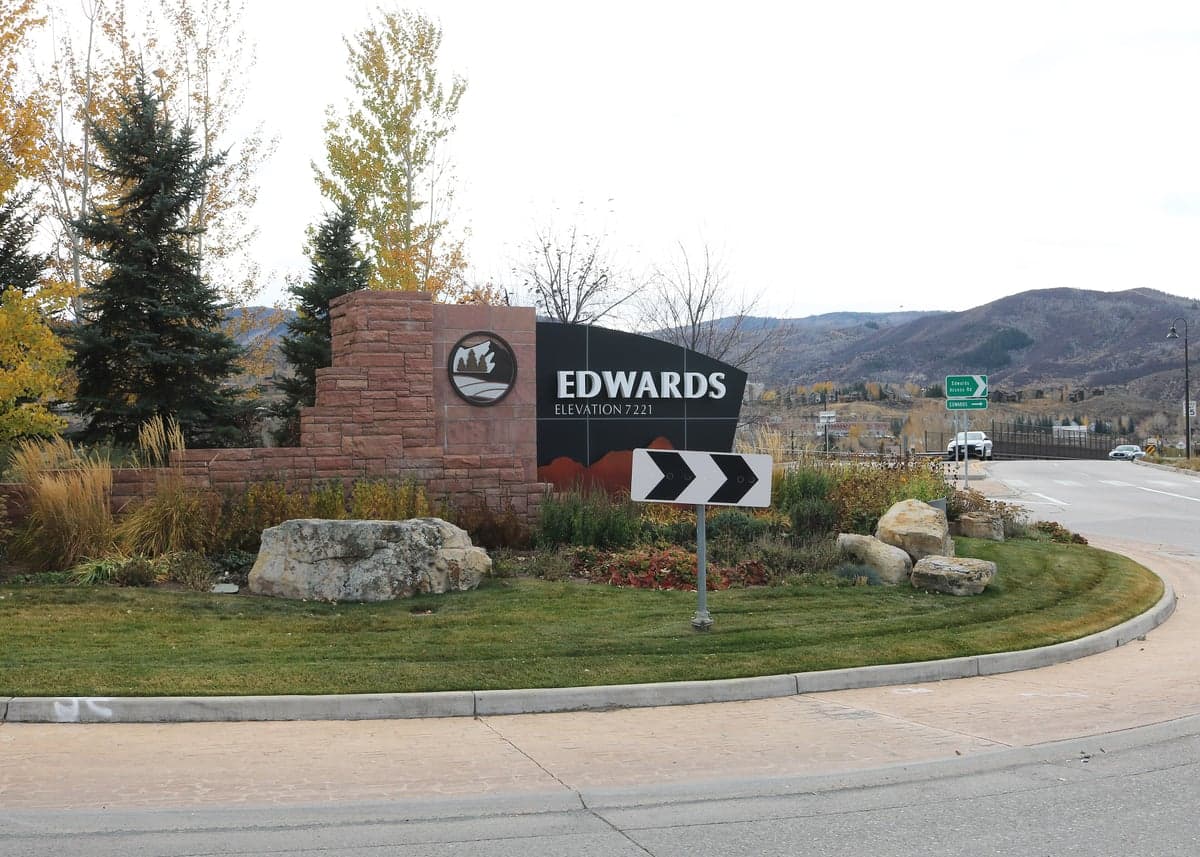
Photo: Wikipedia
Political ClimatePolitical Climate in Edwards, CO
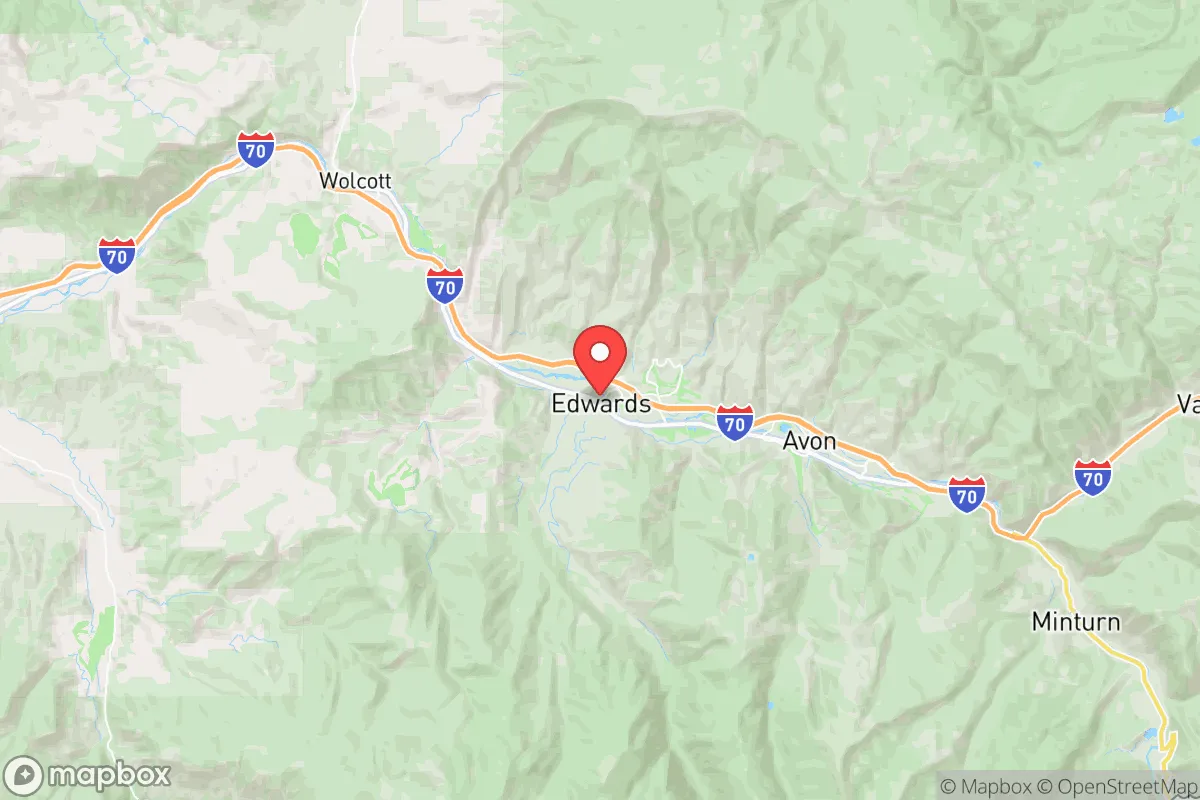
District shown is the primary district for this city’s centroid. Cities may span multiple districts.
Local Political AnalysisPolitical Analysis of Edwards, CO
Edwards, Colorado, sits in the heart of Eagle County, and I’ve watched it shift from a quiet, live-and-let-live mountain town into a place that’s now firmly in the progressive column. The Cook Partisan Voting Index (PVI) here is a stark D+20, meaning this area votes about 20 points more Democratic than the national average. That’s a huge swing from even a decade ago, when the valley had a more balanced mix of ranchers, ski bums, and second-home owners who mostly just wanted low taxes and minimal fuss. Today, the local politics are dominated by a well-funded, environmentally-focused progressive coalition, and frankly, the old-school libertarian streak that made this place special is getting squeezed out.
How it compares
To understand how deep the blue runs here, look at the state level. Colorado as a whole has a Cook PVI of D+6—solidly Democratic, but still with enough purple in places like El Paso County (Colorado Springs) and Mesa County (Grand Junction) to keep things interesting. Edwards, though, is in a different league. It’s more liberal than Boulder or Denver in raw partisan voting, and it’s a world away from the more conservative towns just over the hill. Drive 30 minutes west to Gypsum or Eagle, and you’ll find a more moderate, working-class vibe where people are skeptical of the green agenda and high-density housing mandates. Head an hour north to Steamboat Springs (Routt County, D+9), and you’ll see a similar but less intense version of the same trend. The contrast is real: Edwards is ground zero for the valley’s progressive experiment, while the surrounding rural areas are fighting to hold onto their traditional values of property rights and fiscal restraint.
What this means for residents
For those of us who value personal freedom and limited government, the shift is concerning. The local government has become increasingly comfortable with overreach into private property—think strict short-term rental caps, aggressive building moratoriums, and a push for mandatory affordable housing quotas that effectively dictate what you can do with your own land. The school board and county commissions are now reliably progressive, which means policies on everything from energy use to land management are driven by ideology rather than practicality. If you’re a small business owner or a contractor, you’ve probably felt the squeeze of new regulations and higher fees. The tax burden is also creeping up, with bond measures for open space and transit passing easily, even as the cost of living here is already punishing. It’s not a place where you can just buy a piece of land and live your life without a lot of bureaucratic hassle anymore.
Culturally, the change is palpable. The old Edwards was a place where you’d grab a beer at the Riverwalk and talk about hunting, fishing, or the Broncos with a neighbor who might be a Republican or a Democrat—it didn’t matter. Now, the public discourse is dominated by climate activism, equity initiatives, and a kind of performative wokeness that feels imported from the Front Range. The local paper and community boards are full of calls for more government intervention, not less. In the long term, I see this trend accelerating as more out-of-state money and transplants arrive, drawn by the progressive reputation. For anyone who values individual liberty, a light regulatory touch, and a community that doesn’t police your lifestyle, Edwards is becoming a tough place to call home. The surrounding towns like Gypsum or even Rifle (Garfield County, R+15) offer a much more traditional Colorado experience, and I’d advise anyone considering a move here to look at those areas first if they want to keep their freedoms intact.

State Political ClimatePolitical Climate in Colorado
State Political AnalysisPolitical Environment in the State
Colorado is a state that has shifted dramatically over the past two decades, moving from a classic purple swing state to a solidly Democratic-leaning one with a Cook PVI of D+6. The dominant coalition is a mix of urban progressives, suburban moderates, and a growing Latino electorate, but this blue veneer masks a deep and widening urban-rural chasm. If you’re a conservative considering a move here, you need to understand that the state’s political center of gravity has moved decisively to the left, driven by explosive growth along the Front Range, while the Eastern Plains and Western Slope remain fiercely independent and increasingly frustrated.
Urban vs. rural divide
The political map of Colorado is essentially a tale of two states. The entire political power and progressive momentum is concentrated in the Denver-Boulder-Aurora metroplex, which alone accounts for over half the state’s population. Denver itself is a deep-blue stronghold, but the real engine of the leftward shift has been the suburban counties that used to be battlegrounds. Jefferson County (Jeffco), once a bellwether that voted for George W. Bush twice, has flipped hard and now reliably votes Democratic by double digits. Arapahoe County, home to Centennial and Aurora, followed the same path. Boulder County is essentially a progressive laboratory, with policies on housing, energy, and taxes that would make a California transplant feel right at home. Meanwhile, El Paso County (Colorado Springs) remains the state’s conservative anchor, a military-heavy, evangelical-influenced redoubt that votes Republican by 15-20 points. The rural Eastern Plains—counties like Yuma, Kit Carson, and Prowers—vote 70-80% Republican, but their populations are tiny and shrinking. The Western Slope, including Mesa County (Grand Junction), is reliably red but has seen an influx of Front Range refugees that is slowly diluting its conservative edge. The divide isn’t just political; it’s cultural. A rancher in La Junta and a tech worker in Boulder live in completely different worlds, and the state government increasingly answers only to the latter.
Policy environment
Colorado’s policy environment has become a textbook case of progressive governance, with a few notable wrinkles. On taxes, the state has a flat income tax rate of 4.4% (down from 4.55% after a 2024 ballot measure), and property taxes are relatively low compared to Texas or the Northeast, thanks to the Taxpayer’s Bill of Rights (TABOR), which still limits revenue growth and requires voter approval for tax increases. However, the state has found creative ways around TABOR, including fee hikes and enterprise zones. The regulatory posture is aggressively green: Colorado has a Clean Air Act that targets a 50% reduction in greenhouse gas emissions by 2030, and the state is pushing electric vehicle mandates that will effectively ban new gas car sales by 2035. Education policy is dominated by the teachers’ unions, with per-pupil spending among the highest in the region, but school choice remains robust thanks to charter schools and open enrollment. Healthcare is heavily regulated, with a state-run reinsurance program that has stabilized premiums but kept costs high. Election laws are among the most liberal in the nation: universal mail-in voting, same-day registration, and automatic voter registration have made it very easy to vote, but have also raised concerns about ballot security among conservatives. The state legislature is firmly controlled by Democrats, and Governor Jared Polis, while a libertarian-leaning Democrat, has signed most of the progressive agenda into law.
Trajectory & freedom
On the question of personal freedom, Colorado’s trajectory is mixed and, for conservatives, increasingly concerning. The state has expanded some freedoms—recreational marijuana is legal and regulated, and assisted suicide is permitted—but has aggressively contracted others. Gun rights have been under sustained assault. In 2023, the legislature passed a package of bills including a ban on “ghost guns,” a three-day waiting period for all firearm purchases, and a law raising the minimum age to buy any gun to 21. A 2024 law allows local governments to ban concealed carry in “sensitive spaces,” effectively creating a patchwork of restrictions. Parental rights have taken a hit with the passage of a 2023 law that allows minors to access reproductive health care (including abortion and gender transition procedures) without parental consent. Medical autonomy was further eroded by a 2022 law that codified abortion rights into state statute, removing any local control. Property rights are under pressure from the state’s land-use reform, which mandates higher-density zoning near transit corridors, overriding local control. On the positive side for conservatives, Colorado remains a right-to-work state, and TABOR still provides a check on runaway taxation. But the overall trend is clear: the state government is becoming more interventionist in personal choices, from what you drive to how you raise your kids.
Civil unrest & political movements
Colorado has seen its share of political flashpoints. The 2020 protests in Denver were large and occasionally violent, leading to a lasting rift between the city and state police. The sanctuary state movement has been a persistent issue: while Colorado is not officially a sanctuary state, Denver and Boulder have “welcoming city” ordinances that limit cooperation with ICE, and the state legislature has passed laws restricting local law enforcement from inquiring about immigration status. This has created tension with rural counties, some of which have declared themselves “Second Amendment sanctuaries” in response to state gun laws. The election integrity debate is heated, with many conservatives pointing to the 2020 and 2022 elections as deeply flawed due to the state’s mail-in system and lack of voter ID requirements. A 2024 audit of Denver’s election system found thousands of ballots with signature discrepancies that were never investigated, fueling ongoing distrust. Organized activist movements are strong on both sides: the Colorado Republican Party is fractured between establishment and populist factions, while progressive groups like Indivisible and the Colorado Immigrant Rights Coalition are well-funded and active. The secessionist movement in the Eastern Plains, which proposed creating a new state called “North Colorado” in 2013, has largely fizzled, but the sentiment of being ignored by Denver remains potent.
Projection
Looking ahead 5-10 years, the trend lines are not favorable for conservatives. Demographic shifts are relentless: the Front Range continues to attract young, college-educated, and diverse populations from blue states, while rural areas age and shrink. The Latino population, which is growing rapidly, leans Democratic, though not as overwhelmingly as in other states. The state’s economy is increasingly tied to tech, renewable energy, and government contracting, all sectors that lean left. Expect the PVI to shift further to D+8 or D+10 by 2030. The state legislature will likely pass a state-level assault weapons ban, further restrict school choice, and potentially implement a single-payer healthcare system. The one wild card is housing: if the affordability crisis in Denver and Boulder drives a wave of conservative-leaning families to exurbs like Pueblo West or Fountain, it could slow the leftward drift. But for now, the trajectory is clear: Colorado is becoming a more progressive, more regulated, and less politically diverse state.
Bottom line for a new resident: If you’re a conservative moving to Colorado, you’re not moving to a purple state anymore—you’re moving to a blue state with red pockets. Your vote will have little impact on statewide races, but you can still find community in places like Colorado Springs, Grand Junction, or the Eastern Plains. Be prepared for a state government that is increasingly hostile to gun rights, parental authority, and local control. The natural beauty and outdoor lifestyle are world-class, but the political climate is something you’ll have to navigate carefully. Choose your county wisely, get involved in local politics, and don’t expect the state to swing back anytime soon.
* Values derived from national, state, county, city and local statistics and may differ in a specific area. Last updated: 2026-05-16T10:14:34.000Z
Narrative content on this page is AI-generated and may contain mistakes. Verify any details that matter before acting on them.
ReloMaps may earn a commission from affiliate links at no extra cost to you.

