Photo: Wikipedia
Political ClimatePolitical Climate in El Reno, OK
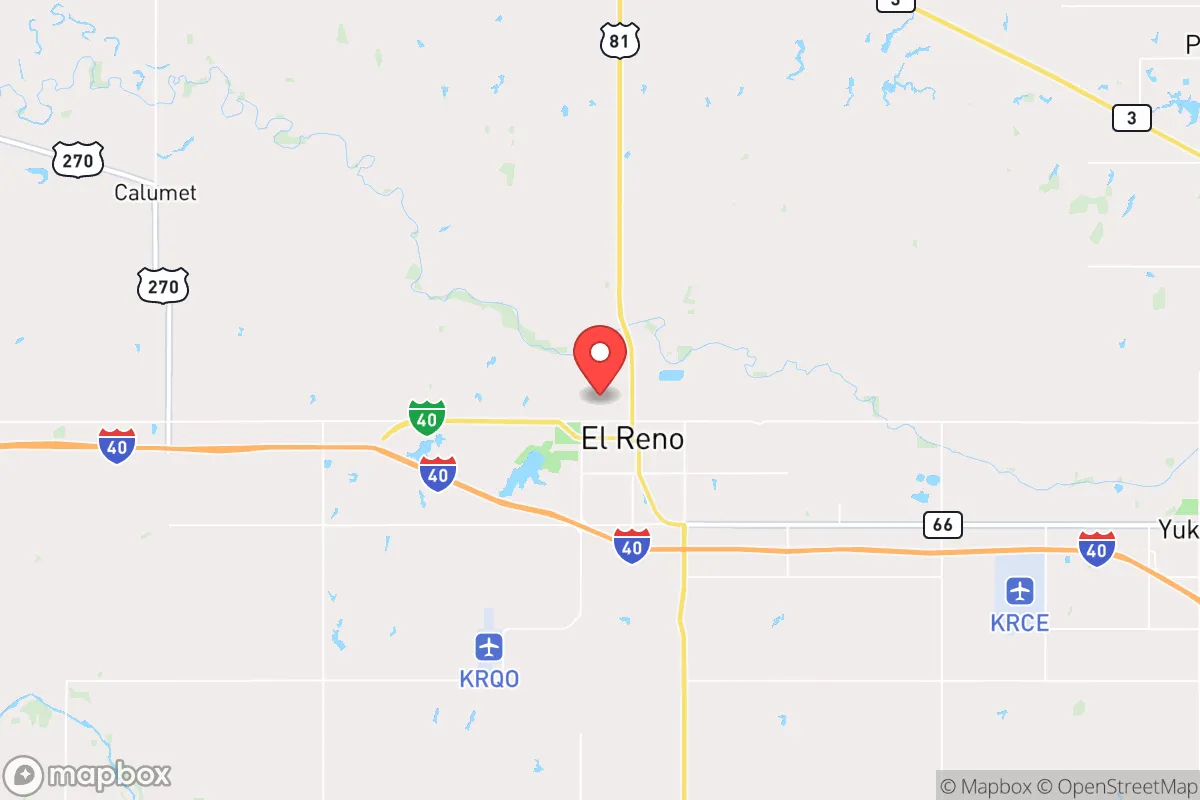
District shown is the primary district for this city’s centroid. Cities may span multiple districts.
Local Political AnalysisPolitical Analysis of El Reno, OK
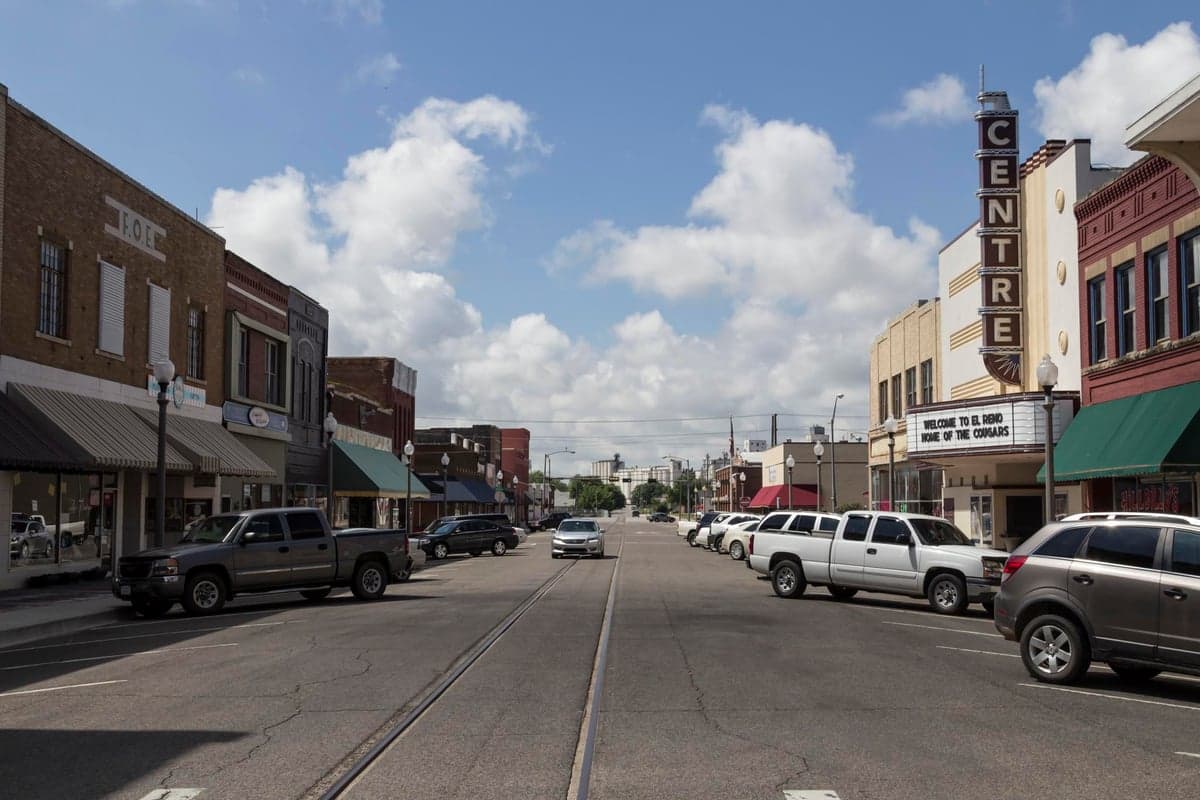
El Reno sits solidly in conservative territory, with a Cook PVI of R+23 that puts it among the most reliably Republican small cities in central Oklahoma. That number isn't just a statistic—it reflects a community where folks have long believed in limited government, personal responsibility, and the right to live without a bunch of bureaucratic red tape in your daily life. The political lean here hasn't shifted much over the decades, though you'll notice a few more progressive-leaning transplants trickling in from Oklahoma City, about 25 miles east, who bring different ideas about how things ought to run. For now, though, El Reno remains a place where conservative values aren't just tolerated—they're the baseline.
How it compares
Drive east toward Oklahoma City proper, and you'll hit a different political world. The capital city leans more moderate-to-liberal, especially in its core neighborhoods, with a Cook PVI closer to D+10 in some precincts. That contrast is stark when you compare property tax rates, zoning rules, and even how local law enforcement operates—El Reno keeps things simpler and more hands-off. To the west, towns like Yukon and Mustang lean conservative too, but not quite as deep as El Reno's R+23 rating. Head north to Kingfisher or south to Chickasha, and you'll find similar small-town conservatism, though El Reno's proximity to the metro area means it faces more pressure from progressive policies bleeding out from the city. The difference is real: in El Reno, you're less likely to see mask mandates, business shutdowns, or heavy-handed land-use restrictions that have become common in bluer areas.
What this means for residents
For someone living here, the political climate translates into fewer headaches over personal freedoms. You won't find the kind of government overreach that's become routine in places like Norman or Tulsa—no surprise business inspections over minor code violations, no school board pushing controversial curriculum without parental input, no city council debating how to restrict your property rights. Local elections tend to be low-key affairs where candidates run on keeping taxes low and government out of the way. The downside? If you're hoping for rapid change on things like infrastructure or public transit, don't hold your breath—conservative governance here means slow, deliberate progress, not sweeping programs. But for most residents, that trade-off is worth it. You keep more of what you earn, you raise your kids with fewer outside influences, and you don't have to worry about the city telling you how to run your business or your home.
One cultural distinction worth noting: El Reno has a strong sense of local identity tied to its agricultural roots and the historic U.S. Route 66 corridor. You'll see that in the annual Fried Onion Burger Day festival and the general skepticism toward any policy that feels like it comes from a distant state capital or Washington. The long-term outlook here is stable but not static—as more people move from bluer states into Oklahoma, there's a quiet concern that the political balance could shift over the next decade. For now, though, El Reno remains a pocket where conservative principles hold firm, and where residents expect their government to stay out of their way.

State Political ClimatePolitical Climate in Oklahoma
State Political AnalysisPolitical Environment in the State
Oklahoma has been a reliably red state for decades, with Republicans holding every statewide office and supermajorities in both legislative chambers, but the political climate here is more nuanced than a simple party label suggests. The state’s overall partisan lean is roughly +33 points Republican in federal elections, a number that has held steady or even widened slightly over the last 10-20 years as rural areas have hardened their conservative identity while urban centers have shifted left. For a conservative-leaning individual or family, Oklahoma offers a policy environment that has consistently prioritized limited government, gun rights, and traditional values, though recent battles over education funding and medical marijuana have introduced new fault lines.
Urban vs. rural divide
The political map of Oklahoma is a study in stark contrasts. The two major metros—Oklahoma City and Tulsa—are the engines of the state’s economy and population, but they are not monolithic. Oklahoma County (Oklahoma City) has been trending purple for a decade; in 2020, Biden pulled 48% of the vote there, and the city itself has a Democratic mayor and a city council that has pushed progressive zoning and police reform measures. Meanwhile, Tulsa remains more conservative overall, but its core has seen a leftward shift driven by younger professionals and a growing arts scene. The real red meat of Oklahoma’s conservative base lies in the rural and exurban counties: Canadian County (west of OKC) voted +51 points Republican in 2024, and Rogers County (northeast of Tulsa) was +44. The panhandle counties like Texas County and Cimarron County are among the most conservative in the nation, with Republican margins exceeding 80 points. The divide is not just geographic but cultural—rural Oklahomans view the state’s cities with suspicion, seeing them as importers of coastal progressive ideas, while urbanites often see the countryside as resistant to necessary modernization.
Policy environment
Oklahoma’s policy environment is a conservative’s dream on paper, but the devil is in the details. The state has a flat income tax rate of 4.75%, which the legislature has been slowly reducing (down from 5% in 2022) with a goal of eventual elimination. Property taxes are among the lowest in the nation, capped by a constitutional amendment that limits annual increases to 5%. On education, the state passed a universal school choice program in 2023—the Oklahoma Parental Choice Tax Credit Act—which provides up to $7,500 per student for private school or homeschooling expenses, a major win for parental rights. However, the public school system remains underfunded, ranking 48th in per-pupil spending, which has led to teacher walkouts and a persistent shortage of qualified educators. Healthcare is a mixed bag: the state rejected Medicaid expansion until 2020, when a ballot initiative forced it through, but the current administration has imposed work requirements and premiums on able-bodied adults. Election laws are strict—voter ID is required, absentee ballots require a notary or two witnesses, and early voting is limited to three days. For a conservative, the regulatory posture is generally light, especially in energy and agriculture, but the state’s heavy reliance on oil and gas revenue means boom-and-bust cycles are a constant concern.
Trajectory & freedom
On the trajectory of freedom, Oklahoma has been a mixed bag over the last five years, but the overall direction is positive for conservatives. The state passed a permitless carry law for firearms in 2019 (HB 2597), allowing any law-abiding adult to carry a concealed handgun without a license, and in 2024 it expanded stand-your-ground protections. On parental rights, the Parents’ Bill of Rights (SB 1147, 2022) requires schools to notify parents of any curriculum involving sexuality or gender identity and to obtain consent before providing mental health services. Medical autonomy took a hit in 2023 when the legislature effectively banned gender-affirming care for minors (SB 613), which conservatives view as protecting children from irreversible procedures. However, the state’s medical marijuana program, approved by voters in 2018, has been a battleground: the legislature has repeatedly tried to tighten regulations, including a failed attempt to ban medical marijuana entirely in 2023. Property rights are strong, with no state-level rent control and a right-to-farm amendment protecting agricultural operations from nuisance lawsuits. The biggest freedom concern for many conservatives is the state’s growing reliance on federal funds—Oklahoma receives about 40% of its budget from Washington, which creates vulnerability to federal mandates.
Civil unrest & political movements
Civil unrest in Oklahoma is relatively muted compared to coastal states, but there have been notable flashpoints. The 2020 George Floyd protests in Oklahoma City and Tulsa saw several nights of property damage and clashes with police, leading to a lasting distrust between law enforcement and activist groups. The Tulsa Race Massacre centennial in 2021 reignited debates over reparations and historical memory, with the city council passing a non-binding resolution supporting reparations studies—a move that angered many conservatives who saw it as divisive. On the right, the Oklahoma Second Amendment Association is a powerful grassroots force that has successfully lobbied for permitless carry and against any gun control measures. Immigration politics are less heated than in border states, but the legislature passed a bill in 2024 (HB 4156) requiring local law enforcement to cooperate with federal immigration authorities and penalizing sanctuary city policies—a direct response to Oklahoma City’s refusal to honor all ICE detainers. Election integrity remains a hot topic: the 2022 gubernatorial race saw allegations of irregularities in Tulsa County, leading to a push for hand-counting ballots in rural precincts, though no major fraud was proven. A new resident would notice the prevalence of “Don’t Tread on Me” flags and pro-life billboards along rural highways, as well as the occasional protest at the state capitol over education funding or medical marijuana regulations.
Projection
Looking ahead 5-10 years, Oklahoma’s political trajectory is likely to remain conservative, but with increasing internal tension. In-migration is accelerating, particularly to the Oklahoma City suburbs like Edmond and Norman, as well as the Tulsa exurbs like Broken Arrow and Owasso. These newcomers are often from California, Texas, and Colorado, and while many are conservative, they bring a more libertarian, less culturally traditionalist bent—they support school choice and low taxes but are less enthusiastic about social issues like abortion restrictions or religious displays in public spaces. The urban cores of OKC and Tulsa will continue to drift left, potentially flipping Oklahoma County to blue in presidential elections within a decade, which would make the state a battleground for the first time since 2000. The rural-urban divide will widen, with rural counties becoming even more conservative as they depopulate and urban areas grow. The biggest wildcard is the state’s budget: if oil prices remain volatile, the legislature may be forced to raise taxes or cut services, which could fracture the Republican supermajority. For a conservative moving in now, expect the state to remain a safe haven for gun rights, school choice, and low taxes, but prepare for more cultural clashes as the population diversifies.
For a new resident, the bottom line is that Oklahoma offers a high degree of personal freedom and a government that is generally on your side if you value limited intervention in your life. The schools are a weak point if you rely on public education, but the school choice program gives you options. The political climate is stable and conservative, but don’t expect a monolith—the cities are changing, and the state’s future will be shaped by how well rural and urban conservatives can find common ground. If you’re looking for a place where your rights are respected and your taxes are low, Oklahoma is a solid bet, just keep an eye on the growing urban influence and the budget pressures that could shift the landscape in the next decade.
* Values derived from national, state, county, city and local statistics and may differ in a specific area. Last updated: 2026-04-25T13:51:37.000Z
Narrative content on this page is AI-generated and may contain mistakes. Verify any details that matter before acting on them.
ReloMaps may earn a commission from affiliate links at no extra cost to you.

