Photo: Wikipedia
Demographics of Everett, MA
Affluence Level in Everett, MA
A middle-class area roughly in line with national averages across income, home values, education, and employment.
People of Everett, MA
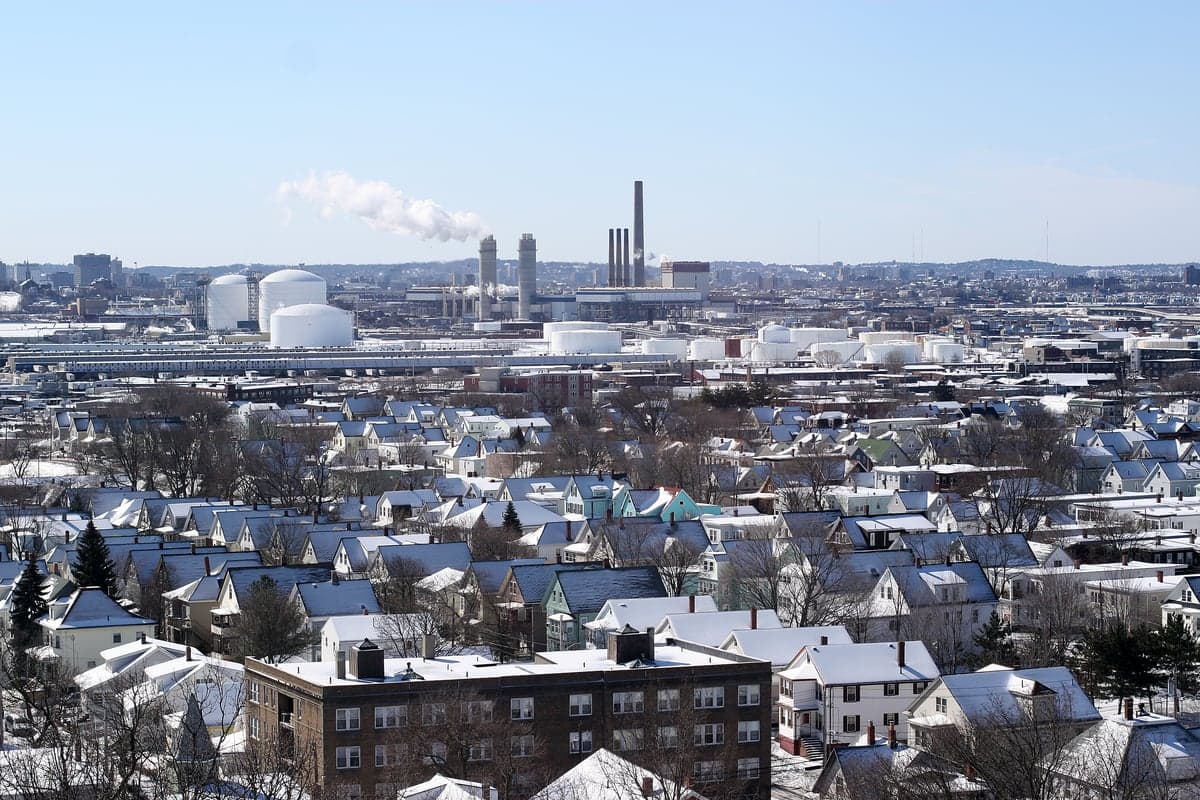
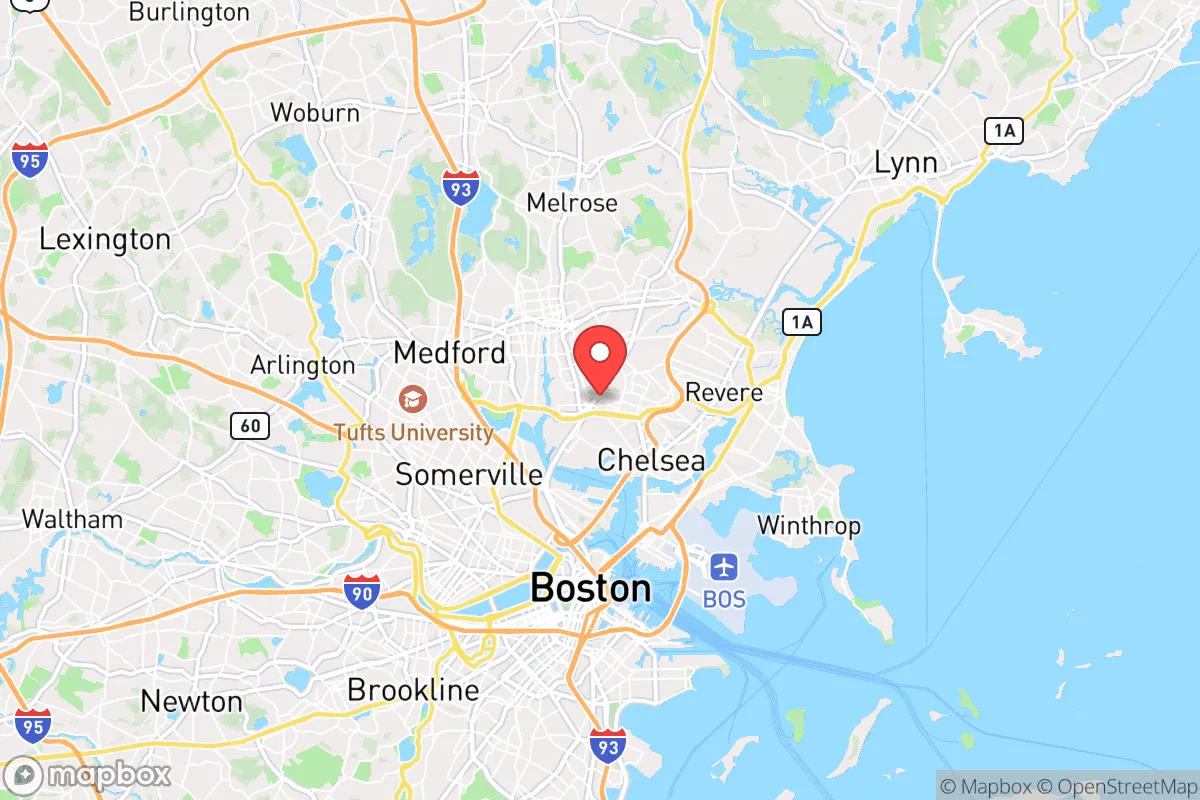
The people of Everett, Massachusetts today form one of the densest and most ethnically diverse urban populations in the Boston metro area, with 49,236 residents packed into just 3.4 square miles. The city is a majority-minority community where no single racial or ethnic group holds a numerical majority: White residents make up 37.9% of the population, Hispanic or Latino residents 31.3%, Black residents 11.6%, East and Southeast Asian residents 5.6%, and Indian-subcontinent residents 2.2%. Nearly three in ten residents (29.0%) are foreign-born, giving Everett a distinctly immigrant character that sets it apart from many neighboring suburbs, while the college-educated share sits at a modest 23.5% — reflecting a working-class, blue-collar identity that has persisted for generations.
How the city was settled and grew
Everett was originally part of Malden and was incorporated as a separate town in 1870, then chartered as a city in 1892. Its early growth was driven by industry along the Mystic River and the arrival of the Boston & Maine Railroad, which made the area a hub for manufacturing, chemical plants, and oil refining. The first major wave of immigrants were Irish laborers who built the railroads and worked in the factories, settling in the Glendale and Woodlawn neighborhoods, where Irish-American families remained a dominant presence well into the 20th century. By the early 1900s, Italian immigrants arrived in large numbers, drawn by construction and dock work, and established a strong community in the Corey Street area and around the Everett Square commercial district. A smaller but notable wave of Jewish immigrants from Eastern Europe settled near the Parlin Street corridor, though most later moved to suburbs. These groups — Irish, Italian, and Jewish — defined Everett’s political and cultural life through the mid-20th century, with the city becoming known as a tight-knit, heavily Catholic, union-oriented community.
Modern era (post-1965)
The 1965 Hart-Celler Act reshaped Everett’s population dramatically. The first post-1965 arrivals were Portuguese and Brazilian immigrants, who settled in the Glendale and Lower Broadway areas, opening restaurants, bakeries, and small markets. By the 1980s and 1990s, a large wave of Haitian immigrants arrived, concentrating in the Corey Street and Santilli Circle neighborhoods, and today Haitian Creole is widely spoken in those blocks. The most transformative shift began in the 2000s: Hispanic immigration, primarily from El Salvador, Guatemala, and Colombia, surged. Hispanic residents now make up nearly a third of the city, with the highest concentrations in the Woodlawn and Everett Square areas, where bodegas, Latin American groceries, and Spanish-language churches have become fixtures. East and Southeast Asian communities — largely Vietnamese and Cambodian — arrived in smaller numbers during the 1990s and 2000s, settling near the Mystic River corridor and around Revere Beach Parkway. Indian-subcontinent residents, a more recent and smaller wave, have clustered near the Wellington station area for access to the Orange Line. The White population, which was over 90% as recently as 1980, has fallen to 37.9%, as older Irish and Italian families aged out or moved to suburbs like Saugus and Woburn.
The future
Everett’s population is trending toward further diversification, but not toward homogenization. The Hispanic share is still growing, driven by both immigration and higher birth rates, and is projected to become the largest single group within the next decade. The East and Southeast Asian and Indian-subcontinent populations are growing slowly but steadily, attracted by the city’s relatively lower housing costs compared to Boston and Cambridge. The White population is likely to continue declining as older residents pass away or sell homes, though a small influx of younger, college-educated White professionals — priced out of Somerville and Medford — has begun in the Glendale and Lower Broadway areas. The city is not tribalizing into hostile enclaves, but distinct ethnic neighborhoods persist: Corey Street remains heavily Haitian, Woodlawn is predominantly Hispanic, and Glendale retains a mix of older Irish and newer Brazilian families. The foreign-born share (29.0%) is near its peak and may plateau as second-generation children assimilate and move outward.
For someone moving in now, Everett is a dense, working-class city where immigrant energy is the dominant force, but where the old Irish-Italian political machine still holds influence. It is not a gentrifying suburb — it is a blue-collar gateway city where new arrivals from Latin America and the Caribbean are reshaping the culture, while the infrastructure and schools struggle to keep pace. The city is becoming more Hispanic, more diverse, and younger, but it remains a place where neighborhood identity matters and where the sense of being an ethnic enclave is still strong.

* Values derived from national, state, county, city and local statistics and may differ in a specific area. Last updated: 2026-05-01T04:52:37.000Z
Narrative content on this page is AI-generated and may contain mistakes. Verify any details that matter before acting on them.
ReloMaps may earn a commission from affiliate links at no extra cost to you.

