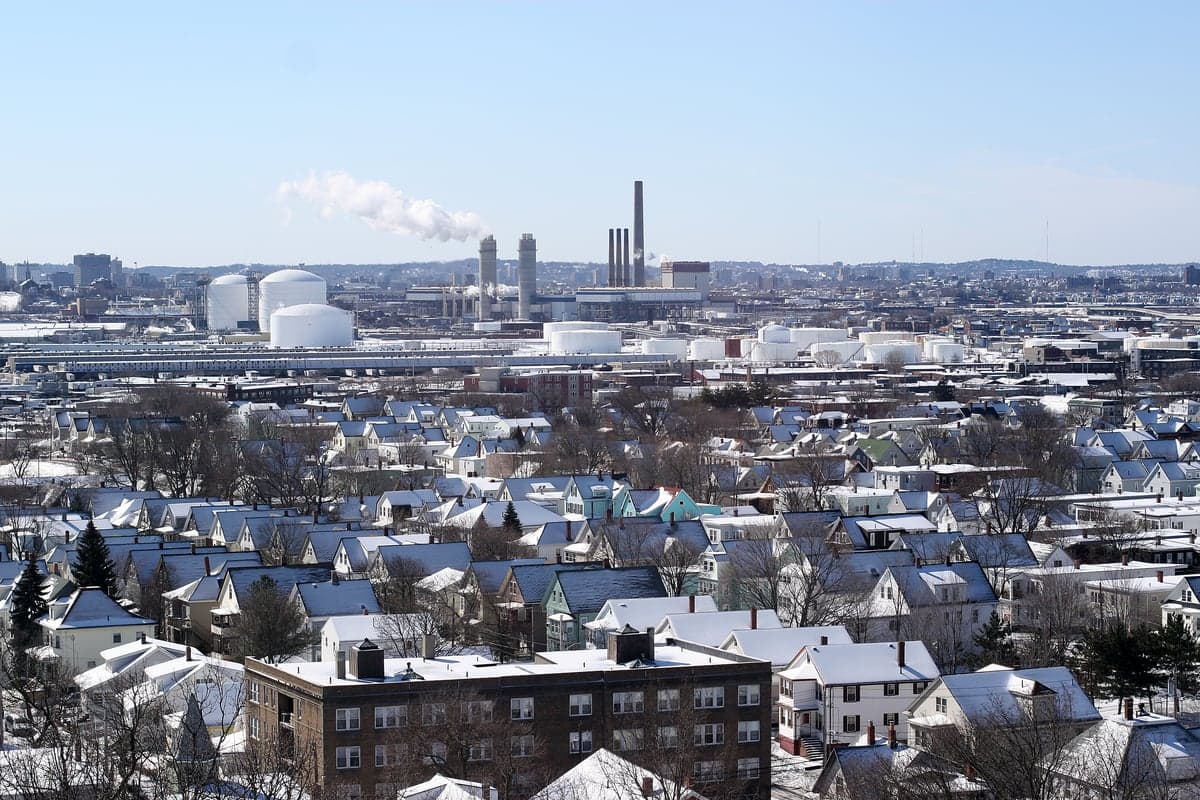
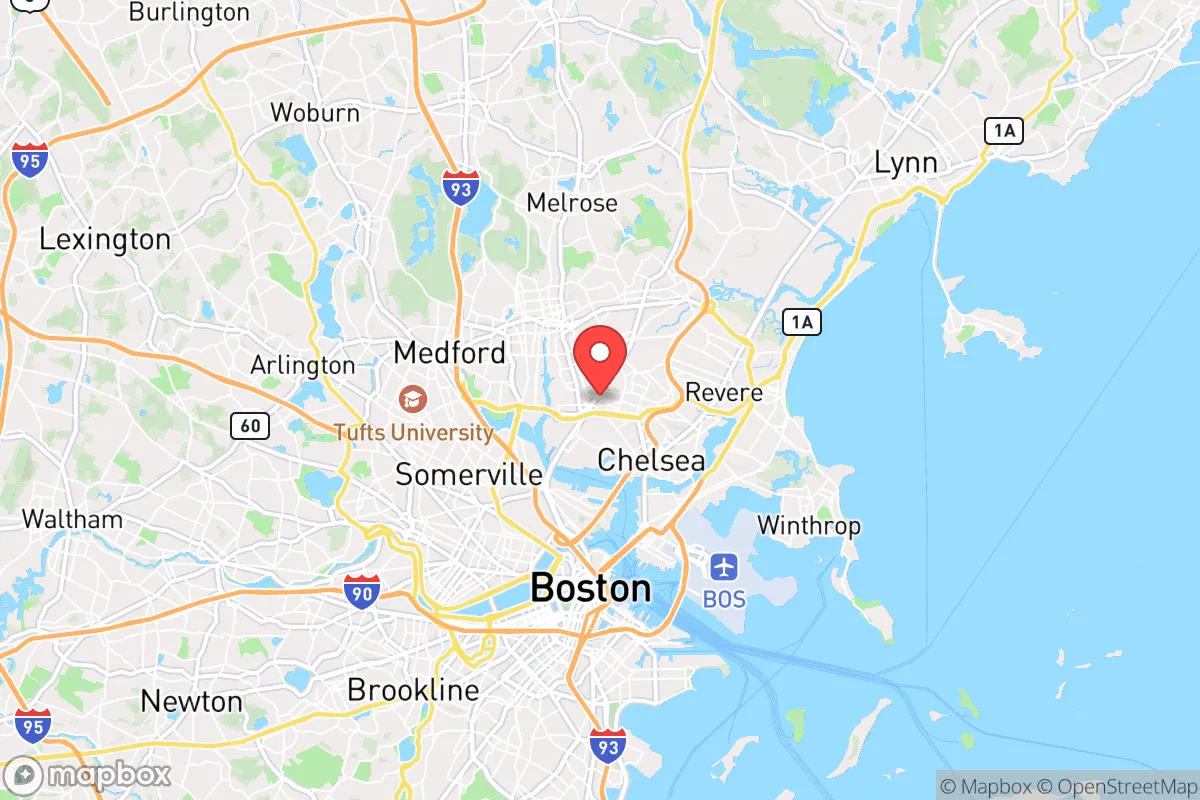
Photo: Wikipedia
Personal Sovereignty in Everett, MA
Viable for self-reliance. Generally workable, though some barriers may limit total independence.
What does Personal Sovereignty tell us?
Personal Sovereignty measures your capacity for self-reliance and independence with minimal government friction. Higher scores mean fewer barriers between you and the way you want to live... but it assumes you have the space you need and good neighbors.
What does this tell us?
Personal Sovereignty measures your capacity for self-reliance and independence with minimal government friction. Higher scores mean fewer barriers between you and the way you want to live... but it assumes you have the space you need and good neighbors.
State Policy
Energy independence: Importer (5% of energy produced in-state)
Personal Liberty
Homesteading

Personal Liberty Analysis
Everett, Massachusetts presents a challenging environment for personal sovereignty, where state-level policies significantly constrain individual autonomy in ways that may concern those prioritizing self-reliance and minimal government overreach. As a densely populated urban suburb of Boston, Everett operates under Massachusetts’ broad regulatory framework, which consistently ranks among the most restrictive in the nation for gun rights, tax burdens, and personal liberties. For a conservative-leaning individual or family evaluating relocation, the city offers limited room for independent action, with state mandates often overriding local discretion. This analysis examines the specific factors shaping personal sovereignty in Everett, from tax and regulatory climates to self-defense laws and homesteading feasibility, providing a clear-eyed assessment for those seeking greater control over their lives.
Tax burden and regulatory posture: How Massachusetts limits financial autonomy
Massachusetts imposes one of the highest combined state and local tax burdens in the country, directly impacting financial sovereignty for Everett residents. The state’s flat income tax rate of 5.0% applies to all earned income, with no deductions for local taxes, while the sales tax stands at 6.25% — among the highest in New England. Property taxes in Everett are moderate for the region, with an effective rate around 1.2% of assessed home value, but the city’s high real estate prices mean annual bills often exceed $6,000 for a median-priced home. The regulatory environment is equally restrictive: Massachusetts has a stringent building code, extensive environmental permitting through the Massachusetts Environmental Policy Act (MEPA), and local zoning that heavily favors dense development over individual property rights. For those seeking to modify their homes, start a small business, or engage in any land use beyond standard residential occupancy, the permitting process is slow and costly. The state’s energy policies, including mandates for renewable energy adoption and strict emissions standards, further limit personal choice in vehicle and home heating options. Overall, the tax and regulatory posture in Everett reflects a system that prioritizes collective goals over individual financial autonomy, making it a poor fit for those who value keeping more of their earnings and making independent property decisions.
Self-defense and gun law specifics: What Everett residents face under Massachusetts law
Massachusetts has some of the most restrictive gun laws in the United States, and Everett residents must navigate a complex, permission-based system to exercise their Second Amendment rights. The state requires a License to Carry (LTC) for both open and concealed carry, which is issued by local police departments — in Everett, the process involves a background check, fingerprinting, a firearms safety course, and a discretionary review by the licensing authority. While Massachusetts is a "may-issue" state in practice, Everett’s police chief has historically been more restrictive than some suburban counterparts, with anecdotal reports of denials or delays for applicants without a clear "good reason" beyond self-defense. The state bans so-called "assault weapons" by name and feature, limits magazine capacity to 10 rounds, and requires all firearm transfers to go through a licensed dealer with a background check. Stand-your-ground laws do not exist; Massachusetts imposes a duty to retreat in public spaces before using deadly force, and self-defense claims are subject to rigorous scrutiny. For preppers and survivalists, the inability to legally own standard-capacity magazines, certain rifle platforms, or suppressors (which are banned outright) represents a significant erosion of personal security autonomy. The state’s firearm storage laws also mandate that guns be locked when not in use, adding another layer of government oversight into private homes. For those prioritizing self-defense as a core component of personal sovereignty, Everett and Massachusetts as a whole present substantial legal barriers.
Self-reliance and homesteading viability: Lot sizes, zoning, and off-grid feasibility in an urban setting
Everett’s dense urban character makes traditional homesteading or off-grid living nearly impossible, severely limiting self-reliance for those seeking to reduce dependence on external systems. The city’s zoning is almost entirely residential and commercial, with minimum lot sizes typically around 5,000 to 7,000 square feet for single-family homes, but most properties are smaller, with many multi-family units on lots under 3,000 square feet. Raising livestock is prohibited in most residential zones, and even backyard chickens require a special permit that is rarely granted. Gardening is possible on small plots, but soil contamination from industrial history is a concern, and community garden space is limited. Off-grid systems face multiple barriers: Massachusetts building codes require connection to municipal water and sewer, solar panels must be grid-tied to qualify for net metering, and rainwater collection is restricted by state health regulations. The city’s high population density (over 10,000 people per square mile) means noise, light, and air pollution are constant, making any attempt at a self-sufficient lifestyle impractical. For those considering long-term resilience, Everett offers no realistic path to homesteading, food production, or energy independence. The best option for self-reliance in this area would be to look at towns farther west in Middlesex County or into Worcester County, where larger lots and more permissive zoning allow for greater autonomy.
Personal liberties: Parental rights, medical autonomy, speech, and property in Massachusetts
Personal liberties in Everett are heavily shaped by Massachusetts state law, which often prioritizes government authority over individual and parental rights. On parental rights, the state mandates comprehensive sex education in public schools, requires parental notification for certain medical procedures but not all (abortion for minors requires parental consent, but gender-affirming care does not), and has a strong child protective services system that can intervene in family decisions with low thresholds. Medical autonomy is constrained by the state’s vaccine mandates for school attendance, which include COVID-19 shots for K-12 students, and strict prescription drug monitoring programs that limit access to controlled substances. Free speech is generally protected under the First Amendment, but Massachusetts has broad hate speech laws and public assembly restrictions that can be used to limit protests or political expression deemed disruptive. Property rights are the most constrained area: the state’s strong eminent domain powers, coupled with rent control possibilities (though currently banned, it’s a recurring legislative proposal), and strict environmental regulations mean that what you can do with your land is heavily dictated by state and local boards. For a conservative audience concerned with government overreach, these policies represent a consistent pattern of state intrusion into family, medical, and property decisions, leaving little room for individual discretion or dissent.
In summary, Everett, Massachusetts offers a low-sovereignty environment compared to many other parts of the country, particularly states in the South, Midwest, or Mountain West that prioritize individual autonomy. The combination of high taxes, restrictive gun laws, dense urban zoning that precludes self-reliance, and state-level mandates on education, healthcare, and property use creates a system where personal freedom is secondary to collective regulation. For a survivalist or prepper mindset, Everett is a location to avoid unless one is willing to accept significant limitations on self-defense, financial independence, and the ability to live according to one’s own values. Those seeking greater personal sovereignty would be better served by researching areas in New Hampshire, Texas, or Idaho, where tax burdens are lower, gun laws are more permissive, and zoning allows for genuine self-reliance. Everett remains a viable option only for those whose priorities align with dense urban living and who are comfortable with a high degree of government involvement in daily life.

* Values derived from national, state, county, city and local statistics and may differ in a specific area. Last updated: 2026-05-01T04:52:37.000Z
Narrative content on this page is AI-generated and may contain mistakes. Verify any details that matter before acting on them.
ReloMaps may earn a commission from affiliate links at no extra cost to you.

