Photo: Wikipedia
Strategic Assessment of Fayetteville, NC
Meaningful friction. Expect exposure to either population pressure, blast zones, or natural disaster risk. Consider buying a retreat property.
What does the Strategic Assessment tell us?
Our Strategic Assessment grades tactical survivability of an area. Major population centers, military targets, fallout zones, natural disasters, and border exposure all drive risk — lower exposure means a more defensible position in a crisis.
This is heavily inspired by Joel Skousen's Strategic Relocation book. Highly recommended you checkout the book ($)What does this tell us?
Our Strategic Assessment grades tactical survivability of an area. Major population centers, military targets, fallout zones, natural disasters, and border exposure all drive risk — lower exposure means a more defensible position in a crisis.
This is heavily inspired by Joel Skousen's Strategic Relocation book. Highly recommended you checkout the book ($)Strategic Pillars

Key Distances
Regional Safe Places
Below is our recommended "safe zones" in North Carolina and the surrounding area based on our strategic heuristics. For most people, it's unrealistic to live in a “safe zone” full-time due to work, family or other personal reasons. They tend to be more rural. However, many of these areas are perfect for second homes and retreat properties that double as a vacation home or even a short-term rental.

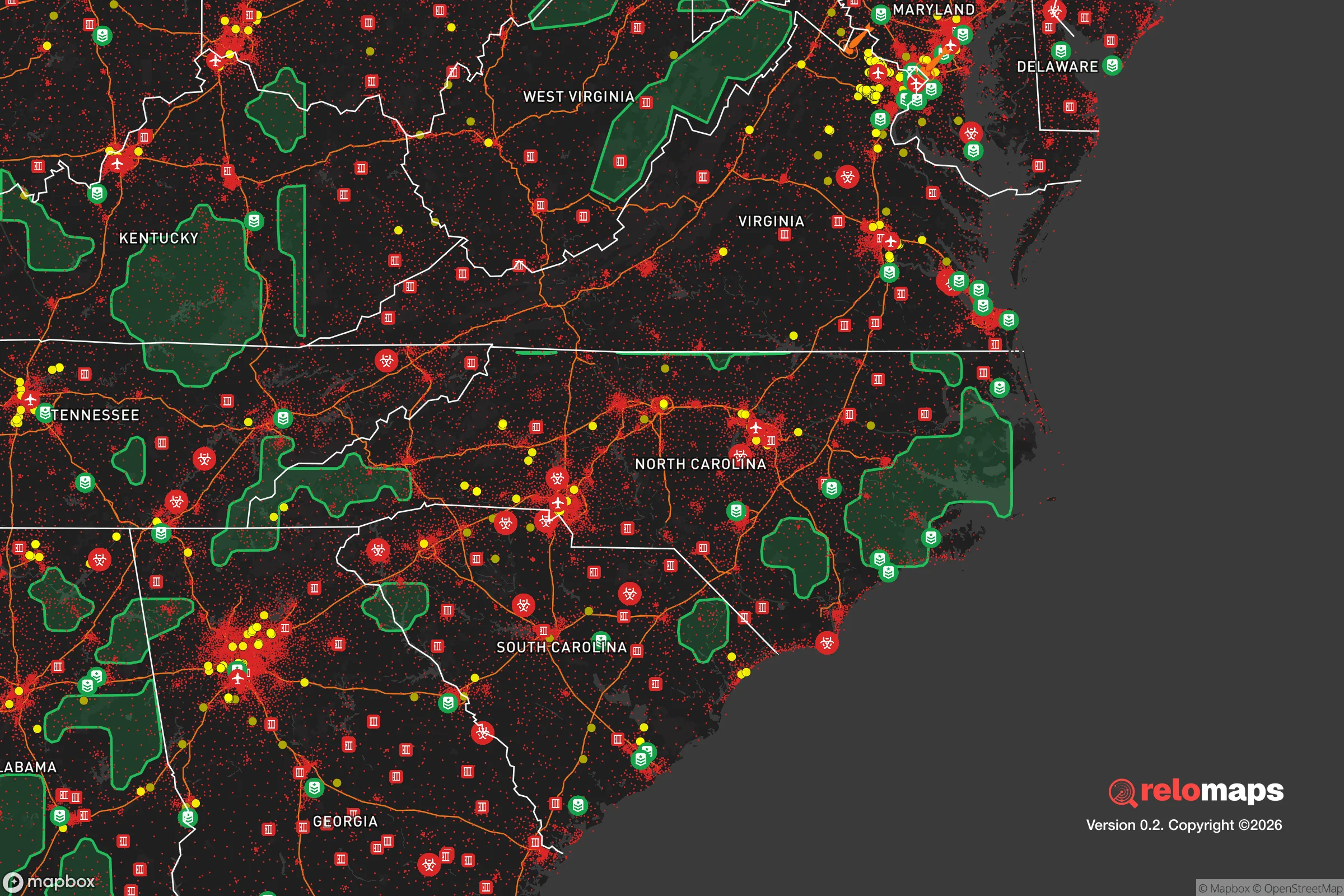


Important Note: For informational purposes only. This does not mean nothing bad ever happens in the green zones. Please use common sense. This is based on public data and modeled with AI. We tried to take a conservative approach but mistakes happen. We update this regularly as new information becomes available.
Solar Generator Recommendations
Backup power matters more here than in safer locations. We've picked three solar generators across budgets and capacity tiers — start with the budget unit if you only need a few essentials, or step up if you want to run a fridge and HVAC for days at a time.

Jackery Portable Power Station Explorer 300
Budget OptionPower on the Go: Weighing only 11 lbs, it's convenient to set up and store with book-sized foldable solar panels

BLUETTI Portable Power Station AC180
Designed for both indoor and outdoor scenarios, AC180 is highly capable as it has a robost capacity and continuous output power.

EF ECOFLOW DELTA Pro Ultra Power Station
Upgraded PickEcoFlow DELTA Pro Ultra is a whole-home energy system designed to grow with your family. Integrated with the Smart Home Panel 2, it scales to meet your evolving energy needs — keeping your home powered, intelligent, and secure through every stage of life.
We earn a commission, at no additional cost to you.
Strategic Assessment Analysis
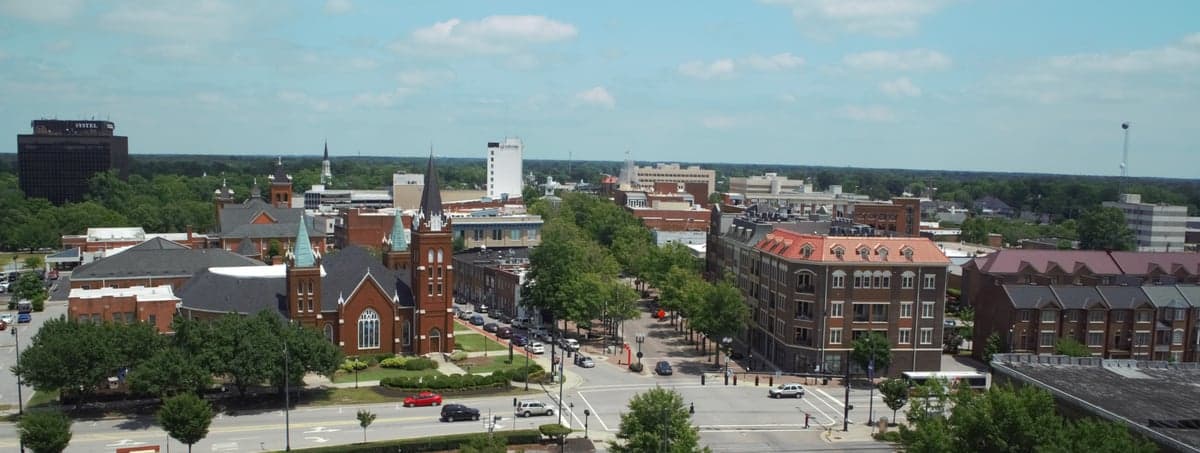
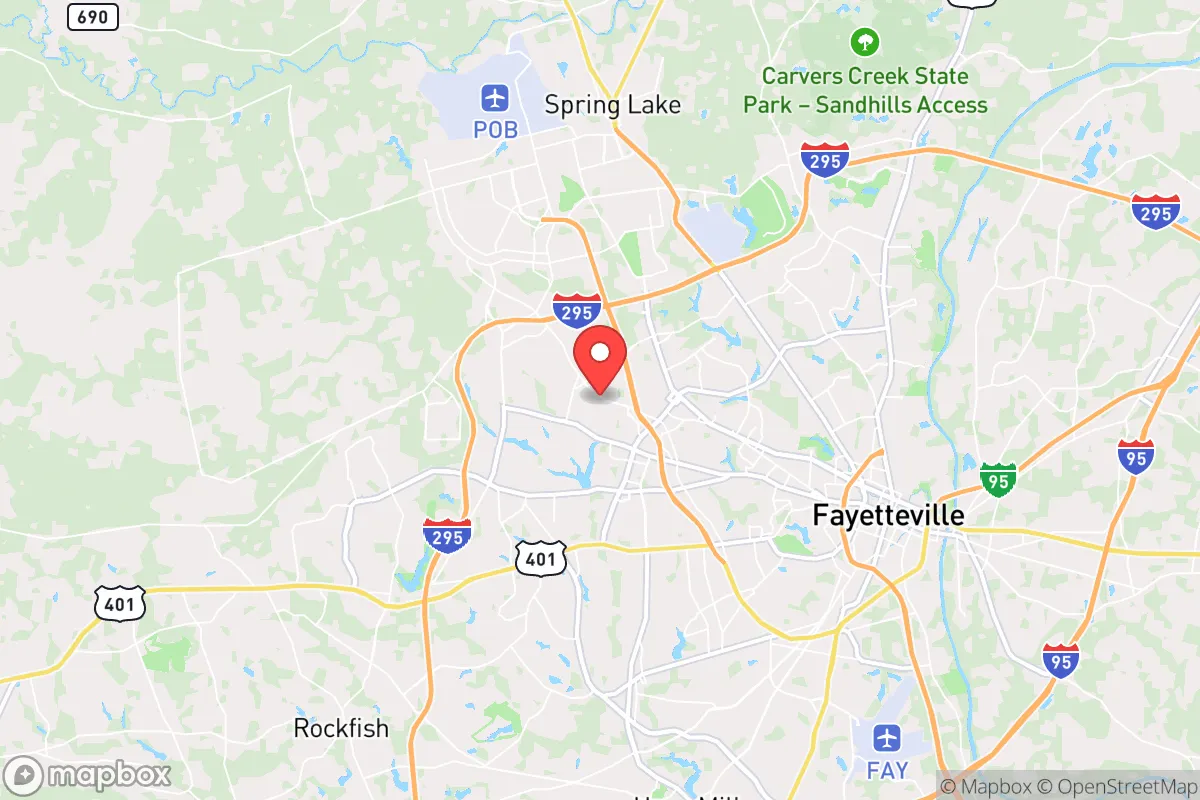
Fayetteville, North Carolina, sits at a strategic crossroads that offers both opportunity and risk for those prioritizing long-term resilience. Its location roughly 60 miles south of Raleigh and 90 miles west of the coast places it within a day’s drive of major population centers, yet far enough to avoid the immediate blast radius of a high-value target. The city’s proximity to Fort Liberty (formerly Fort Bragg), one of the largest military installations in the world, means a robust infrastructure, a steady influx of disciplined residents, and a local economy that doesn’t hinge on a single industry. For a relocator with a prepper mindset, Fayetteville presents a mixed bag: it’s not a remote bunker, but it’s not a soft urban target either. The key is understanding where the vulnerabilities lie and whether the area’s advantages outweigh its exposures.
Geographic position and natural advantages for long-term survival
Fayetteville’s geography is defined by the Cape Fear River, which runs through the city and provides a reliable freshwater source—a critical asset in any grid-down scenario. The surrounding terrain is mostly flat to gently rolling, with the Sandhills region to the west offering slightly higher ground and pine forests that can support hunting, foraging, and timber for construction. The climate is temperate, with mild winters and long growing seasons (USDA hardiness zones 7b to 8a), meaning year-round food production is feasible with basic greenhouse or cold-frame techniques. The area is also far enough inland to avoid the worst of hurricane storm surge, though it still catches tropical storm remnants. For a relocator, the natural advantages are real: ample water, arable land, and a climate that doesn’t require extreme heating or cooling. The city itself sits at an elevation of around 100 feet, so flooding is a concern near the river, but higher ground exists in the western suburbs like Hope Mills and Raeford. If you’re looking to establish a semi-rural homestead within an hour of a major military base, this region offers a solid foundation.
Risks, exposures, and proximity to fallout-relevant landmarks
The single biggest risk for Fayetteville is its proximity to Fort Liberty. While the base provides economic stability and a large pool of trained personnel, it also makes the city a potential target for any adversary seeking to disrupt U.S. military operations. In a major conflict or terrorist event, Fort Liberty would be a high-priority target for conventional or asymmetric attacks. Additionally, the city lies within 100 miles of the coast, meaning a nuclear detonation at the Port of Wilmington or a naval facility could produce fallout patterns that drift inland depending on wind direction. The Cape Fear River also hosts the Progress Energy nuclear plant near Southport, about 70 miles downstream—a potential radiological hazard if compromised. On the civic unrest front, Fayetteville has a history of crime rates above the national average, particularly property crime and violent crime in certain neighborhoods. During a breakdown of order, the city’s population of roughly 210,000 (metro area around 530,000) could become a liability, especially with the transient military population and associated social tensions. The presence of I-95 and I-295 means evacuation routes are well-defined but could become clogged during a mass exodus from the coast or Raleigh. For the prepper, these risks are manageable if you choose a location outside the immediate blast radius of the base and maintain situational awareness of local crime hotspots.
Practical resilience for a relocator: food, water, energy, and defensibility
For someone serious about self-sufficiency, Fayetteville offers a workable baseline. The Cape Fear River and its tributaries (like the Little River and Cross Creek) provide surface water, but you’ll need filtration or purification—municipal water treatment could fail in a prolonged outage. Well water is an option in rural areas outside city limits, with typical depths of 100-300 feet in the Sandhills. The growing season runs from April to October, and the soil in the Sandhills is sandy and acidic, requiring amendment for vegetable gardens, but the region is known for peaches, pecans, and timber. Local farmers’ markets and agricultural co-ops exist, but for a serious prepper, you’d want to establish your own food sources or build relationships with nearby farms. Energy-wise, the grid is moderately reliable, but Duke Energy serves the area, and outages from hurricanes or ice storms are common enough that a backup generator or solar setup is wise. Natural gas is available in the city, but propane tanks are more common in rural areas. Defensibility is a mixed picture: the flat terrain offers few natural chokepoints, but the dense pine forests can provide cover and concealment. A property with a long driveway, perimeter fencing, and a clear line of sight to approach routes would be ideal. The local gun culture is strong, with multiple ranges and gun shops, and North Carolina is a shall-issue state for concealed carry, with no permit required for open carry. For a relocator, the practical takeaway is that Fayetteville is not a prepper paradise, but it’s far from a death trap. You can secure water, grow food, and defend a property if you’re intentional about location and preparation.
Overall, Fayetteville presents a strategic picture that rewards careful planning. It’s not a remote redoubt, but it’s also not a coastal city or a major political hub that would be a first-strike target. The military presence is a double-edged sword: it brings resources and a resilient population, but it also raises the risk profile. For a conservative-leaning relocator concerned about civic unrest, economic collapse, or natural disasters, the area offers a middle ground—close enough to infrastructure and markets to be practical, far enough from the worst fallout zones to give you a fighting chance. The key is to avoid the high-crime neighborhoods, secure a property with access to well water and defensible terrain, and build a network with like-minded locals. If you’re looking for a place that balances accessibility with a reasonable survival calculus, Fayetteville deserves a spot on your short list—just don’t expect it to be a bug-out location. It’s a base of operations, not a fortress.

* Values derived from national, state, county, city and local statistics and may differ in a specific area. Last updated: 2026-04-21T19:18:20.000Z
Narrative content on this page is AI-generated and may contain mistakes. Verify any details that matter before acting on them.
ReloMaps may earn a commission from affiliate links at no extra cost to you.

