Photo: Wikipedia
Political ClimatePolitical Climate in Fayetteville, NC
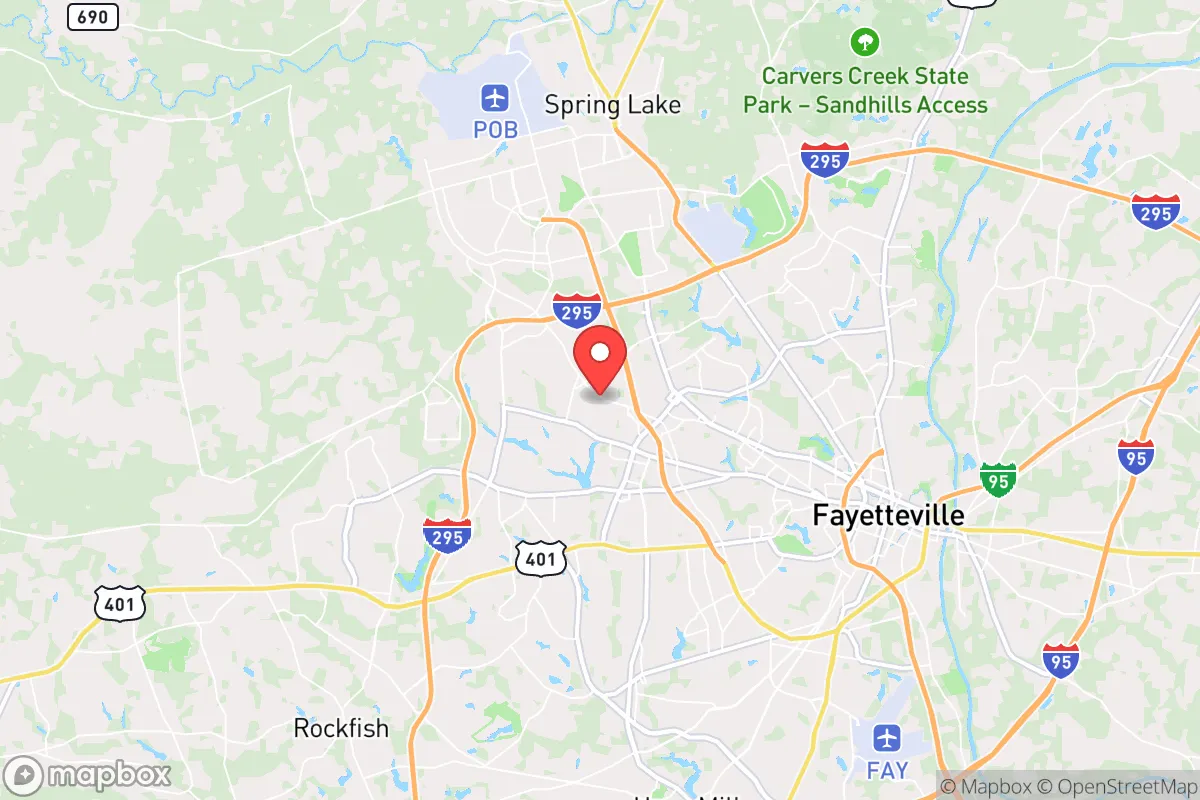
District shown is the primary district for this city’s centroid. Cities may span multiple districts.
Local Political AnalysisPolitical Analysis of Fayetteville, NC
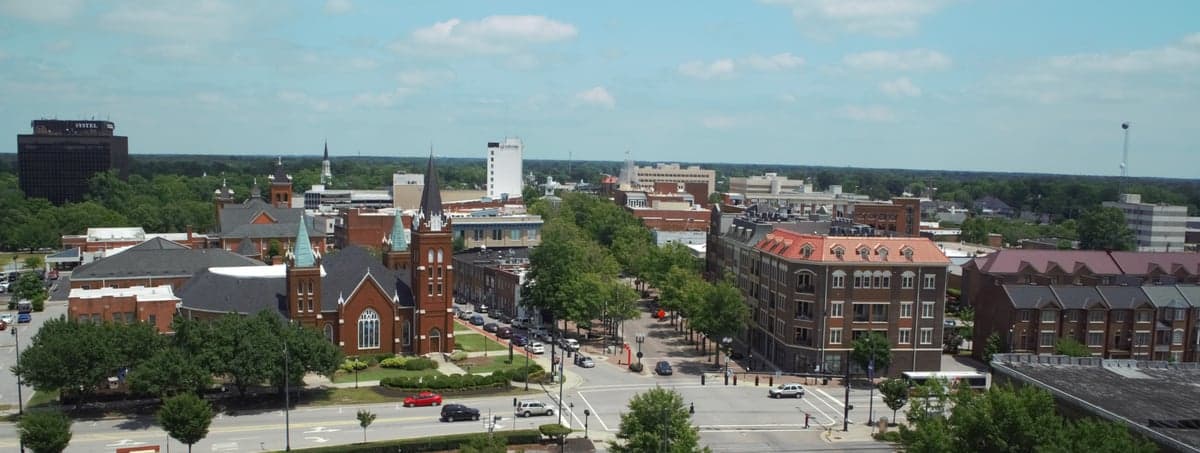
Fayetteville’s political climate has long been shaped by its deep military roots, but the ground is shifting under our feet. The city itself sits in Cumberland County, which has a Cook PVI of R+8, meaning it leans reliably Republican by a solid eight points compared to the national average. That’s a pretty clear signal that, historically, this area has favored conservative values—limited government, personal responsibility, and a strong national defense. But if you’ve been here as long as I have, you’ve noticed the winds changing, especially in the last five to ten years, with more progressive policies creeping into local governance and a growing tension between the old guard and the newcomers.
How it compares
Drive just 30 minutes south to Hope Mills or Spring Lake, and you’ll find communities that still feel like the Fayetteville I grew up in—folks who wave the flag, keep their lawns tidy, and don’t want the city telling them how to live. Head north toward Raleigh, though, and you’re in a whole different world. The contrast is stark: Fayetteville’s R+8 lean is a buffer against the kind of heavy-handed policies you see in Wake County, but it’s not a fortress. Nearby towns like Southern Pines and Pinehurst, with their older, wealthier populations, vote even more conservatively, while the city core of Fayetteville has seen a slow but steady influx of transplants who bring big-city ideas about zoning, taxes, and social programs. It’s a real mixed bag, and the political map here looks like a checkerboard—red precincts in the suburbs, blue pockets near the universities and downtown.
What this means for residents
For those of us who value personal freedoms, the R+8 rating is a comfort, but it’s not a guarantee. The city council has flirted with progressive initiatives—like expanding public housing mandates and pushing for more restrictive business regulations—that feel like government overreach to longtime residents. Property taxes have crept up, and there’s been talk of adopting “equity” policies that could prioritize group identity over individual merit. If you’re a gun owner, you’ll be relieved to know North Carolina’s preemption laws still protect your rights, but local officials have tried to chip away at that with symbolic resolutions. The military presence—Fort Liberty (still Bragg to me) is the biggest employer—keeps things grounded in a “mission-first” mindset, but the civilian side is increasingly influenced by out-of-state money and activist groups. The bottom line: you can still live your life without much interference, but you’ve got to keep an eye on the ballot box.
One thing that sets Fayetteville apart is its unique blend of Southern hospitality and military discipline. You won’t find the kind of aggressive, top-down social engineering you see in places like Asheville or Chapel Hill. The local culture still prizes self-reliance, and most folks here would rather the government stay out of their business—whether that’s homeschooling, starting a small business, or choosing their own healthcare. But the long-term trend is concerning. If the progressive wave that’s washing over other parts of the state keeps pushing east, Fayetteville could lose its character. For now, it’s a place where you can still have a conversation with your neighbor without worrying about being canceled, but the fight to keep it that way is getting harder every election cycle.

State Political ClimatePolitical Climate in North Carolina
State Political AnalysisPolitical Environment in the State
North Carolina has long been a classic swing state, but over the past decade it has settled into a reliably Republican-leaning posture at the state level, with a GOP-controlled General Assembly and a conservative-leaning Supreme Court. The state voted for Donald Trump in both 2016 and 2024, though by margins under 2% in the latter race, while also electing a Democratic governor (Roy Cooper, then Josh Stein) in consecutive cycles. The real story is the widening urban-rural chasm: fast-growing metros like Charlotte and Raleigh-Durham are becoming bluer by the cycle, while the exurbs, small towns, and rural counties—places like Union County, Johnston County, and the Sandhills—are hardening red. The net effect is a state that feels politically split down the middle, but with a structural advantage for conservatives in legislative maps and a cultural tilt that still favors traditional values in most of the state’s geography.
Urban vs. rural divide
The political map of North Carolina is a textbook case of the urban-rural fracture. The Democratic strongholds are concentrated in a handful of metro cores: Mecklenburg County (Charlotte), Wake County (Raleigh), Durham County, and Buncombe County (Asheville). These four counties alone account for roughly a third of the state’s population and deliver massive Democratic margins—Mecklenburg went +29 for Biden in 2020, Wake +26, Durham +60. Outside those islands, the state is overwhelmingly red. The rural east—counties like Robeson, Columbus, and Duplin—vote Democratic on paper but are culturally conservative and have been trending GOP as national polarization deepens. The real action is in the fast-growing exurbs: Union County (southeast of Charlotte) voted +35 for Trump, while Johnston County (southeast of Raleigh) went +24. These are the places where new arrivals from blue states are settling, but they’re choosing master-planned subdivisions and good schools, not progressive politics. The result is a state where the legislature is safely Republican thanks to district maps that reflect the geographic spread of conservative voters, while statewide races remain toss-ups because the metro cores are so densely packed with Democratic votes.
Policy environment
North Carolina’s policy environment has been steadily conservative since the GOP took full control of the General Assembly in 2011. The state has a flat income tax rate of 4.5%, which is scheduled to drop to 3.99% by 2027 under legislation passed in 2021. There is no state property tax, and the sales tax is capped at 7.5% in most counties. The regulatory posture is business-friendly: North Carolina is a right-to-work state, and the legislature has repeatedly preempted local ordinances on everything from minimum wage hikes to plastic bag bans. On education, the state has a robust school choice program—the Opportunity Scholarship Program now provides vouchers for any K-12 student, regardless of income, to attend private school. The state also has a Parents’ Bill of Rights (HB 755, passed in 2023) that requires schools to notify parents of any changes to a child’s health or well-being, including gender identity issues. On healthcare, North Carolina did expand Medicaid in 2023 under a bipartisan deal, but the program includes work requirements for able-bodied adults and a sunset clause. Election laws have been tightened: voter ID is now required (SB 824, 2018), and the legislature has shortened the early voting period and restricted same-day registration. The overall policy direction is one of limited government, low taxes, and strong parental rights—exactly what a conservative-leaning newcomer would want.
Trajectory & freedom
The trajectory of freedom in North Carolina is mixed but generally positive for conservatives. On the plus side, the state has expanded gun rights significantly: permitless carry (HB 189) became law in 2023, allowing any adult who can legally own a firearm to carry it concealed without a permit. The state also has a strong Stand Your Ground law and preempts all local gun ordinances. Parental rights were strengthened by the Parents’ Bill of Rights mentioned above, and the legislature has repeatedly blocked any attempt to adopt California-style environmental or labor regulations. On the concerning side, the state has seen a slow creep of local government overreach in the blue metros: Charlotte and Raleigh have passed non-discrimination ordinances that effectively create protected classes for sexual orientation and gender identity, and Asheville has a sanctuary city policy that limits cooperation with ICE. The legislature has fought back with preemption laws (HB 142 in 2016, which blocked Charlotte’s bathroom ordinance), but the cultural battle is ongoing. The most significant recent threat to freedom was the 2023 Medicaid expansion, which some conservatives see as a step toward government-run healthcare, though the work requirement and private-market structure mitigate that risk. Overall, North Carolina is still a state where personal liberty is respected, but the blue metros are increasingly acting as islands of progressive governance within a conservative state.
Civil unrest & political movements
North Carolina has seen its share of political flashpoints, but nothing approaching the scale of Portland or Seattle. The most notable unrest came in 2020 after George Floyd’s death, when protests in Charlotte, Raleigh, and Durham turned violent—statues were toppled in Durham, and a courthouse was vandalized in Raleigh. The state’s response was measured: the Democratic governor deployed the National Guard, but the legislature later passed a law (HB 805) increasing penalties for rioting and blocking defunding police efforts. On immigration, the state is not a sanctuary state—in fact, the legislature passed a law in 2015 (HB 318) requiring sheriffs to honor ICE detainers. But some local sheriffs, particularly in Wake and Durham counties, have refused to comply, creating a patchwork of enforcement. The most organized political movement on the right is the John Locke Foundation, a free-market think tank that has driven much of the tax and education reform agenda. On the left, the NC NAACP and Moral Mondays movement have been active since 2013, organizing protests at the legislature over voting rights and Medicaid expansion. Election integrity has been a hot topic since 2020, with the legislature creating a bipartisan election audit committee and passing stricter chain-of-custody rules for absentee ballots. A new resident would notice that political signs are everywhere, yard signs for both parties are common, and people are not shy about discussing politics—but it’s generally civil, not hostile.
Projection
Over the next 5-10 years, North Carolina is likely to become more Republican at the state level, even as the metros get bluer. The key driver is in-migration: the state is adding about 100,000 new residents per year, and the majority are coming from blue states like New York, California, and New Jersey. But these newcomers are not all liberals—many are conservatives fleeing high taxes and crime, and they tend to settle in the exurbs (Union, Johnston, Cabarrus counties) rather than the urban cores. The 2024 election results showed that Trump actually improved his margin in many rural and exurban counties compared to 2020, even as he lost ground in the suburbs. The legislature’s gerrymandered maps are likely to hold for the rest of the decade, meaning conservative control of the General Assembly is secure. The wild card is the governorship: if Republicans can win that office in 2028, the state could see a wave of conservative reforms, including a further income tax cut, school choice expansion, and a ban on sanctuary policies. The most likely scenario is a state that remains purple in presidential elections but red in state government, with a growing cultural divide between the blue metros and the red countryside. For a conservative moving in now, the state will feel increasingly friendly over the next decade, as long as you avoid living in downtown Charlotte or Raleigh.
For a conservative individual or family considering a move, North Carolina offers a strong combination of low taxes, school choice, gun rights, and parental control over education. The state is not without its blue pockets—avoid Mecklenburg, Wake, Durham, and Buncombe counties if you want a truly conservative environment—but the exurbs and rural areas are solidly red and getting redder. The legislature is reliably conservative and has a track record of preempting local progressive overreach. The biggest practical takeaway: choose your county carefully. If you land in Union, Johnston, or Brunswick County, you’ll find a community that shares your values. If you land in Asheville or Durham, you’ll feel like you’re in a different state. North Carolina is still a place where freedom is respected, but it’s a freedom you have to be intentional about protecting—and the best way to do that is to live where the politics match your principles.
* Values derived from national, state, county, city and local statistics and may differ in a specific area. Last updated: 2026-04-21T19:18:20.000Z
Narrative content on this page is AI-generated and may contain mistakes. Verify any details that matter before acting on them.
ReloMaps may earn a commission from affiliate links at no extra cost to you.

