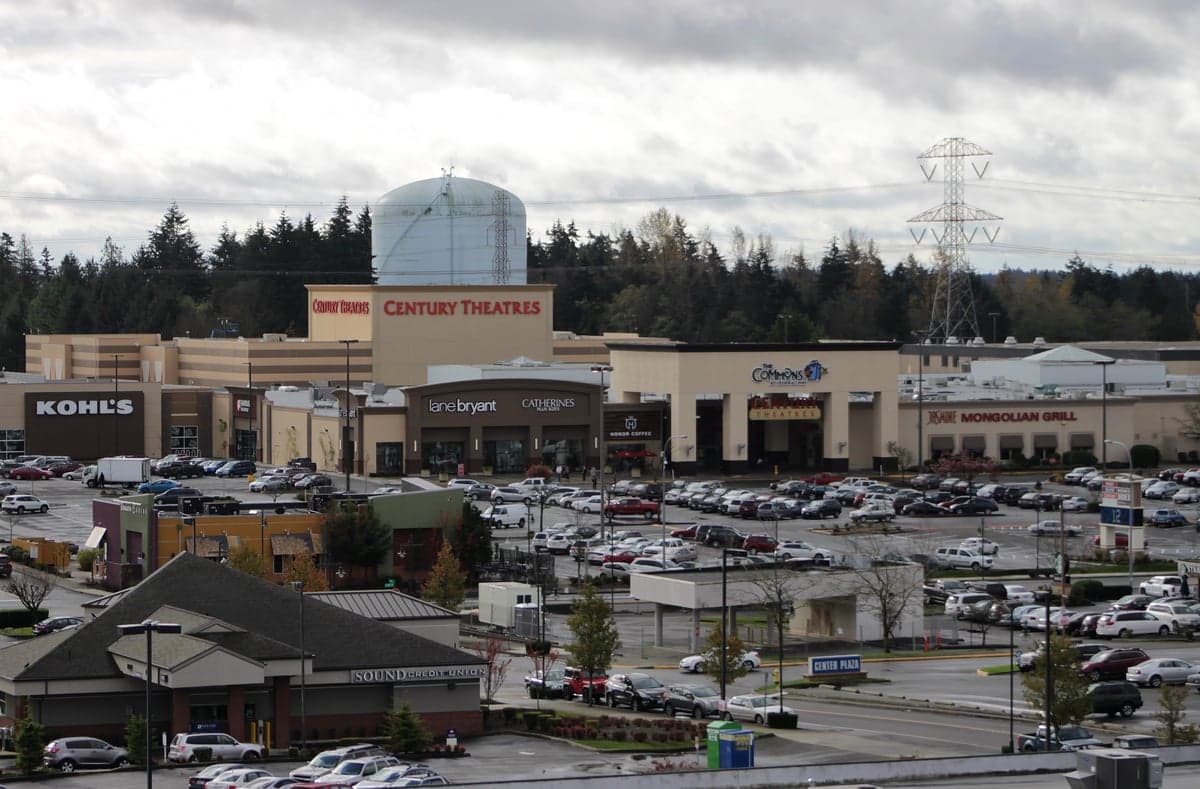
Photo: Wikipedia
Personal Sovereignty in Federal Way, WA
Viable for self-reliance. Generally workable, though some barriers may limit total independence.
What does Personal Sovereignty tell us?
Personal Sovereignty measures your capacity for self-reliance and independence with minimal government friction. Higher scores mean fewer barriers between you and the way you want to live... but it assumes you have the space you need and good neighbors.
What does this tell us?
Personal Sovereignty measures your capacity for self-reliance and independence with minimal government friction. Higher scores mean fewer barriers between you and the way you want to live... but it assumes you have the space you need and good neighbors.
State Policy
Energy independence: Importer (55% of energy produced in-state)
Personal Liberty
Homesteading

Personal Liberty Analysis
For the individualist or prepper evaluating Federal Way, Washington, personal sovereignty is a mixed bag defined by a sharp tension between the state’s progressive regulatory apparatus and the practical realities of living in a mid-sized Puget Sound city. While Washington State as a whole leans heavily into expansive government authority—especially on taxation, health mandates, and land use—Federal Way’s specific geography and local governance offer some breathing room for those willing to navigate the system. The key takeaway: you can carve out a self-reliant life here, but only if you understand exactly where the state’s long arm reaches and where it doesn’t. This analysis breaks down the critical sovereignty factors—tax burden, self-defense law, homesteading feasibility, and personal liberties—so you can decide if this city aligns with your strategic relocation goals.
Tax burden and regulatory posture: how much the state takes and controls
Washington State’s tax structure is a double-edged sword for sovereignty-minded residents. On the plus side, there is no state income tax, which means every dollar you earn stays in your pocket—a major win for self-reliant earners and those building savings for preps. However, the state compensates with some of the highest sales taxes in the nation. Federal Way’s combined state and local sales tax rate sits at 10.1% as of 2026, which hits hard on every purchase of gear, building materials, or bulk supplies. Property taxes are moderate but not negligible; King County levies roughly 1.0% of assessed value, and with home values in Federal Way averaging around $550,000, you’re looking at about $5,500 annually. The regulatory posture is where sovereignty takes a real hit. Washington’s state government is aggressive on environmental and land-use rules—the Growth Management Act heavily restricts rural development, and the Department of Ecology has broad authority over water rights, septic systems, and shoreline buffers. For a prepper, this means you cannot simply buy a plot and do whatever you want; permits are required for most structures, and off-grid systems face rigorous scrutiny. The state also mandates a paid family and medical leave program (deducted from wages) and a long-term care payroll tax (the WA Cares Fund), both of which reduce your control over your own income. Bottom line: you keep more of what you earn than in income-tax states, but the state takes a big cut of what you spend and tells you how you can use your land.
Self-defense and gun law specifics: what you can carry and where
For the survivalist, Washington’s firearm laws have shifted significantly in recent years, and Federal Way sits squarely under state preemption. The most critical change is the 2023 ban on certain semi-automatic firearms (often called “assault weapons”) and high-capacity magazines (over 10 rounds). This law directly impacts preppers who value standard-capacity AR-15s or similar platforms for defense and stockpile purposes. Additionally, the state now requires a 10-day waiting period and a completed background check for all firearm purchases, including private sales (via the state’s universal background check system). Concealed carry is shall-issue, but you must complete a certified training course and obtain a license; open carry is generally legal but restricted in certain public places like courthouses and schools. Federal Way itself has no additional local gun ordinances beyond state law, but the city’s proximity to Seattle means you’ll encounter a heavily anti-gun political climate in the broader region. For self-defense in the home, you are on solid legal ground with the Castle Doctrine—Washington has no duty to retreat if you are in a place you have a right to be. However, the state’s red flag law (Extreme Risk Protection Order) allows law enforcement or family members to petition a court to temporarily seize your firearms if you’re deemed a risk, which is a significant sovereignty concern for anyone who values absolute control over their defensive tools. If you’re a prepper who prioritizes a full firearms inventory, Washington’s current trajectory is restrictive, and Federal Way offers no refuge from that.
Self-reliance and homesteading viability: lot sizes, zoning, and off-grid feasibility
Federal Way is primarily a suburban city, not a rural homesteading zone, which limits self-reliance options for the serious prepper. Typical residential lot sizes range from 5,000 to 10,000 square feet—enough for a large garden and a few chickens, but not for significant livestock or extensive food production. The city’s zoning code allows for backyard chickens (hens only, no roosters) and small-scale vegetable gardens, but any structures like sheds, greenhouses, or detached workshops require building permits. Off-grid feasibility is extremely low within city limits. The city requires connection to municipal water and sewer systems for all habitable structures; rainwater catchment is allowed for non-potable uses (like irrigation) but not as a primary water source. Solar panels are permitted but must meet utility interconnection standards—you cannot simply go off-grid and disconnect from the power grid. For those seeking true self-reliance, you’d need to look at unincorporated King County or neighboring Pierce County, where lot sizes can be 1-5 acres and regulations are looser. However, even there, the Growth Management Act restricts building in rural areas to prevent sprawl, and septic permits are tightly controlled. The practical reality: Federal Way is a good base for a suburban prepper who wants to maintain a low profile and grow some of their own food, but it is not a place for a full-scale homestead or off-grid compound. Your self-reliance here will be more about skills and community networks than land independence.
Personal liberties: parental rights, medical autonomy, speech, and property
On the spectrum of personal liberties, Washington State leans heavily toward government authority over individual choice, and Federal Way reflects that. Parental rights are a flashpoint: the state has strong laws protecting LGBTQ+ student rights in schools, which some parents view as undermining their authority to guide their children’s education and values. The state also mandates comprehensive sex education in public schools, and parents cannot opt out of specific lessons—only the entire curriculum. Medical autonomy took a major hit during the COVID-19 era, with Washington implementing some of the nation’s strictest vaccine mandates for healthcare workers, school employees, and state contractors. While those mandates have eased, the precedent remains: the state demonstrated it will compel medical treatment for public health goals. For the prepper concerned about future mandates, this is a red flag. Free speech is protected under the First Amendment, but Washington has broad hate crime laws and restrictions on “malicious harassment” that can chill certain political expressions. Property rights are the most concerning for a sovereignty-minded individual. The state’s Growth Management Act and the Shoreline Management Act give government broad authority to restrict how you use your land, including prohibiting certain structures, limiting clearing of vegetation, and requiring environmental impact reviews. Eminent domain is also a tool the state uses for infrastructure projects, and property owners have limited recourse. In Federal Way specifically, the city has a rent control-like ordinance limiting rent increases for tenants, which signals a local government comfortable with intervening in private contracts. For the survivalist, the cumulative effect is a legal environment where the state can override your decisions on health, education, and property—so your personal sovereignty is conditional, not absolute.
Overall, Federal Way offers a moderate level of personal sovereignty compared to other areas in the Pacific Northwest, but it falls short of the freedom found in states like Idaho, Montana, or even eastern Washington. The lack of income tax and the Castle Doctrine are genuine advantages, but they are offset by restrictive gun laws, heavy land-use regulation, and a state government that has shown it will override individual choice on health and education. For the strategic relocator with a prepper mindset, Federal Way works best as a transitional or low-profile location—a place to build skills and community while keeping an eye on the exit. If absolute sovereignty is your non-negotiable, you’ll want to look farther east or south. But if you can tolerate a government that takes a cut and sets some rules, Federal Way provides a functional base with decent access to resources and a like-minded network of individuals who value their autonomy.

* Values derived from national, state, county, city and local statistics and may differ in a specific area. Last updated: 2026-04-19T09:38:49.000Z
Narrative content on this page is AI-generated and may contain mistakes. Verify any details that matter before acting on them.
ReloMaps may earn a commission from affiliate links at no extra cost to you.

