Photo: Wikipedia
Demographics of Federal Way, WA
Affluence Level in Federal Way, WA
A middle-class area roughly in line with national averages across income, home values, education, and employment.
People of Federal Way, WA
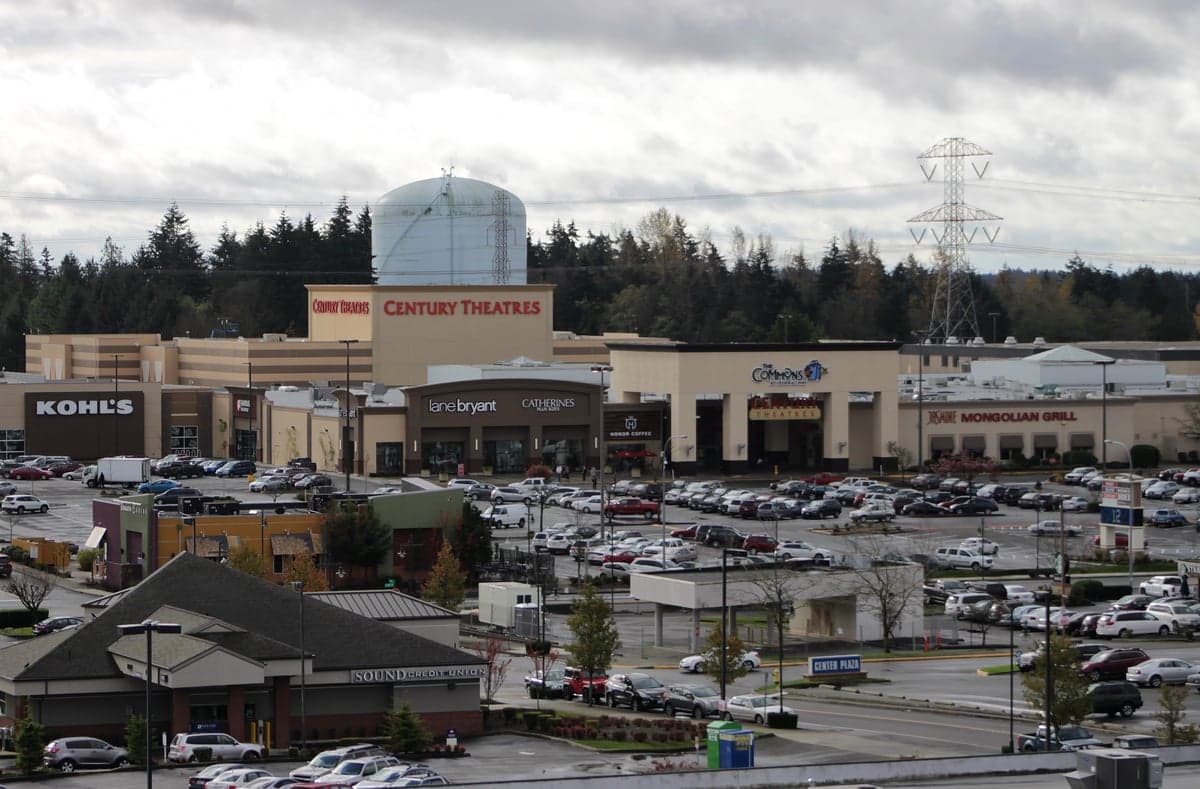
Federal Way, Washington, is a city of roughly 99,000 residents defined by its remarkable ethnic diversity and a middle-class, family-oriented character. It is one of the most racially integrated cities in the Pacific Northwest, with no single group holding a majority: the population is 35.8% White, 19.0% Hispanic, 17.4% Black, 13.5% East/Southeast Asian, and 0.9% Indian (subcontinent). The city’s identity is shaped by a large foreign-born population (15.4%) and a moderate college attainment rate (31.1%), creating a place that feels both suburban and globally connected.
How the city was settled and grew
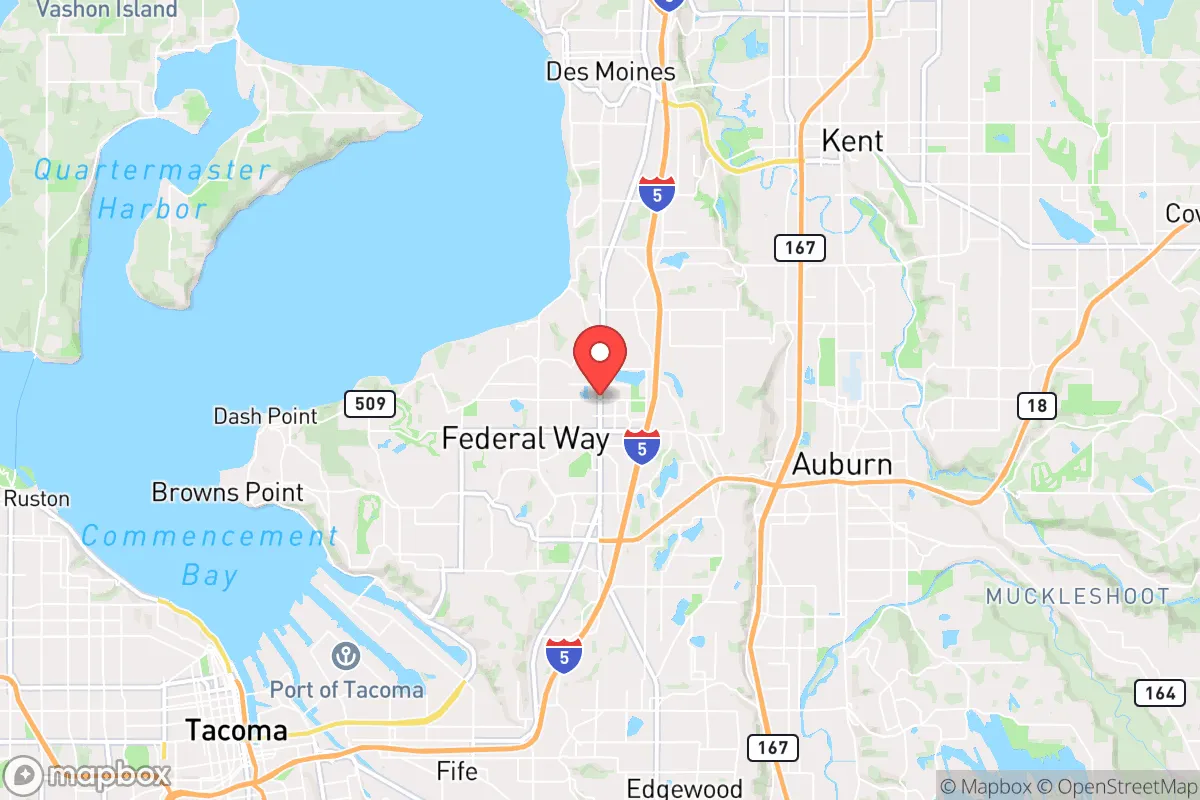
Federal Way’s human history is a 20th-century story, not a pioneer one. The area was originally inhabited by the Puyallup and Muckleshoot tribes, but permanent non-Native settlement began only after the Northern Pacific Railroad laid tracks through the region in the 1880s. The city’s name derives from a federal highway project—the “Federal Way” road—built in the 1920s to connect Tacoma and Seattle. Early growth was slow and agricultural: dairy farms, berry fields, and timber stands drew Scandinavian and German homesteaders to what is now the Dash Point and Lakota neighborhoods. These families built small churches, one-room schools, and a tight-knit rural community that persisted through the Great Depression.
The first major population wave came during and after World War II. The nearby Boeing plants in Seattle and the Port of Tacoma’s wartime shipyards drew thousands of workers from the Midwest and the South. Federal Way’s location halfway between the two cities made it a natural bedroom community. Developers platted subdivisions like Woodridge and Panther Lake in the 1940s and 1950s, filling them with White, blue-collar families—many of them first-generation off the farm. By 1960, the population had reached roughly 5,000, and the area was still unincorporated King County land.
Modern era (post-1965)
The 1965 Hart-Cellar Immigration Act and the 1968 Fair Housing Act transformed Federal Way’s demographics. The city incorporated in 1990, but the groundwork for its diversity was laid in the 1970s and 1980s. Vietnamese and Filipino refugees arrived after the Vietnam War, settling in the West Campus and Mirror Lake neighborhoods near the Federal Way Transit Center, drawn by affordable apartment complexes and the presence of social service agencies. At the same time, Black families—many relocating from the Seattle Central District and the South—moved into Lakota and Woodridge, seeking better schools and larger lots. Hispanic immigration, primarily from Mexico and Central America, accelerated in the 1990s, with families clustering in the Panther Lake corridor and along Pacific Highway South.
By 2000, Federal Way was a majority-minority city. The White share fell from roughly 80% in 1980 to 35.8% today. The Asian population (East/Southeast) grew to 13.5%, concentrated in the West Campus area near the high school and the Korean-owned businesses along 320th Street. The Indian subcontinent population remains small at 0.9%, with families scattered rather than clustered. The Black population stabilized at 17.4%, with a notable presence in Lakota and Woodridge. The Hispanic share rose to 19.0%, with a growing second generation now attending local schools and entering the workforce.
The future
Federal Way’s population is not homogenizing; it is tribalizing into distinct but overlapping enclaves. The White population continues to decline slowly, while Hispanic and Asian shares are rising. The foreign-born rate of 15.4% is above the national average, and new arrivals—particularly from East Africa (Somali and Ethiopian communities) and the Philippines—are settling in the Panther Lake and West Campus areas. The Indian subcontinent community, while small, is growing through tech-worker migration to nearby Amazon and Microsoft campuses, but they tend to choose newer developments in Mirror Lake rather than older neighborhoods.
Over the next 10–20 years, Federal Way will likely become even more diverse, with the Hispanic and Asian shares each approaching 25%. The city’s affordable housing stock (relative to Seattle and Bellevue) will continue to attract immigrant families and younger households. However, the college attainment rate of 31.1% suggests that the city is not yet a magnet for the highly educated tech workforce—that demographic still favors Redmond and Kirkland. Federal Way’s future is as a working- and middle-class hub of ethnic plurality, where no group dominates and where the public schools reflect the city’s global character.
For a conservative-leaning mover, Federal Way offers a place where traditional family structures are common, property values are stable, and the community is genuinely integrated—not segregated by race or class. The city is becoming a model of multiethnic, middle-class suburban life, with all the opportunities and challenges that entails. It is not a place of elite enclaves or deep poverty, but a solid, diverse, family-oriented city that rewards engagement and neighborliness.

* Values derived from national, state, county, city and local statistics and may differ in a specific area. Last updated: 2026-04-19T09:38:49.000Z
Narrative content on this page is AI-generated and may contain mistakes. Verify any details that matter before acting on them.
ReloMaps may earn a commission from affiliate links at no extra cost to you.

