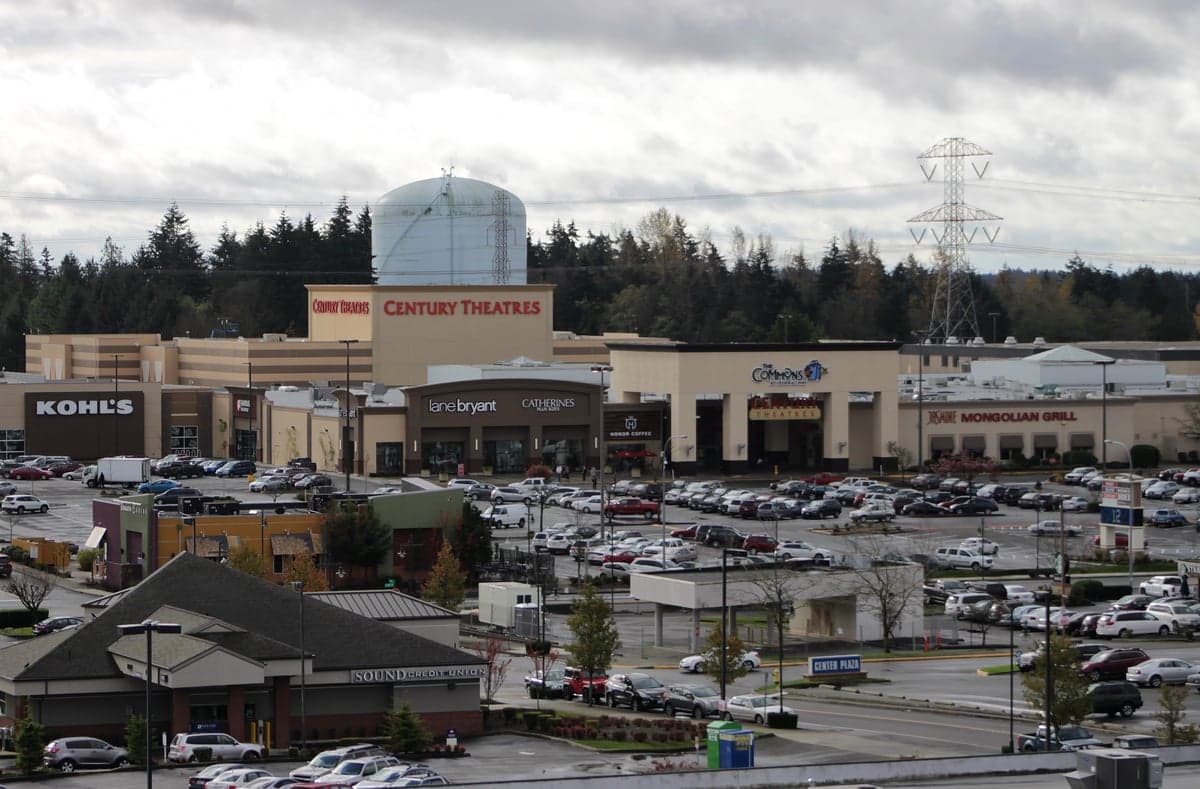
Photo: Wikipedia
Political ClimatePolitical Climate in Federal Way, WA
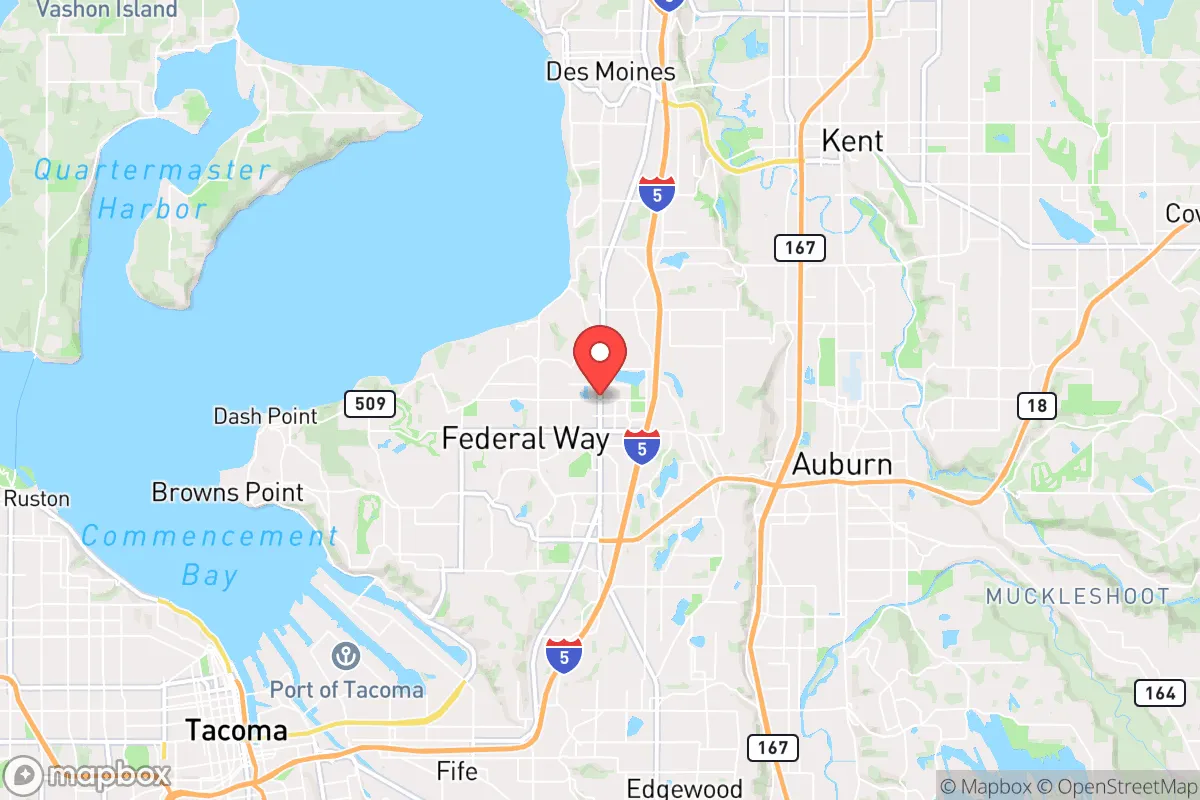
District shown is the primary district for this city’s centroid. Cities may span multiple districts.
Local Political AnalysisPolitical Analysis of Federal Way, WA
Federal Way, Washington, leans heavily Democratic, with a Cook Partisan Voting Index of D+22, meaning it votes about 22 points more Democratic than the national average. That’s a pretty stark shift from what I remember growing up here in the 90s, when this was a solidly purple, working-class suburb where you’d see as many Reagan Democrats as you would union voters. Now, the city council and school board are almost entirely progressive, and the local politics have moved left fast—especially since 2020. If you’re looking for a place where your vote might actually balance things out, you’ll find more of that in nearby Edgewood or Bonney Lake, which lean Republican, or even in parts of unincorporated King County just east of here.
How it compares
Federal Way sits in a political sandwich. To the north, Des Moines and SeaTac are even more liberal, with similar D+ margins. To the south, Tacoma is a mixed bag—still blue overall, but with a more moderate, union-heavy flavor. The real contrast is east of I-5: places like Auburn and Covington have a stronger conservative streak, especially on issues like property rights and school choice. Federal Way itself, though, has become a stronghold for progressive policies. The city council passed a tenant protections ordinance in 2023 that limits rent increases and makes evictions harder, which sounds nice until you realize it’s driving small landlords out of the market. Meanwhile, the school board has pushed for equity-based curriculum changes that, frankly, a lot of longtime residents feel prioritize ideology over academics. If you’re used to a place where local government stays out of your business, this isn’t it.
What this means for residents
For the average resident, the political climate here means you’ll see more government involvement in daily life than you might in a redder suburb. The city has a strong rental inspection program, a plastic bag ban, and a push for higher density zoning that’s already changing the look of older neighborhoods. Property taxes have climbed steadily—King County’s levy rates are among the highest in the state—and there’s talk of a local income tax if the state legislature ever gives the green light. On the plus side, if you’re pro-union or pro-public transit, you’ll find plenty of allies. But if you value low regulation, gun rights, or keeping your property taxes in check, you’ll feel the squeeze. The long-term trajectory is clear: more progressive policies, more spending, and less room for dissenting voices in local elections, which are often decided in low-turnout primaries where the most organized left-wing voters show up.
Culturally, Federal Way has a few distinctions that set it apart from its neighbors. It’s one of the most diverse cities in Washington—about 40% Asian, 20% Hispanic, and 15% Black—which brings a rich mix of restaurants and community events, but also means local politics often center on identity and representation rather than fiscal restraint. The city has a strong police department, but the council has been under pressure to defund or redirect funds, and they’ve already cut the school resource officer program. If you’re a conservative or even a moderate, you’ll find yourself in the minority at city council meetings, and your best bet for influence is joining neighborhood groups or the local Republican party, which is small but active. In the near term, I don’t see the political winds shifting back—Federal Way is likely to stay D+22 or go even bluer as Seattle’s spillover continues. If that doesn’t sit well, you might want to look at Edgewood or even Orting, where the politics and the pace of life feel a lot more like the Federal Way I grew up in.

State Political ClimatePolitical Climate in Washington
State Political AnalysisPolitical Environment in the State
Washington State has shifted from a classic purple battleground to a solidly blue state over the past two decades, with Democrats now holding every statewide office and commanding supermajorities in the legislature. The last time a Republican won a statewide election was 2012, and the state hasn’t voted for a GOP presidential candidate since 1984. However, this blue dominance is almost entirely driven by King County (Seattle) and a handful of other urban centers, while vast swaths of Eastern Washington and even some suburban counties remain deeply red or competitive. For a conservative considering relocation, the state presents a stark choice: live in a blue metro with high taxes and progressive policies, or find refuge in a red rural county where your vote actually counts but you’re still subject to state-level laws you didn’t vote for.
Urban vs. rural divide
The political map of Washington is a tale of two states. King County, home to Seattle, alone casts roughly 30% of the state’s votes and delivers margins of 70-80% for Democrats. That single county can outvote the entire eastern half of the state. The I-5 corridor from Seattle south through Tacoma and Olympia is a Democratic stronghold, with Pierce County (Tacoma) trending bluer each cycle. Meanwhile, Spokane County in the east has become a competitive swing county—it voted for Trump in 2016 and 2020, but by shrinking margins as Spokane city itself gentrifies and attracts Seattle transplants. The true red bastions are the rural counties east of the Cascades: Yakima, Benton (Tri-Cities), Franklin, Grant, Douglas, and Chelan. These are agricultural and energy-producing regions where Trump won by 20-40 points. A notable exception is Whitman County (Pullman), home to Washington State University, which is a blue island in a red sea. The San Juan Islands and Jefferson County (Olympic Peninsula) are also deep blue, driven by wealthy retirees and counterculture types. The bottom line: if you want to live in a red community, you’re looking at towns like Spokane Valley, Wenatchee, Yakima, Kennewick, or Walla Walla—but you’ll still be governed from Seattle.
Policy environment
Washington’s policy environment is aggressively progressive, and it’s been accelerating. The state has no personal income tax, which sounds great, but it’s replaced by some of the highest sales taxes in the nation (10%+ in many cities) and a capital gains tax that was just upheld by the state Supreme Court in 2023—a clear step toward a broader income tax. Property taxes are moderate but rising fast as home values skyrocket. The regulatory posture is hostile to business expansion: the state has a strict plastic bag ban, a ban on natural gas in new buildings (effective 2026 for commercial, 2031 for residential), and a cap-and-trade program (Climate Commitment Act) that adds hidden costs to gasoline and heating. Education policy is dominated by teachers unions, with a fully funded but ideologically driven K-12 system that emphasizes DEI and social-emotional learning over academic rigor. School choice is virtually nonexistent—no vouchers, no charter schools outside of a few in Seattle. Healthcare is heavily regulated, with a state-run insurance exchange and a public option (Cascade Care) that has seen low enrollment. Election laws are among the most liberal: universal mail-in voting, same-day registration, and no voter ID requirement. Ballot harvesting is legal and widespread. For a conservative, this feels like a system designed to maximize turnout in blue areas while making it harder to challenge results.
Trajectory & freedom
On the freedom scale, Washington is moving decisively in the wrong direction. The state has some of the strictest gun laws in the nation, including a 2023 ban on assault weapons (HB 1240), a 10-round magazine limit, and a requirement for a 10-day waiting period and safety training for all purchases. These passed without a single Republican vote. Parental rights took a hit with the 2023 “My Health My Data” act, which critics say allows minors to access gender-affirming care without parental consent and creates a legal shield for providers. Medical autonomy is constrained by a state-run vaccine mandate for healthcare workers and school employees that remains in effect, and a 2024 law (SB 5233) that prohibits “conversion therapy” for minors, which some interpret as limiting private counseling. Property rights are under pressure from the state’s Growth Management Act, which forces cities to upzone for density and limits rural development. The state also passed a “right to repair” law for electronics, which is popular, but it’s paired with a strict net neutrality law and data privacy regulations that add compliance costs. The overall trajectory is clear: more regulation, higher hidden taxes, and less individual autonomy in the name of collective good.
Civil unrest & political movements
Washington has a long history of political activism, and it’s only intensified. The 2020 CHOP/CHAZ occupation in Seattle’s Capitol Hill neighborhood was a national flashpoint—a six-block autonomous zone that lasted three weeks, with police largely withdrawing. That event galvanized a backlash that helped flip several suburban city councils to the right in 2021, but the momentum faded. The state is a sanctuary state, with a 2019 law (SB 5497) that prohibits state and local law enforcement from cooperating with federal immigration authorities. This has led to tensions in border counties like Yakima and Franklin, where ICE operations are common. Election integrity remains a hot-button issue: in 2022, a Republican candidate for Secretary of State, Julie Anderson (who ran as a moderate), lost to Democrat Steve Hobbs, but the race was closer than expected. There’s an active secession movement in Eastern Washington—the “51st state” proposal for a “Liberty State” has been floated multiple times, but it’s purely symbolic. The most visible flashpoint for a new resident would be the homeless encampments and drug crisis in Seattle, Tacoma, and Spokane, which are a direct result of the state’s decriminalization and harm-reduction policies. The 2021 Blake decision by the state Supreme Court effectively decriminalized simple drug possession, leading to a surge in open use until the legislature partially walked it back in 2023.
Projection
Over the next 5-10 years, Washington will likely become even more blue. The in-migration pattern is shifting: while the state saw a net inflow of 100,000+ people annually from 2015-2020, that has slowed to near zero as high costs and crime drive people to Idaho, Texas, and Arizona. The people leaving are disproportionately conservative and middle-class, while the people arriving are younger, more liberal, and wealthier (tech workers). The state’s Democratic supermajority is likely to hold or expand, meaning more gun control, more climate regulations, and a potential move toward a full income tax. The cap-and-trade program will keep energy costs high, and the natural gas ban will make new construction more expensive. However, there are countercurrents: the 2024 election saw a few suburban city council races in Pierce and Snohomish counties flip to Republicans on crime and homelessness issues, suggesting a ceiling on how far left the state can go. If you’re moving in now, expect to see a state that is increasingly expensive, increasingly regulated, and increasingly hostile to traditional values—but with pockets of resistance in the east and in the suburbs.
For a conservative relocating to Washington, the practical takeaway is this: you can find a community that shares your values, but you cannot escape the state government. If you choose a red county like Yakima or Spokane County, you’ll have local representation and a like-minded community, but you’ll still pay the high sales tax, abide by the gun laws, and send your kids to schools that teach from a progressive curriculum. If you choose a blue metro like Seattle or Bellevue, you’ll be surrounded by people who disagree with you on almost everything, and your vote will be meaningless in state elections. The best bet for a conservative is a suburban or exurban area in a purple county like Clark County (Vancouver) or Spokane County, where you can have some local influence while still being close to jobs and amenities. But be prepared: Washington is not a state where conservatives can win at the state level anytime soon. It’s a state where you live defensively, building community and hoping the next election doesn’t bring another round of restrictions on your freedoms.
* Values derived from national, state, county, city and local statistics and may differ in a specific area. Last updated: 2026-04-19T09:38:49.000Z
Narrative content on this page is AI-generated and may contain mistakes. Verify any details that matter before acting on them.
ReloMaps may earn a commission from affiliate links at no extra cost to you.

