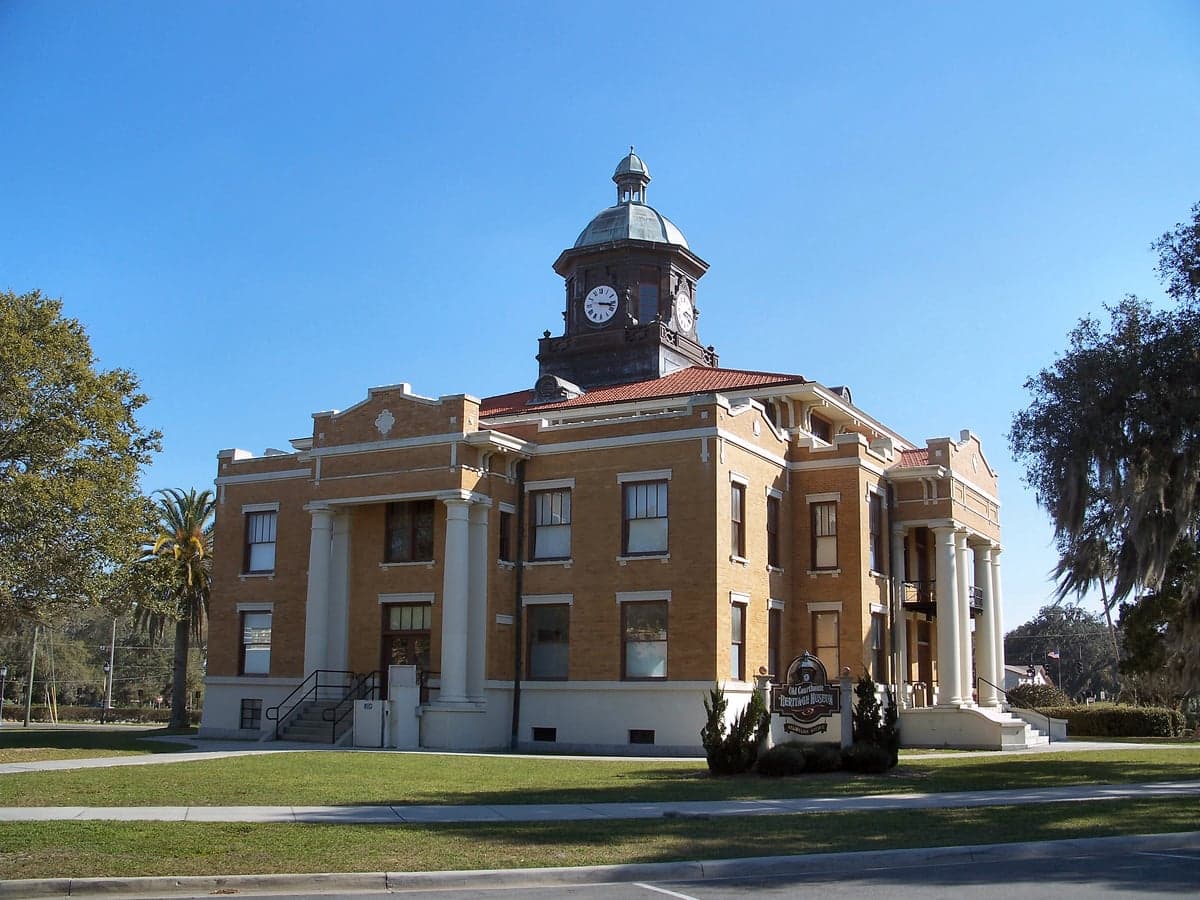
Photo: Wikipedia
Quality of Life in Citrus County
A livable area that tracks near national norms for affordability, walkability, and neighborhood health.
What does Quality of Life tell us?
Quality of Life measures an area by evaluating factors like cost of living, nearby amenities, country club access, airport proximity, socioeconomic signals and neighborhood character. For large states, this is a general average — quality of life can vary dramatically between metro areas, suburbs, and rural communities within the same state.
What does this tell us?
Quality of Life measures an area by evaluating factors like cost of living, nearby amenities, country club access, airport proximity, socioeconomic signals and neighborhood character. For large states, this is a general average — quality of life can vary dramatically between metro areas, suburbs, and rural communities within the same state.
Cost of Living
13% below national average
87%
The Real Cost of Living in Citrus County for 2026
| Tier | Individual | Family (4) |
|---|---|---|
| Survival | $17k | $32k |
| Comfortable | $43k | $64k |
| Luxury | $100k+ | $155k+ |
| Elite (Top 5%) | $132k+ | $204k+ |
Quality-of-Life Analysis
Citrus County, Florida, offers a broad quality-of-life spectrum that ranges from the suburban-style convenience of its largest town, Crystal River, to the quiet, unincorporated rural stretches of Homosassa and the coastal enclave of Inglis. The county draws a mix of retirees seeking waterfront tranquility, families looking for affordable space, and outdoor enthusiasts who prioritize access to the Gulf of Mexico and the Withlacoochee State Forest. With a cost of living index of 87—13 percent below the national average—and a median home value of $223,200, the county provides a notably lower financial barrier to entry than much of coastal Florida, though the trade-off is a longer average commute of 27.8 minutes and fewer big-city amenities.
Largest town(s) & population centers
Crystal River is the county's primary commercial and civic hub, home to about 3,200 residents and the region's largest concentration of retail, medical services, and dining. Daily life here centers around the Kings Bay area, known for its manatee-viewing opportunities and waterfront parks, and the U.S. 19 corridor, which hosts big-box stores and chain restaurants. The city's historic downtown, though small, features local shops and the Crystal River Archaeological State Park. Beverly Hills, an unincorporated community of roughly 8,500, functions as a secondary population center with a more suburban, residential feel, offering a mix of mid-century ranch homes and newer subdivisions, plus easy access to the Citrus County Speedway and the Lecanto government complex. Both areas provide the county's most reliable public services, including the Citrus County Library System's main branch and the Crystal River Airport.
Smaller towns & rural pockets
Beyond the population centers, Citrus County is defined by its smaller communities and unincorporated areas. Homosassa (including Homosassa Springs) is a sprawling, low-density area along the Homosassa River, known for its state wildlife park, fishing guides, and a mix of mobile home parks and modest single-family homes on large lots. Inglis, near the county's western edge, is a quiet fishing village of about 1,400 with a handful of restaurants and direct access to the Gulf via the Inglis Bypass Channel. Yankeetown, just south of Inglis, is even more rural, with a population under 600 and a landscape dominated by salt marshes and the Withlacoochee River. Inland, Floral City offers a historic, Old Florida feel with its canopy roads, the Floral City Heritage Museum, and proximity to the Tsala Apopka Lake chain. These areas lack major retail and rely on Crystal River or Lecanto for groceries and healthcare, reinforcing a slower, more self-sufficient lifestyle.
Cost & lifestyle range
The cost of living and lifestyle options vary significantly across the county. At the higher end, waterfront properties along Kings Bay in Crystal River or the Homosassa River command median home values well above the county's $223,200 average, often exceeding $400,000 for direct Gulf-access homes. Renters in these prime areas pay a premium, though the countywide median rent of $1,069 remains below the state average. At the lower end, inland communities like Lecanto and Pine Ridge offer more affordable housing—often under $200,000 for a three-bedroom home—but require longer drives to reach the coast or major employers. The rural pockets of Inglis and Yankeetown offer the lowest property costs, with some homes under $150,000, but lack public water and sewer infrastructure, relying on wells and septic systems. The trade-off is clear: lower costs in the rural interior come with fewer amenities, longer commutes, and less access to healthcare, while Crystal River and Beverly Hills provide convenience at a moderate price premium.
Citrus County is best suited for those who prioritize affordability, outdoor recreation, and a slower pace over urban nightlife or high-end shopping. Retirees on fixed incomes, remote workers seeking space, and families willing to trade a longer commute for a lower mortgage will find the county's range of options accommodating. The key is matching lifestyle expectations to the specific community—Crystal River for convenience, Homosassa for waterfront living, and the inland towns for maximum affordability and privacy.

Crime in Citrus County
Generally safer than 68% of comparable U.S. locations.
Violent CrimeViolent Crime Analysis
Property CrimeProperty Crime Analysis
Crime Analysis
Citrus County, Florida, presents a notably safer environment than both the state and national averages, with violent crime rates well below typical benchmarks. The county recorded a violent crime rate of 209.9 incidents per 100,000 residents and a property crime rate of 901.5 per 100,000, according to the most recent data. For context, the national violent crime rate hovers around 380 per 100,000, meaning Citrus County residents face roughly half the risk of violent victimization compared to the average American. However, the county's safety profile is not uniform, and understanding where crime concentrates is essential for anyone considering relocation.
Crime in context
Citrus County's violent crime rate of 209.9 per 100,000 is significantly lower than Florida's statewide average of approximately 380 per 100,000 and well below the national figure. Property crime at 901.5 per 100,000 also undercuts the Florida average of roughly 1,600 per 100,000. This places Citrus County among the safer rural-to-suburban counties in the state, comparable to areas like Sumter County (The Villages) and Levy County. The county's relatively low population density—spread across communities like Inverness, Crystal River, and Homosassa—contributes to these lower rates, as dense urban environments typically generate more crime. The Fifth Judicial Circuit of Florida, which covers Citrus, Hernando, Lake, and Sumter counties, operates under a conservative judicial philosophy that prioritizes public safety and accountability, a factor that helps keep recidivism rates in check.
What residents experience
Residents in Citrus County's unincorporated areas and smaller towns like Beverly Hills and Lecanto generally report feeling safe walking their neighborhoods and leaving doors unlocked during the day. Property crime, particularly theft from vehicles and burglaries of vacation homes near the coast, is the most common concern. Crystal River, the county's largest city and a hub for tourism and manatee-watching, sees a modest uptick in property crime during peak tourist season, though violent incidents remain rare. Inverness, the county seat, has a slightly higher concentration of reported incidents near its historic downtown and along US-41, but these are predominantly non-violent. The county's aging population—over 40% of residents are 65 or older—means that fraud and scams targeting seniors are a persistent issue, though these are often underreported in official crime statistics. The Citrus County Sheriff's Office maintains a visible presence, with deputies patrolling rural routes and participating in community policing programs in subdivisions like Black Diamond and Citrus Hills.
Neighborhood-level variation
Safety varies noticeably between the county's incorporated cities and its sprawling unincorporated areas. Homosassa, particularly the waterfront neighborhoods along the Homosassa River, experiences occasional property crime linked to transient populations and seasonal workers. In contrast, gated communities like Citrus Hills and Black Diamond report near-zero violent crime and very low property crime, thanks to private security and limited access. The unincorporated area around Lecanto, home to the county's government complex and a growing medical corridor, is considered one of the safest zones in the county. Prospective residents should note that while Citrus County avoids the violent crime spikes seen in larger Florida metros like Tampa or Orlando, the lack of a major urban center means emergency response times can be longer in remote areas, particularly west of US-19 near the Gulf coast. Overall, Citrus County offers a strong safety profile for families and retirees, with the caveat that property crime awareness is warranted in tourist-adjacent and lower-income pockets.
* Values derived from national, state, county, city and local statistics and may differ in a specific area. Last updated: 2026-09-29T09:19:26.000Z
Narrative content on this page is AI-generated and may contain mistakes. Verify any details that matter before acting on them.
ReloMaps may earn a commission from affiliate links at no extra cost to you.

