 Popular
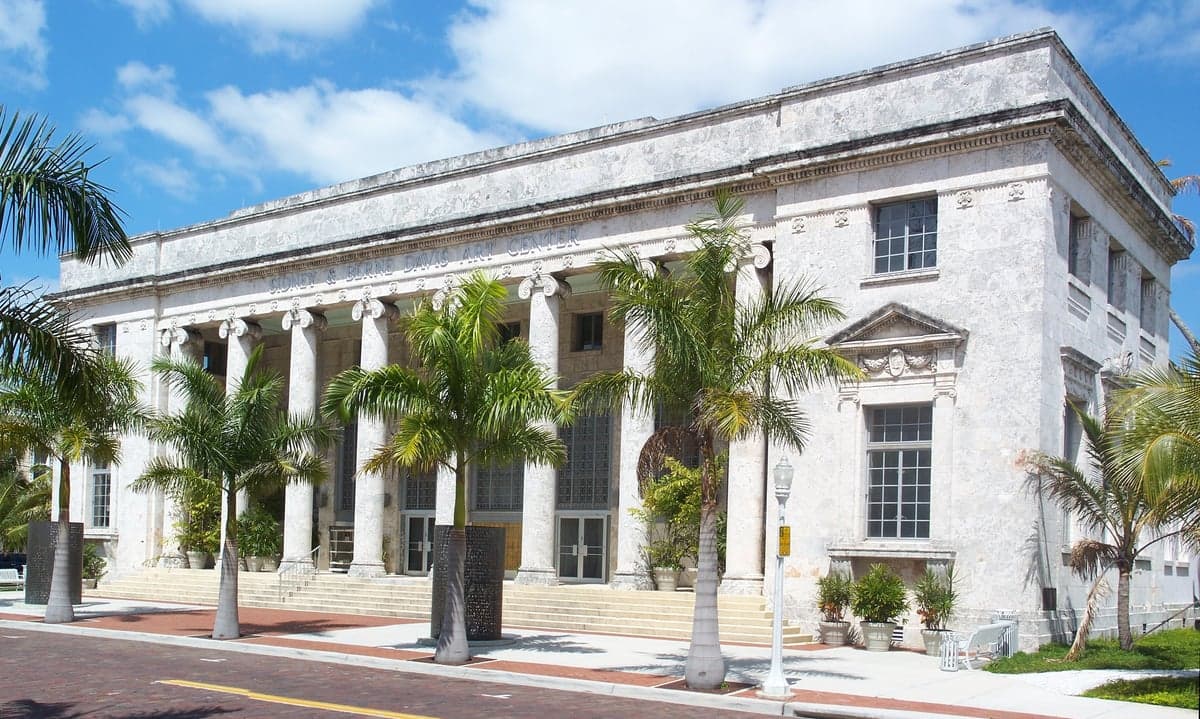
Photo: Wikipedia
Demographics of Fort Myers, FL
Affluence Level in Fort Myers, FL
A middle-class area roughly in line with national averages across income, home values, education, and employment.
People of Fort Myers, FL
Fort Myers today is a city of roughly 91,730 residents defined by its racial and ethnic diversity, with a population that is 46.9% White, 24.0% Hispanic, 21.7% Black, and 1.5% East/Southeast Asian, alongside a smaller Indian-subcontinent community at 0.6%. The city’s foreign-born share stands at 11.9%, and 32.1% of adults hold a college degree, reflecting a mix of working-class roots and growing professional sectors. Distinctive identity markers include a strong Midwestern retiree presence, a vibrant Hispanic commercial corridor along Palm Beach Boulevard, and historically Black neighborhoods that retain deep community ties. The population is younger and more diverse than surrounding Lee County, with a median age around 38, and the city serves as a regional hub for healthcare, government, and tourism services.
How the city was settled and grew
Fort Myers was founded in 1886, well after Florida’s colonial period, as a trading post and military outpost during the Seminole Wars. The original population was drawn by the promise of land and subtropical agriculture, with early settlers arriving from northern states—particularly Ohio, Indiana, and Illinois—seeking warm winters and fertile soil along the Caloosahatchee River. The city’s first major growth wave came with the extension of the Atlantic Coast Line Railroad in 1904, which opened the region to citrus farming, cattle ranching, and winter tourism. The historic River District downtown was the original commercial and residential core, built by White northern migrants and a small number of Black laborers who worked the docks and packing houses. By the 1920s, the Black population had concentrated in the Dunbar neighborhood (originally called “Safety Hill”), a self-contained community with its own schools, churches, and businesses, established during Jim Crow segregation. A second pre-war wave came during the 1920s land boom, when speculators and construction workers—many from the Midwest—flooded in, building out neighborhoods like Edison Park and Fairway Oaks around the new golf courses and winter estates of Thomas Edison and Henry Ford.
Modern era (post-1965)
After the 1965 Hart-Cellar Act, Fort Myers saw modest but significant immigration from Latin America, primarily from Cuba, Mexico, and later Central America, who settled in the East Fort Myers area along Palm Beach Boulevard and SR 80. This corridor became the city’s Hispanic commercial and residential anchor, with bodegas, churches, and Spanish-language services emerging by the 1980s. Domestic in-migration accelerated dramatically after 1970, driven by air conditioning, Interstate 75’s completion, and the rise of retirement communities. White retirees from the Midwest and Northeast poured into suburban subdivisions like Gulf Harbour and McGregor Boulevard estates, while younger families sought affordable housing in Treeline Avenue corridor developments. The Black population, which had been concentrated in Dunbar since the 1920s, began a slow suburban spread into South Fort Myers and Buckingham areas after fair-housing laws passed, though Dunbar remains the historic cultural heart. The East/Southeast Asian community—primarily Vietnamese and Filipino—grew from the 1980s onward, clustering in the Colonial Boulevard corridor near the hospital and medical centers, drawn by healthcare and hospitality jobs. The Indian-subcontinent population remains small at 0.6%, concentrated among professionals in the medical and tech sectors, with no single ethnic enclave.
The future
The population of Fort Myers is heading toward greater diversity, but with distinct enclave patterns rather than full homogenization. Hispanic growth is the fastest demographic trend, projected to approach 30% of the city’s population by 2035, driven by both immigration and higher birth rates, with East Fort Myers solidifying as a bicultural corridor. The White population share is declining slowly as retirees age in place and younger White families choose suburban Lee County towns like Estero or Cape Coral. The Black population is stabilizing around 21-22%, with younger Black residents moving into mixed-income developments near Six Mile Cypress Slough and Daniels Parkway, while Dunbar undergoes gentrification pressure from downtown expansion. East/Southeast Asian communities are plateauing, with second-generation professionals assimilating into broader metro neighborhoods. The Indian-subcontinent population is growing from a tiny base, likely doubling to 1-2% over the next decade as healthcare and engineering employers recruit. The city is not tribalizing into hostile camps, but it is becoming a patchwork of distinct cultural zones—Hispanic east, Black historic core, White retiree west, and a mixed professional corridor along the I-75 edge.
For someone moving in now, Fort Myers is a mid-sized Sun Belt city in transition: younger and more diverse than its reputation suggests, with a growing Hispanic majority in the east and a stable Black community in the center, while White retirees continue to dominate the western suburbs. The city offers a genuinely multicultural environment compared to most of Southwest Florida, but newcomers should expect neighborhood identities to remain strong and services—from schools to churches to grocery stores—to reflect the area’s ethnic geography. The next decade will likely see continued Hispanic growth, modest Asian and Indian professional in-migration, and a slow decline in the White retiree share, making Fort Myers a more working-age, family-oriented city than its beach-town image implies.

* Values derived from national, state, county, city and local statistics and may differ in a specific area. Last updated: 2026-05-03T04:45:15.000Z
Narrative content on this page is AI-generated and may contain mistakes. Verify any details that matter before acting on them.
ReloMaps may earn a commission from affiliate links at no extra cost to you.

