 Popular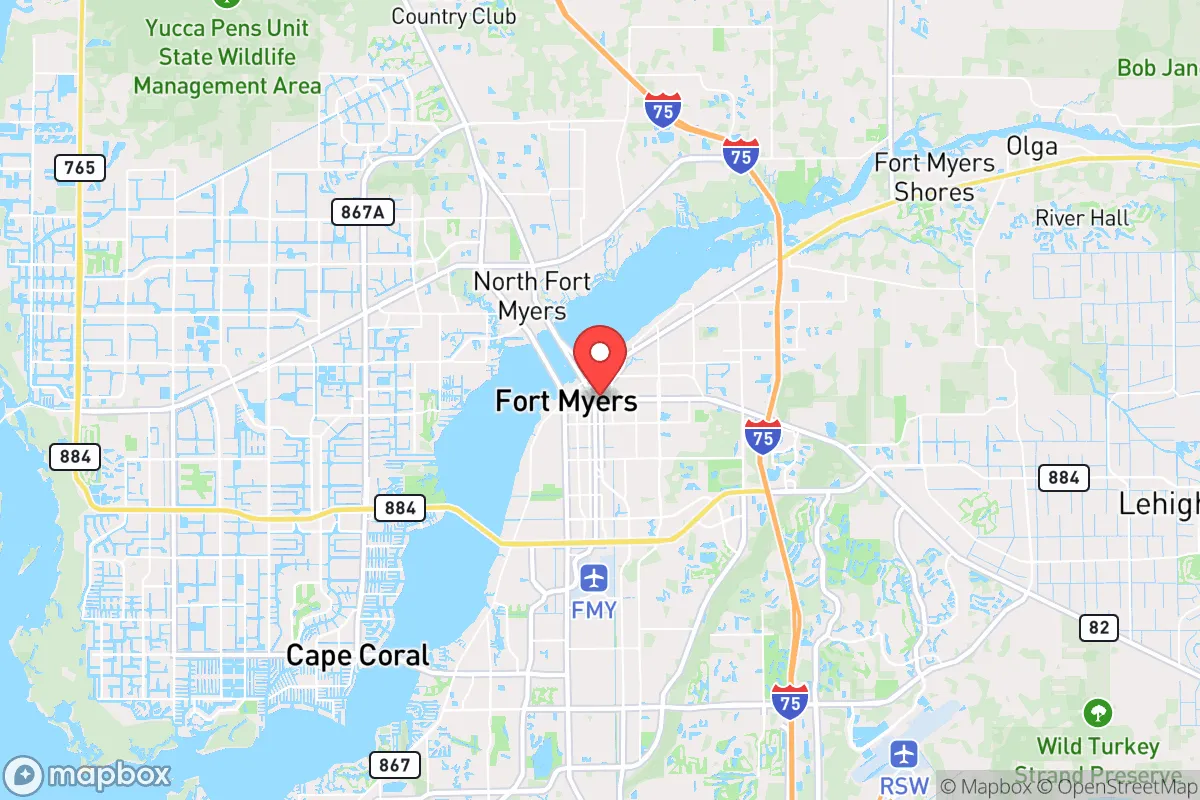
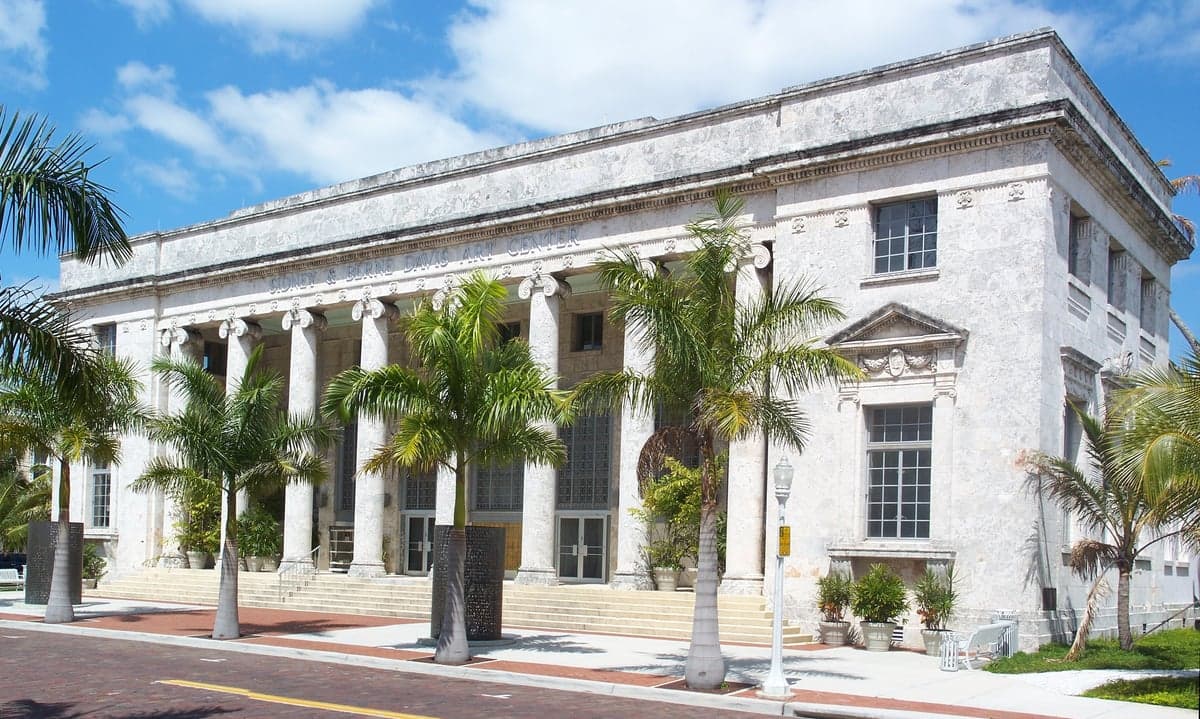
Photo: Wikipedia
Political ClimatePolitical Climate in Fort Myers, FL
District shown is the primary district for this city’s centroid. Cities may span multiple districts.
Local Political AnalysisPolitical Analysis of Fort Myers, FL
Fort Myers has long been a solidly conservative stronghold, and that hasn't changed much despite the influx of new folks from up north. The Cook PVI of R+14 tells you everything you need to know about the baseline here—this isn't a purple area that flips back and forth. If anything, the political lean has gotten a bit more entrenched over the last decade, even as Lee County's population has exploded. You'll see the same "Keep Fort Myers Free" signs in yards today that you saw ten years ago, and the local sentiment still heavily favors limited government and personal responsibility over the kind of top-down mandates you see in places like Miami or Tampa.
How it compares
If you drive north up 41 into Cape Coral, you'll find an even more conservative vibe—it's practically a mirror image, maybe a hair more libertarian on property rights. Head east toward LaBelle or Immokalee, and you're in deep red agricultural country where the politics are as old-school as the citrus groves. The real contrast comes when you cross the Caloosahatchee into Sanibel or Fort Myers Beach—those areas have a noticeable seasonal population from the Northeast and Midwest, and you'll see more "coastal Republican" types there, but still nothing like the progressive strongholds of Broward or Palm Beach County. The biggest shift in recent years has been the influx of retirees and remote workers from blue states, but so far, most of them seem to have moved here because of the conservative culture, not to change it. That said, you do see the occasional "We're Full" bumper sticker, and there's a quiet worry that if too many people from high-tax states keep coming, they'll eventually bring their voting habits with them.
What this means for residents
For the most part, it means you're left alone to live your life. The county commission and city council are reliably conservative, so you don't see the kind of overreach you hear about in places like Orlando or Tallahassee. During the pandemic, Fort Myers was one of those areas that pushed back hard on extended lockdowns and mask mandates—businesses stayed open, and the local government generally trusted people to make their own decisions. Property taxes are reasonable, there's no state income tax, and the local zoning laws are still fairly permissive compared to what you'd find in a more progressive metro. The downside? If you're hoping for big public transit projects or heavy-handed environmental regulations, you'll be disappointed. The trade-off is that your personal freedoms—whether it's carrying a firearm, running a home business, or deciding what to put in your yard—are broadly respected. The biggest concern among long-time residents is that as the area grows, the pressure to "professionalize" local government could lead to more bureaucracy and less common-sense decision-making.
Culturally, Fort Myers still feels like Old Florida in a lot of ways—slow, friendly, and suspicious of anyone who wants to tell you how to live. The big policy fights here are usually about growth management and water quality (the algae blooms in the Caloosahatchee are a recurring headache), but even those debates are framed in terms of property rights and local control rather than sweeping government intervention. You won't find a lot of woke politics in the local schools or city hall, and the general attitude is that if it ain't broke, don't fix it. The long-term trajectory depends on who keeps moving in, but for now, Fort Myers remains a place where conservative values aren't just tolerated—they're the default setting.

State Political ClimatePolitical Climate in Florida
State Political AnalysisPolitical Environment in the State
Florida has transformed from a classic swing state into a solidly Republican-leaning powerhouse over the past decade, with a voter registration advantage of over 800,000 Republicans and a 2024 presidential margin of roughly +13 points for Donald Trump. The dominant coalition is a mix of conservative retirees, Hispanic voters (especially Cuban-Americans and Venezuelans in Miami-Dade), and a surge of domestic migrants from blue states seeking lower taxes and fewer restrictions. This shift has been dramatic: as recently as 2008, Florida voted for Barack Obama, but a combination of GOP-led redistricting, a pandemic-era emphasis on personal freedom, and a steady influx of right-leaning newcomers has cemented a red tilt that shows no signs of reversing.
Urban vs. rural divide
The political map of Florida is a textbook study in geographic polarization. The major metros—Miami-Dade, Broward (Fort Lauderdale), and Orange County (Orlando)—remain Democratic strongholds, but their margins have shrunk. Miami-Dade, once a blue bastion, flipped to Trump in 2020 and again in 2024, driven by Cuban and Venezuelan voters who associate Democratic policies with socialism. Meanwhile, the rural Panhandle—places like Panama City, Pensacola, and the sprawling counties north of Gainesville—vote 70-80% Republican. The real story is the suburbs: Pinellas County (St. Petersburg) has trended right, while Duval County (Jacksonville) flipped to Trump in 2024 after years of being a swing county. The I-4 corridor, stretching from Tampa to Daytona Beach, remains the battleground, but even there, Republican registration gains in Lakeland and The Villages have shifted the balance. The rural-urban split is stark: drive 30 minutes outside any major city, and you’ll find Trump flags, gun shops, and churches on every corner.
Policy environment
Florida’s policy environment is a conservative dream, especially for those fleeing high-tax states. There is no state income tax, a constitutional cap on property tax increases (the Save Our Homes amendment), and a business-friendly regulatory climate that has attracted corporate relocations from California and New York. Education policy is a flashpoint: Governor Ron DeSantis signed the Parental Rights in Education Act (HB 1557), which prohibits classroom instruction on sexual orientation and gender identity in K-3, and the Stop WOKE Act, which restricts critical race theory training in schools and workplaces. School choice is robust, with the Family Empowerment Scholarship program allowing state funds to follow students to private or charter schools. Healthcare is mixed: Florida did not expand Medicaid under the ACA, keeping costs lower for taxpayers, but rural hospital closures remain a concern. Election laws have tightened with SB 90 (2021), requiring voter ID, limiting drop boxes, and restricting mail-in ballot requests. For a conservative, this is a state that actively pushes back against federal overreach and prioritizes parental authority.
Trajectory & freedom
Florida is arguably the most freedom-oriented state in the country right now, and the trajectory is toward more liberty, not less. The Constitutional Carry law (HB 543), signed in 2023, allows permitless carry of firearms, a major win for Second Amendment advocates. The Florida Parental Rights Act and the Don’t Say Gay law (HB 1557) have expanded parental control over children’s education and medical decisions. On medical autonomy, the state banned COVID-19 vaccine mandates for private employers and government workers, and DeSantis suspended local mask mandates in schools during the pandemic. Property rights are strong: there is no state-level rent control, and the Live Local Act preempts local zoning to encourage housing development. However, there are limits: the state has a strict six-week abortion ban (HB 5), which some conservatives see as a moral victory but others worry about government overreach into private medical decisions. The overall trend is clear: Florida is doubling down on individual liberty, low taxes, and limited government, making it a magnet for those who felt suffocated by lockdowns and mandates elsewhere.
Civil unrest & political movements
Florida has seen its share of political flashpoints, but they tend to be more controlled than in states like Oregon or New York. The 2020 Black Lives Matter protests in Miami, Orlando, and Jacksonville were large but largely peaceful, though looting occurred in Miami’s Design District. The state’s response was aggressive: DeSantis created the Office of Election Crimes and Security and signed a law enhancing penalties for rioting (HB 1), which conservatives see as necessary for public safety. Immigration politics are front and center: Florida passed SB 1718 (2023), which requires businesses with 25+ employees to use E-Verify, bans local governments from providing IDs to undocumented immigrants, and mandates that hospitals collect immigration status data. This has made Florida a leader in the anti-sanctuary movement. On the left, groups like Dream Defenders and Equality Florida organize protests, but they’ve lost steam as the state’s political center shifts right. Election integrity remains a hot topic: the 2020 and 2022 cycles saw no major scandals, but the state’s aggressive voter roll maintenance and signature verification laws have drawn lawsuits from the left. For a new resident, you’ll see more Trump flags than BLM signs, and the culture war is visible in school board meetings and local library debates.
Projection
Over the next 5-10 years, Florida will only get redder. The in-migration pattern is overwhelmingly conservative: U-Haul’s 2024 growth index showed Florida as the top destination for movers, and surveys indicate that 60% of new residents come from blue states like New York, California, and Illinois. These newcomers are not bringing their politics with them—they’re fleeing high taxes and crime, and they’re registering Republican. The Hispanic vote, especially in Miami-Dade and Osceola County, is trending right, and the growing Puerto Rican population in Central Florida is more conservative than the national Hispanic average. The Democratic Party in Florida is in disarray, with weak fundraising and a lack of statewide candidates. The biggest wildcard is climate change: rising sea levels and hurricane risk could slow growth in coastal areas like Miami Beach and Fort Myers, but inland cities like Ocala, Gainesville, and Lakeland are booming. Expect more preemption of local progressive ordinances, continued school choice expansion, and a state that becomes a national model for conservative governance. If you’re moving here now, you’ll find a state that’s more aligned with your values in a decade than it is today.
For a conservative individual or parent, Florida offers a rare combination of low taxes, strong parental rights, gun freedom, and a government that actively resists federal overreach. The practical takeaway: you’ll pay no state income tax, your kids won’t be exposed to CRT or gender ideology in early grades, and you can carry a firearm without a permit. The trade-offs are a hot, hurricane-prone climate and a housing market that’s become expensive in desirable areas like Tampa, Naples, and the Space Coast. But if you value personal liberty and a state that fights for it, Florida is the clear choice in 2026.
* Values derived from national, state, county, city and local statistics and may differ in a specific area. Last updated: 2026-05-03T04:45:15.000Z
Narrative content on this page is AI-generated and may contain mistakes. Verify any details that matter before acting on them.
ReloMaps may earn a commission from affiliate links at no extra cost to you.

