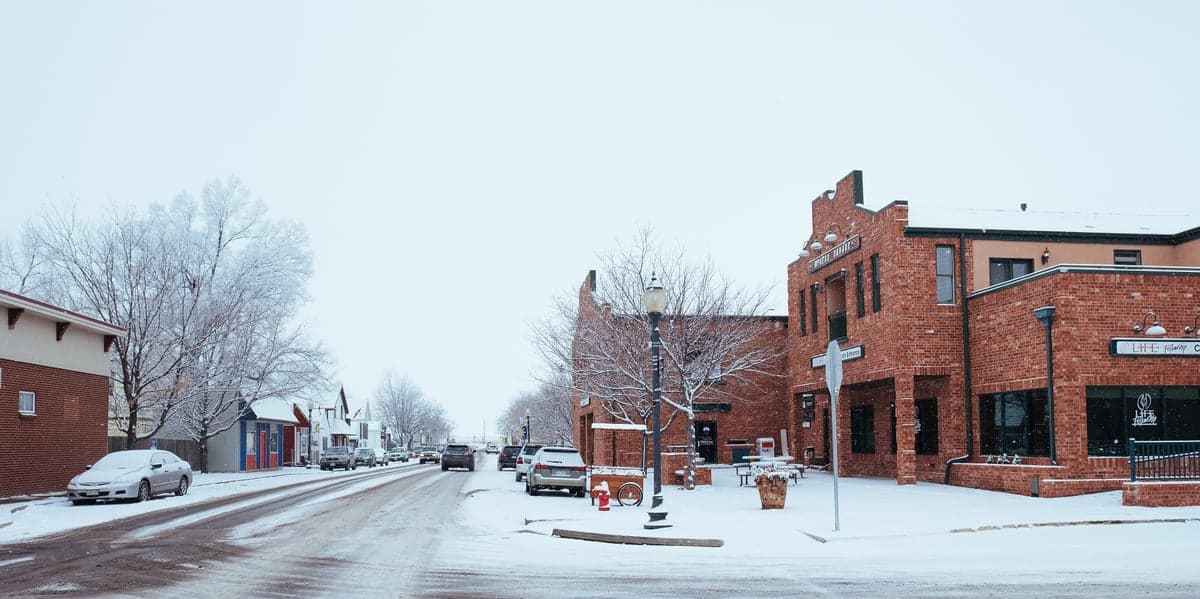
Photo: Wikipedia
Political ClimatePolitical Climate in Frederick, CO
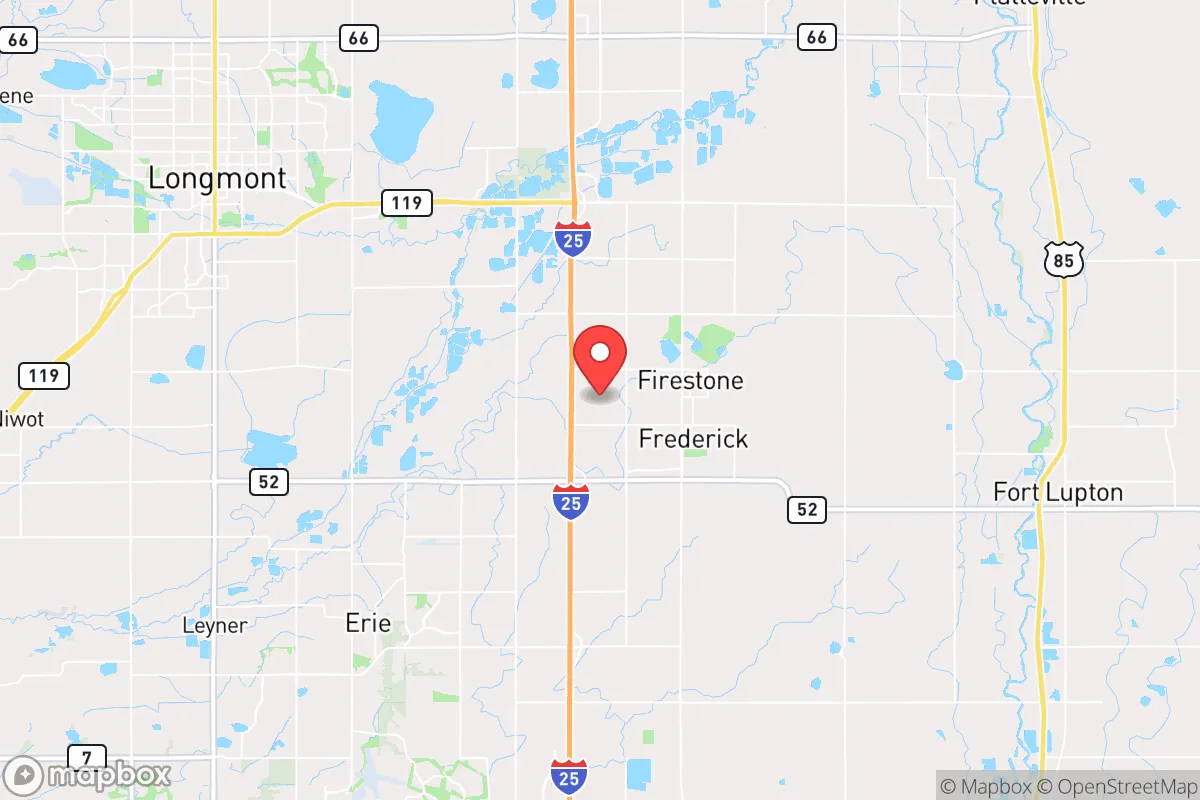
District shown is the primary district for this city’s centroid. Cities may span multiple districts.
Local Political AnalysisPolitical Analysis of Frederick, CO
Frederick, Colorado, sits in a unique political pocket. For years, this was a reliably conservative town, a place where folks valued personal responsibility and wanted the government to stay out of their business. But as the Front Range grows, Frederick is feeling the pressure. The Cook PVI rating of EVEN tells the story: this community is now a true battleground, and the old-school, live-and-let-live vibe is being challenged by an influx of people bringing more progressive ideas from Boulder and Denver. It’s not a red town anymore, and that shift is something long-time residents are watching closely.
How it compares
To really get Frederick, you have to look at its neighbors. Drive a few miles west to Longmont or Boulder, and you’re in deep blue territory—places where taxes are high, regulations are thick, and the government feels like it’s in every decision you make. Head east to Firestone or Dacono, and you’ll find towns that still lean more conservative, with a stronger emphasis on property rights and lower taxes. Frederick used to be firmly in that eastern camp. Now, it’s the dividing line. You can feel the tension at town hall meetings: newer residents pushing for more bike lanes, denser housing, and “climate action” plans, while the old guard pushes back, worried about losing the freedom to park a truck in the driveway or run a small business without a dozen permits. It’s a real clash of cultures.
What this means for residents
For someone who values personal freedoms, this shift is concerning. The biggest red flag is the creeping government overreach. We’re seeing more zoning restrictions that tell you what you can do with your own property, and talk of “sustainability” mandates that could drive up your utility bills. The school board is another battleground—there’s pressure to adopt curriculum that focuses more on social agendas than on reading, writing, and arithmetic. If you moved here to escape the heavy hand of Boulder County’s bureaucracy, you’re starting to see those same patterns appear in Frederick. The local elections are now critical; every city council seat and school board race feels like a referendum on whether Frederick will stay a place where you’re free to live your life, or become another suburb that micromanages everything from your lawn to your lightbulbs.
On the cultural side, there’s still a strong core of folks who remember when Frederick was a quiet farm town. You’ll still see American flags on porches and trucks with gun racks. The annual events—like the Frederick Founder’s Day—still have that small-town, family feel. But the new developments are bringing in chain stores and coffee shops that feel more like Denver. The biggest worry among long-time residents is that the political shift will accelerate. If the progressive wave takes full hold, expect higher taxes, more restrictions on housing and businesses, and a loss of the independent spirit that made this place worth living in. For now, it’s a fight. And if you value your rights, you’d better pay attention to who’s running for office—because the next few elections will decide if Frederick stays Frederick, or becomes just another cookie-cutter suburb with a government that thinks it knows better than you do.

State Political ClimatePolitical Climate in Colorado
State Political AnalysisPolitical Environment in the State
Colorado has shifted from a classic purple swing state to a solidly blue-leaning one over the past two decades, with Democrats now controlling the governorship, both U.S. Senate seats, and both chambers of the state legislature. The state voted for Hillary Clinton by 5 points in 2016, Joe Biden by 13 points in 2020, and Kamala Harris by roughly 11 points in 2024, reflecting a durable leftward tilt driven by explosive growth in the Denver metro and Front Range corridor. For a conservative considering relocation, the state’s political trajectory is a cautionary tale of how rapid in-migration and demographic change can transform a once-balanced state into a one-party progressive stronghold.
Urban vs. rural divide
The political map of Colorado is a stark story of urban dominance versus rural resistance. The Denver metro area—including Denver County, Jefferson County, Arapahoe County, and Boulder County—generates roughly half the state’s votes and leans heavily Democratic. Boulder County is among the most liberal jurisdictions in the nation, routinely voting 75-80% for Democratic presidential candidates. Colorado Springs (El Paso County) remains the state’s largest conservative stronghold, voting Republican by double digits, but its influence is diluted by the sheer population weight of the Front Range. The Western Slope, including conservative-leaning Mesa County (Grand Junction) and rural counties like Moffat and Rio Blanco, votes red but lacks the numbers to offset Denver. A notable shift: once-competitive suburban counties like Arapahoe and Jefferson have moved decisively blue since 2016, driven by college-educated transplants and younger voters. The only recent flip was Douglas County, a wealthy Denver suburb that voted for Trump in 2020 and 2024 after backing Romney in 2012—a rare bright spot for conservatives, but an exception that proves the rule of urban consolidation.
Policy environment
Colorado’s policy environment has become increasingly hostile to conservative priorities. The state income tax rate is a flat 4.4%, relatively low by national standards, but voters rejected a 2023 measure to cut it to 4.0%. Property taxes are moderate, though a 2024 ballot measure (Proposition HH) attempted to slow assessment growth while redirecting revenue to education—a move critics called a backdoor tax hike. The regulatory climate is burdensome: the state has a strict renewable energy mandate (100% clean electricity by 2040), a paid family leave program funded by payroll taxes, and a “red flag” gun law (HB 19-1177) that allows courts to temporarily seize firearms from individuals deemed a risk. Education policy is dominated by teacher unions and progressive school boards; the state’s school choice landscape is mixed, with charter schools allowed but facing increasing regulation. Healthcare is heavily regulated, with a state-run reinsurance program and a public option for health insurance plans. Election laws are among the most liberal: universal mail-in voting, same-day registration, and automatic voter registration are all in place, with no voter ID requirement at the polls (though a signature match is used).
Trajectory & freedom
Colorado is becoming less free by any conservative measure, with a steady expansion of government power over the past decade. The 2019 red flag law was a major infringement on Second Amendment rights, and a 2023 law (SB 23-169) raised the minimum purchase age for all firearms to 21 and imposed a three-day waiting period. Parental rights have eroded: a 2021 law (HB 21-1108) requires schools to adopt comprehensive sex education that includes LGBTQ+ content, with no opt-out for parents on specific lessons. Medical autonomy took a hit with the 2019 “vaccine choice” law that eliminated non-medical exemptions for school immunizations, though a 2024 law restored some religious exemptions. Property rights are under pressure from a 2023 “land use” bill (SB 23-213) that preempts local zoning to mandate higher-density housing near transit—a move that reduces local control and property values in single-family neighborhoods. On the positive side, Colorado has no state-level income tax on Social Security benefits, and a 2023 law (HB 23-1312) expanded the property tax exemption for seniors. But the overall trend is toward more regulation, higher costs, and less individual liberty.
Civil unrest & political movements
Colorado has seen significant civil unrest and political activism, particularly in the Denver metro. The 2020 George Floyd protests in Denver turned violent, with property damage and clashes between protesters and police, leading to a lasting distrust of law enforcement among conservatives. The state’s sanctuary policies are a flashpoint: Colorado’s “Safe Haven” law (HB 19-1124) limits local law enforcement cooperation with federal immigration authorities, and Denver has been a sanctuary city since 2017. This has fueled tensions, especially in rural areas where immigration enforcement is seen as a federal priority. The “Colorado Project” and other left-wing activist groups have successfully pushed progressive policies through ballot initiatives and legislative pressure. On the right, the “Colorado Republican Party” has fractured between establishment and populist factions, weakening its electoral effectiveness. Election integrity remains a concern: the 2020 election saw widespread use of mail-in ballots, and while no major fraud was proven, the lack of voter ID and signature verification standards has eroded trust among conservatives. Secession talk has emerged in rural counties like Weld and El Paso, with some advocating for a “51st state” called “North Colorado,” but it remains a fringe movement.
Projection
Over the next 5-10 years, Colorado will likely become even more Democratic and progressive. In-migration from blue states like California and New York continues to fuel growth in the Front Range, while rural counties lose population. The 2024 election results show Democrats gaining ground in once-competitive suburbs like Arapahoe and Jefferson, and even Colorado Springs is seeing a slow blue shift as tech workers and military retirees move in. The state’s demographic trends—younger, more diverse, more college-educated—favor the left. Expect further gun control measures, a potential state-level wealth tax or higher income tax, and expanded government healthcare. The only brake on this trajectory is the state’s TABOR (Taxpayer Bill of Rights) amendment, which limits tax increases without voter approval, but progressives have learned to work around it through fee increases and ballot measures. A conservative moving to Colorado now should expect to live in a state where their political views are increasingly marginalized, where local control is eroded, and where personal freedoms—especially gun rights and parental rights—are under constant assault. The best bet for conservatives is to settle in El Paso County or Douglas County, where local governance still offers some buffer, but the statewide trend is clear and concerning.
For a new resident, the bottom line is this: Colorado offers stunning natural beauty and a strong economy, but the political climate is hostile to conservative values and trending further left. If you value limited government, Second Amendment rights, and local control, you’ll find yourself fighting an uphill battle against a well-funded progressive machine. The state’s policy environment is increasingly restrictive, and the cultural shift is palpable in everyday life—from school board meetings to local ordinances. Choose your county carefully, and be prepared for a political landscape that will likely become more challenging for conservatives in the years ahead.
* Values derived from national, state, county, city and local statistics and may differ in a specific area. Last updated: 2026-05-01T00:51:00.000Z
Narrative content on this page is AI-generated and may contain mistakes. Verify any details that matter before acting on them.
ReloMaps may earn a commission from affiliate links at no extra cost to you.

