Photo: Wikipedia
Demographics of Gainesville, FL
Affluence Level in Gainesville, FL
A below-average socioeconomic profile. Incomes, home values, and educational attainment trail the U.S., with higher poverty and unemployment.
People of Gainesville, FL
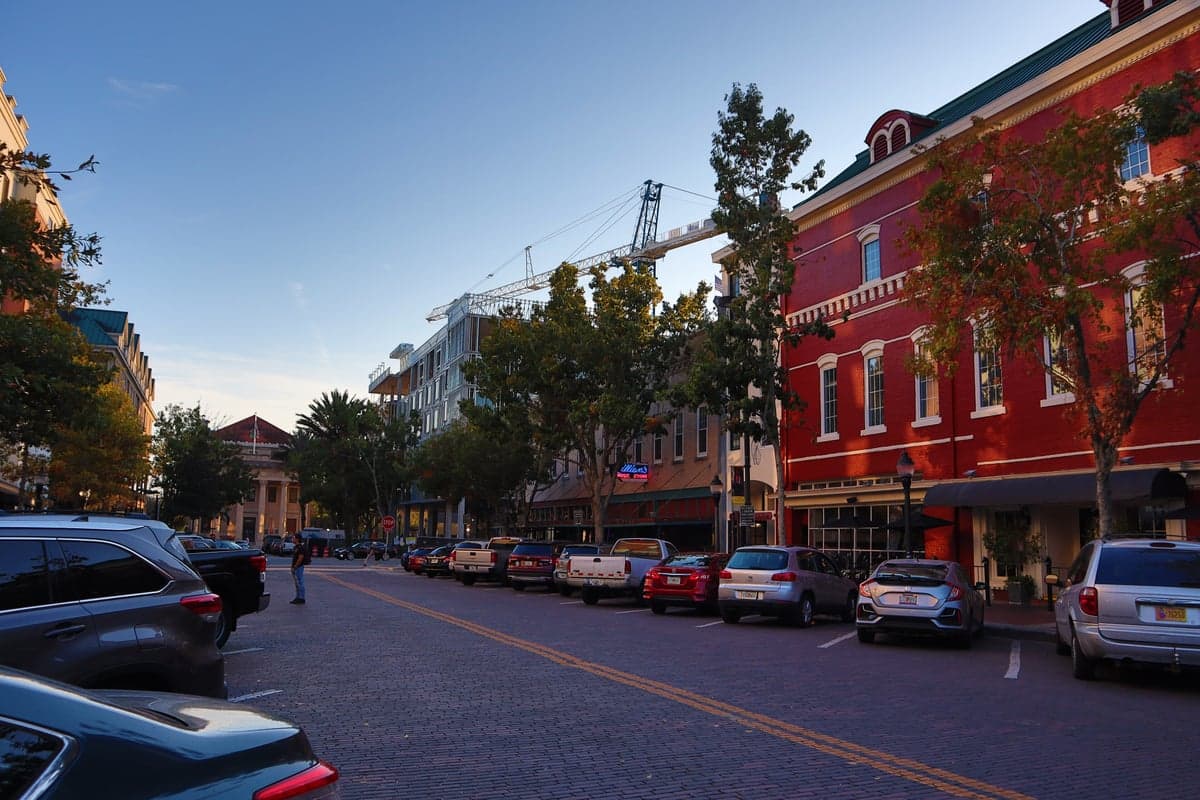
The people of Gainesville, Florida, today number roughly 143,600, forming a compact, highly educated college town where over half of adults hold a bachelor’s degree. The city is notably diverse for a mid-sized Southern city, with a population that is 54.3% white, 21.1% Black, 13.4% Hispanic, and 6.1% Asian (including 4.0% East/Southeast Asian and 2.1% Indian). Despite its liberal-leaning university core, Gainesville retains a distinctly Southern character in its older neighborhoods, and its foreign-born share of 6.2% is below the national average, reflecting a population shaped more by domestic migration than by international immigration.
How the city was settled and grew
Gainesville was founded in 1854 as a railroad depot town, drawing its earliest white settlers from Georgia and the Carolinas who came to farm cotton and timber. The arrival of the Florida Railroad in 1859 turned the settlement into a regional trade hub, and by the 1880s, a small but established Black community had formed around the Pleasant Street Historic District, where freedmen and their descendants built churches, schools, and businesses. The University of Florida’s move to Gainesville in 1906 transformed the town’s economy and demographics, attracting faculty and students from across the South. Through the 1940s and 1950s, the city grew steadily, with white families moving into new subdivisions like Duck Pond and Northwood, while Black residents remained concentrated in the Fifth Avenue/Pleasant Street corridor and the Porters Community area east of downtown. The post-World War II era also brought a wave of veterans and their families, many of whom settled in the expanding Westside neighborhoods near the university.
Modern era (post-1965)
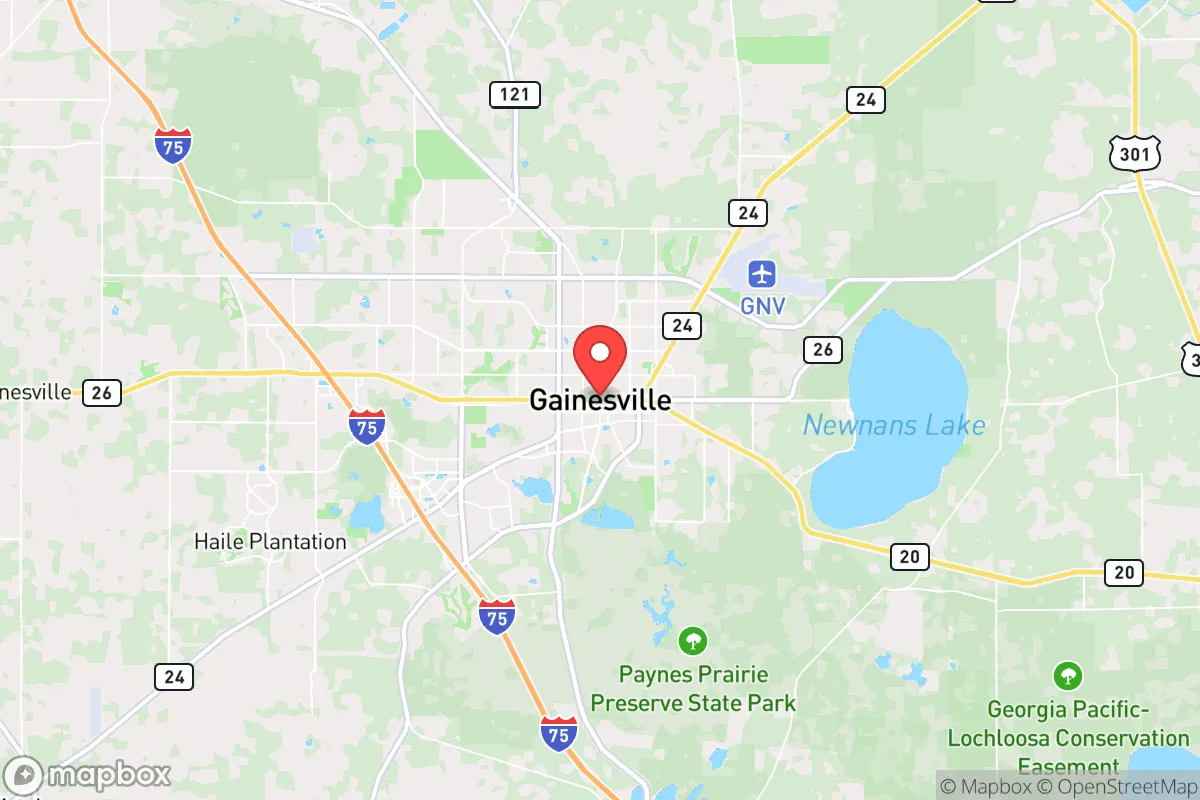
The 1965 Hart-Cellar Act had a modest effect on Gainesville compared to larger Florida cities, but it did open the door for a small but steady influx of Asian and Indian professionals, many of whom came to work at the university or at Shands Hospital. These groups initially clustered near campus in College Park and the University Heights area, drawn by proximity to jobs and rental housing. The 1970s and 1980s saw significant Black suburbanization, as middle-class African American families moved from the historic Fifth Avenue corridor into newer subdivisions like Forest Ridge and East Gainesville, though the east side remains predominantly Black and lower-income today. Hispanic growth accelerated after 1990, driven by Puerto Rican and Mexican families moving for construction and service jobs; they settled primarily in the Southwest Gainesville area and along the Archer Road corridor. The white population, meanwhile, has become increasingly concentrated in the Northwest and West Gainesville neighborhoods, particularly in master-planned communities like Haile Plantation, which grew rapidly from the 1990s onward. The Indian subcontinent population, now 2.1% of the city, remains heavily tied to the university and medical sectors, with many families living in the Duck Pond and Westside areas.
The future
Gainesville’s population is projected to grow modestly over the next decade, likely reaching 155,000–160,000 by 2035, driven primarily by university expansion and the continued growth of the biotech and healthcare sectors. The city is not homogenizing; rather, it is tribalizing into distinct enclaves. The white population is aging and slowly declining as a share, while the Hispanic and Asian (East/Southeast Asian) shares are rising, particularly among younger families. The Black population share has been stable for two decades, but geographic segregation persists, with the east side remaining overwhelmingly Black and lower-income. The Indian community is small but growing, largely through professional migration tied to UF and the innovation district. International immigration will likely remain a secondary factor, as Gainesville lacks the port-of-entry dynamics of Miami or Orlando. The biggest demographic shift may be the continued expansion of the university’s student population, which already swells the city’s effective size by 50,000 during the academic year, creating a transient, liberal-leaning counterweight to the more conservative permanent residents in the outlying neighborhoods.
For a conservative-leaning mover considering Gainesville, the city offers a clear trade-off: a stable, family-oriented suburban life in Northwest Gainesville or Haile Plantation, with good schools and low crime, versus a university-dominated core that is culturally and politically liberal. The east side remains economically challenged and racially isolated, while the southwest corridor is becoming more diverse and younger. The city is not becoming a melting pot so much as a collection of distinct, self-reinforcing neighborhoods, and where you land will largely determine your daily experience.

* Values derived from national, state, county, city and local statistics and may differ in a specific area. Last updated: 2026-04-19T06:58:56.000Z
Narrative content on this page is AI-generated and may contain mistakes. Verify any details that matter before acting on them.
ReloMaps may earn a commission from affiliate links at no extra cost to you.

